
Putin's First Visit to Disputed Kuril Islands Draws Sharp Japanese Protest
Putin makes his first visit to the disputed Kuril Islands, drawing sharp protest from Japan's Prime Minister Sanae Takaichi and Foreign Minister Toshimitsu Motegi, who summoned Russia's ambassador. The move escalates the decades-old territorial dispute and deepens strains in Russia-Japan relations.
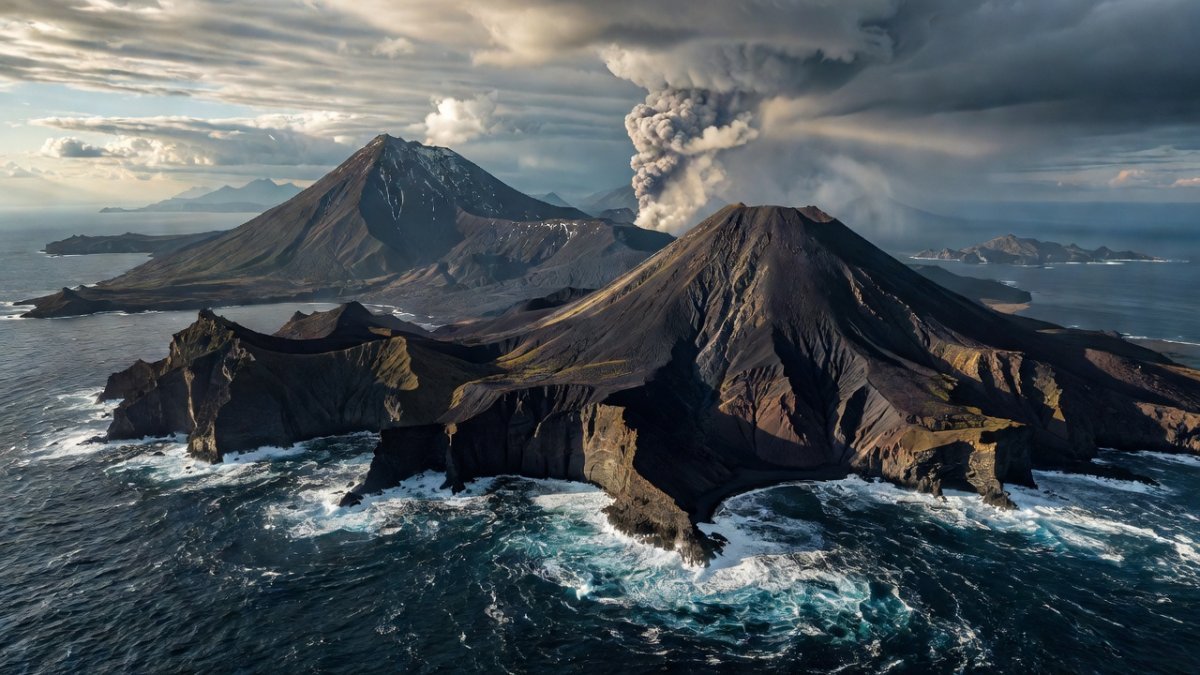
President Vladimir Putin made his first visit to the disputed Kuril Islands on Thursday, a move that drew immediate and forceful protests from Japan, which claims the archipelago as its Northern Territories. The surprise trip, which included a stop at a fish-processing plant, marks a significant escalation in the long-simmering territorial dispute that has prevented Russia and Japan from signing a formal peace treaty since World War II.
Putin's First Visit to Disputed Kuril Islands Draws Sharp Japanese Protest
Moscow, Russia – Thursday — President Vladimir Putin traveled to Russia's far-eastern Kuril Islands on Thursday for the first time in his tenure, a symbolic and strategic move that Japanese Prime Minister Sanae Takaichi called "absolutely unacceptable." The visit, confirmed by Kremlin-published video footage, comes amid already deteriorating bilateral relations fueled by Russia's invasion of Ukraine and Japan's alignment with Western sanctions.
The Surprise Visit
The Kremlin released video footage showing Putin on one of the four main islands of the Kuril chain, with Russian state media reporting that he visited a fish-processing plant and was presented with caviar during the tour. The visit followed a Wednesday stop on the nearby Russian island of Sakhalin, where Putin held a meeting "on ensuring the security of Russia's eastern borders," according to the state news agency RIA Novosti.
The timing and location of the trip carry clear strategic weight. On Wednesday, while on Sakhalin, Putin addressed Japan's recent defense posture directly, calling Tokyo's sanctions against Russia "unprovoked." He stated, "Japan has identified Russia as a main source of threats. I would like to point out that we are not threatening Japan... On the contrary, it has territorial claims against our country." The remarks set the stage for a visit that Moscow knew would inflame tensions with its Pacific neighbor.
Tokyo's Response
Japan's reaction was swift and unequivocal. Prime Minister Sanae Takaichi told reporters that "the Northern Territories are an inherent part of Japan's territory, both historically and under international law." She added that Putin's visit "offends the sentiments of the Japanese people and is absolutely unacceptable," warning that it "made it more difficult to restore relations in the medium to long term."
Beyond the prime minister's public statement, Japan's Foreign Minister Toshimitsu Motegi summoned Russian ambassador to Japan Nikolai Nozdrev on Thursday to lodge a "strong protest" against the move. According to a statement from Japan's foreign ministry, Motegi told the ambassador that Putin's visit would "have an extremely negative impact on Japan-Russia relations," which have already been complicated by Moscow's full-scale invasion of Ukraine.
Historical Context: 1945 and After
The dispute over the islands dates back to the final days of World War II. The Soviet Union only declared war on Japan on August 8, 1945, after the atomic bomb was dropped on Hiroshima and six days before the end of the conflict. Soviet forces then seized the strategically located volcanic archipelago north of Hokkaido, deporting the islands' Japanese population of approximately 17,000 people.
The four contested isles — known as Kunashir, Habomai, Shikotan and Iturup in Russian, and Kunashiri, Habomai, Shikotan and Etorofu in Japanese — are part of the broader Kuril chain that runs in a broad arc from Russia's Kamchatka peninsula down to Japan's main northern island of Hokkaido. Their current population of about 20,000 Russian citizens lives in a harsh climate, but the islands hold significant mineral deposits including gold and silver, as well as rich fishing grounds.
Following their occupation, the islands acquired critical strategic importance, providing air and sea bases during the Cold War as the Soviet Union confronted the United States and Japan, its closest ally in the Pacific. That military presence has been maintained by Moscow ever since, and the territorial dispute has prevented the two nations from signing a formal peace treaty to end their World War II hostilities.
Kremlin Calculations
Putin's decision to visit the islands for the first time is widely seen by analysts as a deliberate signal that Moscow has abandoned any near-term interest in resolving the territorial dispute through negotiation. The visit follows a precedent set by then-president Dmitry Medvedev, who in 2010 became the first Russian leader to visit the disputed territory. Medvedev also went there several times subsequently as prime minister, each visit drawing protests from Tokyo.
By making his own first visit now, Putin appears to be cementing a harder line on the islands, reinforcing the message that Russia considers them non-negotiable territory. The move aligns with a broader Kremlin posture that has grown increasingly confrontational toward Japan since Tokyo joined other G7 nations in sanctioning Russia over the invasion of Ukraine, as well as providing money and non-lethal aid to Kyiv.
Wider Regional Alignment
The visit comes against a backdrop of deepening security concerns for Japan on multiple fronts. Russia and China have moved closer in recent years, with their navies and air forces conducting joint exercises in areas around Japan, prompting frequent scramblings of Japanese jets. Japan's latest defense white paper, issued this month, again highlighted growing risks from all three countries — Russia, China, and North Korea.
North Korea, which this month termed Japan's military build-up a "transformation into a war state," has also sent troops and artillery shells to help Russia's war against Ukraine. This trilateral alignment between Moscow, Beijing, and Pyongyang has fundamentally reshaped the security environment in Northeast Asia, leaving Japan increasingly isolated in its territorial claims against Russia.
The New York Times reported in July that Russia had turned Japan into a "den of spies" and a key source of dual-use technology needed for its war in Ukraine. This characterization underscores the paradoxical nature of the relationship: even as Tokyo officially sanctions Moscow, the two countries remain deeply intertwined in certain economic and technological flows that Russia reportedly exploits for its military efforts.
Analysis and Implications
Putin's visit to the Kuril Islands should be understood not merely as a symbolic gesture but as a strategic statement about Russia's priorities in the Pacific. With Russia's western flank consumed by the war in Ukraine, Moscow is signaling that it will not make concessions in the east, particularly to a nation it views as firmly aligned with the United States and the broader Western alliance.
The timing of the visit — coming just days after Japan's defense white paper and amid ongoing joint Russian-Chinese military exercises — suggests the Kremlin is deliberately raising the stakes. By visiting the islands personally, Putin is making it clear that any future Japanese government seeking improved relations will have to accept the status quo on the territorial question, a position that would be politically untenable for most Japanese leaders.
For Japan, the visit represents a diplomatic defeat and a strategic challenge. Prime Minister Takaichi's characterization of the move as making it "more difficult to restore relations in the medium to long term" reflects a recognition that the window for negotiation has narrowed considerably. The islands, which Japan has sought to reclaim through decades of patient diplomacy, now appear further from Tokyo's reach than at any point since the end of the Cold War.
What Comes Next
The immediate diplomatic fallout is likely to include continued Japanese protests and possibly additional measures, though Tokyo's options are limited. Japan has already joined G7 sanctions against Russia, and further economic pressure would carry costs for Japanese businesses with interests in Russian energy projects, particularly in Sakhalin.
For Russia, the visit consolidates a narrative of territorial integrity and great-power assertiveness that Putin has cultivated throughout his tenure. The islands' strategic location, their mineral wealth, and their symbolic importance as a legacy of the Soviet victory in World War II make them a valuable asset that Moscow shows no inclination to relinquish.
As the war in Ukraine grinds on and Russia's isolation from the West deepens, the Kuril Islands have become another front in Moscow's broader confrontation with the United States and its allies. Putin's first visit to the disputed territory is a clear message that Russia will defend its claims in the Pacific with the same determination it has shown in Ukraine — and that Japan's decades-long pursuit of the Northern Territories has reached an impasse that could last for years to come.
By Irina Volkov, Staff Writer
This article was produced with AI-assisted research and editorial support. Sources: Moscow Times, Reuters, RIA Novosti, The New York Times.
What's Your Reaction?
 Like
0
Like
0
 Dislike
0
Dislike
0
 Love
0
Love
0
 Funny
0
Funny
0
 Wow
0
Wow
0
 Sad
0
Sad
0
 Angry
0
Angry
0

Russia/Eastern Europe Correspondent at Global1.News. Covering Russian politics, energy, security, and the shifting dynamics of the post-Soviet space. Provides clear-eyed analysis on one of the world's most opaque regions.













Comments (0)