
Turkey and Egypt Chart a Strategic Course on Gaza and Regional Order
Turkey and Egypt agreed on stronger measures over Gaza as Foreign Minister Hakan Fidan and Badr Abdelatty met in El Alamein, deepening a strategic partnership spanning Libya, Syria, Sudan and the Strait of Hormuz.
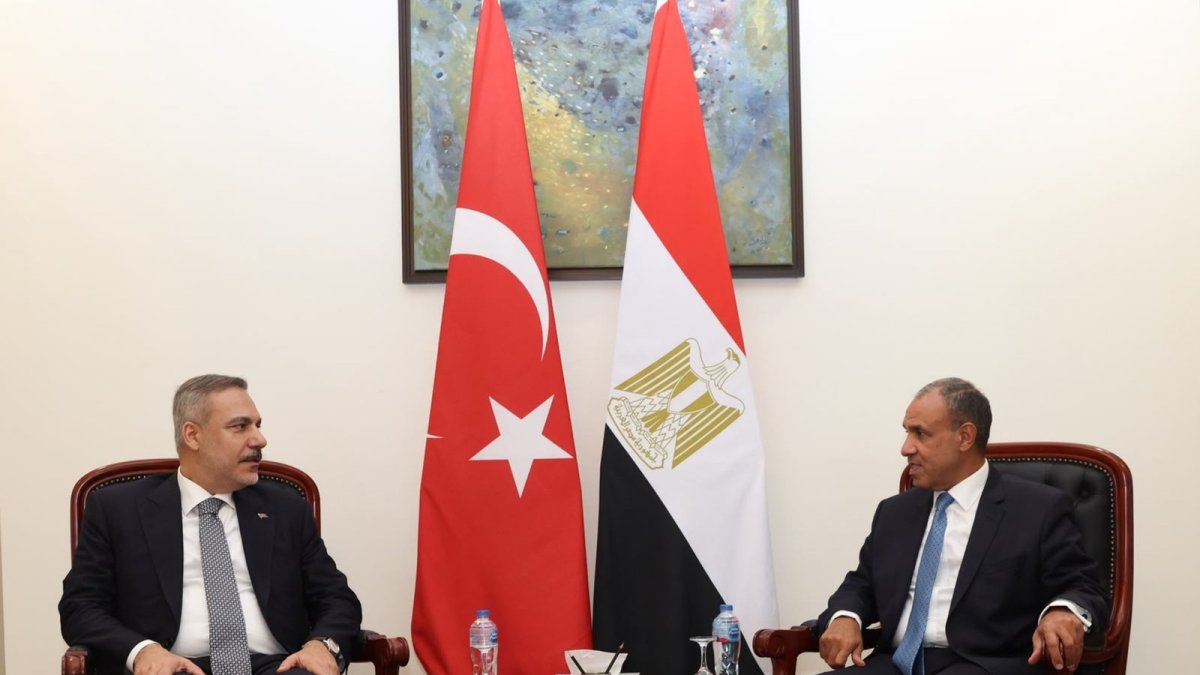
The coastal city of El Alamein, a name etched in the memory of Second World War battles, played host Thursday to a different kind of alignment. Turkish Foreign Minister Hakan Fidan and his Egyptian counterpart, Badr Abdelatty, emerged from talks with a unified message: the region has lost too much time to conflict, and the Ankara-Cairo axis is now positioning itself as a central pillar for addressing the cascade of crises from Gaza to the Strait of Hormuz.
Turkey and Egypt Chart a Strategic Course on Gaza and Regional Order
El Alamein, Egypt – August 13, 2026 — The meeting, part of a two-day visit by Fidan that includes an audience with Egyptian President Abdel Fattah el-Sissi, signals more than routine diplomatic consultation. It represents the maturation of a rapprochement that began in earnest in 2023, following a decade of rupture that saw the two regional heavyweights on opposing sides of nearly every major file in the Middle East. The tone from El Alamein suggests that the era of managed rivalry is giving way to a more structured, and potentially formalized, partnership.
A Natural Partnership Rekindled After a Decade of Rift
To understand the weight of Thursday's statements, one must recall the depth of the schism. Relations between Ankara and Cairo collapsed in 2013 following the ouster of Egyptian President Mohamed Morsi, a close ally of Turkey's ruling Justice and Development Party (AK Party). For years, Turkey and Egypt found themselves in opposing camps: over the legitimacy of the el-Sissi government, over the Libyan civil war where they backed rival factions, and over the broader ideological battle between political Islam and the military-backed order in Cairo.The ice began to thaw in 2021 with exploratory talks, culminating in a landmark meeting between President Recep Tayyip Erdogan and President el-Sissi in Doha in 2023, followed by the appointment of ambassadors and the elevation of ties to a strategic level. The February 2026 meeting of the High-Level Strategic Cooperation Council in Cairo, co-chaired by the two presidents, institutionalized this thaw. Thursday's talks in El Alamein, which included the second meeting of the Türkiye-Egypt Joint Planning Group, are the bureaucratic machinery of a relationship now focused on deliverables rather than grievances.Fidan captured this shift succinctly, describing Egypt as Turkey's "natural partner" and expressing hope that the relationship would "soon become our formal partner as well." This is not merely diplomatic pleasantry; it signals a potential upgrade to a binding strategic framework, one that could reshape the balance of power in the Eastern Mediterranean and beyond.Gaza: A Convergence of Red Lines
The immediate catalyst for the intensified coordination is the situation in Gaza. Both ministers used the platform to condemn Israeli actions and call for stronger international measures. Fidan was unequivocal in his criticism of Israeli Prime Minister Benjamin Netanyahu, stating that his government is "increasingly escalating policies that trample on human dignity" and adopting an attitude that "provokes the entire international community."Abdelatty echoed this sentiment, particularly regarding Israeli attacks on Syrian sovereignty, a point of convergence that would have been unthinkable a few years ago. The two countries are coordinating on the implementation of the second phase of the Gaza Peace Plan, a framework that presumably involves the ceasefire, humanitarian aid delivery, and a political horizon for the Palestinian enclave.The strategic calculus here is significant. Egypt, as the traditional mediator between Israel and Hamas, holds the keys to the Rafah crossing and has been the primary conduit for ceasefire negotiations. Turkey, with its historical ties to Hamas's political leadership and its vocal stance in the Islamic world, provides a complementary channel. By aligning their positions, Ankara and Cairo are effectively creating a unified front that limits Israel's ability to play regional actors against one another. The demand for "stronger measures" suggests that both capitals are frustrated with the status quo and are seeking to leverage their collective diplomatic weight to force a change in Israeli behavior.The Mecca Pact and the New Regional Architecture
Fidan's reference to the Mecca Joint Defense Agreement, signed between Turkey, Pakistan, and Saudi Arabia, adds another layer to this strategic realignment. He described the pact as a "historic moment" for the region. While the agreement is nominally a trilateral defense and cooperation framework, its significance lies in its signal of a shifting security architecture that is increasingly independent of traditional Western guarantees.The inclusion of Egypt in this orbit, even informally, is a logical extension of this trend. The R4 initiative, which brings together the foreign ministers of Turkey, Egypt, Pakistan, and Saudi Arabia, serves as the multilateral vehicle for this coordination. This grouping represents a formidable bloc of Sunni-majority states with significant military, economic, and demographic weight. Their convergence on issues like Gaza, Libya, and Sudan suggests a desire to manage regional crises through a framework of "regional ownership," a phrase Fidan is expected to emphasize in his meetings with el-Sissi.This is not about excluding external powers entirely, but rather about creating a critical mass of regional consensus that external actors—whether the United States, Russia, or the European Union—must contend with. The strategic message is clear: the region's future will be shaped by its own powers, not imposed upon it.Libya, Sudan, and the Question of Sovereignty
The talks in El Alamein also revealed a remarkable convergence on two of the region's most intractable conflicts. On Libya, Fidan stated that Turkey and Egypt share "the same view regarding Libya's unity, territorial integrity, sovereignty and indivisibility." This is a significant departure from the 2019-2020 period when Turkey's military intervention in support of the Government of National Accord (GNA) in Tripoli directly clashed with Egyptian and Emirati support for General Khalifa Haftar's Libyan National Army (LNA).The current alignment suggests that both Ankara and Cairo have concluded that a fragmented Libya serves no one's interests, particularly in the face of external meddling and the presence of Russian mercenaries from the Wagner Group. A unified stance on Libya's territorial integrity allows Turkey and Egypt to jointly manage the post-conflict landscape, ensuring that no single faction or external power dominates the country's oil wealth or strategic coastline.Similarly, on Sudan, Abdelatty highlighted a "full agreement" with Turkey on supporting Sudan's territorial integrity and "categorically rejecting its partition." The conflict between the Sudanese Armed Forces (SAF) and the Rapid Support Forces (RSF) has created a vacuum that regional powers are scrambling to fill. A coordinated Turkish-Egyptian position on Sudan is aimed at preventing the conflict from spiraling into a permanent division, which would have catastrophic humanitarian consequences and further destabilize the Red Sea region.The Economic and Energy Dimension
Beyond the geopolitical posturing, the visit has a hard-nosed economic agenda. Diplomatic sources indicated that Fidan and Abdelatty are working toward increasing bilateral trade volume to $15 billion. This is an ambitious target that requires not just political will but concrete investment in infrastructure and energy.The agenda includes cooperation in hydrocarbons, electricity grid integration, energy infrastructure, and mining. This is a critical area of synergy. Egypt, with its massive natural gas fields in the Eastern Mediterranean (Zohr) and its role as a regional LNG hub, and Turkey, with its growing energy demands and strategic location as a transit corridor, are natural partners. The potential for electricity grid integration between the two countries could create a powerful energy bridge connecting the Middle East to Europe, a prospect that gains urgency as Europe seeks to diversify away from Russian energy.The defense industry is also on the table. Turkey's Bayraktar drones and other military hardware have proven their efficacy in conflicts from Libya to Ukraine. Egypt, which has historically relied on American and Russian equipment, may be looking to diversify its supply chain. Deeper defense industrial cooperation would not only be a commercial boon but would also symbolize a level of strategic trust that was absent for a decade.Navigating the Iran and Hormuz Flashpoint
Fidan's comments on Iran and the Strait of Hormuz were perhaps the most geopolitically sensitive of the day. He expressed hope that the ceasefire between the United States and Iran would be reestablished and that the Strait of Hormuz would be reopened. The reference to a ceasefire implies a recent escalation that has disrupted shipping through the strait, a chokepoint for roughly 20% of global oil consumption.For Turkey, which relies heavily on energy imports, the closure of Hormuz is an economic nightmare. For Egypt, the disruption of oil flows affects the Suez Canal's revenues, a vital source of foreign currency. A coordinated Turkish-Egyptian push for de-escalation between Washington and Tehran is a pragmatic move driven by economic self-interest.However, it also places both countries in a delicate position. Turkey has maintained a working relationship with Iran, despite competing interests in Syria and the Caucasus. Egypt has historically been wary of Iranian influence in the Arab world. By jointly advocating for a ceasefire, Ankara and Cairo are positioning themselves as mediators rather than protagonists in the US-Iran confrontation. This enhances their diplomatic relevance but also risks alienating Washington if the US prefers a more confrontational approach.A Regional Axis with Global Implications
The El Alamein talks represent a defining moment in the post-Arab Spring regional order. The Turkey-Egypt rapprochement, once seen as a fragile truce, is now evolving into a strategic axis with a shared agenda on Gaza, Libya, Syria, Sudan, and the Eastern Mediterranean. The convergence is driven by a mutual recognition that their previous rivalry was a zero-sum game that weakened both countries and allowed external powers to exploit regional divisions.The implications for the international community are profound. A unified Turkey-Egypt position on Gaza increases pressure on Israel and its allies to move toward a genuine political solution. A coordinated stance on Libya and Sudan could either accelerate peace processes or create a new bloc that marginalizes other stakeholders. The economic and energy cooperation between Ankara and Cairo could redraw the map of energy transit in the Eastern Mediterranean.As Fidan prepares to meet President el-Sissi and the Arab League Secretary-General Nabil Fahmy, the trajectory is clear. The "natural partnership" is being institutionalized, and the region is watching. The question is no longer whether Turkey and Egypt will cooperate, but rather how far they will take this partnership and who will be left out of the new regional order they are building.By Malik Hassan, Staff WriterBy Malik Hassan, Staff Writer
This article was produced with AI-assisted research and editorial support. Reporting is based on sources cited in the article.
What's Your Reaction?
 Like
0
Like
0
 Dislike
0
Dislike
0
 Love
0
Love
0
 Funny
0
Funny
0
 Wow
0
Wow
0
 Sad
0
Sad
0
 Angry
0
Angry
0

Middle East Correspondent at Global1.News. Based in Beirut, covering politics, conflict, energy, and society across the Middle East. Brings context and depth to a region often reduced to headlines.















Comments (0)