
Defense questions ex-Sandigan presiding justice as witness
The Senate impeachment court’s latest hearing has become a theater of procedural battles as the defense challenges the prosecution’s decision to call retired Sandiganbayan presiding justice Amparo Cabotaje‑Tang as a witness.
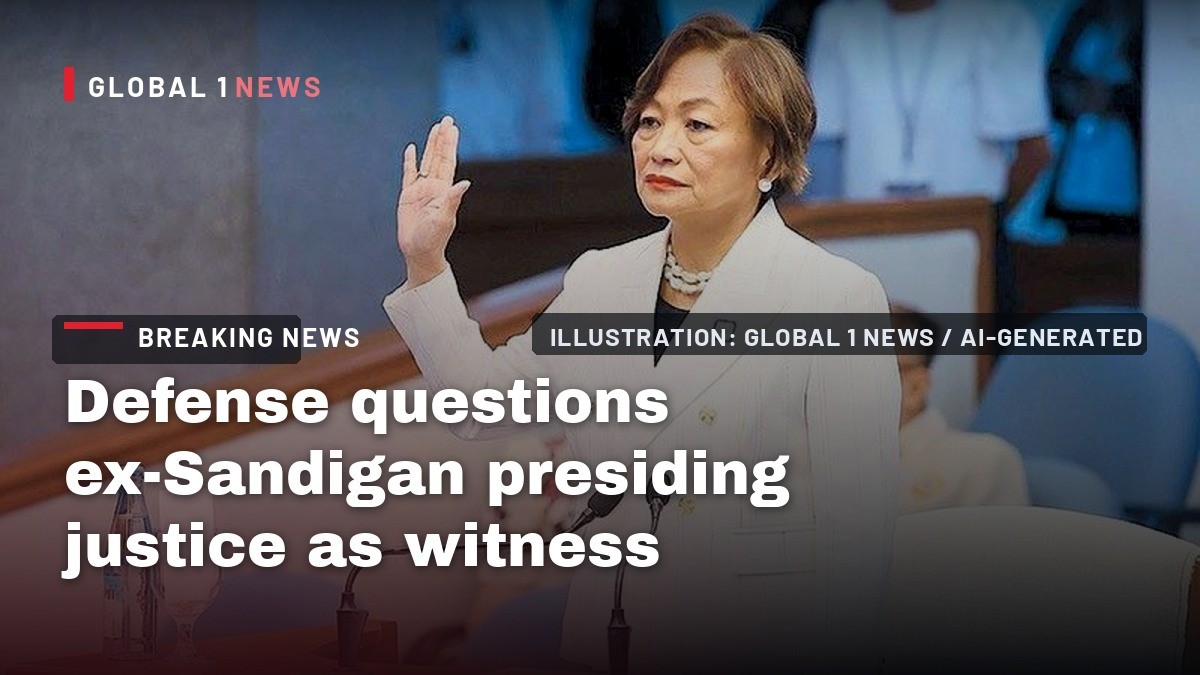
The Senate impeachment court’s latest hearing has become a theater of procedural battles as the defense challenges the prosecution’s decision to call retired Sandiganbayan presiding justice Amparo Cabotaje‑Tang as a witness. While the case centers on alleged unexplained wealth of Vice President Sara Duterte, the dispute over who may testify underscores the high‑stakes nature of a trial that could see the nation’s second‑highest executive face removal from office.
Surprise Witness Sparks Procedural Outcry
Defense lawyer Mark Vinluan openly questioned the propriety of presenting Justice Cabotaje‑Tang, labeling her appearance as a “surprise witness.” He pointed out that the pre‑trial order did not list her as a witness and that there was no reservation for a witness of her designation or background. “For all intents and purposes, Justice Tang is a surprise witness, which violates fair play and is prohibited under the rules,” Vinluan asserted, emphasizing that the rules of the Senate impeachment court demand prior notice.
Vinluan further argued that the prosecution failed to furnish the defense with copies of the documents and testimony that Justice Tang would rely on. He noted that this was already the third instance in which the prosecution attempted to introduce a witness without first providing the defense with the necessary materials, thereby compromising the Vice President’s right to a meaningful cross‑examination.
Due Process and the Right to Be Informed
Beyond the procedural hiccup, Vinluan framed the issue as a violation of Vice President Duterte’s constitutional right to due process. He stressed that the Vice President must be “promptly and completely informed of the nature and cause of the accusation against her.” The defense’s concern is that without full disclosure, the Vice President cannot adequately prepare her defense, a cornerstone of the Philippine justice system.
The lawyer also highlighted the ambiguity surrounding Justice Tang’s legal expertise. “We don’t know the extent of her legal knowledge, her political background, whether she’s neutral, DDS, loyalista or kakampink,” Vinluan said, noting that such designations are often subjective in the Philippines. This uncertainty, he argued, further erodes confidence in the fairness of the proceedings.
Presumption of Innocence Amidst a “Hellbent” Prosecution
The defense reiterated that Vice President Duterte enjoys the presumption of innocence, a principle enshrined in both the Constitution and the Senate’s impeachment rules. Vinluan warned that the prosecution appears “hellbent on removing her from office,” suggesting that the pursuit of conviction may be driven more by political motives than by evidentiary strength.
During cross‑examination, Vinluan reminded the court that the prosecution’s primary duty is not to secure a conviction but to present a case that meets the burden of proof. “Conviction must be based on the strength of the prosecution and not the weakness of the defense,” he said, underscoring the high threshold required for an impeachment conviction.
The Two‑Thirds Threshold and Its Political Implications
Impeachment in the Philippines requires a two‑thirds vote of the Senate to convict. With 20 senators on the active roster, 16 votes are needed to reach that threshold. Impeachment court spokesman Reginald Tongol clarified that the Senate will need 11 votes to overturn the ruling that set the conviction threshold at 16 votes. This arithmetic underscores how a handful of swing votes could determine the fate of the Vice President.
The defense is already preparing for the oral arguments that will focus on whether the required two‑thirds majority can be legitimately achieved. Defense spokesman Michael Poa indicated that the team has selected a representative for the oral arguments, though the name remains undisclosed, hinting at strategic considerations as the trial moves forward.
Legal Experts Weigh In on Witness Eligibility
Legal scholars familiar with Senate impeachment procedures have noted that the designation of “legal expert” is not an official category under the rules. Vinluan’s observation that “being a legal expert is not an official designation and is quite subjective” reflects a broader debate about who may be called to testify in impeachment hearings. The lack of a clear statutory definition leaves room for interpretation, which both sides are now exploiting.
Justice Cabotaje‑Tang, a retired presiding justice of the Sandiganbayan, brings a background in anti‑corruption cases, but the defense argues that her political affiliations—whether she leans “loyalista” or “kakampink”—remain unclear. This ambiguity fuels concerns that her testimony could be perceived as partisan rather than purely factual, potentially influencing public perception of the trial’s legitimacy.
Impact on Ordinary Filipinos and the Broader Political Landscape
For barangays across Luzon, Visayas and Mindanao, the impeachment trial is not just a political drama; it directly affects everyday concerns such as the delivery of basic services, the stability of the national economy, and the trust placed in public officials. The debate over procedural fairness resonates with citizens who have long championed the principle of “bayanihan” in holding leaders accountable.
Moreover, the outcome could set a precedent for future impeachment proceedings. If the Senate permits surprise witnesses without prior disclosure, the bar for due process in high‑profile cases may be lowered, potentially reshaping how future accusations of misconduct are handled. Conversely, a ruling that upholds strict procedural safeguards could reinforce the judiciary’s role as a check on political power, reaffirming the democratic ideals that many Filipinos cherish.
Looking Ahead: What to Expect in the Next Phase
As the Senate impeachment court prepares for the oral arguments, both sides are sharpening their strategies. The prosecution is expected to argue that Justice Cabotaje‑Tang’s testimony is essential to establishing the alleged wealth trail, while the defense will likely press the court to exclude her testimony on procedural grounds and on the basis that it infringes on the Vice President’s constitutional rights.
Observers note that the next hearing will be a litmus test for the Senate’s commitment to due process. The court’s decision on whether to admit Justice Tang’s testimony could either reinforce the integrity of the impeachment process or deepen public skepticism about political motivations behind high‑stakes legal battles. As Filipinos tune in, many hope that the outcome will reflect not only legal rigor but also the spirit of justice that underpins our democracy.
This article was produced with AI-assisted research and editorial support. Reporting is based on the source material cited below. Sources: Philstar.com; Global1.News (15 September 2026).
By Bella Reyes, Staff Writer
What's Your Reaction?
 Like
0
Like
0
 Dislike
0
Dislike
0
 Love
0
Love
0
 Funny
0
Funny
0
 Wow
0
Wow
0
 Sad
0
Sad
0
 Angry
0
Angry
0

Philippines/Southeast Asia Correspondent at Global1.News. Manila-based journalist covering Philippine politics, environment, maritime security, and social issues. Passionate about marine conservation and the communities protecting the Philippines' natural heritage.














Comments (0)