
Fifth UK Heatwave of 2026 Looms Next Week as Wildfire Risk Climbs
The return of extreme heat next week will test already stretched public services and communities across England and Wales, as the Met Office confirms the fifth official heatwave of 2026. With wildfire incidents at record levels, the driest July since records began and the whole of Wales now in drought, the coming days will place fresh pressure on fire and rescue services, the NHS and households from London to the Scottish borders.
The return of extreme heat next week will test already stretched public services and communities across England and Wales, as the Met Office confirms the fifth official heatwave of 2026. With wildfire incidents at record levels, the driest July since records began and the whole of Wales now in drought, the coming days will place fresh pressure on fire and rescue services, the NHS and households from London to the Scottish borders.
Fifth Heatwave of 2026 Looms as Wildfire Pressure Mounts on Fire Services
London, UK – Saturday 8 August 2026 — Channel 4 News reports that heatwave conditions will return across large parts of England and Wales next week, with temperatures climbing sharply through the middle of the week. The Met Office forecast warns of up to 36°C in East Anglia and the south-east by Thursday, marking the fifth such episode this year, while the National Fire Chiefs Council warns that prolonged dryness is leaving vegetation primed to ignite.
Met Office Issues Detailed Temperature Forecast
Deputy Chief Forecaster Mike Silverstone said temperatures will climb through the weekend and, more significantly, through much of next week. After a brief dip on Monday, high pressure will move across the UK before settling to the east, allowing a southerly flow to develop. Friday is expected to reach around 27°C, with 29°C or potentially 30°C on Saturday and the low 30s in southern and south-eastern England on Sunday. Tuesday could see 30°C across parts of England and Wales, rising to 32-34°C on Wednesday, before East Anglia and the south-east potentially push higher on Thursday.
The weekend will bring a pronounced north-south split. Scotland and Northern Ireland are expected to see spells of rain, possibly heavy at times, while England and Wales remain largely dry, sunny and increasingly warm. "A fairly widespread heatwave is likely across large parts of England and Wales," Silverstone said. "The heat is expected to peak for much of England, Wales, Northern Ireland and Scotland on Wednesday, with up to 34°C possible in parts of central and southern England and southeast Wales. East Anglia and south-east England, however, could see temperatures even higher on Thursday." Humidity levels are also forecast to increase through the week, making conditions feel more uncomfortable, particularly overnight.
Meteorologist Aidan McGivern delivered the blunt assessment in an official Met Office forecast update on Friday: "More heat? Still no rain? Not exactly the news many people want to hear across a large part of England and Wales. But that's the forecast for the second week of August." The UK has now recorded 25 days above 30°C this year — more than in 1976 — with no significant rain in the forecast.

UKHSA Issues Yellow Alerts for Seven Regions
The UK Health Security Agency has placed Yellow Heat-Health Alerts on seven English regions: East Midlands, West Midlands, South East, South West, East of England, Yorkshire and the Humber, and London. The alerts run from 9:00am on Saturday 8 August until 9:00pm on Tuesday 11 August, with possible extension. They highlight particular risks to older people and those with underlying health conditions, as prolonged high night-time temperatures reduce the body's recovery time, escalating the risk of heat exhaustion and heatstroke among clinically vulnerable groups, elderly residents and young children.
England and Wales Record Driest July on Record
Provisional Met Office figures released on 3 August show England received just 6.5mm of rain in July — only 10 per cent of the average — while Wales recorded 9.3mm, or 9 per cent of average. Southern England experienced its driest month since records began in 1836, with 1.9mm, just 3 per cent of average. Nineteen counties across England recorded effectively no rainfall at all, at 1mm or less. The whole of Wales has now been declared in drought.
Wildfire Incidents Reach Record Levels This Year
Fire and rescue services in England and Wales responded to 342 wildfires between 1 January and 6 July 2026, according to National Resilience data, compared with 639 in the same period last year. The total for 2026 stands at 706, with 208 incidents recorded in a little over a fortnight between 16 and 28 July. July proved the busiest month on record, with firefighters responding to 393 wildfires across England and Wales.
The National Fire Chiefs Council has described wildfires as a "recurring and growing feature of the risks facing our communities". Dave Swallow, the council's Wildfire Deputy Lead and Lead Tactical Advisor, said: "Hot, dry weather can significantly increase wildfire risk, but most wildfires start because something provides the spark. Whether it is a disposable barbecue left behind, a discarded cigarette or even a glass bottle left in the sunshine, we all have a role to play in preventing them." With crops dried and harvesting under way, fire chiefs are also urging farmers and contractors to take extra care operating machinery in the fields, while the council has separately warned of the dangers of inland water — cold water shock and hidden hazards — as summer holidays begin.
Recent Fires Disrupt Travel and Force Evacuations
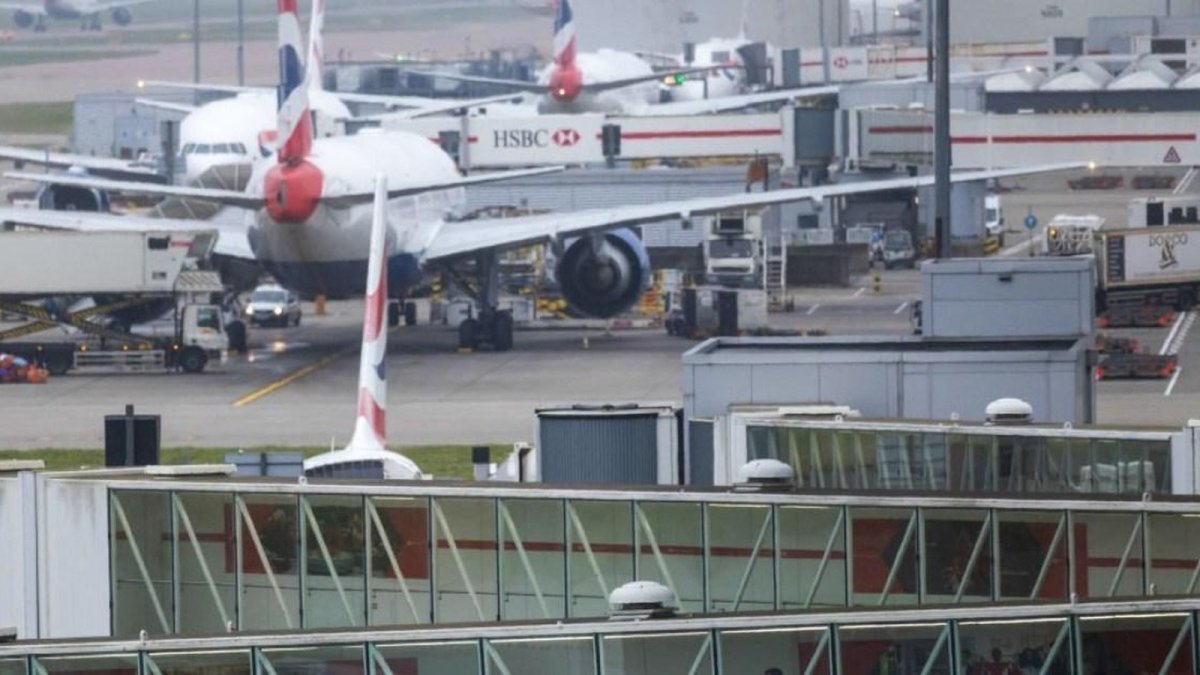
A grass fire near Heathrow's Southern Runway on 6 August closed one runway during the peak of the summer holiday travel season. London Fire Brigade was called at 17:37 and had the blaze, covering around one hectare, under control by 18:07; British Airways flights were delayed, cancelled and diverted until both runways returned to operation.
In North Wales, a major incident was declared over a wildfire at Conwy Mountain near Sychnant Pass, with residents evacuated as a precaution, while crews also fought fires on Halkyn Mountain in Flintshire and at Braichmelyn near Bethesda. Tintwistle Moor in Derbyshire burned for around a month — an area the size of a small town — before the major incident was stood down after 23 days, and Dovestone in Oldham remained in a prolonged containment phase. In Scotland, crews reported significant progress against a Cairngorms blaze that first broke out two weeks earlier. The pattern of disruption extends to urban edges too: a large grass fire in Romford and a vegetation fire near Stratford station that closed several London rail lines.
What This Means for the UK
For much of England and Wales, the week ahead means the return of a familiar strain on daily life: stifling nights, parched gardens, heightened pressure on water supplies and a countryside where a single spark can become a fast-moving emergency. The north-south divide will be stark — Scotland and Northern Ireland may see relief in the form of rain while southern and eastern England faces the most intense heat and the highest fire risk, with the north-east and parts of the north-west relatively less exposed but still far from safe while ground conditions remain dry.
Public services are braced. Fire and rescue services have already activated mutual-aid arrangements to manage prolonged operations such as Tintwistle and Dovestone, and the NFCC's warning about harvest machinery underscores how the heat reaches into the rural economy. For the NHS, the UKHSA alerts mean district nurses, care homes and GP practices in the seven alert regions will be watching for the classic warning signs of heat illness — headache, dizziness, nausea, weakness or heavy sweating — which can progress to confusion or dangerously high body temperature if left unchecked.
State of the UK Climate 2025 Report Confirms Accelerating Warming
The Met Office's State of the UK Climate 2025 report, published in the Royal Meteorological Society's International Journal of Climatology, confirmed 2025 as the warmest year on record in a series dating back to 1884 — the sixth time the record has been broken this century, with the last four years all ranking in the top five warmest. Warming has been running at roughly 0.25°C per decade since the 1980s, and the decade 2016-2025 was 1.33°C warmer than 1961-1990 and 0.51°C warmer than 1991-2020.
The report's central message is that the distribution of British weather is changing. The hottest days in parts of the South East are significantly warmer than several decades ago, while regions farther north are experiencing annual temperatures once associated with southern England. England and Wales received less than half their average spring rainfall in 2025, with some places receiving less than a third — dry springs that leave soil moisture depleted and vegetation vulnerable before the hottest part of summer. Temperatures at or above 34°C occurred in May, June and July 2026 for the first time, and 35°C or higher was recorded in all three months of the same year; 33.5°C was logged at Wisley in Surrey on 3 August, the twentieth day this year at 32°C or higher.
Mike Kendon, the Met Office climate information scientist who led the report, said: "2025 was the UK's warmest year on record... With warming at around 0.25°C per decade since the 1980s, it seems likely this record will be broken again in a matter of years." Professor Liz Bentley, Chief Executive of the Royal Meteorological Society, added: "The way we experience climate change most is through the weather extremes. Climate change has been described by scientists for many years but is now increasingly being felt by the UK population in their own homes and communities."
The Bottom Line
With no significant rain forecast and a fifth heatwave confirmed, the combination of extreme heat, established drought and elevated wildfire activity will continue to strain emergency services and public health resources across England and Wales in the weeks ahead. The immediate advice is straightforward: stay hydrated, avoid prolonged exposure to the sun during the hottest part of the day, and check on vulnerable friends, family and neighbours — while fire services stress that cigarettes must be extinguished completely, disposable barbecues kept off dry grass, heath and moorland, and any fire reported to 999 immediately. The longer-term question, as the Met Office's own scientists make plain, is whether a summer like this one remains the exception or becomes the new normal.
By Erica Thornton, Staff Writer
This article was produced with AI-assisted research and editorial support. Reporting is based on sources cited in the article.
What's Your Reaction?
 Like
0
Like
0
 Dislike
0
Dislike
0
 Love
0
Love
0
 Funny
0
Funny
0
 Wow
0
Wow
0
 Sad
0
Sad
0
 Angry
0
Angry
0

US Politics and Policy Correspondent at Global1.News. Based in Washington DC, covering American politics, policy, elections, and the courts. Knows how the system works and tells you what it actually means.














Comments (0)