
Dead Rat Found in Sealed Bikanervala Namkeen Packet in UP: Food Safety Probe Launched
A dead rat found inside a sealed packet of Bikanervala Navratna Mixture namkeen in Rajpur, Kanpur Dehat, has triggered a Uttar Pradesh Food Safety Department probe. Consumer Javed Khan bought the Rs 80 dalmoth packet for his children; a viral video forced regulators to issue a notice to the manufacturer and order an on-the-spot inspection. The case tests India's FSSAI enforcement as the snacks market heads toward Rs 1 lakh crore.
The discovery of a dead rat inside a sealed packet of Bikanervala Navratna Mixture in Kanpur Dehat, Uttar Pradesh, has triggered an official investigation and reignited a national debate about hygiene protocols in India’s rapidly expanding packaged snacks industry. The incident, which occurred on August 20, 2026, has prompted the Uttar Pradesh Food Safety Department to issue a formal notice to the manufacturer and dispatch an inspection team to the district, raising critical questions about the efficacy of quality-control checkpoints in a market projected to be worth over INR 1 lakh crore within a decade.
Dead Rodent in Sealed Bikanervala Packet Sparks UP Food Safety Crackdown and Consumer Alarm
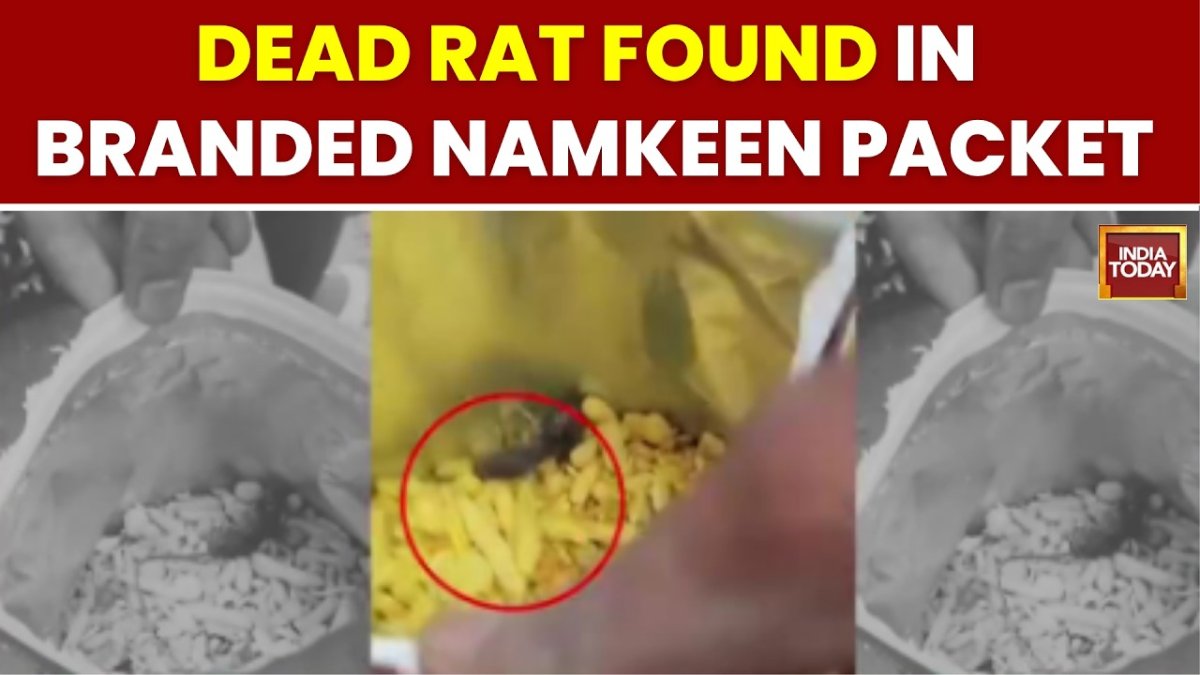
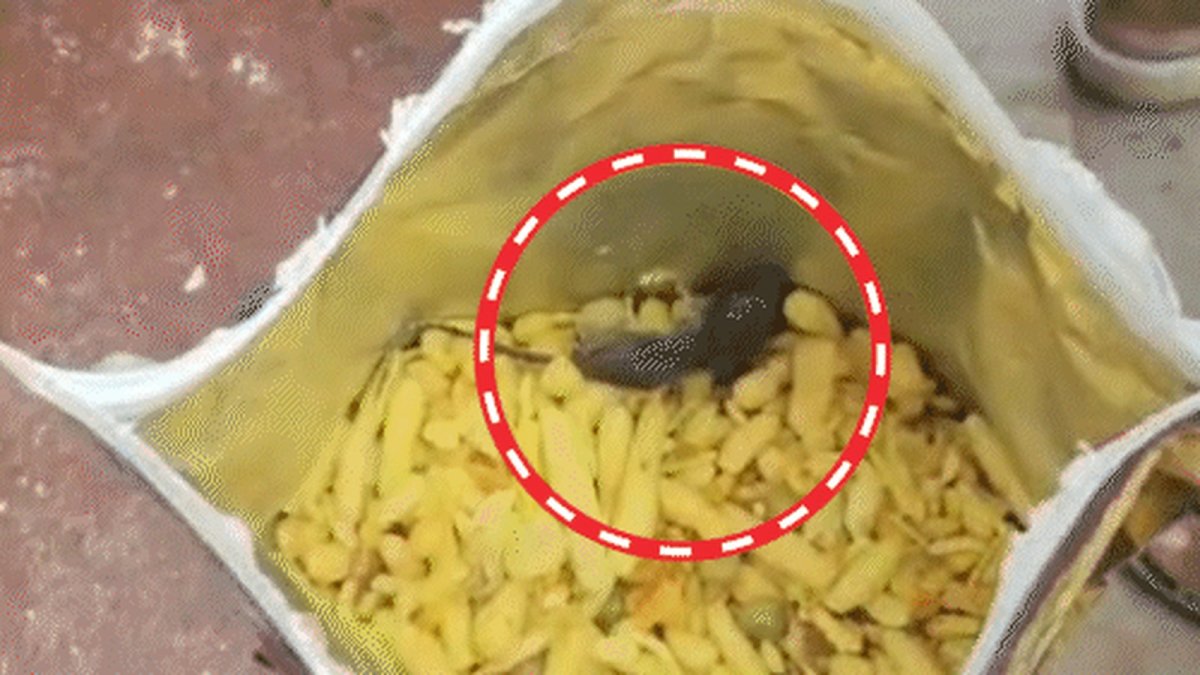
Kanpur Dehat, Uttar Pradesh – August 20, 2026 — A routine purchase of an Rs 80 dalmoth packet turned into a public health shock for Javed Khan, a resident of New Basti in Rajpur town, Kanpur Dehat district. Khan, who bought the Bikanervala Navratna Mixture for his children from a grocery store on Mughal Road, discovered a dead rat inside the sealed packet upon opening it at the shop. The subsequent video, which captured the rodent embedded within the namkeen, has gone viral on X (formerly Twitter), forcing regulatory bodies into immediate action and placing one of India’s most trusted sweet and namkeen brands under the scanner.
Regulatory Response: The UP Food Safety Department’s Immediate Action
The Uttar Pradesh Food Safety Department responded with unusual speed to the viral footage. Within hours of the complaint being logged, officials issued a formal notice to the manufacturer and ordered an on-the-spot inspection of the premises. A regional food safety inspection team has been deployed to Rajpur to examine the circumstances surrounding the contamination. According to department sources, officials are currently recording witness statements from Javed Khan and the shopkeeper, while simultaneously questioning company representatives about their production and packaging protocols.
The core question under investigation is a logistical and sanitary paradox: how a dead rat could be present inside a hermetically sealed packet without breaching the packaging material. Investigators are examining batch numbers, production dates, and the specific facility where the Navratna Mixture was processed. The inquiry aims to determine whether this was an isolated lapse or a systemic failure in the manufacturer’s hazard analysis and critical control points (HACCP) protocols, which are mandatory under the Food Safety and Standards Act, 2006.
What This Means for India: The FSSAI Framework and Legal Repercussions
This incident strikes at the heart of India’s food safety architecture. The Food Safety and Standards Authority of India (FSSAI), the statutory regulator established under the FSS Act, 2006, mandates that every food business operator hold a valid licence or registration under the FSS (Licensing and Registration of Food Businesses) Regulations, 2011. The presence of a foreign object—let alone a dead rodent—constitutes a clear violation of Section 2(1)(zj) of the Act, which defines "unsafe food" as articles that are injurious to health or unfit for human consumption.
For Indian consumers, the legal remedies are stringent but often underutilised. Under the FSS Act, 2006, selling substandard or unsafe food carries fines that can run up to Rs 5 lakh, with imprisonment applicable in serious cases. Furthermore, operating without a valid licence is a criminal offence under Section 63 of the Act. The question now is whether the Uttar Pradesh Food Safety Department will escalate this case to the adjudicating officer for criminal prosecution, or whether it will be settled through administrative fines. The precedent set here will signal to the industry how seriously regulators are treating contamination claims in the post-COVID era of heightened hygiene awareness.
Industry Context: The High-Stakes Economics of India’s Snacks Market
The timing of this contamination scandal could not be more sensitive for the packaged foods sector. India’s snacks market was valued at INR 50,590.37 crore in 2025 and is projected to reach INR 103,556.03 crore by 2034, growing at a compound annual growth rate (CAGR) of 8.28% between 2026 and 2034. This explosive growth is driven by urbanisation, changing dietary patterns, and the increasing penetration of organised retail in Tier-2 and Tier-3 cities like Rajpur.
However, this expansion brings with it immense pressure on manufacturing capacity. Bikanervala, one of India’s best-known namkeen and sweets brands with a substantial national retail and packaged-goods footprint, now faces a reputational crisis that could impact its market share in the competitive northern Indian snack belt. The company’s response to the investigation will be closely watched by industry analysts, as consumer trust is the single most volatile asset in the food processing sector. A single viral video has the power to undo years of brand equity built on the promise of traditional recipes and hygienic processing.
Regulatory Precedents: FSSAI’s Intensified Enforcement Drive
This case does not exist in a vacuum. The FSSAI has recently intensified its enforcement actions across the sector, signalling a shift from advisory to punitive regulation. In the months preceding this incident, the regulator issued formal notices to Bikanervala itself, alongside Marico Ltd and Param Dairy, over alleged misleading claims and labelling violations. More tellingly, FSSAI issued nine separate notices to Swiggy Instamart over consumer complaints regarding contaminated eggs, spoiled milk, and other unsafe products delivered through its quick-commerce platform.
This pattern of enforcement indicates that the regulator is moving beyond mere labelling checks and into the realm of physical product safety. The Kanpur Dehat case, however, represents a more visceral failure—one that involves biological contamination within a sealed package. Food safety experts argue that this points to a breakdown in the fumigation and pest-control measures that should be standard in any FSSAI-licensed facility. The presence of a rodent in a finished product suggests that either the raw material storage area is compromised, or the packaging line lacks adequate metal detection and X-ray inspection systems that are standard in larger FMCG units.
Consumer Protection and the Viral Amplification Effect
The role of social media in this case cannot be overstated. The video of the dead rat, shared widely on X, transformed a local grievance into a national news story within hours. The India Today YouTube channel picked up the story on August 20, 2026, under the headline 'Bikanervala Namkeen Shock: Dead Rat Found Inside Packet In UP', amplifying the reach to millions of viewers. This viral amplification places immense pressure on both the company and the regulator to act transparently and swiftly.
For consumers in Uttar Pradesh and across India, this incident serves as a grim reminder of the hidden risks in processed foods. While the FSSAI has established a consumer complaint portal and a toll-free helpline (1800-112-100), the onus of proof often falls on the consumer. In this case, Javed Khan’s decision to film the evidence at the point of opening the packet was crucial. Food safety advocates are now urging consumers to document such incidents meticulously, as video evidence is often the only tool that compels regulatory action in a system that is still grappling with enforcement capacity.
The Bottom Line
The Bikanervala contamination case in Kanpur Dehat is more than a single instance of poor quality control; it is a stress test for India’s food safety ecosystem. As the snacks market hurtles towards the INR 1 lakh crore milestone, the industry must reconcile rapid scaling with rigorous safety standards. The Uttar Pradesh Food Safety Department’s investigation will determine whether this was a criminal lapse or a systemic failure, but the immediate damage to consumer confidence is already done. For Indian families, the sealed packet is no longer a guarantee of safety—it is a promise that must be earned through transparent audits, stricter penalties, and a regulatory framework that prioritises public health over commercial expediency. The verdict in this case will resonate far beyond the dusty lanes of Rajpur, setting the tone for how India regulates the food that fuels its fastest-growing consumer market.
— By Dr. Raj Patel, Staff Writer
This article was produced with AI-assisted research and editorial support. Reporting is based on sources cited in the article.
What's Your Reaction?
 Like
0
Like
0
 Dislike
0
Dislike
0
 Love
0
Love
0
 Funny
0
Funny
0
 Wow
0
Wow
0
 Sad
0
Sad
0
 Angry
0
Angry
0

India/South Asia Correspondent at Global1.News. Analytical voice with a background in science and health journalism. Based in New Delhi, covering Indian politics, education, healthcare, technology, and policy. Breaks down complex data into clear, actionable reporting.















Comments (0)