
Brazil's President Lula hails oil discovery near Amazon river
Lula hails Petrobras oil discovery near the Amazon river mouth as a passport to Brazil's future, igniting an election-year clash between energy development and environmental protection in the Equatorial Margin.
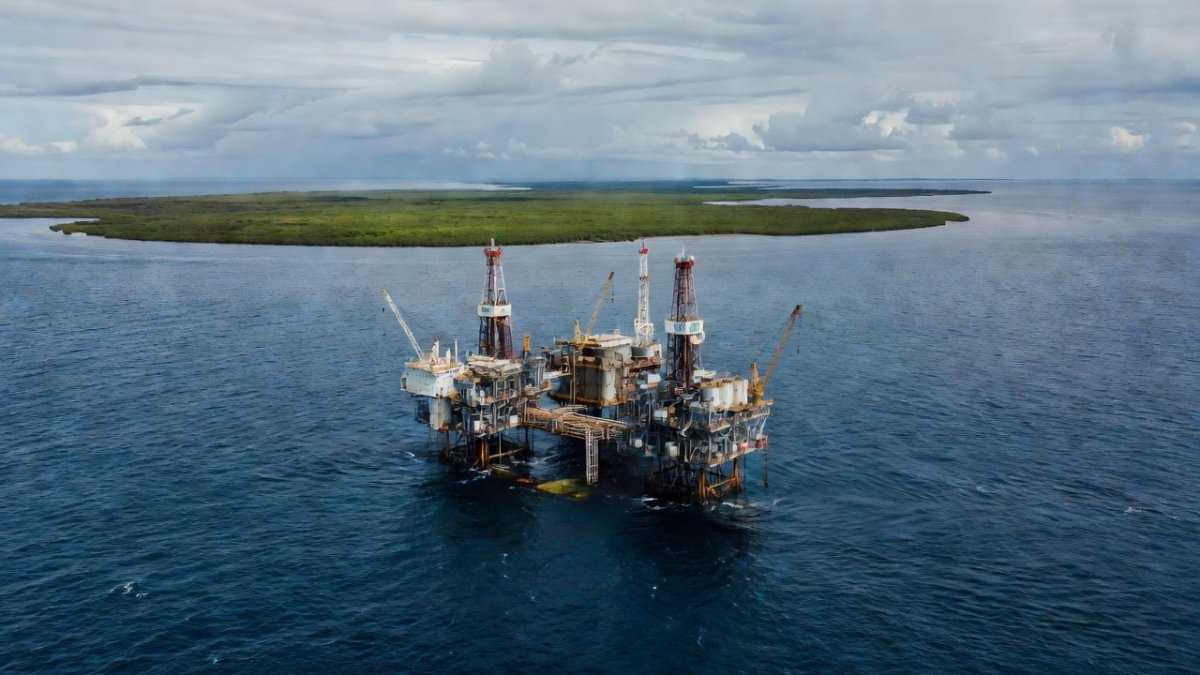
Rio de Janeiro, Brazil — The announcement has landed like a political earthquake in a country still grappling with the legacy of COP30, the UN climate conference Brazil hosted last November. Lula, who has positioned himself globally as a champion of rainforest protection, now faces the delicate task of reconciling that image with his government’s aggressive push into fossil fuel exploration. The president’s remarks on Monday were unapologetic, framing the decision to drill as an act of national self-determination. “This means national sovereignty,” he said. “Any country which has oil of this quality won’t allow anyone to butt in.” The statement was a direct rebuke to European leaders and conservation groups who had urged Brazil to halt the drilling, particularly given that Lula had authorized the exploratory work just weeks before the COP30 summit Brazil hosted last November.
A Discovery Shrouded in Uncertainty
Petrobras began exploratory deep-water drilling in the Brazilian Equatorial Margin in October 2025, a region that stretches along the country’s northern coast and has long been considered a promising frontier for oil exploration. The company’s chief executive, Magda Chambriard, said the discovery confirmed Petrobras’s “optimism” about the area’s potential, adding that the company remained committed to “ensuring the country’s energy security.” However, the size of the field is not yet clear, and experts caution that it remains unknown whether extracting oil from such extreme depths would be commercially viable. The drilling site, located in waters nearly three kilometers deep, presents significant technical and financial challenges that could take years to overcome.The Brazilian Equatorial Margin is considered one of the world’s most promising offshore oil frontiers, but it is also one of the most environmentally sensitive. The region is home to extensive coral reef systems, mangrove forests, and coastal wetlands that support a vast array of marine life, including several endangered species. Conservationists have warned that any oil spill could have devastating consequences, with ocean currents potentially carrying crude oil to fragile coastal ecosystems teeming with wildlife. The proximity of the drilling site to the Amazon River mouth adds another layer of risk, as the freshwater discharge creates a unique and highly productive marine environment that scientists say is irreplaceable.Lula’s Balancing Act: Climate Rhetoric vs. Economic Reality
Lula has consistently argued that oil revenues are essential to fund Brazil’s transition to renewable energy, a position he reiterated on Monday. “I’m not denying my commitment to the fight for a day when we no longer need fossil fuels,” he insisted, “because Brazil will continue to be the king of biofuel innovation and will remain a major player in renewable energy.” This framing allows the president to position himself as both a climate leader and a pragmatic developer, arguing that Brazil cannot afford to leave its natural resources untapped while the world still depends on oil. It is a delicate rhetorical dance that has drawn criticism from both sides: environmentalists see it as a betrayal of Brazil’s climate commitments, while some industry advocates argue the government is moving too slowly to capitalize on the discovery.The tension was palpable during the COP30 conference, where Brazil sought to present itself as a global leader in climate action. Lula’s decision to authorize exploratory drilling just weeks before the summit was seen by many as a direct affront to the conference’s goals, and it sparked outrage among international delegates and environmental organizations. On Monday, Lula acknowledged the criticism, singling out European opposition in particular. “Many people didn’t want me to announce that Petrobras had won the licence because they said that the Europeans would be annoyed,” he said. “I took the decision to announce that people wanted to do exploratory drilling there before COP because the interests of our country and our company were at stake.”Environmentalists Sound the Alarm
Conservation groups have been unequivocal in their opposition to the drilling, warning that the Brazilian Equatorial Margin is too ecologically valuable to risk. The area’s biodiversity is extraordinary, with scientists documenting hundreds of species of fish, corals, and marine mammals that exist nowhere else on Earth. The reefs near the drilling site are particularly vulnerable, and researchers have noted that the region’s ocean currents could spread any spilled oil across a vast area, potentially reaching coastal wetlands that serve as critical habitats for migratory birds, manatees, and river dolphins. The potential for long-term ecological damage, they argue, far outweighs the economic benefits of oil extraction.The environmental movement’s concerns are not merely hypothetical. Brazil has experienced significant oil spills in the past, including a 2019 spill that affected thousands of kilometers of coastline in the northeast, and the country’s offshore drilling infrastructure has faced repeated safety criticisms. While Petrobras has emphasized its commitment to safety and environmental standards, the company’s track record in deep-water operations has not always been flawless. The sheer depth of the current drilling operation, combined with the remote location and challenging ocean conditions, raises questions about the ability to respond effectively to any accident.Local Hopes and Economic Pressures
While environmentalists decry the drilling, the prospect of oil wealth has already transformed the nearest town to the discovery site. In Oiapoque, a small municipality in Amapá state, the hope of jobs and economic opportunities has led to an influx of people, according to local housing authorities. The town, which sits near the border with French Guiana, has long been one of Brazil’s most isolated and impoverished communities, and residents see the oil industry as a potential lifeline. The influx has strained local infrastructure, with housing shortages and increased demand for public services, but many residents remain optimistic about the future.The economic dimension is crucial to understanding Lula’s political calculus. Brazil’s economy has struggled in recent years, and the president is under pressure to deliver tangible improvements in living standards, particularly in the country’s poorer northern regions. Oil revenues could provide a significant boost to government coffers, funding social programs and infrastructure projects that could help Lula secure re-election in October. The president’s appeal to national sovereignty resonates strongly in a country that has long harbored suspicions about foreign interference in its affairs, particularly regarding the Amazon. By framing the drilling as a matter of Brazilian independence, Lula is tapping into a deep well of nationalist sentiment that transcends partisan lines.An Election-Year Gamble
With less than two months to go before the presidential election, Lula is walking a political tightrope. He must attract voters in remote regions like Amapá who are desperate for economic development, while simultaneously reassuring urban, environmentally conscious voters that he remains committed to climate action. The oil discovery provides a concrete example of the trade-offs inherent in this balancing act, and it is likely to become a central issue in the campaign. Lula’s opponents have already seized on the controversy, with some accusing him of hypocrisy for championing climate causes on the international stage while expanding fossil fuel exploration at home.The president’s response has been to double down on his sovereignty argument, dismissing critics as out of touch with Brazil’s needs. His reference to European opposition on Monday was clearly calculated to appeal to nationalist sentiment, framing the drilling as a matter of Brazilian pride and independence. However, this approach carries risks. Brazil’s international reputation as a climate leader is a significant diplomatic asset, and alienating European partners could have economic consequences, particularly in terms of trade agreements and foreign investment. The challenge for Lula is to maintain Brazil’s climate credibility while pursuing the oil development that he believes is essential for the country’s future.The Road Ahead: Uncertainty and Opportunity
The discovery near the Amazon river mouth is a reminder of the complex choices facing Brazil as it navigates its energy future. The country is blessed with abundant renewable resources, including hydroelectric power, wind, and solar potential, and it has made significant strides in biofuel production. Yet it also sits on vast reserves of oil and gas, and the temptation to exploit those resources is powerful, particularly in a time of economic uncertainty. Lula’s vision of using oil revenues to fund the transition to clean energy is appealing in theory, but it depends on a level of discipline and foresight that has often been lacking in Brazilian governance.For now, the size and commercial viability of the discovery remain unknown, and it could be years before any oil is actually extracted. The exploratory drilling is just the first step in a long and uncertain process that will require significant investment and face numerous regulatory hurdles. Environmental impact assessments, licensing procedures, and potential legal challenges from conservation groups could all delay or even halt the project. The coming months will be critical, as the election campaign intensifies and the debate over Brazil’s energy future takes center stage. What is clear is that the discovery has already had a profound impact on the national conversation, forcing Brazilians to confront the difficult trade-offs between economic development and environmental protection in one of the world’s most ecologically significant regions.This article was produced with AI-assisted research and editorial support. Sources: BBC News.
What's Your Reaction?
 Like
0
Like
0
 Dislike
0
Dislike
0
 Love
0
Love
0
 Funny
0
Funny
0
 Wow
0
Wow
0
 Sad
0
Sad
0
 Angry
0
Angry
0

Latin America Correspondent at Global1.News. Based in Mexico City, covering politics, economics, energy, and culture across the region. Brings an on-the-ground perspective to stories spanning from the Rio Grande to Patagonia.













Comments (0)