
Southern States Demand NEET Exemption, Delimitation Guarantee at Zonal Council
The 31st Southern Zonal Council meeting in Mahabalipuram on Thursday exposed deepening federal fault lines as Tamil Nadu Chief Minister Vijay, in his maiden appearance, demanded a legislative guarantee on parliamentary representation and a complete NEET exemption—challenges that combine a decade-lon...
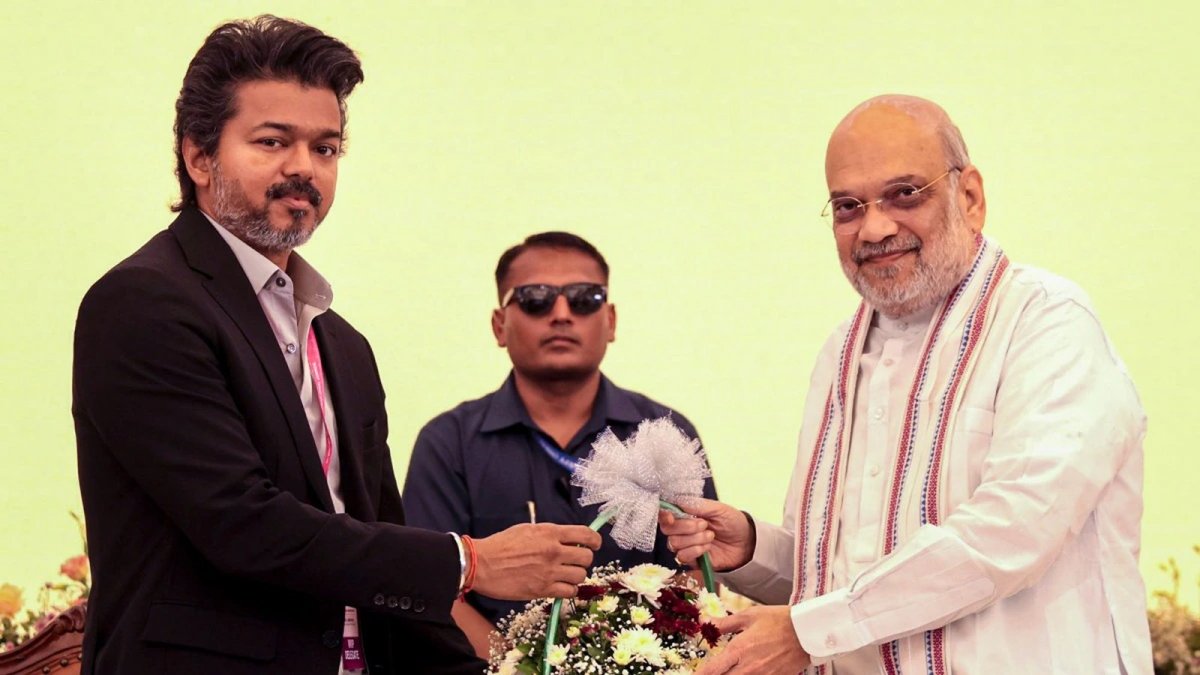
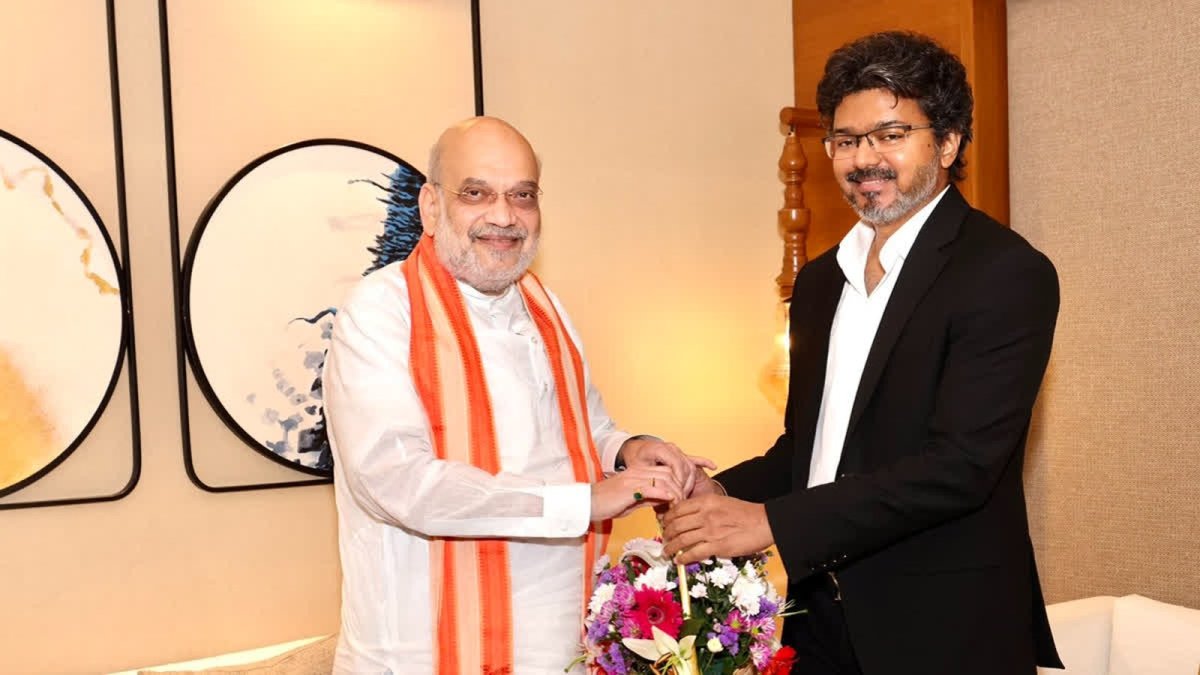
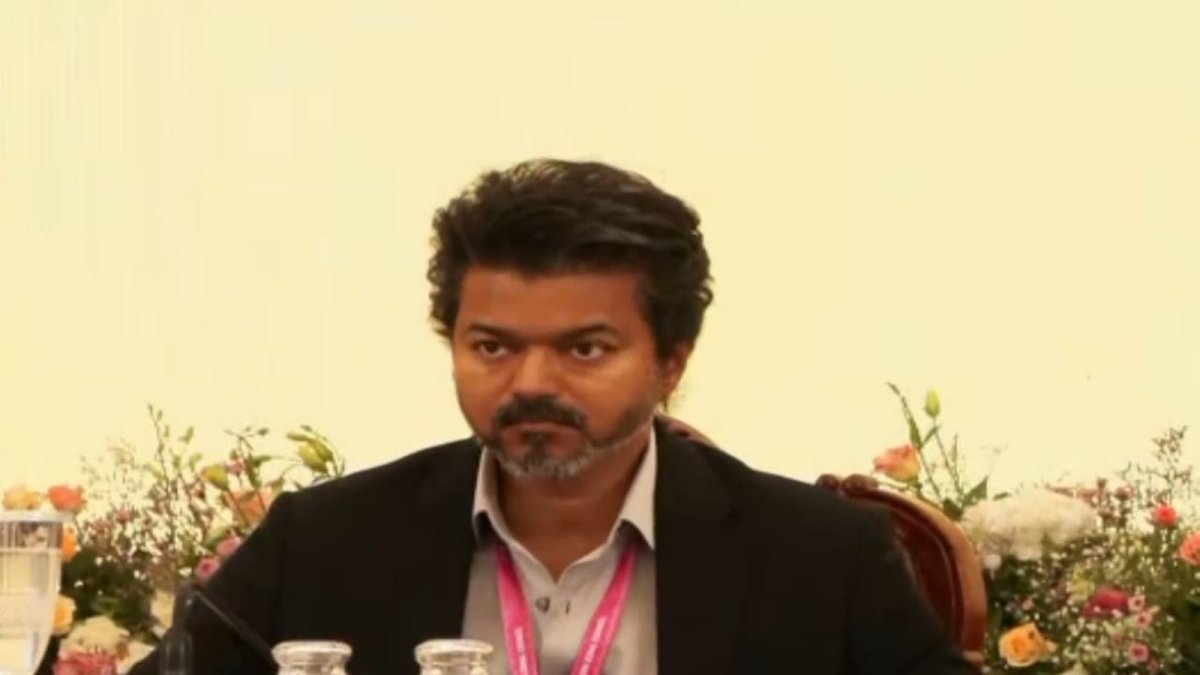
The 31st Southern Zonal Council meeting in Mahabalipuram on Thursday exposed deepening federal fault lines as Tamil Nadu Chief Minister Vijay, in his maiden appearance, demanded a legislative guarantee on parliamentary representation and a complete NEET exemption—challenges that combine a decade-long educational grievance with demographic anxieties shared across the southern region. The meeting, chaired by Union Home Minister Amit Shah, saw the newly-sworn-in Chief Minister position his government as the vanguard of southern interests, moving beyond traditional party lines to a more cohesive, state-centric assertion of rights.
Southern States Demand NEET Exemption, Delimitation Guarantee at Zonal Council
Mahabalipuram, Tamil Nadu – August 20, 2026 — The coastal town of Mahabalipuram, situated approximately 40-50 km south of Chennai, became the stage for a high-stakes political dialogue on Thursday as Tamil Nadu Chief Minister Vijay attended his first Southern Zonal Council (SZC) meeting, with the agenda dominated by two explosive issues: the future of medical admissions in the state and the impending threat of a population-based delimitation of parliamentary constituencies.
The Southern Zonal Council Setting and a New Political Player
The Southern Zonal Council, one of five such bodies established under Sections 15 to 22 of the States Reorganisation Act, 1956, convened its 31st meeting with a full house. The council comprises Andhra Pradesh, Karnataka, Kerala, Tamil Nadu, and Telangana, alongside the Union Territories of Puducherry, Andaman and Nicobar Islands, and Lakshadweep. While Amit Shah serves as the Chairman, the Tamil Nadu Chief Minister holds the position of Vice-Chairman, a role that gave Vijay a prominent platform for his inaugural address.
Karnataka Chief Minister D.K. Shivakumar and Telangana Chief Minister Revanth Reddy were also in attendance, with Shivakumar raising critical issues pertaining to fiscal devolution and water cooperation. For Vijay, who assumed office in May 2026, this meeting was not merely a procedural formality but a strategic opportunity to position his government at the head of a broader southern push for a larger say in national policy.
The NEET Exemption Demand: A Decade-Long Fight Intensifies
The core of Vijay's argument centered on a complete exemption for Tamil Nadu from the National Eligibility cum Entrance Test (NEET). He urged the Centre to permit the state to fill seats for MBBS, BDS, and AYUSH courses based solely on Class 12 marks, arguing that the national test structurally disadvantages rural students and those from financially weaker backgrounds. "Tamil Nadu remains firmly committed to protecting the interests of its students and ensuring equitable access to medical education," Vijay stated, framing the demand as a defense of the state's long-standing model of school-based learning.
This demand is not new but represents the culmination of a nearly decade-long confrontation. Successive Tamil Nadu governments, including the previous DMK administration, have consistently opposed NEET. The Tamil Nadu Legislative Assembly passed two bills in 2017, unanimously, seeking exemption from NEET-based admissions for both undergraduate and postgraduate medical courses. However, the President of India withheld assent to these bills. The legal battle reached a new peak on 15 November 2025, when the Tamil Nadu government moved the Supreme Court challenging the President's decision to withhold assent to the Tamil Nadu Admission to Undergraduate Medical Degree Courses Bill, 2021, calling the refusal arbitrary, unconstitutional, and a violation of federal principles. The refusal, notably, was communicated through the Union Home Ministry, a detail that underscores the central government's direct involvement in the matter.
The constitutional friction here is not incidental; it is structural. Education sits on the Concurrent List, which permits both Parliament and state legislatures to enact laws, but central law prevails in case of repugnancy. This is precisely the trap Tamil Nadu finds itself in. The state's argument rests on a distinct pedagogical model: admitting students based on their Class 12 board examination scores, a system that rewards sustained schooling rather than a single high-stakes test.
The resonance of this fight extends well beyond Tamil Nadu's borders. NEET was made the sole gateway for medical admissions nationwide from the 2016-17 academic year, following a Supreme Court order that sought to standardise admissions and curb capitation fees. Yet the empirical reality has been uneven. The exam has disproportionately favoured candidates from urban centres with access to expensive coaching academies, while rural students—who often cannot afford the relocation or tuition fees—have seen their admission rates stagnate. The coaching economy, now a multi-crore industry, has effectively outsourced medical entrance preparation from schools to private institutes. Tamil Nadu's insistence on a school-based model is therefore not a parochial demand; it is a direct challenge to a national policy that many education economists argue has deepened, rather than narrowed, access inequities across state lines.
The 2026 NEET-UG Paper Leak: A Catalyst for Change
The political urgency of Vijay's demand is amplified by the catastrophic events surrounding the NEET-UG 2026 examination. Held on 5 May across approximately 4,750 centres with around 24 lakh candidates appearing, the exam was compromised by a paper leak that triggered weeks of student-led protests at Jantar Mantar in Delhi. The scale of the public outrage was such that it forced Union Education Minister Dharmendra Pradhan to resign on 25 July 2026. The protesters, largely students from aspirational backgrounds, demanded not just a re-test but wider reforms in the conduct of public examinations.
The protests were not merely about a single leak; they crystallised years of growing distrust in the National Testing Agency, the body responsible for conducting NEET and other major entrance examinations. The NTA has faced repeated allegations of paper leaks, centre-allotment irregularities, and result delays across multiple exams, including JEE and UGC-NET, in recent years. Each incident has eroded confidence in the centralised, single-window testing model. The policy question now is whether India should continue relying on one high-stakes national examination for medical admissions, or whether a decentralised model—where states conduct their own tests or rely on board scores—would be more resilient and equitable. The trade-off is clear: centralisation offers standardisation and a common merit list, but it also creates a single point of failure. A leak in one city can invalidate an entire national cohort. Decentralisation, as Tamil Nadu has long argued, spreads risk and allows states to tailor admissions to their educational contexts, but it complicates inter-state mobility and the comparability of standards.
This context provides a powerful backdrop for Tamil Nadu's argument. The leak has exposed the vulnerabilities of a high-stakes, single-window examination system that the state has long criticized. Vijay's assertion that NEET undermines Tamil Nadu's equitable access model gains traction when the integrity of the national test itself is in question. The TVK government, which has vociferously opposed NEET since coming to power, has also previously demanded that education be transferred back from the Concurrent List to the State List, a constitutional change that would grant states complete control over medical admissions based on higher secondary results.
The Delimitation Demand: Protecting Southern Representation
Beyond medical education, Vijay raised a "genuine" and "shared concern" among southern states regarding the impending delimitation of parliamentary constituencies. He urged the Centre to provide a legislative assurance that no state would suffer a reduction in its percentage share of parliamentary representation because of its success in stabilising population. "The southern states have been at the forefront of population stabilisation, human development, and economic growth," he said, adding that "public policy must not inadvertently penalise states for fulfilling national objectives."
The delimitation anxiety gripping southern states is rooted in a constitutional mechanism that has been frozen for decades. The 42nd Amendment in 1976 froze the allocation of Lok Sabha seats based on the 1971 Census, a measure intended to encourage population control without penalising states that achieved it. The 84th Amendment in 2001 extended this freeze until the first census conducted after 2026, which is now imminent. The logic of the freeze was simple: states that successfully reduced population growth should not lose parliamentary representation as a reward for their demographic discipline. Tamil Nadu, along with Kerala and other southern states, achieved fertility rates below replacement level decades ago. Their population stabilisation is a policy success story, yet a reallocation based on the 2011 Census would shift seats towards the northern Hindi-belt states, which continue to grow at a faster pace.
Chief Minister Vijay's demand for a legislative assurance on the percentage share of southern states is a direct response to this looming arithmetic. The concern is not merely about numbers in Parliament; it is about the distribution of financial resources and policy influence. A reduction in seat share would weaken the southern bloc's ability to negotiate on fiscal devolution, infrastructure spending, and legislative priorities. The linkage to the 33% women's reservation is also deliberate. That constitutional amendment, which reserves one-third of all seats for women, will be implemented alongside delimitation. Southern states fear that a combined exercise could dilute their representation twice over—once through population-based reallocation and again through the new reservation matrix. The argument that population stabilisation should not be penalised is not just a political slogan; it is a demographic reality that the constitutional freeze was specifically designed to protect. The coming delimitation exercise will test whether that protection holds.
Cauvery, Fiscal Reforms, and the Southern Economy
The meeting also addressed the perennial Cauvery river water dispute, which remains a flashpoint between Tamil Nadu and Karnataka. The Cauvery Water Disputes Tribunal was constituted in 1990 to adjudicate the sharing of waters between Tamil Nadu, Karnataka, Kerala, and Puducherry. Its final award, delivered in 2007, allocated a specific annual share to each state, but the matter did not end there. In February 2018, the Supreme Court modified the tribunal's award, reducing Tamil Nadu's share and allocating additional water to Karnataka, a decision that continues to generate political and legal friction. The dispute has been further complicated by Karnataka's Mekedatu project, a proposed reservoir on the Cauvery that Tamil Nadu argues would impound water that rightfully flows downstream. The project remains mired in litigation and political negotiation, with no clear resolution in sight.
The economic stakes are substantial. The southern states—Tamil Nadu, Karnataka, Kerala, Andhra Pradesh, and Telangana—collectively contribute a disproportionately large share of India's GDP, estimated at roughly 30% or more, while receiving a smaller share of central tax devolution relative to their output. This fiscal asymmetry was a recurring grievance at the meeting, with Karnataka CM D.K. Shivakumar specifically raising the issue of fiscal devolution, a critical concern for states that generate significant revenue but receive a smaller share of central taxes. Water disputes like the Cauvery are not merely environmental issues; they are economic ones. Agriculture in the Cauvery delta supports millions of livelihoods, and any shortfall in water allocation directly impacts food production, rural incomes, and the regional economy. The broader pattern of interstate river-water friction in southern India—including the Krishna and Godavari disputes—reflects a systemic challenge: a federal structure that lacks a robust, depoliticised mechanism for resolving water-sharing conflicts.
The Broader Agenda: Drug Abuse Regulation, Blue Economy, and Coastal Security
The council also deliberated on a spectrum of interstate issues, including greater cooperation against interstate drug abuse and the urgent need for regulation of online drug sales, a growing public health concern in the digital age. The agenda included discussions on the maritime economy, or 'blue economy', and coastal security, reflecting the strategic importance of the long southern coastline. These issues, while less contentious than NEET or delimitation, highlight the functional role of the Zonal Council in coordinating policy across state lines. Vijay reaffirmed Tamil Nadu's commitment to working with the Central government and other southern states towards a 'Developed India', but the underlying tone was one of caution and a demand for equitable treatment.
What This Means for India: Federalism, Equity, and the Road Ahead
Thursday's meeting at Mahabalipuram was more than a routine administrative review; it was a barometer of Indian federalism. The convergence of the NEET exemption demand with the delimitation anxiety signals a new phase of southern assertiveness. For Indian students, particularly in Tamil Nadu, the outcome of this meeting could determine whether their medical admissions are based on state-board performance or a national test that has proven susceptible to leaks. For the nation, the delimitation issue poses a fundamental question: can a federal democracy penalize states for achieving the national goal of population stabilisation?
The resignation of Dharmendra Pradhan on 25 July 2026 has already created a policy vacuum in the education ministry, and the Supreme Court petition filed on 15 November 2025 regarding the withheld assent remains pending. The ball is now in the Centre's court. If the government provides the legislative assurance sought by the southern states, it could pave the way for a more cooperative federal structure. If not, the 'shared concern' articulated by Vijay could evolve into a more organized political movement, reshaping the electoral landscape of the South ahead of the next general elections. The data is clear: the South contributes disproportionately to India's GDP, yet fears a proportionate loss of political power. The resolution of this paradox will define the next decade of Indian politics.
This article was produced with AI-assisted research and editorial support. Sources: NDTV, India Today, PTI, Moneycontrol, Asianet Newsable, ETV Bharat.
— By Dr. Raj Patel, Staff WriterWhat's Your Reaction?
 Like
0
Like
0
 Dislike
0
Dislike
0
 Love
0
Love
0
 Funny
0
Funny
0
 Wow
0
Wow
0
 Sad
0
Sad
0
 Angry
0
Angry
0
India/South Asia Correspondent at Global1.News. Analytical voice with a background in science and health journalism. Based in New Delhi, covering Indian politics, education, healthcare, technology, and policy. Breaks down complex data into clear, actionable reporting.













Comments (0)