
Cuba Marks Fidel's Centenary Amid Its Deepest Crisis in Decades
As the sun rose over Havana on Thursday, August 13, 2026, the island nation of Cuba began a week of solemn remembrance for the man who led its revolution, Fidel Castro, on what would have been his 100th birthday. But this is no ordinary anniversary.
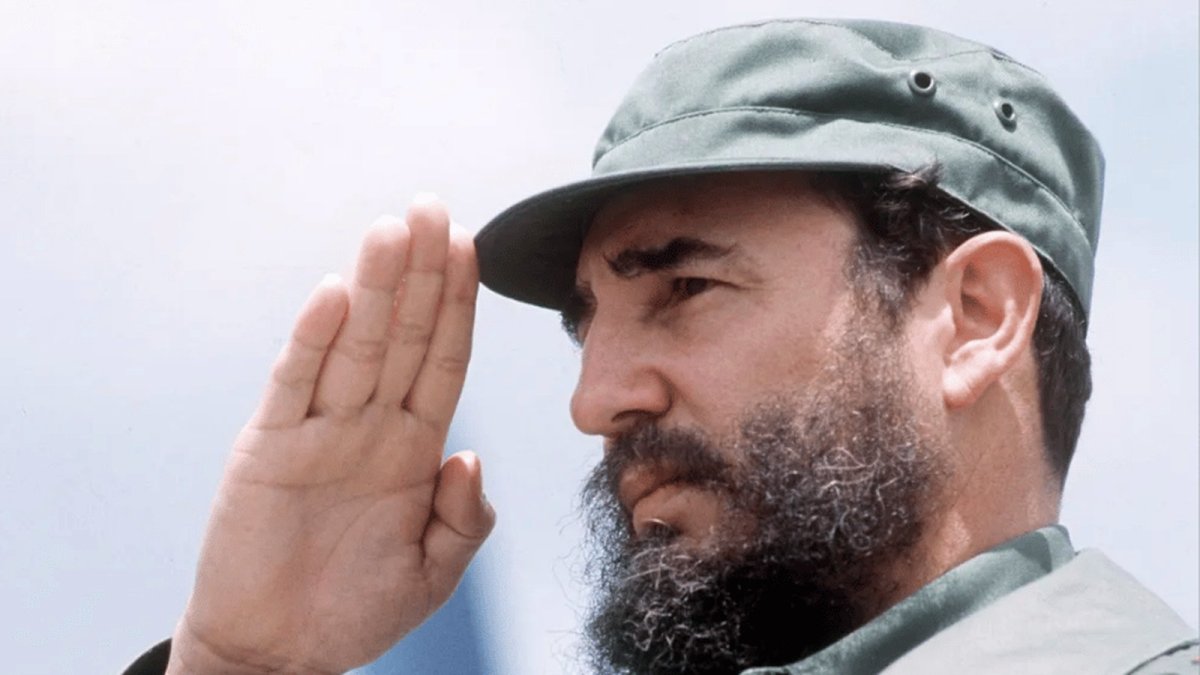
As the sun rose over Havana on Thursday, August 13, 2026, the island nation of Cuba began a week of solemn remembrance for the man who led its revolution, Fidel Castro, on what would have been his 100th birthday. But this is no ordinary anniversary. The celebrations, steeped in revolutionary nostalgia and the famous cry of "Socialismo o Muerte" — Socialism or Death — are unfolding against a backdrop of crippling fuel shortages, nationwide blackouts, and an exodus of citizens that threatens to redefine the country's future.
For us in the Caribbean, the images coming out of Cuba are both familiar and deeply unsettling. We know what it means to feel the squeeze of global economics, to watch the cost of living climb while services falter. But the scale of what Cuba is enduring in 2026 is something else entirely. According to reporting from Reuters and the Associated Press, the country is running on empty, quite literally, as it marks this historic centenary. The grand commemorative events are taking place, but the engines of daily life have largely stalled.
A Centenary Commemorated Amid Scarcity
Cuban state media has officially designated 2026 as the "Year of the Centenary of Commander in Chief Fidel Castro Ruz," with a full programme of events planned across all 15 provinces and the special municipality of Isla de la Juventud. The centrepiece of the commemoration has been the First International Colloquium "Fidel: Legacy and Future," which ran from August 10 to 13 at Havana's Convention Palace. Reports indicate that more than 1,500 delegates from 63 countries attended the gathering, a significant show of international solidarity for the revolutionary government.
According to CiberCuba, more than 1,000 foreigners travelled specifically for the centenary celebrations, a modest number compared to the island's pre-pandemic tourism figures, but a meaningful gesture of loyalty nonetheless. The atmosphere, however, is a stark contrast to the grand revolutionary parades of decades past. The hotels are quieter, the streets less crowded with tourists, and the ever-present hum of generators is punctuated by the silence of stalled traffic. The colloquium itself, focused on Fidel's legacy, is being held in a city that is struggling to keep its lights on, a poignant irony that has not been lost on observers.
The commemorations are a deliberate act of political memory, an attempt to anchor the revolution's legitimacy in the figure of its maximum leader. Yet, the reality on the ground, as described by international journalists, is one of a state trying to honour its past while being suffocated by its present. The question hanging over the festivities is not whether Fidel's legacy will endure, but whether the system he built can survive the current crisis.
The Fuel Blockade and the Mechanics of Collapse
The immediate cause of Cuba's current misery is a severe shortage of petroleum. Since early 2026, tightened United States oil sanctions, which Cuban officials describe as a fuel blockade, have severely restricted the island's ability to import crude and refined products. As an island nation, Cuba is almost entirely dependent on foreign fuel to power its electricity grid, its transport system, and its economy. Historically, it has relied on shipments from Venezuela and Mexico, but those flows have become increasingly unreliable and are now subject to aggressive US enforcement.
The situation reached a critical point on May 13, 2026, when Energy and Mines Minister Vicente de la O Levy publicly acknowledged that the country had run out of diesel and fuel oil used for electricity generation. This admission, reported by the Associated Press, was a watershed moment. It confirmed what ordinary Cubans had been experiencing for months: the lights were going out, and there was no clear timeline for their return.
The consequences have been cascading. Nationwide blackouts have become a nightly occurrence in many provinces. Fuel rationing is in place, with motorists facing weeks-long queues for as little as 20 litres of gasoline, distributed through a failing "Ticket" app rationing system that frequently crashes under the weight of demand. Universities have been forced to close their doors, and the tourism sector, once a vital source of hard currency, has collapsed as some international airlines have suspended flights to the island. The crisis was further compounded in March 2026 by a fire at Havana's Nico Lopez refinery, which knocked out a key piece of the island's limited domestic processing capacity.
Resilience and the Return of the Ciclobús
In the face of such adversity, Cubans are displaying the resilience that has defined their history. One of the most striking symbols of this adaptation is the revival of the Ciclobús, an underwater bus that travels through the tunnel beneath Havana's harbour. As the Associated Press reported in April 2026, this service was originally born in the 1990s during the "Special Period," the devastating economic crisis that followed the collapse of the Soviet Union. Back then, Fidel Castro himself distributed Chinese-made bicycles to the population to cope with the lack of fuel.
Now, the Ciclobús has made a comeback. With petrol nearly impossible to obtain, commuters are once again packing into these buses, which run on electricity and offer a reliable, if crowded, way to cross the bay. It is a powerful image: a solution from the era of "Socialismo o Muerte" being resurrected to keep the city moving in 2026. It speaks to a certain ingenuity, but also to a profound regression. A country that once sent doctors to the world and boasted of its scientific achievements is now struggling to provide basic mobility for its citizens.
Officials have acknowledged that reserves are diminishing rapidly. In a desperate bid to keep the economy afloat, Cuba has been seeking alternative fuel sources from Russia, China, and Iran. Foreign Minister Bruno Rodríguez has condemned what he called United States hegemony and reiterated Cuba's right to trade with any nation willing to supply fuel. This diplomatic push, however, has yet to yield a tangible solution to the immediate shortage. The tankers that do arrive are few and far between, and the fuel they carry is barely enough to keep the system from total collapse.
A Caribbean Lens: Energy, Migration, and Solidarity
For the English-speaking Caribbean, the crisis in Cuba resonates on multiple levels. We are all too familiar with the vulnerability of small island states to external shocks, particularly when it comes to energy. The contrast with Trinidad and Tobago, a regional energy powerhouse with its own natural gas and oil resources, is stark. While we in T&T grumble about the price at the pump, we rarely face the prospect of the pumps simply running dry. Cuba's predicament serves as a sobering reminder of what energy dependence can mean when geopolitical winds shift.
The human cost is perhaps the most significant. Emigration from Cuba has surged, according to reports from Rio Times, as the crisis shapes daily life and erodes hope for the future. This is not just a Cuban story; it is a Caribbean story. The diaspora is growing, with Cubans joining the ranks of other Caribbean nationals seeking opportunities in the United States, Spain, and beyond. This migration pressure has implications for the entire region, from border security to the remittance flows that sustain many island economies. We in the Caribbean know the pain of watching our brightest and most determined citizens leave in search of a better life.
There is also a deep historical resonance. The slogan "Socialismo o Muerte" is a relic of the Cold War, but it echoes the language of survival that many Caribbean nations have used in their own struggles. We know what it means to live under the shadow of embargoes and economic hardship. The region has long expressed solidarity with Cuba, and that sentiment remains strong, even as the practical realities of the crisis test that bond. The question for CARICOM is how to support a neighbour in need without being dragged into a geopolitical confrontation that is not of our making.
Looking Ahead: A Region Watching Closely
As the centenary events conclude, the world's attention will inevitably shift away from the speeches and the wreath-layings, and back to the grim arithmetic of survival. The Cuban government is banking on the symbolism of Fidel's legacy to rally its base, but symbolism does not generate electricity or put fuel in tanks. The coming months will be critical. Will Russia or China step in with meaningful shipments? Will the US sanctions be relaxed in any way? Or will Cuba be forced into an even deeper austerity, one that could trigger a larger wave of migration?
For the Caribbean, these are not abstract questions. The stability of our region is intertwined with the stability of Cuba. We share a sea, a history, and a set of economic challenges. The sight of Havana in darkness is a warning to us all about the fragility of our own infrastructure and the importance of regional cooperation. The energy security of the Caribbean is a collective concern, and Cuba's crisis underscores the urgent need for investment in renewable energy and regional integration.
As we mark this historic centenary, we honour the memory of a man who changed the course of his nation. But we also look forward, hoping that the Cuban people, who have endured so much, can find a path to a more stable and prosperous future. The slogan may be "Socialism or Death," but for the ordinary families in Havana and Santiago, the real struggle is for a life worth living. The Caribbean is watching, and we are hoping, as we always do, for the resilience of our neighbours to prevail.
This article was produced with AI-assisted research and editorial support. Sources: Caribbean360, Reuters, Associated Press, France 24, Rio Times.
By Sharon Sahatoo, Staff WriterWhat's Your Reaction?
 Like
0
Like
0
 Dislike
0
Dislike
0
 Love
0
Love
0
 Funny
0
Funny
0
 Wow
0
Wow
0
 Sad
0
Sad
0
 Angry
0
Angry
0

Caribbean Correspondent at Global1.News. Based in Port of Spain, Trinidad, covering Caribbean politics, economy, energy, climate, and culture. Amplifying the voices and stories of the Caribbean region.













Comments (0)