
Why Dubai private schools, universities are getting a 5-day break? What is Eid Al Etihad? Check dates
Students in Dubai’s private schools and universities will enjoy a five‑day holiday beginning on 2 December, as the United Arab Emirates commemorates its 55th Eid Al Etihad – the national day that marks the federation’s founding in 1971.
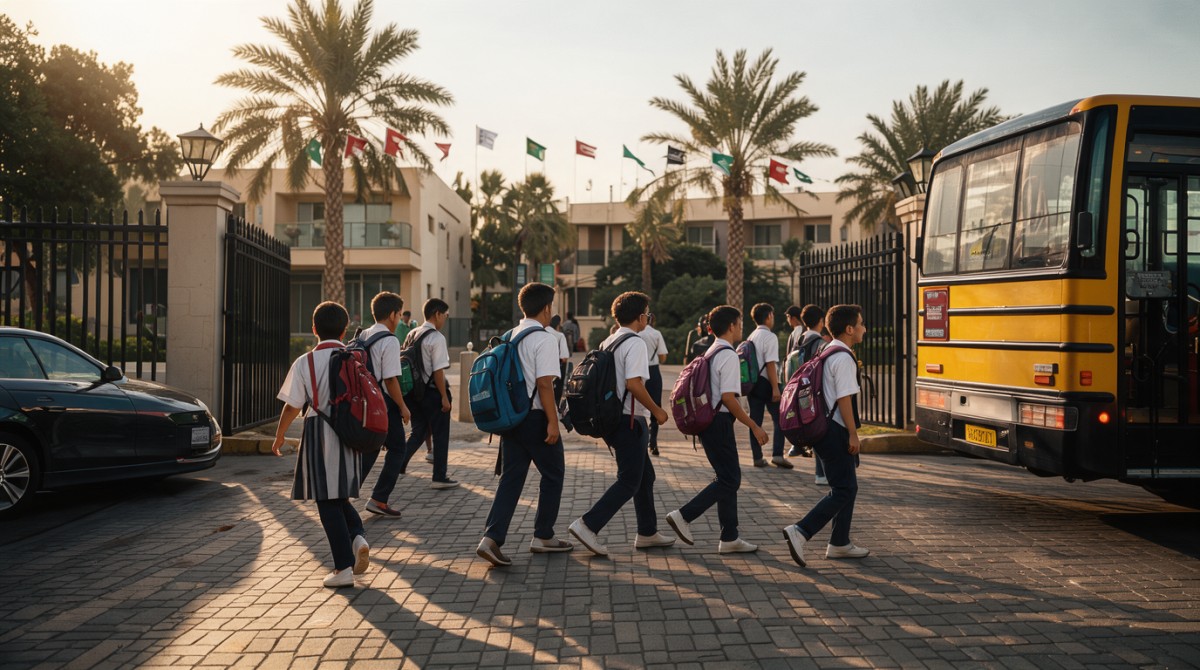
Students in Dubai’s private schools and universities will enjoy a five‑day holiday beginning on 2 December, as the United Arab Emirates commemorates its 55th Eid Al Etihad – the national day that marks the federation’s founding in 1971. The break, announced by the Dubai Government Human Resources Department, runs from Wednesday, 2 December, to Friday, 4 December, and includes the weekend, giving learners a continuous pause before classes resume on Monday, 7 December. While the celebration is a local observance, its timing and structure have implications for Indian families, educators, and businesses that maintain cross‑border ties with the Gulf region.
Understanding Eid Al Etihad and its significance
Eid Al Etihad, observed each year on 2 December, commemorates the historic union of six emirates in 1971 that formed the United Arab Emirates. The seventh emirate, Ras Al Khaimah, joined the federation in February 1972, completing the union of all seven states. This year marks the 55th anniversary, a milestone that the UAE has framed within its “Year of Family” theme, emphasizing the role of families, generations and communities in nation‑building.
The holiday’s focus on “a family of families” reflects a broader narrative of social cohesion that resonates with the expatriate population, many of whom are Indian nationals working or studying in the Gulf. For Indian families with children enrolled in Dubai’s private education sector, the extended break provides a rare window for reunions, travel, and cultural exchange, underscoring the intertwined social fabric of the two economies.
Impact on private education institutions in Dubai
The announcement specifically targets private schools and higher‑education institutions, signalling the government’s intent to align the academic calendar with national celebrations. By granting a five‑day hiatus, authorities aim to ensure that students and staff can partake fully in the festivities without compromising academic continuity. The break is sandwiched between the regular weekend, creating a seamless stretch of rest that culminates in the resumption of classes on 7 December.
For Indian‑run schools and universities operating in Dubai, the holiday presents logistical considerations: curriculum planning must accommodate the lost instructional days, while administrative staff need to coordinate with parents and guardians. Nonetheless, the predictable nature of the holiday—announced well in advance—allows institutions to adjust timetables and assessment schedules with minimal disruption.
Repercussions for Indian expatriate families
India’s diaspora in the UAE remains one of the largest overseas Indian communities, with many families relying on the private education sector for their children’s schooling. The five‑day break offers an opportunity for these families to travel back to India or to other destinations, aligning with school holidays in India’s own academic calendar. However, the timing—mid‑December—coincides with the onset of India’s winter break in many schools, potentially creating a convergence of travel demand.
Travel agencies and airlines operating between India and the Gulf typically experience a surge in bookings around such overlapping holidays. While the source material does not provide specific travel data, the pattern suggests that Indian travellers may leverage the Dubai break to visit relatives, attend cultural events, or simply enjoy a family vacation, reinforcing the cultural and economic linkages between the two nations.
Economic and policy implications for Indian businesses
Beyond the personal sphere, the holiday has broader economic ramifications. Indian firms with offices or subsidiaries in Dubai often align their operational calendars with local public holidays to maintain workforce morale and compliance. The five‑day school break, coupled with the national holiday, may affect sectors such as retail, hospitality, and logistics, where consumer footfall typically spikes during festive periods.
Companies that provide services to the education sector—textbook publishers, ed‑tech platforms, and extracurricular activity providers—must anticipate a temporary slowdown in school‑related procurement. Conversely, businesses catering to family-oriented consumption, such as restaurants and entertainment venues, may see heightened demand as families gather to celebrate Eid Al Etihad.
Comparative perspective: Indian national holidays
India’s own calendar features several extended holidays that parallel the UAE’s approach to aligning school breaks with national celebrations. For instance, Republic Day and Independence Day often trigger multi‑day school closures, allowing families to observe civic rituals while engaging in community activities. The UAE’s “Year of Family” framing mirrors India’s emphasis on familial bonds during festivals such as Diwali and Eid, highlighting a shared cultural ethos that transcends borders.
From a policy standpoint, the coordination of school calendars with national holidays in both countries underscores the role of education ministries in fostering social cohesion. In India, the Ministry of Education periodically issues guidelines to synchronize school holidays with cultural observances, a practice that mirrors the Dubai Government Human Resources Department’s recent directive for private institutions.
Implications for Indian students studying abroad
Indian nationals enrolled in Dubai’s private universities will experience a brief academic pause, which can be strategically used for academic catch‑up, research, or personal development. The break may also serve as a period for students to engage in community service or cultural exchange programs that align with the “Year of Family” theme, thereby enriching their cross‑cultural competencies.
Moreover, the holiday provides a natural checkpoint for Indian students to assess their progress and seek mentorship from faculty before the semester resumes. Academic advisors can leverage the interval to schedule one‑on‑one sessions, ensuring that students remain on track despite the temporary disruption.
Looking ahead: Anticipating future calendar alignments
The 55th Eid Al Etihad celebration sets a precedent for how the UAE may continue to integrate national narratives into the academic calendar. As the federation marks subsequent anniversaries, Indian educational institutions and businesses operating in the Gulf are likely to monitor these developments closely, adjusting their own planning cycles accordingly.
For Indian policymakers, the Dubai example offers insights into how public holidays can be leveraged to reinforce societal values—family unity, national pride, and community participation—while minimizing economic disruption. As India continues to refine its own holiday scheduling, the Dubai experience may serve as a reference point for balancing cultural commemoration with educational continuity.
This article was produced with AI-assisted research and editorial support. Reporting is based on the source material cited below. Sources: Livemint; livemint.com; Global1.News (22 November 2026).
By Dr. Raj Patel, Staff Writer
What's Your Reaction?
 Like
0
 Dislike
0
 Love
0
 Funny
0
 Wow
0
 Sad
0
 Angry
0

India/South Asia Correspondent at Global1.News. Analytical voice with a background in science and health journalism. Based in New Delhi, covering Indian politics, education, healthcare, technology, and policy. Breaks down complex data into clear, actionable reporting.














Comments (0)