
Scattered by war, the band that gave voice to Sudan's revolution plays again
After years of upheaval, the Sudanese band Aswat al‑Madina has resurfaced in Cairo, echoing the sounds that once filled the streets of Khartoum during the 2018 uprising.
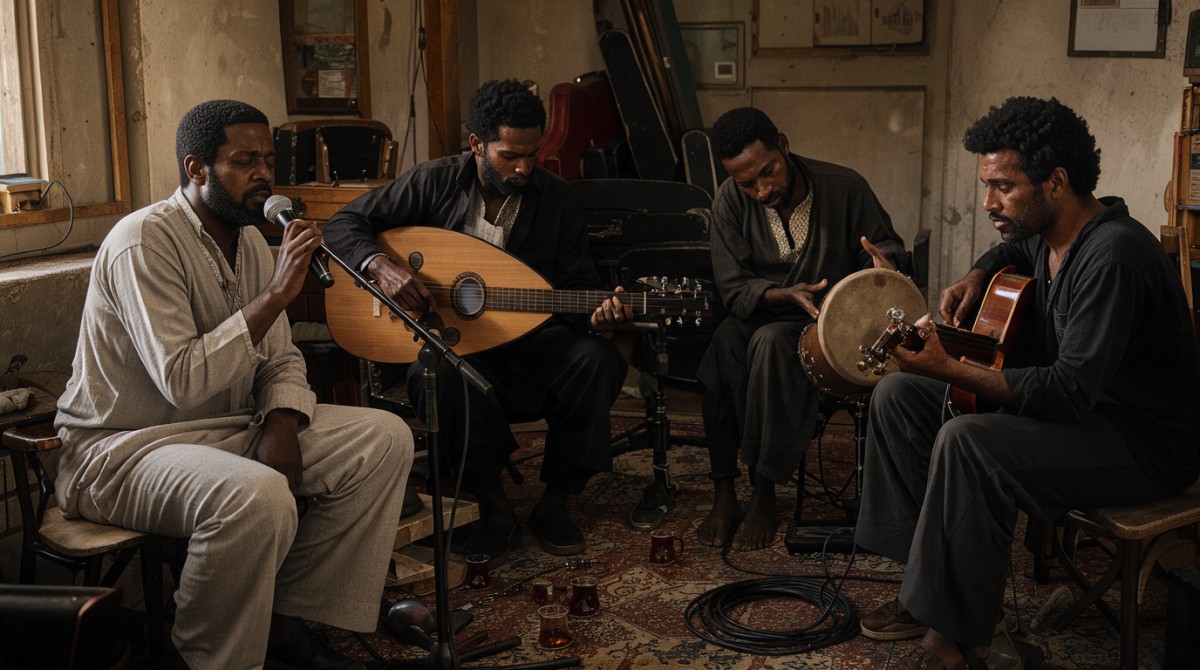
After years of upheaval, the Sudanese band Aswat al‑Madina has resurfaced in Cairo, echoing the sounds that once filled the streets of Khartoum during the 2018 uprising. Their reunion, captured in a modest studio where guitarist Mohamed al‑Mustafa – known on stage as Timon – strums his guitar, offers a vivid reminder of how art and politics intertwine across the region. While war continues to ravage Sudan, the band’s return underscores the broader displacement of creative talent from conflict zones and highlights the role of neighboring countries, including Egypt and the United Arab Emirates, in providing temporary safe havens for artists.
From Khartoum’s Underground to the Frontlines of Revolution
Founded in Khartoum in 2014, Aswat al‑Madina emerged as part of a wave of underground groups pushing Sudanese music beyond conventional boundaries. Their blend of folk traditions with jazz, reggae and contemporary rhythms gave voice to a generation chafing under authoritarian rule. Lead singer Ibrahim Ahmed Taha recalled how the band’s early technique relied on coded lyrics that “everyone understood what we meant, but nobody could prove it,” a strategy that kept them under the radar while still resonating with listeners.
When Sudan’s youth erupted onto the streets in December 2018, demanding an end to Omar al‑Bashir’s long‑standing regime, the band’s songs blared from phones, passing cars and makeshift barricades. Timon remembers a demonstrator hauling a giant speaker, amplifying their music through the marches. The band’s presence at the nightly sit‑in outside Khartoum’s military headquarters – a gathering that combined speeches, poetry and music – cemented their role as a soundtrack to the protest movement. A lyric from one of their tracks, “Find me in the square at half‑past revolution; tonight, the devil falls,” captured the defiant spirit of those evenings.
The June 2019 Massacre and Its Aftermath
The sit‑in turned into a tragedy in June 2019 when security forces, led by the army and the paramilitary Rapid Support Forces (RSF), opened fire on protesters, killing at least 120 people. The massacre marked a turning point for the band and the broader pro‑democracy movement. Their five‑storey creative hub was looted; “everything was gone,” Timon said, noting that not only musical equipment but also chairs and tables vanished. The streets filled with bodies and rubble, a stark visual that reinforced the fragility of Sudan’s transition.
Four years later, as the army and RSF turned on each other, the band – like many Sudanese citizens – lost everything. The conflict displaced millions and claimed tens of thousands of lives, according to the source material. For Aswat al‑Madina, the war meant abandoning their instruments, studios and the community that had nurtured their art. The musicians fled with little more than backpacks and laptops, scattering across the region.
Exile Across the Region: From the UAE to Egypt
In the chaos of the conflict, Timon escaped to the United Arab Emirates, while other members settled in Egypt and elsewhere in Africa. Their displacement reflects a broader pattern of Sudanese talent seeking refuge in neighboring states. Egypt, with its sizable Sudanese diaspora and cultural infrastructure, became a natural gathering point. The band’s first reunion in Cairo took place in August 2024, marking their first performance since the war began.
During the reunion concert, familiar songs filled the venue, prompting audience members to sing along and shout requests. “For a moment, I felt like I was in Khartoum again,” Taha said, highlighting how music can bridge geographic and emotional distances. Keyboard player Roba Bashir, the band’s sole female member, described the day as “the happiest day since the war began,” while longtime fan Musab Mahgoub noted that the performances “brought back so many old memories of Sudan.” These reactions illustrate the powerful role of cultural memory in sustaining community cohesion amid displacement.
Recording a New Chapter in Cairo
Back in the Cairo studio, the band is not merely revisiting old repertoire; they are actively creating new recordings that reflect their exile experience. One project involves a new version of “Nos Kobayet Shai Bi’Aisha” (“Half a Cup of Tea with Bread”), a song about home and family now infused with collaboration from an Egyptian‑Nubian artist. The thematic focus on home and family gains heightened resonance as the musicians navigate life far from their native streets.
The recording process, described by Timon between takes, is marked by a mixture of nostalgia and forward‑looking ambition. “I still can’t quite process the fact that we’re back together,” he told AFP, underscoring the emotional weight of reuniting after years of separation. The band’s hope to tour internationally signals a strategic pivot: leveraging diaspora networks and global interest in Sudanese culture to sustain their art and, indirectly, raise awareness of the ongoing crisis at home.
Regional Implications: Culture, Conflict and Soft Power
The story of Aswat al‑Madina illustrates how cultural production can become entangled with regional geopolitics. Egypt’s willingness to host Sudanese artists reflects its broader policy of offering sanctuary to displaced professionals, a practice that aligns with its soft‑power objectives in the Nile basin. Meanwhile, the United Arab Emirates’ role as a refuge for Timon highlights the Gulf’s growing attractiveness to artists seeking stability, even as the UAE navigates its own complex regional relationships.
From an Israeli perspective, the displacement of Sudanese creatives underscores the ripple effects of conflict on neighboring societies. Israel’s Ministry of Economy and the Israel Innovation Authority have recently highlighted the importance of cultural exchange programs in stabilising border regions. While the source material does not detail Israeli involvement, the broader regional dynamics suggest that fostering cross‑border artistic collaborations could serve as a conduit for dialogue and economic integration, especially as Sudan’s conflict hampers domestic reconstruction.
Economic Realities for Displaced Artists
For musicians like Aswat al‑Madina, exile brings both challenges and opportunities. The loss of their studio and equipment meant a sudden halt to income streams that relied on live performances and local recordings. Their current reliance on modest venues and collaborative projects points to a precarious financial footing, typical of displaced creatives who must rebuild networks from scratch.
Nevertheless, the band’s ambition to tour internationally could unlock new revenue channels. International festivals and diaspora audiences often provide higher remuneration than local gigs, especially when the narrative of exile adds a compelling dimension to performances. The band’s partnership with an Egyptian‑Nubian collaborator also reflects a strategic blending of regional sounds that may appeal to broader markets, potentially attracting interest from cultural institutions and NGOs supporting displaced artists.
Looking Ahead: Music as a Beacon Amid Ongoing War
As the war between Sudan’s army and the RSF continues, the future of Aswat al‑Madina remains intertwined with the fate of their homeland. Their music, once a rallying cry on Khartoum’s streets, now carries the weight of memory and hope for a displaced audience. The band’s reunion in Cairo serves as a microcosm of the wider Sudanese diaspora’s resilience, illustrating how cultural expression can survive even when physical infrastructure collapses.
For observers in Israel and the broader Middle East, the band’s journey underscores the importance of supporting cultural ecosystems that transcend borders. While the immediate focus remains on humanitarian relief and diplomatic efforts to halt the fighting, the long‑term reconstruction of Sudan’s creative sector will be essential for rebuilding a vibrant civil society. As Aswat al‑Madina prepares for international tours and new recordings, they embody the possibility that, even amid war, art can pave pathways toward reconciliation and renewal.
This article was produced with AI-assisted research and editorial support. Reporting is based on the source material cited below. Sources: Al-Monitor; al-monitor.com; Global1.News (16 November 2026).
By Hannah Berg, Staff Writer
What's Your Reaction?
 Like
0
 Dislike
0
 Love
0
 Funny
0
 Wow
0
 Sad
0
 Angry
0

Israel Correspondent at Global1.News. Based in Tel Aviv, covering Israeli politics, security, technology, and society. Provides balanced, deeply-sourced reporting on one of the most closely-watched regions in the world.













Comments (0)