
China Vows to Defend Iran Trade as US Unveils Sweeping Sanctions
In a recent BBC News report, the United States announced plans to widen economic sanctions against Iran and its trading partners, drawing a sharp rebuke from Beijing. Beijing – 26 August 2026 — Washington has launched what it calls the most aggressive financial offensive in its history against Tehran, targeting not only Iran but any nation that continues to do business with the regime.
In a recent BBC News report, the United States announced plans to widen economic sanctions against Iran and its trading partners, drawing a sharp rebuke from Beijing.
China Vows to Defend Iran Trade as US Unveils Sweeping Sanctions
Beijing – 26 August 2026 — Washington has launched what it calls the most aggressive financial offensive in its history against Tehran, targeting not only Iran but any nation that continues to do business with the regime. The move, announced on Monday by US Treasury Secretary Scott Bessent, has provoked an immediate and defiant response from China, which has vowed to protect its commercial ties with Iran and reject what it terms "illegal unilateral sanctions." With the Iran war entering its seventh month and a ceasefire in tatters, the new measures threaten to reshape global energy markets and test the limits of American financial power against a Beijing that holds critical leverage of its own.
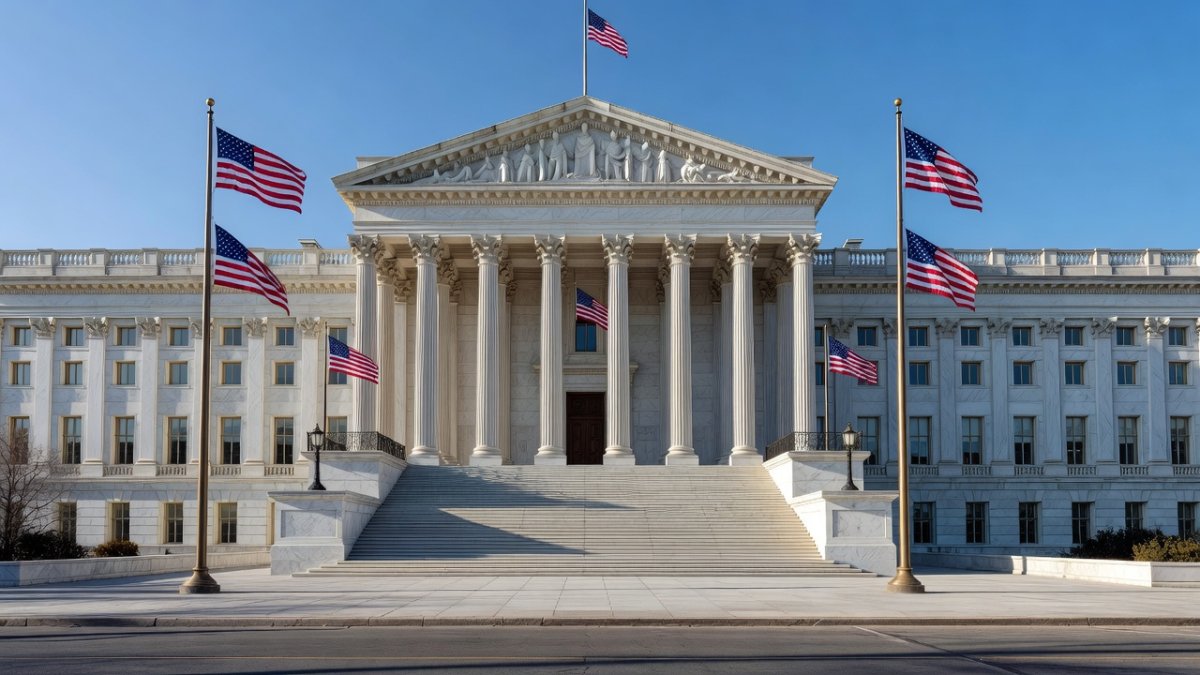
A New Financial Offensive
US Treasury Secretary Scott Bessent unveiled the expanded sanctions regime on Monday, describing the package as "the single greatest financial offensive ever" launched against Iran. The measures, collectively dubbed "Operation Economic Outcast" by the administration, were framed as an "economic D-Day" designed to sever Tehran's access to global finance and oil revenue. The Treasury Department has mapped financial channels, facilitators and networks used by Iran to evade existing sanctions, and has imposed new restrictions on almost 60 entities, individuals and vessels connected to the Iranian regime's oil trade and military procurement.
Bessent warned that any nation, bank or business that continues to financially partner with Iran would share in its isolation. "We are no longer managing the Iranian threat, we are ending it," he said, adding that the United States would "tighten the noose" around every revenue source Tehran relies upon. He confirmed that President Donald Trump would be phoning world leaders "with specific requests to cease their interactions with the regime." Asked directly about Chinese banks, Bessent was unambiguous: "No one was above the reach of US sanctions." The Treasury's targeting extends beyond oil to include networks linked to Iran's military activities and cyber threats, reflecting a comprehensive approach to dismantling the regime's economic infrastructure.
The announcement signals a decisive shift in US strategy, moving from containment toward what Washington describes as outright economic termination of the Iranian threat. UK Chancellor John Healey expressed support for the American approach, stating that the British government backed "US work to secure a diplomatic solution and welcome efforts to increase pressure." The British endorsement underscores the transatlantic alignment on Iran policy, even as questions mount about the practical effectiveness of secondary sanctions and the willingness of major economies like China to comply with Washington's directives.
Beijing's Defiant Response
China's Foreign Ministry spokesman Lin Jian responded swiftly and firmly, declaring that Beijing was "firmly opposed" to what it called "illegal unilateral sanctions" and would take "all necessary measures" to safeguard its rights. "Cooperation between China and Iran has always been conducted within the framework of international law and should not be interfered with or disrupted," Lin Jian said, framing the dispute as a matter of principle rather than mere commercial interest. China is the largest buyer of Iranian oil, with analyst David Oxley estimating that roughly 90 percent of Iran's crude exports flow to Chinese refineries, although trade volumes have declined under the US naval blockade of Iranian ports.
The phrase "all necessary measures" carries significant weight in diplomatic parlance, suggesting Beijing is prepared to respond with concrete countermeasures. China's most potent leverage lies in its dominance over rare earths and critical minerals, which are essential for high-tech manufacturing across the globe, including in the United States. Beijing has already tightened export controls on rare earths during previous trade negotiations with Washington, demonstrating a willingness to weaponize its supply chain advantages. Should the sanctions dispute escalate, China could restrict access to these materials, causing disruption to American and allied defense industries, electronics manufacturers and renewable energy sectors.
Beijing's refusal to recognize US unilateral sanctions reflects a broader posture against what it terms "long-arm jurisdiction" — the practice of extending domestic law beyond national borders. China has consistently argued that only United Nations Security Council resolutions carry international legal weight, and that bilateral sanctions imposed by Washington are illegitimate. This principled stance, combined with China's economic self-interest in maintaining access to Iranian oil, makes compliance with the new US measures unlikely. The question now is whether Washington's threats of isolating non-compliant nations will prove credible against a power of China's economic heft, or whether the sanctions regime will simply accelerate the fragmentation of the global financial system into rival blocs.
The Iran War's Economic Front
The new sanctions offensive comes nearly six months after the outbreak of the Iran war, a conflict that has sent shockwaves through global energy markets and tested the resilience of the world economy. Tehran has effectively blocked exports through the Strait of Hormuz, the narrow waterway through which roughly a fifth of global oil supply passes, while the United States has imposed its own naval blockade, slowing traffic and further constraining supply. The combined effect has been sustained hikes in oil prices worldwide, feeding inflation pressures in economies already struggling with post-pandemic recovery and geopolitical uncertainty.
The economic front has become central to the conflict's trajectory, with both sides recognizing that financial pressure can achieve what military operations alone cannot. For Washington, strangling Iran's oil revenue is seen as the most effective means of forcing Tehran to the negotiating table or, failing that, crippling its capacity to sustain the war effort. For Tehran, maintaining export channels and finding buyers willing to defy US sanctions is a matter of national survival. The blockade of the Strait of Hormuz has been a double-edged sword, however, as it has alienated Iran's neighbours and drawn international condemnation while also demonstrating Tehran's ability to disrupt global commerce at will.
The formal expiry of the 60-day ceasefire last week, with no sign of a settlement, has removed any pretense of de-escalation and set the stage for the intensified economic confrontation now underway. The timing of the sanctions announcement — coming so soon after the ceasefire's collapse — suggests Washington sees economic warfare as the primary lever for the next phase of the conflict. With diplomatic channels largely exhausted and military options carrying unacceptable risks of escalation, the economic front has become the arena where the Iran war will likely be decided, with profound implications for energy security, global inflation and the stability of the international financial order.
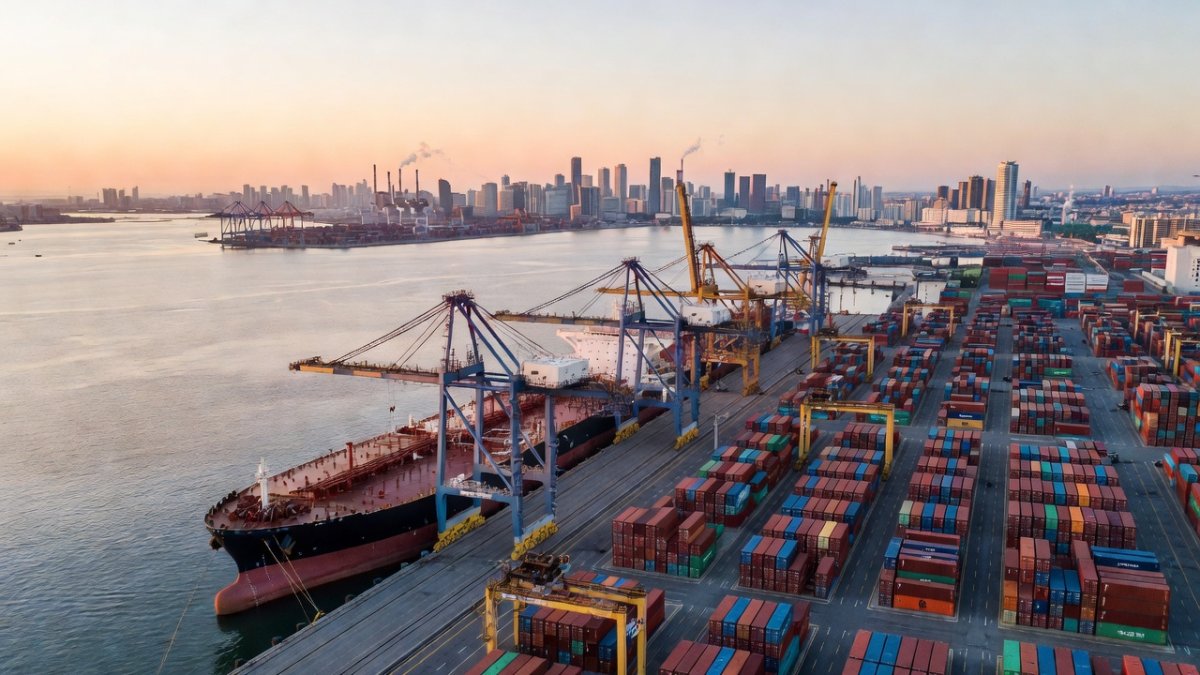
Tehran's Calculated Confidence
Iranian Economy Minister Ali Madanizadeh responded to the US announcement with a display of defiance, telling state television that Tehran was "fully prepared" for the wider sanctions and predicting they would lead to "another defeat" for the United States. "The government is and was ready and has a two-year plan to manage these events," Madanizadeh said, projecting an image of careful preparation and strategic patience. "We also have our own tools and know how to play the game," he added, suggesting that Iran has developed countermeasures and evasion networks that will blunt the impact of the new restrictions. "We have been waiting for these plans for a long time," he concluded, implying that Tehran had anticipated this escalation and had already adapted its economic strategy accordingly.
Iran's history of surviving decades of sanctions lends some credibility to Madanizadeh's confidence. Since the 1979 revolution, the Islamic Republic has developed sophisticated mechanisms for circumventing financial restrictions, including barter arrangements, informal money transfer networks, and the use of third-country intermediaries. The country has also diversified its economy to reduce dependence on oil revenue, although hydrocarbons remain the dominant source of foreign exchange. The two-year plan referenced by Madanizadeh likely involves stockpiling essential goods, expanding domestic production capacity, and deepening economic ties with non-Western partners such as China, Russia and Turkey, all of whom have shown varying degrees of willingness to trade with Iran despite US pressure.
The "another defeat" rhetoric signals that Tehran views the sanctions offensive not as an existential threat but as a familiar challenge it has overcome before. Iran has weathered previous rounds of maximum pressure, including the Trump administration's 2018 withdrawal from the nuclear deal and the subsequent "maximum pressure" campaign, which brought the economy to the brink but did not achieve regime change. The regime's willingness to "absorb any pain" and pass the costs onto the population, as analyst Ali Vaez notes, suggests that Tehran's leadership is prepared for a prolonged economic standoff. The question is whether the Iranian people's tolerance for hardship has limits, and whether the cumulative effect of sanctions, war and inflation will eventually erode the regime's domestic support base.
Analysts Question the Strategy
Despite the administration's bold rhetoric, analysts have expressed skepticism about the effectiveness of the new sanctions package. David Oxley, chief climate and commodities economist at Capital Economics, told the BBC that the direct impact on Iran's energy revenues would be "somewhat of a damp squib" and that the new package would have "only a limited direct impact on Iranian energy flows in the short term." Oxley pointed to China's central role in Iranian oil exports, noting that Beijing "has not recognised US sanctions in the past and is unlikely to be cowed this time either." This assessment suggests that the sanctions may succeed in raising costs and complicating transactions, but will not achieve the dramatic reduction in Iranian oil revenue that Washington envisions.
Ali Vaez, deputy director of the Middle East and North Africa Program at the International Crisis Group, offered a broader critique of the strategy. "Generally, the Chinese are against unilateral sanctions. They would comply with multilateral or international sanctions, but unilateral sanctions just imposed by the US — they have always seen that as illegitimate," Vaez said, explaining Beijing's likely resistance. He also noted that Iran's neighbours, including Pakistan, Turkey and Iraq, "can't really afford to cut off ties with Iran," given their economic interdependence and shared borders. Vaez argued that putting economic pressure on Tehran "doesn't work" because the regime is willing to "absorb any pain" and pass it onto the people, suggesting that sanctions may harden rather than soften Iranian resolve.
The practical limits of secondary sanctions are considerable. Enforcing restrictions on third-country entities requires cooperation from foreign governments and financial institutions, many of which have their own legal frameworks that prohibit compliance with extraterritorial US laws. The European Union, for example, has blocking statutes that forbid European companies from adhering to US sanctions, creating legal conflicts that complicate enforcement. Bessent declined to name specific countries that would be targeted, perhaps reflecting the diplomatic sensitivity of threatening allies and adversaries alike. India and Russia, both significant trade partners with Iran, have not yet responded to the announcement, and their silence may indicate a wait-and-see approach or quiet negotiations with Washington behind the scenes.
A Test for Trump and Xi
The sanctions announcement comes ahead of planned talks between President Donald Trump and Chinese President Xi Jinping next month, adding a layer of diplomatic complexity to an already fraught relationship. Washington is wary of potential retaliation from Beijing, which processes the majority of the world's rare earths and other critical minerals crucial for high-tech manufacturing. Beijing has already tightened export controls on rare earths as part of previous trade negotiations with the United States, demonstrating its willingness to use this leverage when its interests are threatened. The sanctions campaign against Iran now places China's compliance — or non-compliance — at the center of the upcoming summit agenda.
For Trump, the talks with Xi represent an opportunity to secure Chinese cooperation on Iran, or at least to extract concessions in exchange for exemptions or carve-outs. For Xi, the summit offers a chance to push back against what Beijing views as American overreach, while protecting China's energy security and commercial interests. The outcome of these negotiations could determine whether the sanctions regime becomes a genuine constraint on Iranian oil exports or merely a symbolic gesture that China and Iran find ways to circumvent. Each side enters the talks with significant leverage: Washington with its control over the global financial system, and Beijing with its dominance over critical supply chains and its position as Iran's primary customer.
The broader picture suggests that the sanctions offensive is a stress test for the post-war global order and the limits of American financial power. If China successfully defies the sanctions and maintains its trade with Iran, it would demonstrate that the US dollar's dominance and Washington's regulatory reach have boundaries. Conversely, if China capitulates under pressure, it would signal that American financial power remains unchallenged. The outcome will have implications far beyond Iran, affecting how other nations calculate their exposure to US sanctions and whether they view alignment with Washington or Beijing as the safer bet. The coming weeks, leading up to the Trump-Xi meeting, will reveal whether economic warfare can achieve what military force and diplomacy have not.
Analysis — The Limits of Economic Warfare
This episode reveals a fundamental gap between Washington's stated ambitions and the structural reality that China is Iran's lifeline. The United States can impose sanctions, threaten banks, and isolate entities, but it cannot compel a nation of China's economic weight to abandon a commercial relationship that serves its strategic interests. The sanctions offensive, for all its rhetorical force, may ultimately demonstrate the limits of American financial power in a multipolar world where alternative economic arrangements are increasingly viable. China's refusal to recognize unilateral sanctions, combined with its rare earths leverage, suggests that Washington's threats carry less weight than they once did.
The risk is that the sanctions push will push Beijing into deeper alignment with Tehran and Moscow, accelerating the formation of a bloc of nations that reject US financial hegemony. China, Russia and Iran already coordinate on various issues, and the sanctions could strengthen their resolve to build alternative payment systems, currency arrangements and trade routes that bypass the dollar-based order. This would be a strategic setback for Washington, which has long relied on financial tools as a substitute for military force. The coming weeks will be critical: the Trump-Xi meeting, China's response measures, and Iran's next moves will all shape the trajectory of this confrontation.
What to watch in the near term: whether China announces concrete countermeasures, whether India and Russia formally respond, and whether the sanctions actually disrupt Iranian oil flows or merely add friction to a trade that continues through informal channels. The Iran war has already demonstrated the fragility of global energy markets and the interconnectedness of economic and military power. The sanctions offensive is the latest chapter in that story, and its outcome will be determined not in Washington or Tehran, but in Beijing, where the world's largest importer of Iranian oil holds the key to whether economic warfare can succeed.
By Irina Volkov, Staff Writer
This article was produced with AI-assisted research and editorial support. Reporting is based on sources cited in the article.
What's Your Reaction?
 Like
0
Like
0
 Dislike
0
Dislike
0
 Love
0
Love
0
 Funny
0
Funny
0
 Wow
0
Wow
0
 Sad
0
Sad
0
 Angry
0
Angry
0
Russia/Eastern Europe Correspondent at Global1.News. Covering Russian politics, energy, security, and the shifting dynamics of the post-Soviet space. Provides clear-eyed analysis on one of the world's most opaque regions.










Comments (0)