
Why Spain Can't Send Ceuta's Migrant Children Back to Morocco
Spain's Supreme Court rulings block summary returns of unaccompanied minors who swam into Ceuta during the late-July surge. Shelters are at 48 times capacity and Morocco demands the children back — a standoff testing EU asylum law and echoing child-protection dilemmas at the US-Mexico border.
In a recent DW News report, the legal reality of Spain's Ceuta migrant crisis came into sharp focus: hundreds of unaccompanied minors remain in the Spanish exclave after a late July surge, and Madrid's hands are legally tied when it comes to sending them back to Morocco. The video explains why Spanish law, reinforced by two landmark Supreme Court rulings this summer, prohibits the summary return of children who arrived by swimming around the Tarajal breakwater. As Moroccan forces tighten border security amid fears of another mass attempt, the standoff over these children has become a defining test of European asylum law, child protection norms, and the limits of border enforcement.
Spain's Legal Wall: Why Ceuta's Migrant Children Cannot Be Sent Back to Morocco
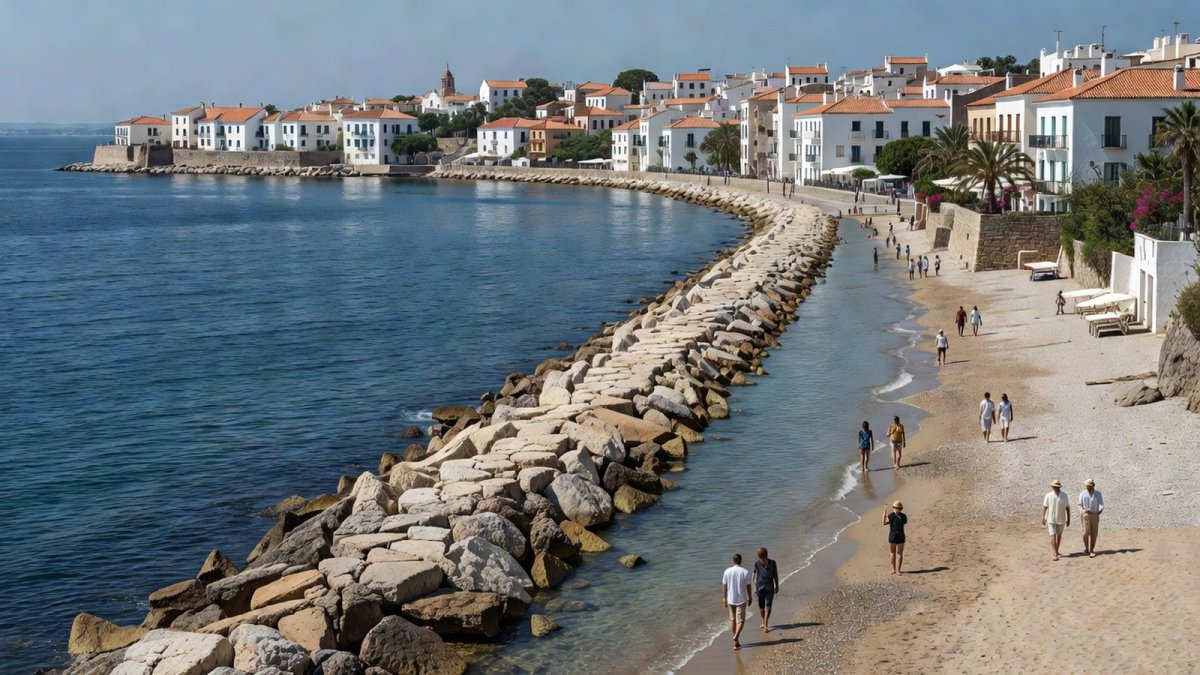
Ceuta, Spain – this week — The 28-square-kilometer Spanish exclave of Ceuta, one of only two European Union land borders with Africa, is facing a population surge that nearly doubled its 87,000 residents in a matter of hours. Between July 29 and 30, an estimated 60,000 to 72,000 people entered the territory, most swimming around the Tarajal and Benzú breakwaters or crossing on foot along the shoreline. Spain's Interior Ministry says roughly 70,000 were returned within the first four days, but at least 2,000 remain — including approximately 1,400 unaccompanied minors who now sit at the center of a legal and diplomatic confrontation between Madrid and Rabat.
At least 100 people died during the surge, with earlier counts from the Guardian placing the death toll at 88 in Ceuta and 11 in Morocco. The human cost is not abstract. A 17-year-old girl from Tangier told the AP she watched Spanish police pull the body of her 8-year-old brother from the sea. "I saw people stepping on the dead. Now we are children begging on the street," she said, describing how the government facility for youths was full and she was relying on local residents for help.
The Supreme Court Rulings That Changed Everything
The legal framework preventing mass returns of minors rests on two pillars. First, Article 35 of Spain's 2000 Law on Foreigners' Rights (Ley de Extranjería) mandates that when police identify unaccompanied minors, they must be granted protection and receive "immediate attention" from Spanish child protection services. Second, in late June, the Supreme Court ruled that migrants stopped at sea while trying to reach Ceuta or Melilla cannot be summarily returned to Morocco without due process. A follow-up ruling in July (STS 868/2026) struck down provisions of the 2024 Aliens Regulation that had weakened the obligation to provide immediate care to unaccompanied foreign minors.
The key precedent emerged from an Algerian migrant who challenged his summary return, arguing he had entered by swimming rather than breaching the border fence. Ceuta's court, the High Court of Andalusia, and ultimately the Supreme Court all ruled in his favor: migrants who arrive by swimming do not "cross a border containment element," a legal requirement for summary returns without an individual case file under Spain's Aliens Act. This means most Tarajal crossers — including the children — cannot be immediately returned. The ruling is precise in scope: it does not apply to fence-climbers, who face different procedural rules.
Under Spanish asylum law, once a person expresses a wish for international protection, a formal procedure must open, including free legal aid, temporary accommodation, and protection from removal, with registration required within 30 days of entry, consistent with EU Directive 2013/32. For unaccompanied minors, the consequences are even more binding: they become the legal responsibility of Ceuta's local government, which must provide housing, food, education, and legal guardianship until they are repatriated with consent, reunited with family, or turn 18.
Overwhelmed Protection System: 29 Slots for 1,500 Children
The gap between legal obligation and physical capacity is staggering. Ceuta's minor protection services have a maximum capacity of 29 slots, according to Antena 3 — meaning the pressure is 48 times higher than maximum ordinary capacity. The reception center CETI can hold 600 people. Save the Children estimates more than 4,000 children remain unidentified in Ceuta, while Euronews reported this week that approximately 1,500 have been identified within the protection system. Unicef Spain warns dozens more could be wandering the streets unprotected.
Catalina Perazzo of Save the Children put it bluntly: "Every night a boy or a girl spends on the street exposes them to serious dangers, from a risk of violence, trafficking or exploitation." José María Vera, executive director of Unicef Spain, said: "Right now not all children in Ceuta are protected, they are not safe; they are in a situation of neglect." Susana Hidalgo, Unicef's migration expert, added: "Many small children crossed over; we don't know how many have disappeared. There are 10- and 12-year-old children asking for phones so they can call their mothers."
The human stories from the ground are harrowing. A 12-year-old boy was seen crying and begging a soldier not to send him back, with bystanders intervening to point out that Spanish law prevents children from being deported alone. Omar, 15, told DW this month that he spent nights on the streets, struggling to find shelter despite expectations that Spain would assist him, and is now searching for a route to mainland Spain while facing risks including possible returns to Morocco and costly offers from smugglers.
Morocco's Demands and the Diplomatic Standoff
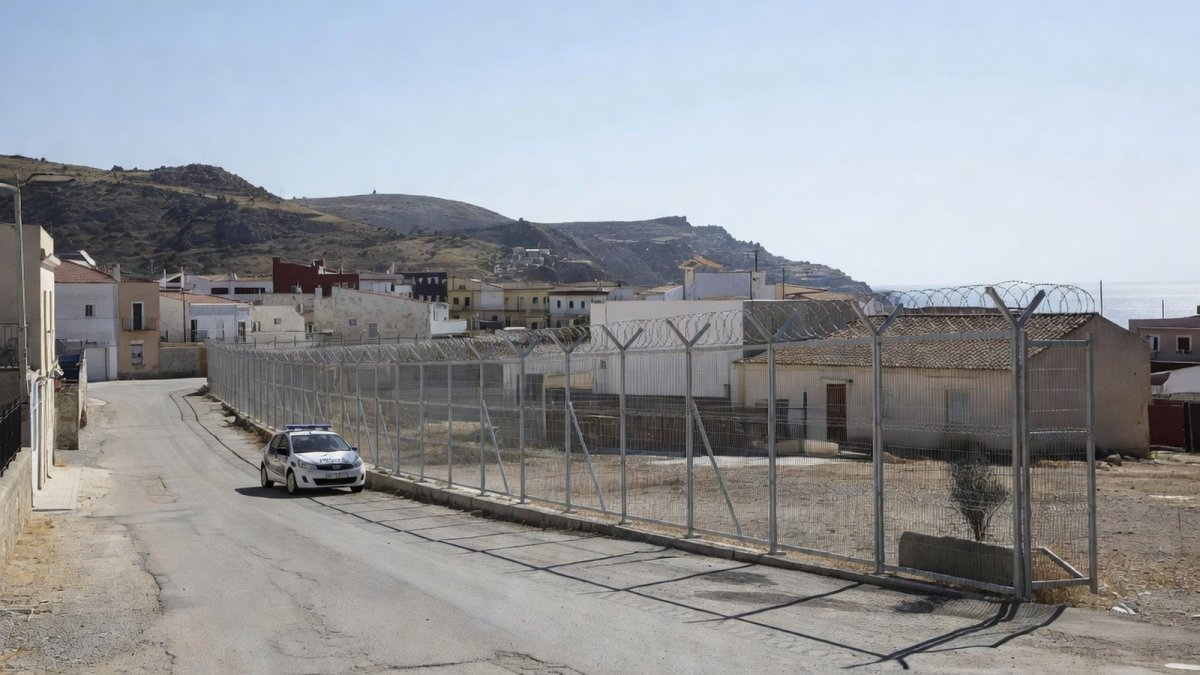
Morocco's Justice Minister Abdellatif Ouahbi has demanded the return of all unaccompanied Moroccan migrant children in Spanish territory, declaring last week: "Morocco is not prepared to abandon its children, youth and teenagers." He has threatened to use all "legal and political" venues and is considering suspending the extradition agreement with Spain. Ouahbi told EFE: "We prevent migrants from leaving, not only Moroccans but others as well, but when they arrive in Spain, they are accepted and their status is regularized."
Rabat says it warned Madrid in late July about networks discussing the Supreme Court ruling, a claim Spain's migration minister Elma Saiz rejected outright: "At no point was there any evidence, any report that alerted us to the magnitude of this unprecedented event." A senior Moroccan official pushed back on criticism that Morocco should have used more force: "It's simplistic to say that Morocco should just have used force to stop them... At a certain point, the Moroccan law enforcement forces could no longer confront the migrants because the numbers were very large." Morocco's interior ministry blames the "exploitation of the digital sphere" and "the spread of misinformation."
Spain's Prime Minister Pedro Sánchez blamed trafficking mafias for taking a "self-serving interpretation" of the Supreme Court ruling that "spread like wildfire," vowing to return migrants to Morocco. Interior Minister Fernando Grande-Marlaska said this week: "We'll continue to deploy whatever personnel are necessary to restore normality as soon as possible and prevent events like those of July 30 from happening again." Spain has deployed the military, more than 500 additional police officers from the mainland, and installed a maritime barrier. Ceuta's president, Vivas, has called the situation one of "absolute humanitarian and social emergency" and requested a national emergency declaration — which Madrid rejected because migration does not fit within that legal framework.
The Political Battle Over Legal Reform
The crisis has ignited a fierce political fight in Madrid. The conservative People's Party (PP) has introduced a bill in Congress to amend the tenth additional provision of the Aliens Act, extending the special border rejection regime to anyone attempting irregular entry to Ceuta or Melilla through any unauthorized point, land or sea. Ceuta's president Vivas has called for "legalizing" summary returns for minors, and Civil Guard unions (AUGC) have sought a clearer legal framework.
Opposition is robust. Coordinadora de Barrios, No Name Kitchen, and the Jesuit Migrant Service all argue that any reform must comply with the European Pact on Migration and Asylum. Verónica Laorden of CEAR insists: "There can be no mass returns." Dani Canales of Amnesty International framed the core principle: "The state must ensure the best interests of the child, and that best interest of the child takes precedence over other statuses, such as migration status."
Spain's government is finalizing plans to transfer minors to the mainland, but several autonomous communities — Madrid, Castilla-La Mancha, Canarias, Extremadura, and Aragón — have rejected accepting them. VOX demands return to Morocco, while the PP urges compliance with distribution. The 2007 agreement between Morocco and Spain, which established mechanisms for the return of unaccompanied Moroccan minors, remains on the table but is complicated by the Supreme Court's insistence on individual assessment and consent.
Mexico's Mirror: Border Surges, Child Protection, and the Same Legal Dilemmas
For Mexican readers, the Ceuta crisis is uncomfortably familiar. The social-media-organized surge — with calls for a mass crossing circulating online over the weekend and Moroccan police detaining dozens near Fnideq — mirrors the dynamics at the US-Mexico border, where migrant surges are increasingly coordinated through digital platforms. The 2021 Ceuta precedent, when approximately 8,000 people entered in two days after a diplomatic crisis over the hospitalization of Polisario leader Brahim Ghali, showed how quickly border events can spiral.
Mexico's own legal framework applies the same universal norms that Spain is wrestling with: the best interests of the child, non-refoulement, and individual assessment. Mexico's INM (Instituto Nacional de Migración) and the DIF (Sistema Nacional para el Desarrollo Integral de la Familia) child protection system are the institutional counterparts to Spain's child protection services, both bound by the Ley de Migración to prioritize child welfare over migration status. The American Immigration Council's definition of "unaccompanied children" at the US-Mexico border finds its echo in Spain's Article 35 protections.
Mexico has held hundreds of unaccompanied children in its own facilities, as the Washington Post documented in 2021, and has faced similar criticism about capacity and care. The repatriation protocols between Mexico and Central American countries, and between the US and Mexico, are structurally analogous to the 2007 Spain-Morocco agreement — all struggling with the same tension: managing borders humanely while respecting the legal rights of children who cross them alone.
What Happens Next: The August 15 Test and Beyond
The immediate test came over the weekend, when calls for another mass crossing circulated on social media. Rabat said it was monitoring the situation and warned organizers and participants face prosecution. Heavy Moroccan security presence now surrounds Ceuta and Melilla — checkpoints, patrol boats, and water cannons, according to RTVE. Moroccan police detained dozens attempting to cross near Fnideq, with Reuters reporting more than 100 mostly sub-Saharan migrants stopped and Le360 reporting 294 detained.
The crisis has drawn sharp international reaction. European Commission President Ursula von der Leyen declared: "The images coming from Ceuta are unacceptable... Dangerous crossings must stop immediately. Smuggling networks must be dismantled," while insisting returns must be "swift." Italy's Giorgia Meloni called the crisis "shocking" and temporarily suspended Schengen by closing sea and air borders with Spain, while France's Laurent Nunez said Paris would tighten its physical border with Spain. EU interior ministers held an emergency videoconference this month, offering Morocco more support at the border.
Press freedom has become a collateral casualty. EFE and RTVE journalists were ordered to leave Fnideq without explanation, prompting EFE president Miguel Angel Oliver to urge respect for free journalism and RTVE president Jose Pablo Lopez to call the expulsion "a grave obstacle to press freedom and the right to information." Meanwhile, Russia-linked accounts spread far-right narratives during the crisis, according to a Guardian investigation, and Amnesty International has tracked disinformation targeting NGOs, including false claims that aid groups facilitated irregular transfers.
The deeper question is whether Spain's legal framework — designed to protect children — can survive contact with a mass migration event. The Supreme Court's rulings are clear: children who swim into Ceuta cannot be sent back without individual assessment, due process, and consideration of their best interests. But with protection services at 48 times capacity, with children sleeping on streets, and with Morocco demanding return, the law's promise of "immediate attention" rings hollow for the 10-year-olds asking for phones to call their mothers.
For Mexico, the lesson is both cautionary and affirming. The norms embedded in Spain's Supreme Court rulings — non-refoulement, best interests of the child, individual assessment — are the same principles Mexico's INM and DIF are bound to uphold. As Hadijja, a mother from Tangier waiting at the border for her 23-year-old son, told the Guardian: "I have just one son... He didn't tell me he was going to cross. This is a tragedy." The children of Ceuta, like the children of the US-Mexico border, deserve more than legal arguments. They deserve protection that matches the scale of their need.
By Rosa Martinez, Staff Writer
This article was produced with AI-assisted research and editorial support. Reporting is based on sources cited in the article.
What's Your Reaction?
 Like
0
Like
0
 Dislike
0
Dislike
0
 Love
0
Love
0
 Funny
0
Funny
0
 Wow
0
Wow
0
 Sad
0
Sad
0
 Angry
0
Angry
0

Latin America/Andes Correspondent at Global1.News. Based in Bogota, covering politics, environment, energy, and social movements across the Andean region. Passionate about environmental journalism and communities protecting their land.














Comments (0)