
Trump Hails Mecca Defence Pact as Turkiye, Pakistan, Saudi Arabia Forge New Security Bloc
Trump hails the Mecca Joint Defence Agreement signed Aug. 7 by Turkiye, Pakistan and Saudi Arabia as a big, bold step, as the NATO-style collective defence pact reshapes Middle East security amid the U.S.-Iran war.

The Middle East's security map is being redrawn. On Aug. 7, in the Saudi holy city of Mecca, the leaders of Turkiye, Pakistan, and Saudi Arabia signed a trilateral defence pact that analysts say could reshape the region's security architecture. The Mecca Joint Defence Agreement arrives amid the ongoing U.S.-Iran war, a conflict that has already drawn missile attacks on Gulf infrastructure and extended violence across the Levant.
US President Donald Trump has thrown his weight behind the deal, framing it not as a challenge to American influence but as a welcome evolution of regional self-reliance. "Very happy to see that Saudi Arabia, Turkey, and Pakistan have recently, and finally, signed the Mecca Joint Defence Agreement," he wrote on Truth Social, calling it a "BIG, BOLD, IMPORTANT FIRST STEP." His endorsement carries weight — all three signatories are longstanding US partners — yet the pact's deeper implications for Washington's alliance system are only beginning to surface.
Trump Hails Mecca Defence Pact as Turkiye, Pakistan, Saudi Arabia Forge New Security Bloc
Istanbul, Turkiye – Aug. 17, 2026 — US President Donald Trump welcomed the fresh security agreement forged by Turkiye, Saudi Arabia, and Pakistan, framing the trilateral deal as a positive step toward broader security cooperation amid the U.S.-Iran war.
A Collective Defence Clause Modelled on NATO's Article 5
At its core, the Mecca agreement establishes a collective-defence provision broadly comparable in principle to NATO's Article 5: an armed attack against any one of the three countries is to be regarded as an attack against all three. The signing was conducted by Saudi Crown Prince Mohammed bin Salman, Turkish President Recep Tayyip Erdogan, and Pakistani Prime Minister Shehbaz Sharif, accompanied by Pakistan's army chief, General Asim Munir.
Under the pact, the three states plan to establish strategic political and military mechanisms involving their defence and foreign ministers, as well as chiefs of general staff or armed forces commanders. Military cooperation is expected to expand gradually, beginning with command-post and field exercises before progressing to joint drills involving land, naval and air forces, air defence assets, and unmanned systems. Pakistani Foreign Minister Ishaq Dar has stressed the agreement is defensive, does not replace existing arrangements, and remains open to other regional states.
The trilateral framework builds on the Strategic Mutual Defence Agreement signed between Pakistan and Saudi Arabia in September 2025, which already defined any attack on either nation as an attack on both. The addition of Turkiye gives that bilateral arrangement a wider political, military, and industrial dimension.
Why Now: The Iran War and Gulf Vulnerability
The timing is no accident. Negotiations began soon after the Oct. 7, 2023 Hamas attack on Israel and the onset of the subsequent Israeli military campaign in Gaza, but gained significant pace amid the U.S. and Israel's ongoing war on Iran. While Turkiye and Pakistan have not been directly impacted by regional tensions so far, Saudi Arabia — which hosts US military assets and critical infrastructure — has come under direct attack from Iran and its allies, including the Houthis in Yemen, with oil facilities targeted and the Kingdom's acute vulnerability underscored despite its vast defence spending.
Tehran has also attacked other Gulf nations and Jordan, which similarly host US military assets. The Houthi attacks have shown that Iran's proxy network can reach deep into the Gulf's economic heartland, threatening global energy supplies.
For Riyadh, the calculus is clear: reliance on US security guarantees has proven insufficient to deter Iranian-backed attacks, and the Kingdom has been looking to diversify its defence partnerships. The pact offers a framework for collective deterrence that does not depend solely on Washington's willingness to intervene, and it comes amid rising tensions between Turkiye and Israel over Gaza and other regional conflicts — including the war in Iran and Lebanon, where Israel has occupied roughly one-fifth of Lebanese territory while targeting Hezbollah strongholds.
The Strategic Calculus of Each Signatory
Saudi Arabia is the leading Gulf power and a major oil producer, but its military has historically relied on external protection. The Crown Prince's Vision 2030 economic diversification agenda requires a stable security environment, and the war in Iran has exposed the limits of that reliance. By anchoring a new regional security framework, Riyadh positions itself as the political and financial centre of a Sunni bloc that can act with greater autonomy — the choice of Mecca as the signing venue was deliberate, lending the agreement religious legitimacy.
Turkiye brings NATO's second-largest army and a rapidly growing defence industry that has proven its capabilities from Libya to the Caucasus. President Erdogan has long pursued a neo-Ottoman foreign policy seeking to expand Ankara's influence across the Middle East, Africa, and Central Asia. The pact gives Turkiye a formal foothold in Gulf security affairs, a role it has sought for years. Ankara's drone technology and military-industrial capacity complement Saudi Arabia's financial resources and Pakistan's manpower and nuclear deterrent.
Pakistan is the nuclear-armed member of the trio, with longstanding military ties to Riyadh dating back decades. Pakistani troops have historically served in the Kingdom, and Islamabad has repeatedly pledged to defend Saudi territorial integrity. For Pakistan, the agreement deepens its strategic relationship with the Gulf and enhances its standing in the Islamic world. General Munir's presence at the signing underscores the military's central role in Pakistani foreign policy.
Regional Dynamics: A Sunni Bloc Against the Iran-Israel Axis
The Mecca pact must be understood within the broader context of the Sunni-Shia divide that continues to shape regional alignments. It brings together three strategically important Sunni Muslim-majority states at a moment when Iran's network of proxies — Hezbollah in Lebanon, the Houthis in Yemen, and various militias in Iraq — has demonstrated its capacity to strike across the region.
Iran-backed groups in Iraq have been accused of carrying out drone attacks in Saudi Arabia and have themselves come under fire from US and Israeli attacks. The Houthis have disrupted Red Sea shipping and launched missiles toward Gulf states. Israel's military operations in Lebanon and its confrontation with Iran have created a volatile security environment that threatens to draw in multiple actors.
The pact is not explicitly directed against Iran or Israel, and officials have been careful to describe it as defensive. However, the strategic logic is unmistakable: it creates a counterweight to Iranian influence and, potentially, to Israeli military dominance. The agreement also signals a shift away from the Abraham Accords framework, which sought to normalise Arab-Israeli relations, toward a more autonomous regional security structure.
Turkish Foreign Minister Hakan Fidan has already signalled that Ankara expects Egypt to join the new agreement, expressing confidence that Cairo would eventually accede. Egypt's inclusion would add the Arab world's most populous nation and a major military power astride the Suez Canal, dramatically expanding the bloc's weight. However, Egypt's deep reliance on US military aid complicates any move that might be perceived as distancing Cairo from Washington.
What This Means for the US Alliance System and Energy Markets
Trump's endorsement reflects a broader American strategic shift toward encouraging regional allies to take greater responsibility for their own security — consistent with his "America First" doctrine, reducing the US military burden while maintaining Washington's role as ultimate security guarantor. Analysts cited by Bloomberg say the pact reflects regional governments' efforts to strengthen their own security capabilities while maintaining ties with Washington.
Yet the agreement also carries potential complications. Turkiye, despite being a NATO member, has pursued an independent foreign policy that has often frustrated Washington — from its acquisition of Russian S-400 missile systems to its criticism of Israeli operations in Gaza. Saudi Arabia, while historically aligned with Washington, has increasingly diversified its security relationships, including with China and Russia.
The pact's implications for global energy markets are significant. Saudi Arabia remains the world's swing oil producer, and any enhancement of its security directly affects the stability of global supply. The Houthi attacks on Saudi oil facilities have already demonstrated how regional conflict can spike global prices.
The effectiveness of the Mecca pact, however, hinges on operational details that remain unclear. Analysts note that its success will depend on whether the three governments establish clear command structures, intelligence-sharing arrangements, rules for responding to an attack, and mechanisms for coordinating deployments. Without these, the pact risks remaining a political declaration rather than a functioning military alliance.
Regional Implications: A New Security Architecture Takes Shape
Landmarks in Riyadh, Istanbul, and Islamabad lit up in red, white, and green — the combined main colours of the signatories' flags — a symbolic display of unity that resonated across the Islamic world. The pact's openness to additional members suggests it could evolve into a broader Sunni security framework: other Gulf states, particularly the UAE, Qatar, and Bahrain, may eventually seek to join, creating a formidable bloc capable of projecting power across the Middle East, North Africa, and South Asia.
For Iran, the agreement represents a significant strategic setback. Tehran has long sought to divide its adversaries and maintain regional dominance through proxy networks. A unified Sunni bloc with collective defence provisions complicates that strategy, potentially deterring Iranian attacks on Gulf states and their allies — and the inclusion of Pakistan, with its nuclear arsenal, adds a deterrent dimension Tehran cannot ignore.
For Israel, the pact presents a more ambiguous picture. While Israel shares with Saudi Arabia and Turkiye a common adversary in Iran, the agreement's potential to evolve into a broader Islamic alliance — particularly if Egypt joins — could eventually challenge Israeli military superiority. Ongoing tensions between Turkiye and Israel over Gaza and Lebanon suggest that Ankara's role may not align with Israeli interests.
The Mecca agreement is, in many ways, a product of the current conflict environment. The U.S.-Iran war has exposed the fragility of the existing security order and the limits of American protection. Regional powers are responding by building their own capabilities and alliances, a trend likely to accelerate regardless of how the current conflict resolves. Whether the pact fulfils its promise of collective deterrence will depend on the willingness of its signatories to invest in the mechanisms that make military alliances effective.
This article was produced with AI-assisted research and editorial support. Sources: Daily Sabah, Al Jazeera, Gulf News, Reuters, Bloomberg.
By Malik Hassan, Staff Writer
What's Your Reaction?
 Like
0
Like
0
 Dislike
0
Dislike
0
 Love
0
Love
0
 Funny
0
Funny
0
 Wow
0
Wow
0
 Sad
0
Sad
0
 Angry
0
Angry
0
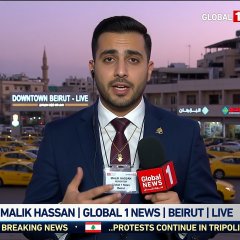
Middle East Correspondent at Global1.News. Based in Beirut, covering politics, conflict, energy, and society across the Middle East. Brings context and depth to a region often reduced to headlines.











Comments (0)