
Kenya seizes 454kg of meth in drug crackdown
Kenyan police have uncovered one of the biggest drug hauls in the country’s recent history, seizing 454 kg of methamphetamine after an intelligence‑led operation that stretched from Tanzania to the Kenyan coast.
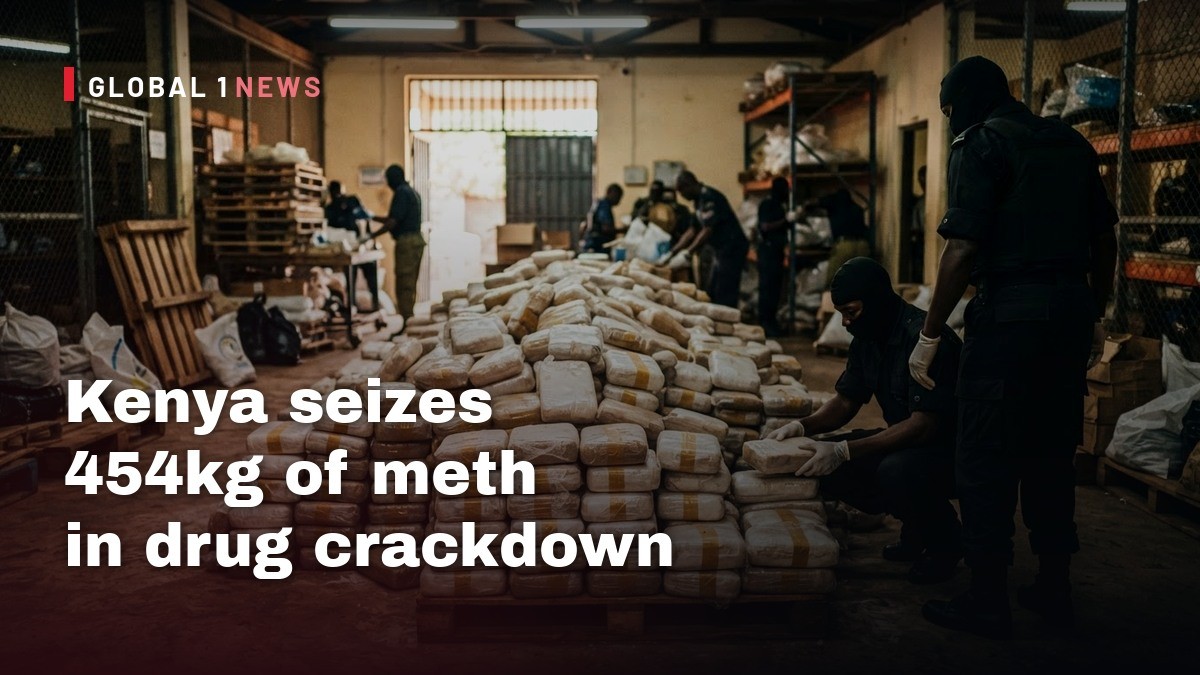
Kenyan police have uncovered one of the biggest drug hauls in the country’s recent history, seizing 454 kg of methamphetamine after an intelligence‑led operation that stretched from Tanzania to the Kenyan coast. The seizure, valued at roughly $27 million, underscores a worrying expansion of East Africa’s role not only as a transit corridor for illicit substances but also as a point of entry for synthetic drugs destined for local consumption. As the investigation unfolds, it reveals a network that spans several nations, linking the streets of Mombasa to production hubs far beyond the continent.
The operation that uncovered the haul
The crackdown began after a key suspect was apprehended in Tanzania last week and handed over to Kenyan authorities at the border. That suspect, linked to a previous seizure of 299 kg of suspected methamphetamine and heroin in Tanzania, guided officers to a coastal location in Msambweni, where the bulk of the drugs were hidden. Kenyan anti‑narcotics officers, working alongside their Tanzanian counterparts, conducted the raid, arresting three individuals on the spot—two Tanzanians and a Ugandan.
In addition to the narcotics, police seized two motor vehicles and a motorcycle, evidence that suggests the operation was part of a larger logistical chain. The four suspects detained in Kenya are now in custody awaiting arraignment, while the seized drugs and equipment have been secured as court exhibits. Authorities stress that the investigation remains ongoing, urging the public to share any information that could aid in dismantling the broader trafficking network.
Regional dimensions of the trafficking network
According to Aretas Lyimo, head of Tanzania’s Drug Control and Enforcement Authority, initial questioning indicated that the drugs intercepted in Tanzania had entered the country through Kenya’s bustling port of Mombasa. Lyimo further noted that several of those arrested appear to be key figures in an international trafficking network that stretches across Afghanistan, South Africa, Mozambique, Zambia, Malawi, Uganda, Kenya, Tanzania and the United Arab Emirates.
The Institute for Security Studies, a regional think‑tank, has warned that East Africa’s coastline is evolving from a mere transit route for narcotics bound for other markets into a gateway for manufactured drugs intended for local consumption. The scale of the Msambweni seizure, combined with a separate operation that destroyed more than a tonne of methamphetamine intercepted offshore by the Kenyan navy, illustrates how the region is becoming a focal point in the global drug trade.
Kenya’s escalating drug challenge
Kenya’s Deputy President Kithure Kindiki recently placed illicit alcohol and drug abuse among the nation’s top threats, signalling a shift in governmental priorities. He warned that the state would introduce tougher laws and intensify nationwide operations to combat the menace. The Msambweni seizure, valued at an estimated $27 million, provides concrete evidence of the scale of the problem that Kindiki referenced.
Beyond the immediate health risks associated with methamphetamine—addiction, severe psychosis, heart attacks and strokes—the seizure highlights the broader social impact of drug abuse in Kenya. Communities along the coast, already grappling with poverty and limited economic opportunities, face the added burden of a growing drug market that can erode social cohesion and fuel crime.
Cross‑border cooperation and its limits
The operation demonstrates the importance of cross‑border intelligence sharing between Kenya and Tanzania. The arrest of the Tanzanian suspect and his subsequent hand‑over to Kenyan authorities set the stage for the Msambweni raid. However, the involvement of Ugandan nationals and the alleged links to networks spanning multiple African nations and the Middle East reveal the challenges of policing a transnational trade that moves fluidly across porous borders.
While the joint effort succeeded in seizing a massive quantity of meth, the broader network remains largely intact. The fact that seven suspects were arrested across two locations—five Tanzanians and two Ugandans—suggests that the trafficking cells are dispersed and capable of rapid relocation. Strengthening regional cooperation, perhaps through a more formalized East African anti‑narcotics task force, could be a necessary step to address the fluidity of these operations.
The human cost of methamphetamine
Methamphetamine, commonly known as meth, is a highly addictive synthetic drug that can lead to severe health complications, including psychosis, heart attacks and strokes. Its potency and low production cost make it an attractive commodity for traffickers seeking high profit margins. For Kenyan communities, the influx of such a drug poses a direct threat to public health, especially among youth who may be drawn to its euphoric effects without fully understanding the long‑term consequences.
The recent seizures underscore the urgency of expanding treatment and prevention programs. While the government has signalled a tougher legal stance, addressing the demand side—through education, rehabilitation services and community outreach—remains essential to curbing the market’s growth. The Deputy President’s call for stricter laws must be balanced with investments in health services that can support those already affected by addiction.
Economic implications of the drug trade
The estimated $27 million value of the seized meth highlights the lucrative nature of the trade. Such sums can fund further criminal activities, from arms procurement to corruption of officials. Moreover, the presence of high‑value narcotics can distort local economies, diverting resources away from legitimate enterprises and undermining investor confidence in regions perceived as drug‑infested.
Kenya’s reliance on the port of Mombasa as a major trade hub makes it vulnerable to exploitation by traffickers. The port’s high traffic volume offers both opportunity and challenge for law enforcement. Strengthening customs inspections and deploying advanced detection technologies could help safeguard legitimate trade while disrupting illicit shipments.
Looking ahead: policy and community response
The Msambweni seizure is a stark reminder that Kenya’s battle against drugs is far from over. Deputy President Kindiki’s pledge to introduce tougher legislation will likely see amendments to existing drug laws, potentially increasing penalties for trafficking and possession. However, legal reforms alone will not dismantle the sophisticated networks that span continents.
Community engagement will be vital. The police’s appeal for public information reflects a recognition that local knowledge can be a powerful tool in identifying and intercepting drug operations. Empowering coastal communities with awareness campaigns, coupled with support for victims of addiction, could create a grassroots front against the spread of methamphetamine.
In the coming months, the courts will hear the cases of the four suspects currently in custody, while investigators continue to trace the broader network that stretches from Afghanistan to the United Arab Emirates. The outcome of these legal proceedings, combined with any policy shifts, will shape Kenya’s trajectory in confronting a drug trade that threatens both public health and regional stability.
This article was produced with AI-assisted research and editorial support. Reporting is based on the source material cited below. Sources: BBC News Africa; bbc.co.uk; Global1.News (10 November 2026).
By Amara Diop, Staff Writer
What's Your Reaction?
 Like
0
 Dislike
0
 Love
0
 Funny
0
 Wow
0
 Sad
0
 Angry
0

West Africa/Sahel Correspondent at Global1.News. Dakar-based journalist covering politics, security, climate, and development across Francophone and Anglophone West Africa. Tells the stories of a region undergoing profound transformation.












Comments (0)