
Pope delivers veiled rebuke of Milei's austerity measures
The papal visit to Buenos Aires this week has become more than a symbolic homage to the late Pope Francis; it has turned into a stark arena where Argentina’s fierce economic experiment meets the moral compass of the Catholic Church.
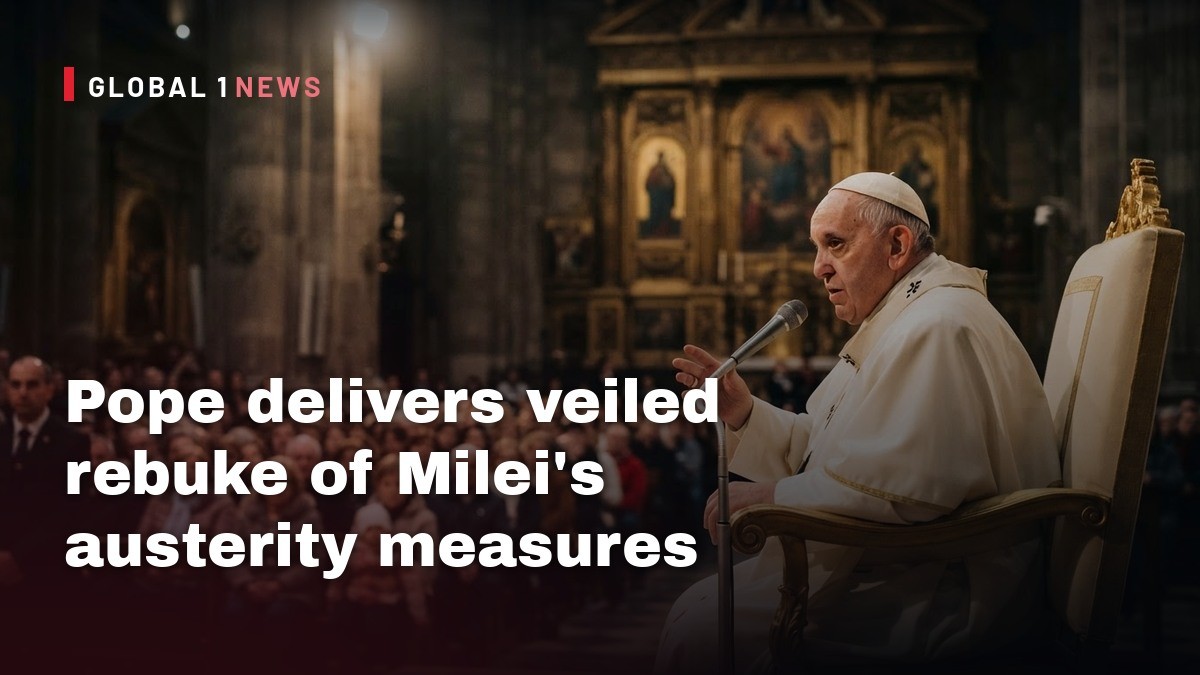
The papal visit to Buenos Aires this week has become more than a symbolic homage to the late Pope Francis; it has turned into a stark arena where Argentina’s fierce economic experiment meets the moral compass of the Catholic Church. Pope Leo XIV’s arrival, just three weeks after lung‑cancer surgery, was marked by a carefully worded rebuke of President Javier Milei’s austerity drive, a rebuke that resonated far beyond the pulpit and into the daily struggles of families trying to keep the lights on.
The Pope’s Message: Economy at the Service of People
In his first public remarks on Argentine soil, Pope Leo XIV emphasized that “the economy must be at the service of the people, rather than people being at the service of the economy.” He framed his appeal around the lived reality of those who, “despite hard work, nonetheless struggle to meet their household’s needs.” By highlighting “particular concern” for the ill, the dependent and the disabled, the pontiff subtly targeted the government’s recent cuts to disability assistance, a policy that has already sparked protests in several provinces.
The Pope’s language was diplomatic yet pointed, underscoring a “willingness to listen” and “careful use of words” as pillars of a healthy democracy. He warned that those who wield authority must act with prudence, acknowledging the limits of power and directing decisions toward the common good. For a nation grappling with soaring inflation and a shrinking middle class, that call carries a weight that transcends theology.
Milei’s Defense: Libertarian Ideals and Electoral Ambitions
President Milei, a vocal libertarian, responded by framing his austerity measures as a safeguard for future generations. He insisted his government is working to avoid “punishing the Argentines of tomorrow in order to benefit the Argentines of today.” In his address welcoming the Pope, Milei invoked the constitutional pillars of life, liberty and property, positioning them as the backbone of Argentina’s democratic tradition and of “Western democracies.”
The president’s rhetoric also revealed a political calculus. Having announced his intention to seek re‑election next year, Milei is keen to soften his image after a campaign marked by combative language, including past insults directed at Pope Francis. By calling Francis an “exceptional figure” and “undoubtedly the most important Argentine in history,” Milei attempted to bridge the gap between his hard‑line policies and the nation’s deeply Catholic identity.
The Political Context: Midterm Wins and Social Backlash
Milei’s “chainsaw” austerity has already reshaped Argentina’s fiscal landscape, slashing public spending in a bid to tame inflation and restore confidence among investors. Yet the very measures that earned him a decisive victory in recent midterm elections have also ignited fierce opposition from labor unions, social movements and, now, the Vatican. The Pope’s remarks echo the concerns of those who fear the cuts will deepen poverty and erode social cohesion.
While the Catholic Church’s critique is couched in moral language, it carries political implications. By urging the government to protect the most vulnerable, the Pope indirectly challenges the narrative that fiscal discipline alone can revive Argentina’s stagnant economy. The tension between fiscal orthodoxy and social justice is likely to shape the next round of legislative debates, especially as Milei prepares for a re‑election campaign that will hinge on delivering tangible improvements to ordinary Argentines.
Health and Symbolism: The Pope’s Personal Journey
Pope Leo XIV’s visit is also notable for its personal dimension. Having undergone an operation to remove a lung tumour just a month ago, the 71‑year‑old pontiff arrived in Buenos Aires without “extraordinary measures” according to Vatican officials. The successful surgery and the fact that the cancer has not spread were highlighted to reassure the faithful that his health would not impede his duties.
Beyond the medical reassurance, the Pope’s presence carries symbolic weight. The trip is described as a homage to Pope Francis, who never returned to his homeland during his papacy. By stepping onto Argentine soil, Leo XIV not only honors his predecessor but also re‑asserts the Vatican’s moral authority in a region where religious sentiment remains a potent force in public discourse.
International Echoes: U.S. Influence and Regional Dynamics
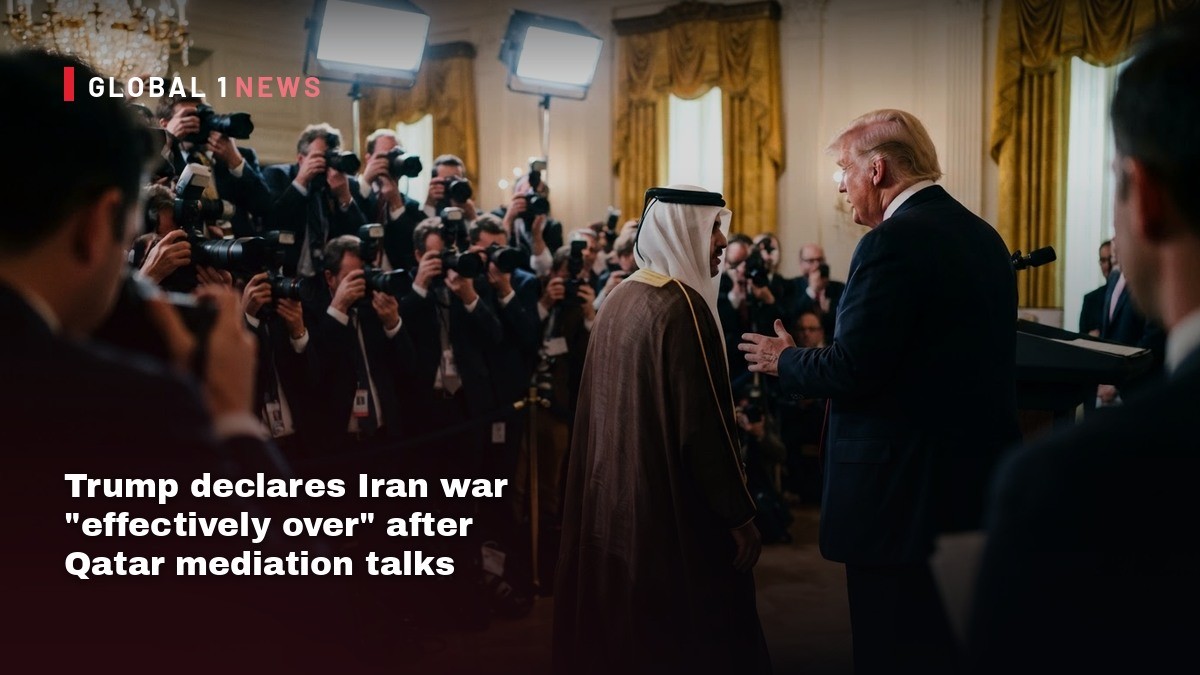
Milei’s alignment with U.S. President Donald Trump adds another layer to the unfolding drama. Trump has publicly criticized Pope Leo XIV for opposing the war in Iran, a stance that underscores the broader geopolitical tug‑of‑war between American hawkishness and the Vatican’s diplomatic outreach. Milei’s support for Trump signals a willingness to anchor Argentine policy within a broader right‑wing coalition that prioritizes market liberalization and a hard‑line stance on foreign affairs.
This alignment raises questions about Argentina’s foreign policy direction, especially as the nation navigates a complex regional landscape marked by left‑leaning governments in Brazil and Mexico, and a resurgence of populist rhetoric in Venezuela. The Pope’s appeal for prudence and democratic responsibility may serve as a counterbalance to the growing influence of external powers shaping domestic policy.
Public Reaction: From Streets to Social Media
On the digital front, Milei’s conciliatory tone toward Pope Francis—calling him “exceptional” and the “most important Argentine in history”—was echoed in a post on X, where he wrote that Argentina awaits the Pope’s arrival “with immense joy.” This messaging aimed to soften his image and rally popular support ahead of the upcoming election cycle.
Meanwhile, grassroots reactions to the Pope’s speech have been mixed. While many faithful see his words as a moral affirmation of the Church’s longstanding commitment to the poor, others view the remarks as a political intrusion into economic policy. Demonstrations in several neighborhoods have already begun to coalesce around the theme of “economy for the people,” a phrase lifted directly from the papal address, indicating that the Pope’s moral framing is already being weaponized by civil society.
Looking Ahead: Democracy, Policy and the Moral Ledger
The convergence of papal moral authority, Milei’s libertarian agenda, and a populace under economic strain creates a volatile mix that will shape Argentina’s democratic trajectory. Pope Leo XIV’s call for leaders to act with prudence and to recognize the limits of their power places a moral litmus test on the government’s forthcoming policy decisions, especially regarding social assistance programs.
As the 12‑day Latin American tour continues, the Argentine episode will likely serve as a bellwether for how the Vatican’s moral diplomacy can influence policy in a region where economic hardship often fuels political polarization. For Argentines, the Pope’s words may become a rallying cry for those demanding that “the economy serve the people,” while Milei’s supporters will argue that fiscal restraint is the only path to long‑term stability. The coming months will reveal whether moral persuasion can sway a government that has already demonstrated a willingness to cut deep into the social safety net in pursuit of a market‑driven vision of prosperity.
This article was produced with AI-assisted research and editorial support. Reporting is based on the source material cited below. Sources: BBC News Latin America; bbc.co.uk; Global1.News (10 November 2026).
By Elena Vasquez, Staff Writer
What's Your Reaction?
 Like
0
 Dislike
0
 Love
0
 Funny
0
 Wow
0
 Sad
0
 Angry
0
Latin America Correspondent at Global1.News. Based in Mexico City, covering politics, economics, energy, and culture across the region. Brings an on-the-ground perspective to stories spanning from the Rio Grande to Patagonia.











Comments (0)