
Burnham Pledges £8.4bn for Nuclear Submarines in Trident Renewal Drive
PM Andy Burnham announces £8.4bn for Dreadnought-class nuclear submarines at Barrow-in-Furness, supporting 18,000 jobs and 22,000 apprenticeships in a defence-driven reindustrialisation push.
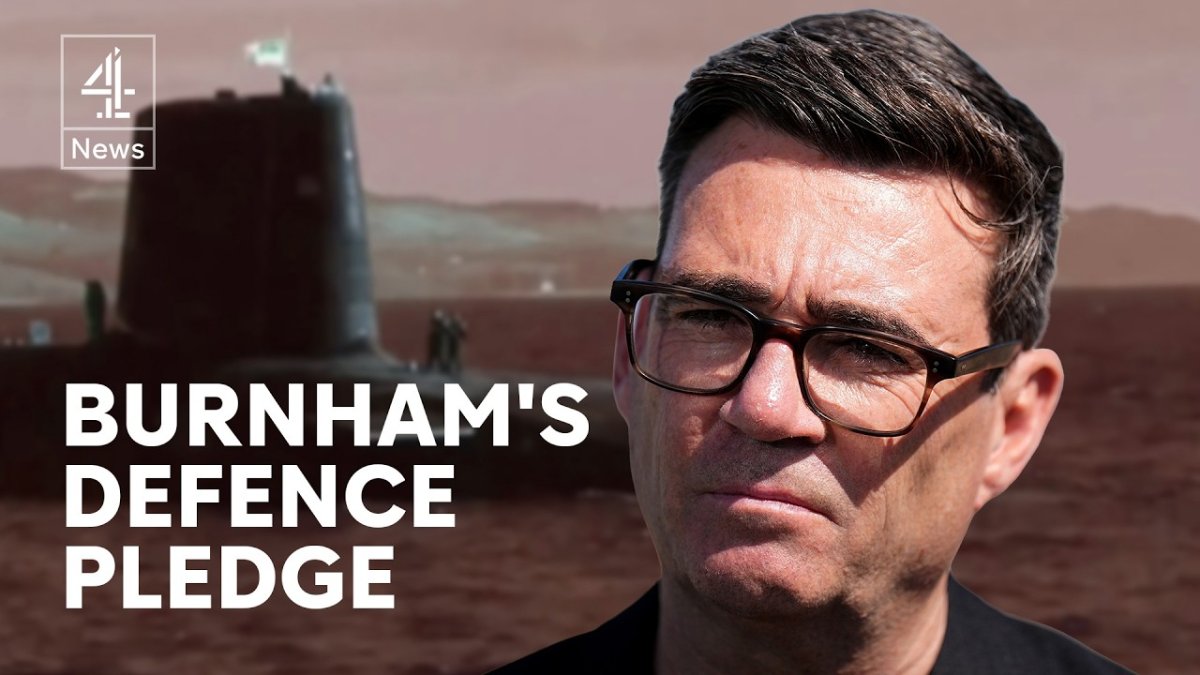
Prime Minister Andy Burnham has placed the renewal of Britain's nuclear deterrent at the centre of his vision for a reindustrialised nation, announcing £8.4 billion in new contracts for the Dreadnought-class submarine programme during a visit to Barrow-in-Furness on Thursday.
Burnham Pledges £8.4bn for Nuclear Submarines in Trident Renewal Drive
Barrow-in-Furness, UK – 30 July 2026 — Standing on the factory floor of BAE Systems' sprawling shipyard in Cumbria, Andy Burnham did more than recommit to Britain's nuclear deterrent. He staked his premiership on a simple proposition: that defence spending can rebuild the towns and communities left behind by decades of deindustrialisation.
The £8.4bn Commitment: What the Dreadnought Programme Delivers
The new phase of contracts, part of the already agreed £31 billion Dreadnought programme, will fund the continued construction of four new nuclear-armed submarines to replace the ageing Vanguard-class fleet. BAE Systems has been awarded the largest single contract — £5.9 billion — to complete the build of HMS Dreadnought, the first of the new class, which is expected to enter service in the early 2030s.
Downing Street said the investment would support 18,000 additional jobs in nuclear defence by 2030 and create 22,000 new apprenticeships across the country by 2035. The wider defence programme currently sustains 47,000 jobs, with 13,500 of those based at the Barrow shipyard alone.
"To every young person across the country, I want you to know that there is a path for you into a reindustrialised Britain, and it starts with the apprenticeships we are funding through this investment today," Burnham said ahead of his visit to England's north-west.
Barrow-in-Furness: A Town Rebuilt by Defence
The choice of Barrow-in-Furness for Thursday's announcement was no accident. The Cumbrian town is home to one of the UK's last great industrial shipyards, and its political journey mirrors the complexity of Britain's relationship with nuclear defence. The constituency swung from Labour to the Conservatives in 2019 before returning to Labour in the 2024 general election — a bellwether for working-class attitudes towards defence spending and the unions that have historically opposed it.
The investment delivers more than warships. BAE Systems announced a new apprenticeship scheme that will train 30 apprentices over the next three years, with the promise of thousands more to follow. For a town that has weathered the collapse of shipbuilding elsewhere in Britain, the Dreadnought programme represents both employment security and a statement of intent.

The Defence Spending Row: 3 Per Cent by 2030 or Not?
Burnham's announcement comes against a backdrop of high political drama over defence spending. His predecessor, Keir Starmer, was fatally undermined last month when his own defence secretary, John Healey, resigned in protest over Starmer's refusal to commit to spending 3 per cent of GDP on defence by 2030.
Healey's resignation precipitated Starmer's departure, clearing the path for Burnham to enter Number 10 just over a week ago. The new prime minister quickly leaned into a NATO commitment to increase defence spending by over £25 billion a year, reaching 3.5 per cent of GDP by 2035. But at a press conference on Wednesday, Burnham declined to endorse Healey's proposed interim target of 3 per cent by 2030.
"When it comes to defence, obviously those commitments … relate to the parliament after this one," Burnham said. "In terms of our NATO commitments, I have been very clear that we will honour those commitments. It does mean being prepared to look at challenging issues."
Wes Streeting, now Defence Secretary, and John Healey, elevated to Chancellor of the Exchequer in a deft reshuffle, were both among the MPs who voted for Trident renewal in 2016 — a marker of continuity at the top of government on the nuclear question.
Trident's Political History: The Labour Split That Never Healed
The significance of a Labour prime minister championing Trident renewal is not lost on those who remember the party's civil war over the issue. In 2016, then-leader Jeremy Corbyn voted against renewing the nuclear deterrent, triggering one of the most consequential Labour splits in a generation. Burnham, then Mayor of Greater Manchester, was among the 456 MPs who voted in favour.
The 2016 vote saw 47 Labour MPs defy Corbyn's anti-nuclear position, including several who now populate the upper echelons of Burnham's government. Louise Haigh, who now runs the new office of the prime minister, was among the 66 Labour MPs who voted against — a reminder that the party's anti-nuclear wing remains present even as the leadership has shifted decisively back towards the Atlanticist mainstream.
The Industrial Strategy: Defence as Reindustrialisation
Burnham's framing of the Dreadnought investment is as much about industrial policy as it is about national security. "Keeping this country safe is the first responsibility of any government — but security is not only about what we build; it is about who builds it, and who benefits from it," he said.
The supply chain for the Dreadnought programme extends well beyond Barrow. Trident warheads are designed and built at the Atomic Weapons Establishment in Aldermaston and Burghfield in Berkshire, employing 9,000 people. Rolls-Royce in Derby builds the nuclear reactors that power the Dreadnought and other Royal Navy submarines, sustaining a further 4,000 skilled jobs. The geography of the programme — Cumbria, Berkshire, Derby, and scores of smaller suppliers across the UK — gives Burnham a ready-made narrative of national renewal through defence procurement.
Cost Concerns and Programme Risk: The £10bn Contingency
The Dreadnought programme is not without its critics. The overall £31 billion price tag includes a £10 billion contingency specifically allocated to cover potential overspends — a figure that has already placed the programme on amber alert by government procurement monitors. Delays and cost overruns on major defence projects are hardly unusual in the UK, but the scale of the contingency suggests genuine concern within the Ministry of Defence about the programme's financial trajectory.
Each Vanguard-class submarine, the vessels the Dreadnoughts will replace, currently carries up to 40 nuclear warheads — enough destructive power, as defence analysts note, to devastate Moscow and several other major Russian cities. The question of whether Britain needs such capability in a world of evolving threats, from cyber warfare to drone swarms, remains a live debate. But Burnham has made his position unequivocally clear.
The Bottom Line — What Comes Next
Andy Burnham has placed a large bet on the proposition that Britain can spend its way to security while simultaneously rebuilding its industrial base. The Dreadnought programme, at £31 billion with a £10 billion contingency, is the most expensive single defence project in British history. Whether it delivers the promised jobs, apprentices, and regional renewal — and whether the submarines arrive on time and on budget — will define not just the programme's success but the credibility of Burnham's entire reindustrialisation agenda.
The prime minister has bought himself time on the 3 per cent question, deferring the hard spending decisions to the next parliament. But with Russia's war in Ukraine grinding into its fourth year, NATO allies watching closely, and a UK defence budget already under strain, the pressure to move faster will only intensify. For the engineers in Barrow, the apprentices in Derby, and the nuclear scientists at Aldermaston, the message is clear: the work is coming. The question is whether the money will follow.
By Erica Thornton, Staff Writer
This article was produced with AI-assisted research and editorial support. Reporting is based on sources cited in the article.
What's Your Reaction?
 Like
0
Like
0
 Dislike
0
Dislike
0
 Love
0
Love
0
 Funny
0
Funny
0
 Wow
0
Wow
0
 Sad
0
Sad
0
 Angry
0
Angry
0

US Politics and Policy Correspondent at Global1.News. Based in Washington DC, covering American politics, policy, elections, and the courts. Knows how the system works and tells you what it actually means.














Comments (0)