
Ontario First Nations Chiefs Demand Wildfire Public Inquiry
Northern Ontario First Nations leaders are demanding an independent public inquiry into the provincial government's wildfire response, citing delayed evacuations, poor communication, and inadequate support as more than 180 fires burn across the region and over 1,800 people remain displaced.
In a recent CBC News report, Northern Ontario First Nations leaders launched a fierce critique of the provincial government's wildfire response, demanding an independent public inquiry into what they describe as a systemic failure to protect Indigenous communities. With more than 180 wildfires burning across the region and over 1,800 people displaced, the allegations of delayed evacuations, poor communication, and inadequate support have reignited long-standing questions about emergency management in Ontario's remote and Indigenous communities.
First Nations Demand Public Inquiry Into Ontario Wildfire Response
Thunder Bay, Ontario — First Nations chiefs from northwestern Ontario are demanding a public inquiry into the provincial government's handling of this year's wildfire season, accusing the Ministry of Natural Resources (MNR) of abandoning communities as flames closed in.
Gull Bay First Nation Chief Wilfred King has emerged as the leading voice in the call for accountability, stating bluntly that "the lack of communication and evacuation support should horrify all Canadians, and our community was on its own." Speaking at a news conference in Thunder Bay organised by Nishnawbe Aski Nation (NAN), King was joined by leaders from Whitewater Lake First Nation, Eabametoong First Nation, Fort William First Nation, and other affected communities.
The Call for a Public Inquiry
The centrepiece of the First Nations' demands is an independent public inquiry into Ontario's wildfire response. The inquiry, according to Chief King, would investigate evacuation planning, emergency co-ordination with First Nations, and the province's overall preparedness for what is shaping up to be the worst wildfire season on record in Ontario.
"How could this happen? More importantly, how do we make sure this never happens again? That's what they must answer," King said, flanked by chiefs from a dozen affected communities. The press conference at the Superior Inn Hotel and Conference Centre in Thunder Bay marked a coordinated pushback against Premier Doug Ford's characterisation of the provincial response.
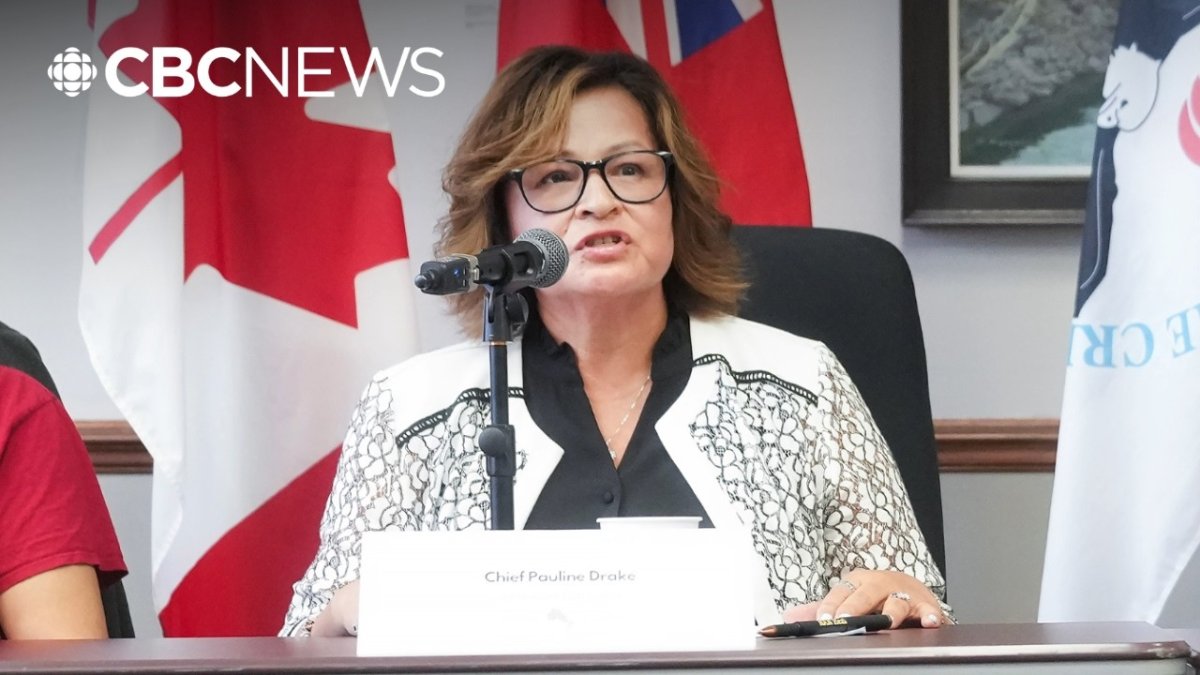
Ontario Regional Chief Abram Benedict was also present, lending the weight of the Ontario region of the Assembly of First Nations to the call for a formal inquiry. Chief Pauline Drake of Whitewater Lake First Nation and Chief Solomon Atlookan of Eabametoong First Nation stood alongside King, presenting a united front of Indigenous leadership demanding systemic change.
Allegations of Systemic Failure
The chiefs' specific allegations paint a troubling picture of a provincial emergency management system that failed Indigenous communities at multiple junctures. Several leaders reported that official evacuation orders came late or not at all, forcing residents to flee without government support.
Chief Lawrence Wanamakik of Whitesand First Nation said the Ministry of Natural Resources took too long to warn residents and issue evacuation orders, leaving his community to organise its own transport and shelter. Chief Helen Paavola described a similar ordeal, stating her community was "left to evacuate without notice and support."
The community of Collins — also known as Namaygoosisagagun First Nation — was among those where widespread destruction was reported. Whitewater Lake First Nation also suffered significant damage as fires swept through the region. Some fires spread so quickly, provincial officials acknowledged, that they were only spotted once they were dangerously close to First Nations communities.
The chiefs say the MNR ignored years of warnings from Indigenous leaders about the need to improve wildfire preparedness and emergency response in remote northern communities. The allegations have prompted broader questions about whether the province has adequately invested in fire suppression infrastructure, evacuation transportation, and emergency communication systems in the North.
Premier Ford's Response
Premier Doug Ford has pushed back forcefully against the allegations. Speaking to reporters, Ford said his government did "everything we possibly can" to respond to the wildfires and rejected the notion that the province had abandoned First Nations communities.
"I totally disagree with that," Ford said when asked about the chiefs' allegations. The premier said Ontario has had "constant communication" with First Nations communities throughout the crisis and has helped move roughly 2,000 people from affected areas, providing hotel accommodations, food, and other assistance.
Ford acknowledged that services on reserves are constitutionally a federal responsibility but maintained that Ontario has taken a leading role in supporting evacuees and fighting the fires. He said the province would spend whatever is necessary to combat the fires and protect affected communities.
Chief King, however, accused Ford of lying and framed Tuesday's news conference as a direct rebuttal to what he called the premier's misleading narrative about the province's response. The stark disagreement between the premier and Indigenous leaders underscores the depth of the divide over this year's wildfire management.
Meanwhile, Ontario Minister of Natural Resources Mike Harris — the son of former premier Mike Harris — appeared alongside the ministers of emergency preparedness and Indigenous affairs to take questions as the fires continued to burn across the northwest. The ministerial response has done little to satisfy the chiefs, who say they want structural changes, not press conferences.
The Scale of the Crisis
This year's wildfire season in Ontario is on track to break records. More than 180 wildfires are currently burning across northern Ontario, a vast region stretching from the Manitoba border to the Quebec boundary. More than a dozen First Nations communities have been evacuated, displacing over 1,800 people from their homes.
The record-breaking fires have been fuelled by a combination of dry conditions, high temperatures, and strong winds — factors that climate scientists have linked to a changing climate that is making wildfire seasons longer and more intense across Canada. The federal government's Canadian Interagency Forest Fire Centre has reported that the 2026 wildfire season is among the most severe in the country's history, with provinces stretching from British Columbia to Quebec battling significant blazes.
In Ontario, the fires have stretched provincial resources thin. The MNR has deployed water bombers, helicopters, and hundreds of firefighters, but First Nations leaders argue that the scale of the crisis demands a fundamentally different approach to emergency management in the North.
Indigenous Relations and Federal-Provincial Jurisdiction
The wildfire crisis has exposed long-standing tensions between Indigenous communities, the Ontario government, and the federal government over emergency management on First Nations lands. Services on reserves are a federal responsibility under the Indian Act, administered by Indigenous Services Canada, but provincial resources — including firefighting aircraft, emergency co-ordination centres, and evacuation logistics — are essential for responding to threats in remote communities.
This jurisdictional divide has created what Indigenous leaders describe as a gap in accountability. When fires threaten a First Nation, neither level of government is clearly responsible for ensuring timely evacuations, adequate shelter, or long-term recovery support. The chiefs argue that this ambiguity has cost lives and property.
The call for a public inquiry comes against the backdrop of broader efforts toward reconciliation in Canada. The Truth and Reconciliation Commission's Calls to Action, including those related to health, child welfare, and emergency services, have placed a renewed focus on the need for Indigenous communities to have meaningful decision-making authority over services that affect them. Chief King explicitly connected the wildfire response failures to this larger reconciliation framework, arguing that excluding First Nations from emergency planning is a continuation of colonial governance structures.
Nishnawbe Aski Nation, which represents 49 First Nations across Treaty 9 and Treaty 5 territories in northern Ontario, has been a persistent voice on this issue. Grand Chief Alvin Fiddler has previously called for a First Nations-led emergency management strategy that would give Indigenous communities greater control over wildfire preparedness and response, rather than relying on MNR-led decision-making from offices in Toronto and Thunder Bay.
What Happens Next
The path forward remains uncertain. Premier Ford has not committed to a public inquiry, and his government's focus remains on containing the active fires and supporting evacuees. But the political pressure is building. Ontario NDP Leader Marit Stiles has expressed support for an inquiry, and the issue is expected to be a flashpoint when the provincial legislature resumes sitting.
The chiefs say they will continue to press their case publicly and through political channels. An inquiry would require a formal order-in-council from the Ontario cabinet, meaning the decision ultimately rests with the Ford government. However, the growing chorus of voices — including municipal leaders, opposition politicians, and advocacy groups — may make it politically difficult for the province to resist indefinitely.
In the meantime, hundreds of evacuees remain in hotels in Thunder Bay, Sault Ste. Marie, and other communities, unsure when they will be able to return home. The immediate priority, as Minister Harris has stated, is containing the fires and ensuring the safety of residents. But for Indigenous leaders, the question of accountability — of how to ensure this never happens again — will not be deferred.
As Chief King put it: "How could this happen? More importantly, how do we make sure this never happens again? That's what they must answer."
By Alex Thompson, Staff Writer
This article was produced with AI-assisted research and editorial support. Reporting is based on sources cited in the article.
What's Your Reaction?
 Like
0
Like
0
 Dislike
0
Dislike
0
 Love
0
Love
0
 Funny
0
Funny
0
 Wow
0
Wow
0
 Sad
0
Sad
0
 Angry
0
Angry
0

Canada Correspondent at Global1.News. Based in Toronto, covering Canadian politics, energy, trade, and US-Canada relations. Provides the Canadian perspective on North American and global affairs.












Comments (0)