
B.C. Businesses Brace as Canada's Counter-Tariffs Take Effect, Deepening Trade-War Uncertainty
The new CBC News report from British Columbia captures a moment of profound uncertainty for businesses across the province, framing the trade war as a state where "volatility has become the condition" rather than an exception. As Canada's dollar-for-dollar counter-tariffs take effect today, the report profiles companies like Richmond Plywood and West Coast Walls that are making drastic decisions—calling back shipments and weighing existential threats—in real time.
The new CBC News report from British Columbia captures a moment of profound uncertainty for businesses across the province, framing the trade war as a state where "volatility has become the condition" rather than an exception. As Canada's dollar-for-dollar counter-tariffs take effect today, the report profiles companies like Richmond Plywood and West Coast Walls that are making drastic decisions—calling back shipments and weighing existential threats—in real time. For Canadian readers, this is the human cost of a trade dispute that has moved from abstract negotiation to the factory floor and the loading dock.
B.C. Businesses Brace as Canada's Counter-Tariffs Take Effect, Deepening Trade War Uncertainty
Vancouver, B.C. — The 50 per cent U.S. tariffs that came into effect over the weekend are now met with Canada's retaliatory levies, creating a double-barrelled squeeze on businesses in British Columbia, the province most exposed to the dispute. Finance Minister Francois-Philippe Champagne announced the schedule of counter-tariffs in Ottawa today, applying 15, 25 or 50 per cent levies to roughly $28 billion in U.S. imports, corresponding dollar-for-dollar with the hit to Canadian exports. The affected goods include seafood, paper products, furniture, apparel, tools, motorcycles, iron and steel products, and machinery—a list that mirrors the sectors where B.C. businesses are feeling the sharpest pain.
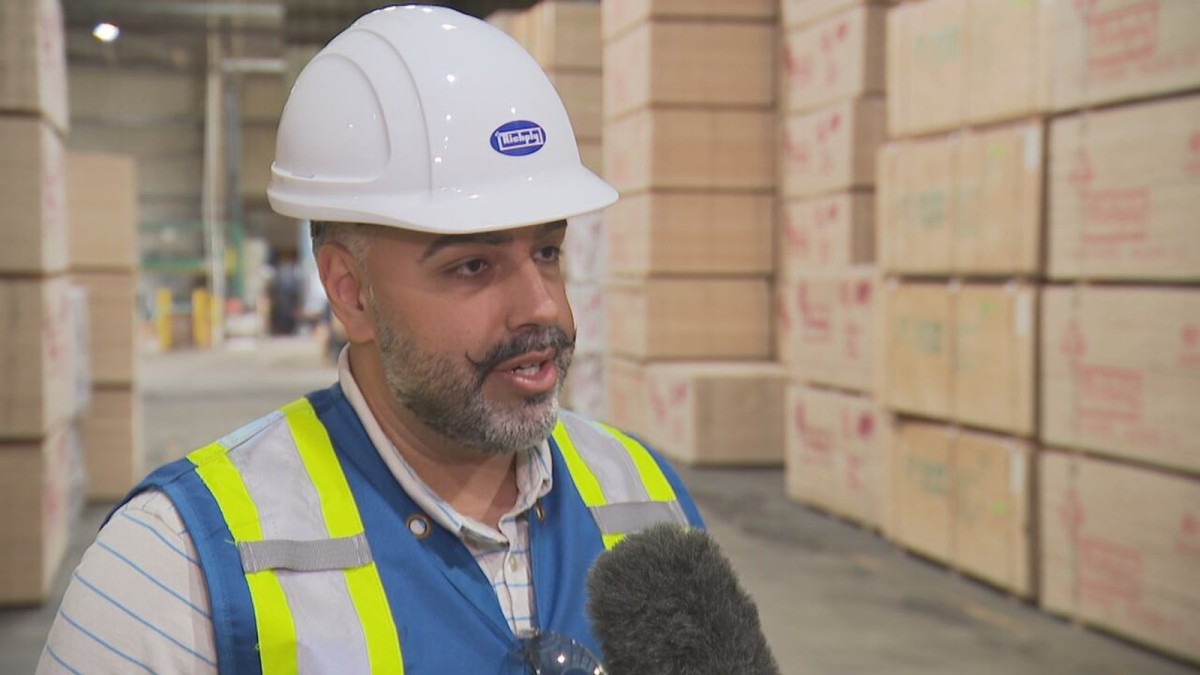
Richmond Plywood Calls Back Eight Truckloads
Bhavjit Thandi, chief financial officer of Richmond Plywood, an employee-owned company where roughly 20 per cent of sales go to the U.S. and represent its highest-margin products, made a decisive call in recent days. The company recalled a shipment of eight truckloads of product waiting to cross the border, an action Thandi estimated avoided a potential tariff bill of up to $800,000. "Richmond Plywood will not be doing any more sales to the U.S. pretty much overnight," Thandi said earlier, adding bluntly: "We can't absorb 50 per cent and the customers on the U.S. side can't pay a 50 per cent increase."
The plywood and wood veneer sector is ground zero for this dispute. U.S. President Donald Trump's Section 338 executive order targeted a range of Canadian goods including plywood, wall coverings, wallpaper, furniture, cement, wine and hockey sticks—together worth roughly US$28 billion in annual exports. For British Columbia, items under tariff threat represent more than 13 per cent of the province's total exports to the United States, higher than any other province, with wood and paper products leading the exposure. The B.C. Chamber of Commerce has estimated the province could see about 14 per cent of its exports affected.
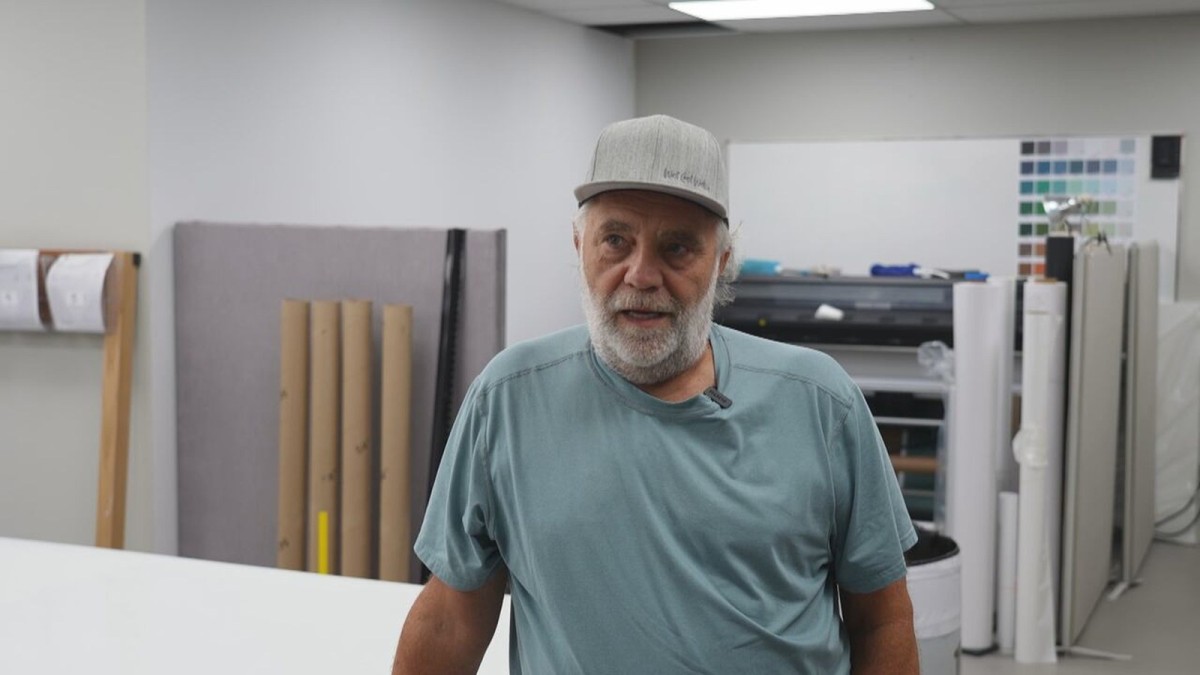
Abbotsford Manufacturer Faces 'Existential Threat'
Blaine Maryniuk, co-founder and president of West Coast Walls, a small Abbotsford manufacturer of wallpaper, stickers and decals, sends 25 to 50 per cent of his monthly sales to the U.S. market. The prospect of tariffs, he said, "poses an existential threat" and "it actually has been overwhelming." Maryniuk is now considering having a U.S.-based company print his designs south of the border, but concedes the arrangement would likely consume any profit margin. His products had always travelled under the Free Trade Agreement—"and then suddenly they're not."
The scale of the challenge in Abbotsford is significant. Alex Mitchell, CEO of the Abbotsford Chamber of Commerce, notes that more than 300 businesses in the city export to the United States, with about $1.5 billion in annual exports flowing from the municipality alone. Many of those exporters are up to 90 per cent reliant on the U.S. market. "It's very challenging for customers and suppliers to continue to maintain those excellent trading relationships," Mitchell said.
Small Business Bears the Brunt of Tariff Uncertainty
The burden falls disproportionately on smaller operations that lack the legal and financial teams to navigate shifting trade rules. Bridgitte Anderson, president and CEO of the Greater Vancouver Board of Trade, underscored the vulnerability: "British Columbia is made-up of a lot of small and medium businesses, and these are the ones that just don't have the capacity or the resources to be able to deal with this significant amount of tariffs." She pointed to estimates that tens of thousands of jobs could be lost across Canada, with significant numbers in British Columbia.
Dan Kelly, president of the Canadian Federation of Independent Business (CFIB), which represents more than 100,000 small and medium enterprises, said some of the businesses he represents would be effectively "done" because of the new levies. CFIB data paints a grim picture: 35 per cent of small and medium-sized exporters expect revenue to fall by at least half, and 78 per cent said the new tariffs would make their products uncompetitive in the U.S. market. "I'm feeling quite worried," Kelly said. "The burden of counter-tariffs hits disproportionately hard on some, not on others."
Federal Support Programs Face Criticism Over Thresholds
The federal government has responded with a $7.5 billion package of new and enhanced measures for workers and businesses, including an additional $1.5 billion for the Regional Tariff Response Initiative (RTRI), building on $1.95 billion previously announced. Enhanced RTRI applications through PacifiCan opened today, and Minister Gregor Robertson, responsible for Pacific Economic Development Canada, has convened Northern B.C. businesses to discuss impacts. PacifiCan also announced over $11 million for ten businesses and organisations across Northern B.C. last week.
But Ryan Mitton, B.C. director of legislative affairs for CFIB, argues the program's thresholds—a minimum revenue of $2 million or at least 10 employees—"shut out a good portion of small businesses" in the province. CFIB prefers a simpler program where businesses simply prove they are "a real Canadian business." The criticism highlights a gap between federal design and on-the-ground reality for the smallest exporters, who are often the most trade-exposed relative to their size.
Political Fallout and the '51st State' Rhetoric
The breakdown of trade talks late Friday night set the stage for the current impasse. Prime Minister Mark Carney said Canada walked away after the U.S. attempted last-minute changes to a proposed deal, adding "they asked too much and they offered too little." B.C. Premier David Eby, at a news conference over the weekend, was blunter, saying the proposed U.S. terms would reduce Canada to "the economic equivalent of the 51st state." Eby noted that B.C. was set to be disproportionately affected by the tariffs.
Laura Jones, CEO of the Business Council of B.C., offered a measured assessment: tariffs "are terrible economic policy, full stop." She endorsed the federal approach, saying Canada needs to "continue to support this very proportionate, calm, measured approach." On the path forward, Jones added: "It would be great to get back to the table with the U.S., but only with a fair deal... no deal is better than a bad deal."
Macroeconomic Impact and the Search for New Markets
The macroeconomic picture adds context to the anxiety. BMO senior economist Robert Kavcic estimates the 50 per cent duties could shave half a percentage point off Canada's GDP growth, though the roughly $28 billion of Canadian exports covered is only about five per cent of Canada's total exports to the U.S. Bank of Canada Governor Tiff Macklem said last week that while the retaliatory duties and U.S. tariffs add financial burdens for specific sectors, they remain targeted at a relatively narrow commercial base. These Section 338 tariffs stack on top of earlier U.S. levies: 25 per cent on steel and aluminum, 25 per cent on autos, and softwood lumber duties that averaged about 45 per cent in 2026.
Across the country, business owners describe a planning paralysis where an on-again, off-again tariff landscape makes multi-year investments and hiring decisions nearly impossible. Some exporters are stockpiling or front-loading shipments, others are calling shipments back like Richmond Plywood, and many are looking to diversify to non-U.S. markets in Europe, Asia and South America. There are glimmers of domestic opportunity: CFIB provincial data shows roughly a third of B.C. businesses report increased demand for Canadian-made products, and 40 per cent have switched to Canadian suppliers.
For B.C. businesses, the immediate question is survival—whether they can bridge the gap until a fair deal emerges or whether the cumulative weight of tariffs, counter-tariffs and uncertainty forces permanent contraction. The answer will shape not just individual companies but the economic fabric of communities from Richmond to Abbotsford and beyond. As the CBC News report makes clear, volatility is no longer a temporary condition to be weathered; it has become the operating environment itself.
This article was produced with AI-assisted research and editorial support. Sources: CBC News, The Canadian Press, Vancouver Sun, Pacific Economic Development Canada.
By Alex Thompson, Staff Writer
What's Your Reaction?
 Like
0
Like
0
 Dislike
0
Dislike
0
 Love
0
Love
0
 Funny
0
Funny
0
 Wow
0
Wow
0
 Sad
0
Sad
0
 Angry
0
Angry
0

Canada Correspondent at Global1.News. Based in Toronto, covering Canadian politics, energy, trade, and US-Canada relations. Provides the Canadian perspective on North American and global affairs.













Comments (0)