
Iran Announces Maritime Exclusion Zone Near Strait of Hormuz as Tanker War Escalates
Iran plans to announce a maritime exclusion zone outside the Strait of Hormuz targeting vessels it says attempt to transit the waterway, a senior security official told state media.
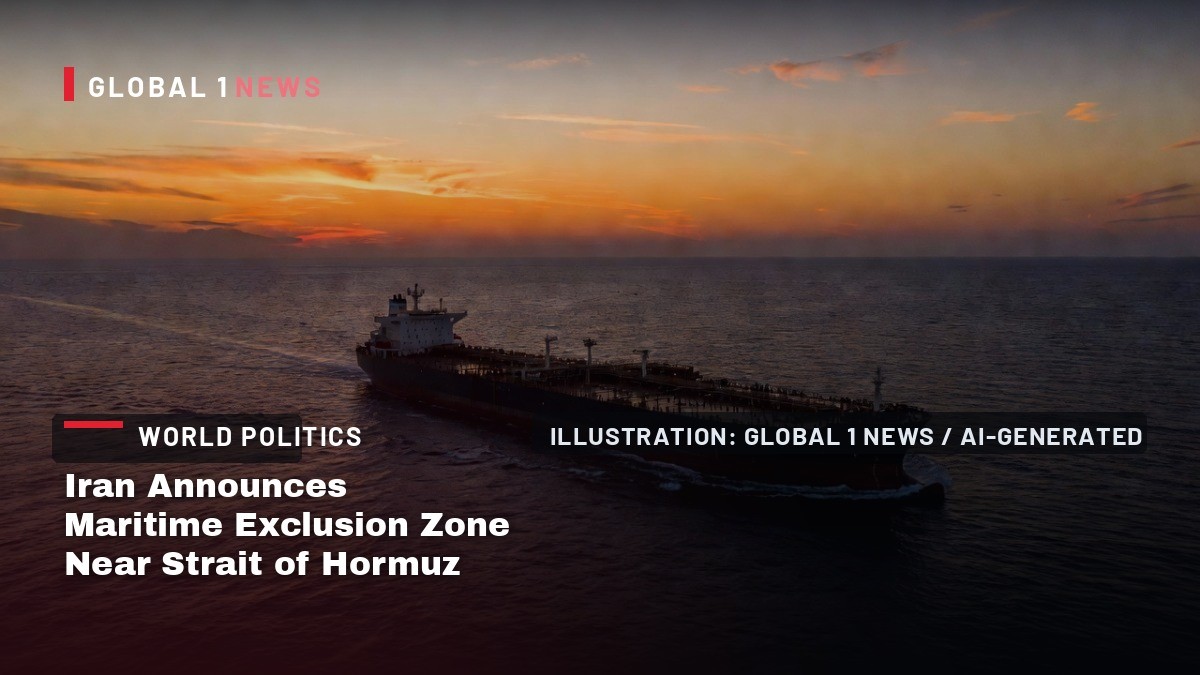
Iran announced plans on Monday to declare a maritime “exclusion zone” in the waters approaching the Strait of Hormuz, a move that threatens to deepen the confrontation with the United States just days after Washington struck Iranian oil tankers in the region, according to statements carried by Iran’s state broadcaster.
Mohsen Rezaei, the head of Iran’s Supreme National Security Council, said Tehran would formally announce the zone “in the coming days and weeks” and would target vessels it believes are attempting to transit the strategic waterway. The declaration marks the latest escalation in a months-long conflict that has disrupted global shipping and drawn repeated U.S. military responses.
Iran’s exclusion zone plan and its stated boundaries
Rezaei said the exclusion zone “will begin from the line of the U.S. naval blockade, extend toward the Strait of Hormuz, and from this side continue into the Persian Gulf.” He warned that any ship entering the area with the intention of passing through the Strait, once identified, would be placed on Iran’s sanctions list.
The Iranian official did not specify how the zone would be enforced or what actions Iranian naval forces might take against vessels that ignore the designation. His remarks, aired on state media, appeared designed to challenge the U.S.-led naval presence that has been escorting commercial traffic through the strait since hostilities resumed in late August.
Rezaei disputed U.S. claims about the volume of commercial traffic moving through the waterway, asserting that it is “completely closed” and that at most seven or eight ships pass per day. His characterization stands in sharp contrast to U.S. military assessments, which describe an ongoing, if constrained, flow of commercial shipping under escort.
U.S. strikes on Iranian tankers follow missile attacks
The announcement came a day after the United States struck three Iranian oil tankers in response to Tehran launching ballistic missiles at U.S. warships, which Washington said escaped damage. U.S. Central Command said it destroyed three Islamic Revolutionary Guard Corps-linked tankers on 5 September, including the M/T Kylo.
U.S. officials said the strikes were intended to degrade Iran’s ability to threaten maritime traffic and to retaliate for the missile barrage, which they described as an unprovoked attack on American forces operating in international waters. The officials added that no U.S. vessels were hit and that all personnel were safe.
The tanker strikes represent a significant expansion of the U.S. military campaign, which had previously focused on intercepting and redirecting commercial vessels. The destruction of the M/T Kylo and two other tankers signals a more aggressive posture aimed at crippling Iran’s oil export capacity and its ability to fund allied forces in the region.
U.S. blockade and its impact on commercial shipping
The U.S. military says more than 20 warships are supporting the blockade, which as of Sunday had redirected 92 commercial ships and disabled three. The blockade, first imposed after the collapse of a June truce, is designed to prevent Iranian oil from reaching international markets and to ensure the safe passage of other commercial traffic through the Strait of Hormuz.
U.S. naval commanders have described the operation as one of the largest maritime interdiction efforts in recent decades, with warships from multiple allied nations participating in escort missions and boarding operations. The redirected vessels have been sent to ports in the region for inspection, while disabled ships have been taken out of service.
The blockade has drawn sharp criticism from Tehran, which has called it an act of piracy and a violation of international law. Rezaei’s exclusion zone announcement appears to be a direct response to the blockade, framing Iran’s actions as a defensive measure against what it characterizes as U.S. aggression.
Iran claims cruise missile test against U.S. carrier
In his state broadcast remarks, Rezaei also claimed that Iran carried out its first test of a cruise missile on an American aircraft carrier, a statement cited by Reuters. The claim could not be independently verified, and U.S. officials did not immediately comment on it.
If confirmed, the test would mark a significant escalation in Iran’s military capabilities and its willingness to target U.S. naval assets directly. The U.S. Navy has maintained a continuous carrier presence in the region throughout the confrontation, and any successful strike on a carrier would represent a major strategic victory for Tehran.
Experts described Iran’s missile launches as a dangerous escalation after earlier attacks at sea targeted commercial shipping. The shift from harassing merchant vessels to firing at U.S. warships, and now the claimed test against a carrier, suggests that Iran is willing to risk a broader military confrontation to break the blockade.
Collapse of the June truce and renewed hostilities
The current crisis has its roots in a memorandum signed by former President Donald Trump and Iranian President Masoud Pezeshkian on 17 June, which had paused the war. The truce held for more than two months, but hostilities resumed on 30 August after negotiations collapsed over the scope of sanctions relief and the future of Iran’s nuclear program.
Since the resumption of hostilities, the United States has been introducing new measures to increase economic pressure on Iran, including the naval blockade and a series of sanctions designations targeting Iranian officials, shipping companies, and financial institutions. The Trump administration has said it will not relent until Tehran agrees to verifiable limits on its missile program and its support for regional proxies.
Iranian officials, for their part, have rejected any precondition for negotiations and have vowed to continue what they describe as resistance operations until the blockade is lifted. The collapse of the June truce has left both sides locked in a cycle of escalation, with each new round of strikes and counter-strikes reducing the prospects for a return to diplomacy.
Economic fallout and oil price forecasts
The ongoing confrontation has taken a heavy toll on global energy markets. The U.S. Energy Information Administration forecasts a third-quarter average near $85 a barrel, about $11 above its previous forecast, warning that prices will stay elevated until traffic through the Strait of Hormuz normalizes.
The strait carries roughly one-fifth of global oil consumption, and the disruption of shipping through the waterway has forced tankers to take longer routes or to wait for naval escorts, adding costs and delays to every voyage. The blockade has also reduced Iran’s oil exports to near zero, removing roughly 1.5 million barrels per day from the market.
Analysts said the price forecast could prove conservative if the exclusion zone is implemented and Iran begins to interdict or sanction vessels attempting to transit the strait. A sustained closure of the waterway, even partial, could push prices significantly higher and trigger a global economic slowdown.
Human cost of the maritime confrontation
Beyond the economic impact, the months-long confrontation has exacted a human toll. Some regional reporting cited at least 20 seafarers and one port worker killed and 35 injured across the months-long confrontation, though the figures could not be independently confirmed and may not capture the full scale of casualties.
The deaths and injuries have occurred in a series of incidents, including missile strikes on commercial vessels, attacks on tankers, and clashes between Iranian fast boats and U.S. naval forces. Seafarers from a range of countries, including India, the Philippines, and Bangladesh, have been caught in the crossfire, raising concerns about the safety of civilian mariners in a war zone.
Humanitarian organizations have called for the establishment of safe corridors for commercial shipping and for the protection of seafarers, who they say are not legitimate military targets. The calls have gone unheeded by both sides, and the announcement of the exclusion zone is likely to increase the risks faced by crews attempting to transit the strait.
International reaction and the path forward
The international community has watched the escalation with growing alarm, with several nations urging restraint and calling for a return to negotiations. The United Nations Security Council has held closed-door briefings on the situation, but deep divisions among its permanent members have prevented any unified response.
Regional powers, including Saudi Arabia and the United Arab Emirates, have sought to distance themselves from the conflict while quietly supporting the U.S. blockade through the provision of port facilities and logistical support. Iran has warned its neighbors against cooperating with the blockade, threatening retaliation against any state that hosts U.S. forces or facilitates the interdiction of Iranian oil.
With negotiations collapsed and both sides digging in, the immediate outlook is for continued escalation. Iran’s exclusion zone announcement, if implemented, would create a direct challenge to the U.S. blockade and could lead to confrontations between Iranian naval forces and the U.S. warships enforcing the interdiction. The risk of a miscalculation that triggers a wider war has rarely been higher.
This article was produced with AI-assisted research and editorial support. Sources: AP, Reuters, U.S. Central Command.
What's Your Reaction?
 Like
1
Like
1
 Dislike
0
Dislike
0
 Love
0
Love
0
 Funny
0
Funny
0
 Wow
0
Wow
0
 Sad
0
Sad
0
 Angry
0
Angry
0

Editor-in-Chief at Global1.News. Atlanta-based journalist who cuts through the BS and tells it like it is. Lead anchor, host, and the voice you hear when the spin stops and the truth starts.













Comments (0)