
Bangkok Halts New Data Centre Approvals as Regulators Race to Catch Up With AI Boom
Bangkok has slammed the brakes on new standalone data centre projects, suspending three pending applications and ordering a fresh review under stricter standards covering fuel storage, land use, safety, and the strain these facilities place on the capital's electricity and water networks.
Bangkok has slammed the brakes on new standalone data centre projects, suspending three pending applications and ordering a fresh review under stricter standards covering fuel storage, land use, safety, and the strain these facilities place on the capital's electricity and water networks. The move, announced at a joint briefing on Wednesday, marks a turning point for Thailand's booming digital infrastructure sector, which has raced ahead of its own regulatory framework.
Bangkok Halts New Data Centre Approvals as Regulators Race to Catch Up With AI Boom
Bangkok, Thailand — The Bangkok Metropolitan Administration (BMA) has suspended three planned standalone data centre projects and ordered a comprehensive reassessment under new standards, while the Energy Ministry separately halted new permits for backup-fuel tanks at these facilities. The coordinated action, revealed at a joint briefing on Wednesday by the BMA, Metropolitan Electricity Authority (MEA), Metropolitan Waterworks Authority (MWA), and the Energy Ministry, responds to growing public concern over safety, environmental impact, and resource consumption in a sector that has become Thailand's primary driver of rising power demand.
Six Applications, Three Suspended: The Scope of the Problem
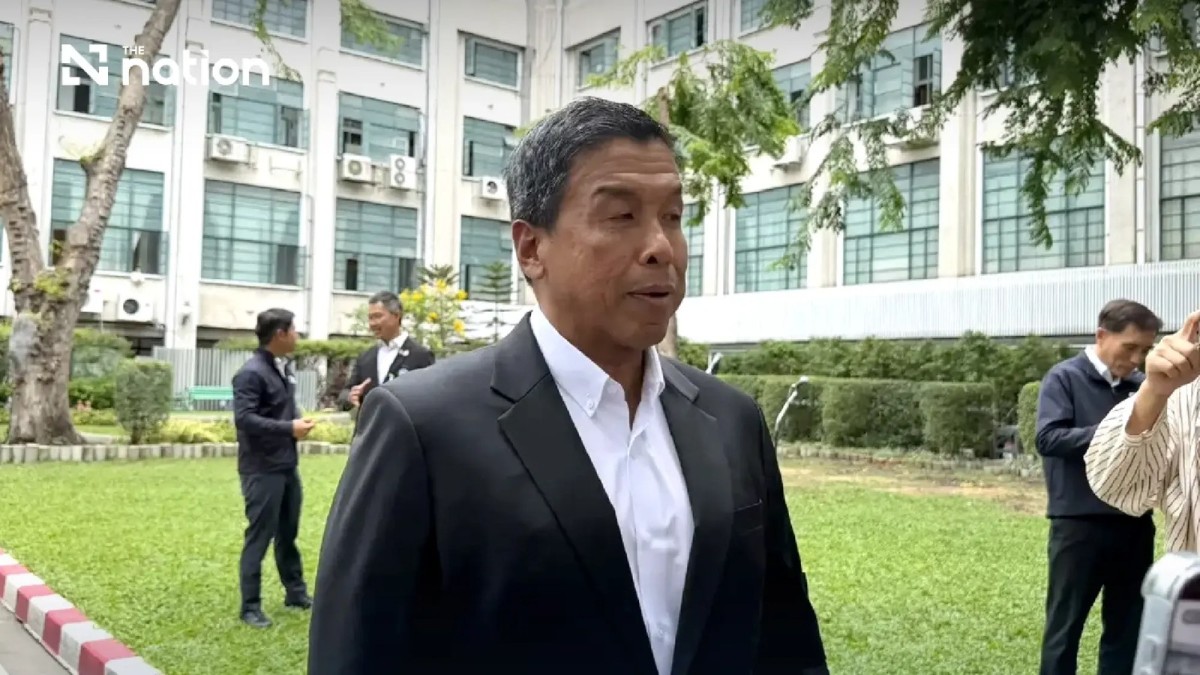
Bangkok Governor Chadchart Sittipunt disclosed that six applications for large standalone data centres have been submitted in the capital since 2021-2022. Three were approved during 2022-2023, but the remaining three are now suspended and sent back for reassessment under new criteria. The governor was careful to distinguish these new commercial facilities from roughly 30-40 older data centres operating internally within individual companies, which have served their own organisations for over a decade without negatively affecting electricity or water services.
The core issue, Chadchart explained, is that Thailand previously had no clear legal definition of a data centre. Developers submitted applications under the category of a warehouse, and warehouse rules — designed around toilets and parking spaces — did not reflect how standalone data centres actually operate. These projects did not automatically face environmental and industrial requirements, creating a regulatory blind spot as global tech giants and regional investors rushed to build AI-ready infrastructure in Bangkok.
A Legal Definition Finally Arrives — But Only in August
The Prime Minister's Office formally introduced a definition of data centres on August 13, 2026, closing a gap that had allowed the sector to expand largely unchecked. Bangkok now plans to incorporate this definition and updated land-use requirements into its revised comprehensive city plan and building-control regulations. The timing is critical: without a legal definition, authorities had no clear basis to apply industrial safety standards, environmental reviews, or resource-consumption limits to these facilities.
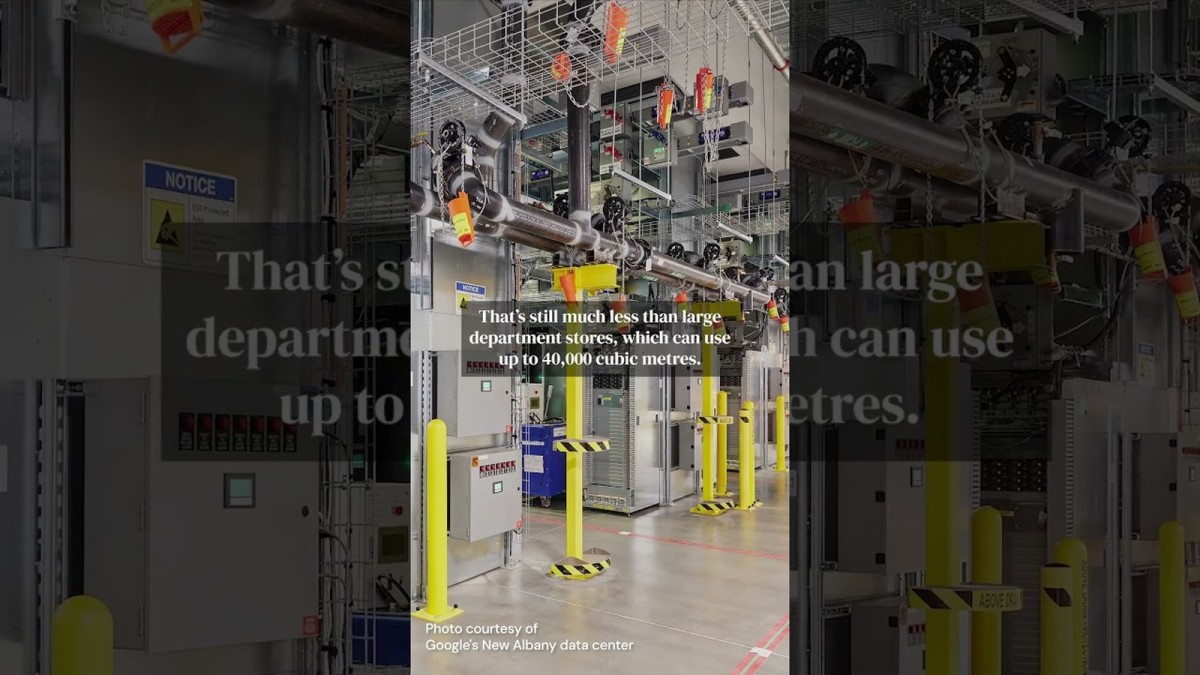
Thitipat Chotidechachainan, secretary to the energy minister, said the Department of Energy Business has suspended new permits for emergency fuel tanks at data centres while authorities develop comprehensive standards covering safety, environmental effects, and water and electricity consumption. Data centres generally require fuel to keep emergency generators running for at least 48 hours during a power disruption, making diesel storage a standard feature of their operations — and a significant new risk in densely populated Bangkok neighbourhoods.
Ramkhamhaeng Soi 28: 400,000 Litres or 200,000? The Discrepancy Explained
Public reports have claimed a facility on Ramkhamhaeng Soi 28 could store between 400,000 and nearly 500,000 litres of diesel. However, licensing records show permission to store only 200,000 litres. Officials say the 400,000-litre figure may represent capacity planned for a future full phase of the project. The BMA and Department of Energy Business will inspect the site, and the operator faces legal action if storage exceeds the licensed limit.
A separate data centre project in the Rama IX area has not received any permit to store fuel at all. Under the Fuel Trade Act B.E. 2542 (1999), storing more than 15,000 litres without authorisation is an offence, carrying a maximum penalty of two years in prison and a fine of up to THB200,000. The Energy Ministry was reported ready to file a criminal complaint over a Rama 9 Road data centre — the EDGNEX Data Centers BKK01 project by Daria Data Center and Cloud Services Co in Huai Khwang district, a four-storey building of 12,249 square metres — after officials found more than 200,000 litres of diesel stored without a permit. The discovery followed weeks of resident complaints about fuel-like odours in the area. Officials would file the complaint at Makkasan Police Station.
Fuel Storage in the City: A Ceiling Under Review
Bangkok currently has 56 premises licensed to store fuel for their own operations, spanning different business types and not limited to data centres. The BMA has proposed reviewing the existing ceiling of 500,000 litres for private operational fuel use, arguing that this limit should be reconsidered for densely populated urban areas. A single data centre storing half a million litres of diesel in the middle of a residential district presents risks that warehouse-era regulations never anticipated.
The Energy Ministry's firm stance reflects a broader policy shift under Energy Minister Akanat Promphan. New electricity user class Category 9 now requires high-capacity data centres on fossil grid power to absorb the true cost of imported LNG, while operators wanting certified renewable power must use the Utility Green Tariff with a 10-15% premium. Energy is roughly 70% of a data centre's operating budget, making these costs decisive for investment decisions. Under the draft Power Development Plan (PDP 2026), the government has capped allocated growth capacity at roughly 8,000 MW — and data centres are now the primary driver of Thailand's rising power demand.
Electricity and Water: The Numbers Behind the Concern
Kasem Sratonghug, MEA assistant governor for planning and innovation, offered a measured assessment of the actual burden. Bangkok data centres are smaller than projects in the Eastern Economic Corridor (EEC), he noted. Facilities in the capital request an average electricity capacity of about 20 megawatts but consume on average about 8 MW. MEA supplies them through dedicated systems where the network has capacity, preventing disruption to nearby consumers. Their demand, Kasem said, is below some major shopping centres and large urban developments requiring more than 100 MW.
Supichete Tavorntaveevong, MWA deputy governor, addressed water concerns with similar specificity. Bangkok's largest data centre consumed on average about 7,800 cubic metres of water per month for cooling. For context, a large hospital may use roughly 20,000 cubic metres monthly, and a major shopping centre 30,000-40,000. Current data centre consumption has not significantly affected water supplies, Supichete said. Cooling water is largely lost through evaporation or reused, including for landscaping. The BMA plans to measure the temperature of discharged water before it enters public waterways, addressing concerns about thermal pollution in Bangkok's already-stressed canal system.
Community Complaints and the Human Dimension
The BMA has received complaints involving two locations. One project near a hospital in the Rama IX area — a facility not yet operating — drew concern from nearby residents. Another involved noise from emergency-generator testing at night; testing has been moved to daytime hours, and no further complaints have been received. Chadchart said officials would also examine potential effects of accumulated urban heat, a growing issue as Bangkok's dense districts absorb waste heat from large-scale cooling systems.
Responsibility for oversight is divided across multiple agencies: the Department of Energy Business oversees fuel, MEA manages electricity, MWA supervises water, and the BMA enforces building, setback, and public-nuisance regulations. A national Data Centre Board is expected to coordinate these responsibilities and establish a unified regulatory framework, ending the fragmented approach that allowed projects to slip through gaps.
Investment Pause and the Regional Race
The Board of Investment (BOI) halted new data-centre investment-promotion applications in April 2026 to get ahead of a sector outpacing its own oversight. Investment applications worth more than 728 billion baht (approximately US$20 billion) spanning 36 data centre and cloud-service projects had piled in before the halt. A Data Centre Business Policy Committee chaired by Deputy Prime Minister and Finance Minister Ekniti Nitithanprapas scheduled its first meeting for Friday, September 4 — today. As of late July 2026, twenty-six operators held NBTC telecommunications business licences covering qualifying data centre services: 23 Type 1 and three Type 3.
The Eastern Economic Corridor Office (EECO) secretary-general Chula Sukmanop has compared a data centre to a "digital stadium" attracting global tech industries. Several hundred billion baht is being invested in data centres, followed by at least another hundred billion baht in clean energy and recycled-water systems. But Thailand competes with Malaysia — where Johor is experiencing its own data centre boom — as well as Vietnam and Singapore for AI infrastructure investment in Southeast Asia. The challenge for Bangkok is balancing this economic opportunity against the very real concerns of residents who live next door to facilities storing hundreds of thousands of litres of diesel.
What Happens Next
The three suspended projects will be reassessed under the new definition and standards, with the BMA expected to issue revised guidelines once the comprehensive city plan and building-control regulations are updated. The Energy Ministry's suspension on new backup-fuel tank permits remains in effect while standards are developed. The national Data Centre Board, once operational, will provide the unified framework that authorities acknowledge has been missing.
For Thai readers watching this unfold, the message is clear: the era of data centres slipping in under warehouse rules is over. The question now is whether Thailand can build a regulatory framework that protects residents without scaring away the very investment it needs to compete in Southeast Asia's digital economy. The answer will shape not just Bangkok's skyline, but the country's position in the regional AI race for years to come.
By Ann Srisawat, Staff Writer
This article was produced with AI-assisted research and editorial support. Reporting is based on sources cited in the article.
What's Your Reaction?
 Like
0
Like
0
 Dislike
0
Dislike
0
 Love
0
Love
0
 Funny
0
Funny
0
 Wow
0
Wow
0
 Sad
0
Sad
0
 Angry
0
Angry
0

Southeast Asia Correspondent at Global1.News. Based in Bangkok, covering Thai and Southeast Asian politics, economy, technology, and culture. Deep regional perspective on one of the world's most dynamic regions.













Comments (0)