
Nvidia employees greet Jensen Huang like a hero as he returns to company’s HQ
Why the Huang comeback matters to independent providers The fact that a “crowd of hundreds” greeted Huang with cheers tells us that Nvidia’s internal brand still commands loyalty, despite a cascade of scandals that forced him off the helm earlier this month.
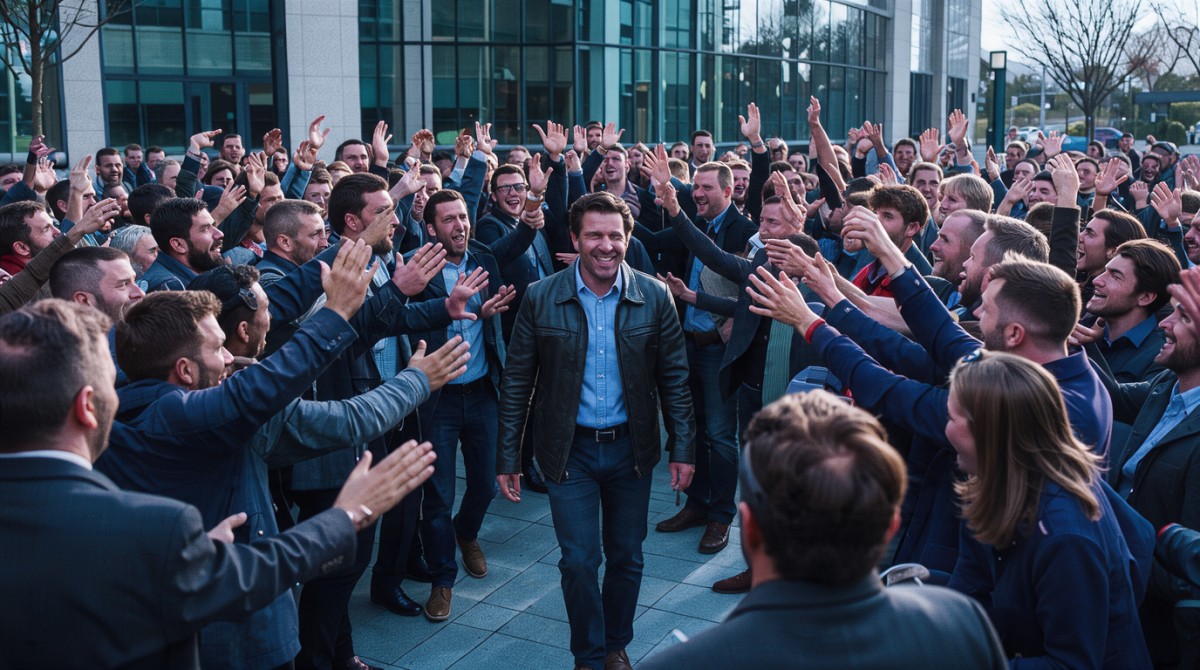
When Jensen Huang strutted back into Nvidia’s headquarters this week, the scene looked like a rock‑star homecoming: hundreds of staff chanting his name, a wave of applause, and a swaggering promise to be “a better CEO the second time around.” The theatrics are impressive, but for anyone running real hosting infrastructure the takeaway is simple – leadership drama at a $1‑plus‑trillion AI juggernaut doesn’t change the hard facts that matter to us: cost, reliability, and the risk of a single‑point‑of‑failure culture that can bleed out into the broader tech ecosystem.
Why the Huang comeback matters to independent providers
The fact that a “crowd of hundreds” greeted Huang with cheers tells us that Nvidia’s internal brand still commands loyalty, despite a cascade of scandals that forced him off the helm earlier this month. For us, that loyalty is a double‑edged sword. On one hand, it shows the power of a charismatic founder to rally a massive engineering workforce. On the other, it masks the underlying governance issues that have already attracted Congressional hearings and even a presidential intervention.
When a single individual can be both the chief architect of a $1‑plus‑trillion AI empire and the subject of a national‑security probe, the risk profile for any downstream partner spikes. Hosting providers that rely on Nvidia GPUs for AI workloads must factor in the possibility of sudden policy shifts, export restrictions, or supply‑chain hiccups triggered by political fallout. In practice, that means diversifying your hardware stack, negotiating contracts that include clear exit clauses, and keeping an eye on the geopolitical undercurrents that can turn a chip shortage into a business‑critical outage.
The open letter: a proxy for industry pressure
Over 200,000 signatures, including roughly 10,000 Nvidia employees, signed an open letter urging Huang’s return. That figure is staggering, but it also underscores how tech communities can mobilise around a single leader. For independent hosting firms, this is a cautionary tale: the same crowd‑sourcing power can be wielded to pressure vendors into concessions, or to rally against them if they fall out of favour.
In the past decade, we’ve seen hyperscalers use “community support” as a bargaining chip to lock in pricing and terms that favour their scale. When Nvidia’s own staff rallied behind Huang, it sent a signal to the market that the company’s leadership stability was still a work in progress. The practical takeaway? Keep your vendor relationships on a merit‑based footing, not a sentiment‑based one. If a vendor’s leadership is under fire, you need a contingency plan that can be activated without a public relations crisis.
Elon Musk’s endorsement: hype or genuine risk mitigation?
Elon Musk’s comment at the DealBook Summit likening Huang’s ouster to “kicking Michael Jordan off your team when you’re on a winning streak” is classic VC‑funded hype. Musk’s endorsement adds star power, but it also inflates the perception of Nvidia as an untouchable monopoly. That perception can lull smaller players into complacency, assuming they’ll always have access to Nvidia’s chips at whatever price the market dictates.
In reality, the price dynamics for AI accelerators have been anything but stable. When a single executive’s tenure becomes a headline, it can trigger speculative price spikes, especially if investors anticipate supply constraints. Independent hosting providers should treat such hype as a warning sign, not a justification for continued reliance on a single supplier. Hedge your hardware spend, explore alternatives like AMD’s Instinct line or emerging RISC‑V accelerators, and negotiate volume‑based discounts that survive leadership turbulence.
The darker side of Huang’s leadership
The New York Times’ reporting paints a different portrait: a leader who “used humiliation as a tool” and verbally belittled staff. That kind of toxic culture can bleed into product quality and operational reliability. When engineers are fearful rather than empowered, bugs slip through, documentation suffers, and the speed of innovation can stall – all of which directly impact the downstream reliability of the chips we ship to customers.
From a risk‑management perspective, a toxic culture at a critical supplier is a red flag. It raises the probability of production delays, quality control lapses, and even supply‑chain sabotage. For hosting firms that depend on Nvidia’s roadmap to plan capacity, that uncertainty translates into potential revenue loss. The prudent move is to maintain a diversified hardware portfolio and to demand transparent quality metrics from any supplier whose culture is under scrutiny.
Political entanglements and the cost of compliance
The scandal involving an alleged Chinese spy and the resulting Congressional hearings have already put Nvidia under a microscope. When a company’s leadership is tangled in national‑security investigations, the regulatory burden can increase dramatically. Export controls may tighten, and compliance costs can balloon, which often get passed down the chain to customers.
For a hosting provider, that means higher licensing fees, stricter data‑handling requirements, and the need for legal counsel versed in export law. It also means that any sudden policy shift – for example, a ban on certain GPU models for foreign customers – could force you to scramble for alternatives mid‑project. The bottom line: factor political risk into your total cost of ownership calculations, and keep a legal safety net ready for rapid compliance adjustments.
What the fanfare tells us about the tech ecosystem
The spectacle of Huang’s return, complete with chants and a promise of “being a better CEO,” is a reminder that the tech industry still idolises founder‑CEOs. That cult of personality can obscure the hard realities of running massive, capital‑intensive operations. As a founder of a hosting business, I’ve learned that the only thing that matters in production is uptime, not the charisma of the person on stage.
When investors and media latch onto a charismatic leader, they often overlook the underlying economics: the cost of power, cooling, and the relentless churn of hardware refresh cycles. Nvidia’s ability to command premium pricing for its GPUs is partly a function of that brand halo, but it also reflects a market that has few viable alternatives at scale. That market dynamic is exactly why we need to keep pushing for open‑source hardware initiatives and more competitive GPU ecosystems.
Actionable steps for hosting founders
First, audit your hardware dependencies. List every vendor that supplies critical components and assign a risk score based on leadership stability, regulatory exposure, and cultural health. Second, negotiate contracts that include clear service‑level guarantees and exit clauses that can be triggered by leadership scandals or regulatory actions.
Finally, keep an ear to the ground on industry sentiment. When you see massive open letters, celebrity endorsements, or media spectacles, treat them as leading indicators of potential volatility. Use that intel to adjust capacity planning, pricing models, and compliance budgets. In a world where a CEO can be ousted, reinstated, and still command a cheering crowd, the only thing you can control is your own risk posture.
— Allan Ali, Founder
This article was produced with AI-assisted research and editorial support. Reporting is based on the source material cited below. Sources: TechCrunch; techcrunch.com; Global1.News (23 November 2026).
By Allan Ali, Global1.News
What's Your Reaction?
 Like
0
 Dislike
0
 Love
0
 Funny
0
 Wow
0
 Sad
0
 Angry
0
Publisher of Global1.News. Automation architect, systems builder, and the guy making sure the truth gets published.











Comments (0)