
Bangkok Governor Warns of PM2.5 Danger After Khlong Thom Fire Reignites
Bangkok Governor Warns of PM2.5 Danger After Khlong Thom Fire Reignites BANGKOK — Bangkok Governor Chadchart Sittipunt has issued a fresh warning about particulate pollution after the fire at Khlong Thom Center in Pom Prap Sattru Phai district flared up again on Saturday, sending thick, discolored s...
Bangkok Governor Warns of PM2.5 Danger After Khlong Thom Fire Reignites
BANGKOK — Bangkok Governor Chadchart Sittipunt has issued a fresh warning about particulate pollution after the fire at Khlong Thom Center in Pom Prap Sattru Phai district flared up again on Saturday, sending thick, discolored smoke over the Worachak Road area. The governor, who inspected the response earlier in the day, said the blaze was almost completely under control, but persistent hot spots and smouldering fires inside the heavily damaged structure continue to pose a significant air-quality risk to nearby residents.
The renewed eruption, which occurred at around 14:30, produced large volumes of smoke that billowed continuously from the shopping center. Witnesses, including a news team at the scene, reported seeing flames on an upper floor, with visible fire emerging from the middle section of the building and its rear area. The sighting suggested that hot spots or active burning may still have remained inside the structure, complicating efforts by firefighters to fully extinguish the blaze.
Governor Inspects Damage and Response Efforts
Governor Chadchart visited the site on Saturday to oversee the emergency response, which has involved multiple agencies under the coordination of the Bangkok Metropolitan Administration (BMA). He explained that crews were using excavators to clear access routes so that firefighters could reach and extinguish fires burning deep inside the building. The operation, he noted, was being carried out with extreme caution because the structure had sustained extensive damage, raising concerns about the safety of personnel working within or near the collapsed sections.
The governor thanked all officials and parties involved in the ongoing response, saying the BMA would closely monitor both the fire and air quality to protect residents and emergency personnel. He stressed that although the situation was largely under control, the presence of smouldering material meant the work was far from complete. The use of heavy machinery to open pathways is a delicate process, he said, as the building’s integrity has been compromised by the intense heat and prolonged burning.
PM2.5 Levels Spike to 630 Micrograms at Fire Site
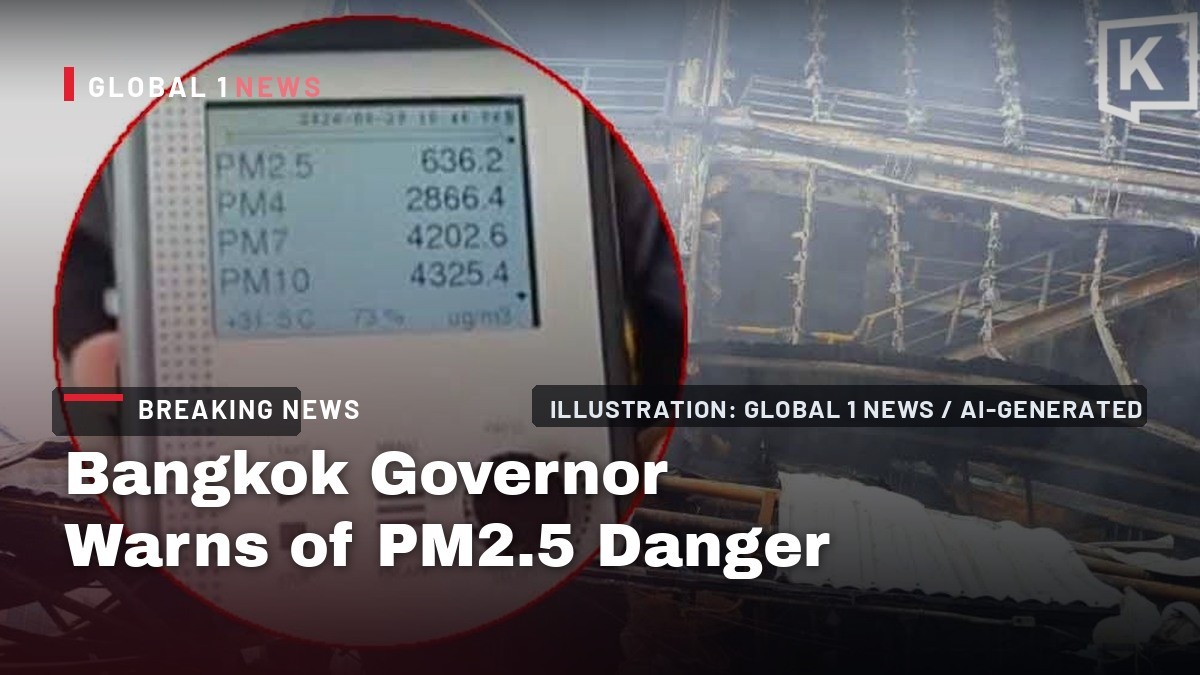
The primary concern for public health, according to the governor, is particulate matter, specifically PM2.5 — the fine particles that can penetrate deep into the lungs and enter the bloodstream. Measurements taken at the fire site reached about 630 micrograms per cubic metre, a level that is dramatically above the Thai government’s safe threshold and poses an acute health risk to anyone exposed, even for short periods.
Governor Chadchart urged people to avoid the area unless absolutely necessary. For those who must be near the site, he recommended wearing dust-protection masks, particularly N95 masks, which are designed to filter out fine particulate matter. Vulnerable groups, including the elderly, young children, pregnant women, and individuals with pre-existing respiratory or cardiovascular conditions, were advised to take extra precautions and to remain indoors with windows closed if possible.
While the PM2.5 reading at the source is alarming, preliminary monitoring has found no gases or toxic substances at worrying levels at the designated monitoring point. Volatile organic compounds (VOCs) were measured at about 0.4 parts per million, which remains within normal levels. However, the governor cautioned that this does not mean the air is safe, as smoke and dust from the fire remain a concern, prompting authorities to continue monitoring air quality around the clock.
Rescue Officials Warn of Toxic Smoke from Burning Chemicals
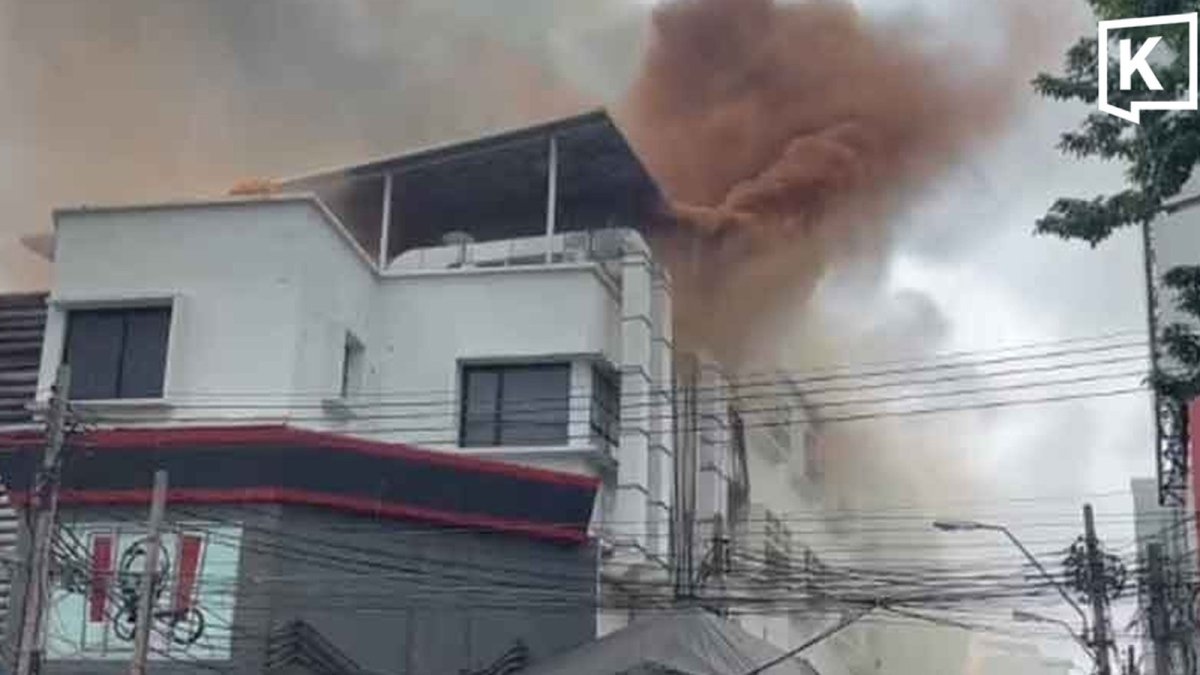
The renewed smoke emission on Saturday afternoon raised the alarm among rescue officials, who said the unusual color of the smoke — thick black, gray, and reddish-brown — could be linked to the burning of chemicals. They warned that the smoke could contain toxic gases or other hazardous substances, posing a risk if inhaled. The exact cause of the renewed smoke, as well as the type of materials that may have been burning, has yet to be determined and will require further examination by the relevant authorities.
Rescue crews responded by deploying water trucks and spraying the building, particularly areas where smoke was seen, in an effort to contain the situation and prevent the fire from reigniting or spreading. The operation was carried out as heavy rain continued to fall in the area, which provided some relief but also complicated the logistics of the response. Authorities remained at the scene to monitor and control the situation, with the BMA deploying drones equipped with infrared cameras to detect hot spots and assess the area from above.
Wind Direction and Air-Quality Monitoring Along the Path
One of the key factors in the ongoing response is the wind. According to the governor, wind was expected to blow towards the northeast on Saturday. Bangkok authorities are therefore monitoring wind direction closely and conducting additional air-quality checks along the wind path to assess potential impacts and issue public warnings. This is a critical step, as the dispersion of PM2.5 and other pollutants depends heavily on atmospheric conditions. If the wind shifts or stalls, the concentration of particulate matter could build up in residential areas downwind of the fire.
The BMA is also preparing maps showing risk areas, hot spots, and wind direction to help crews plan their operations. These maps will be used to guide both the firefighting effort and the public health response, ensuring that warnings are issued to the right communities at the right time. The governor stressed that although no worrying levels of toxic gases had been detected, residents should continue to monitor the situation and follow BMA advice, particularly regarding dust protection and avoiding the affected area.
Context: Bangkok’s Seasonal Air Pollution and the Khlong Thom District
This incident comes at a time when Bangkok is already grappling with seasonal air pollution. While the fire is an acute, localized source of PM2.5, the city has historically struggled with elevated particulate levels during the cooler months, when agricultural burning in neighboring regions and stagnant air masses combine with urban vehicle emissions to create a toxic haze. The Khlong Thom fire adds a sudden, intense spike to an already fragile air-quality situation, raising concerns among public health experts about the cumulative impact on residents.
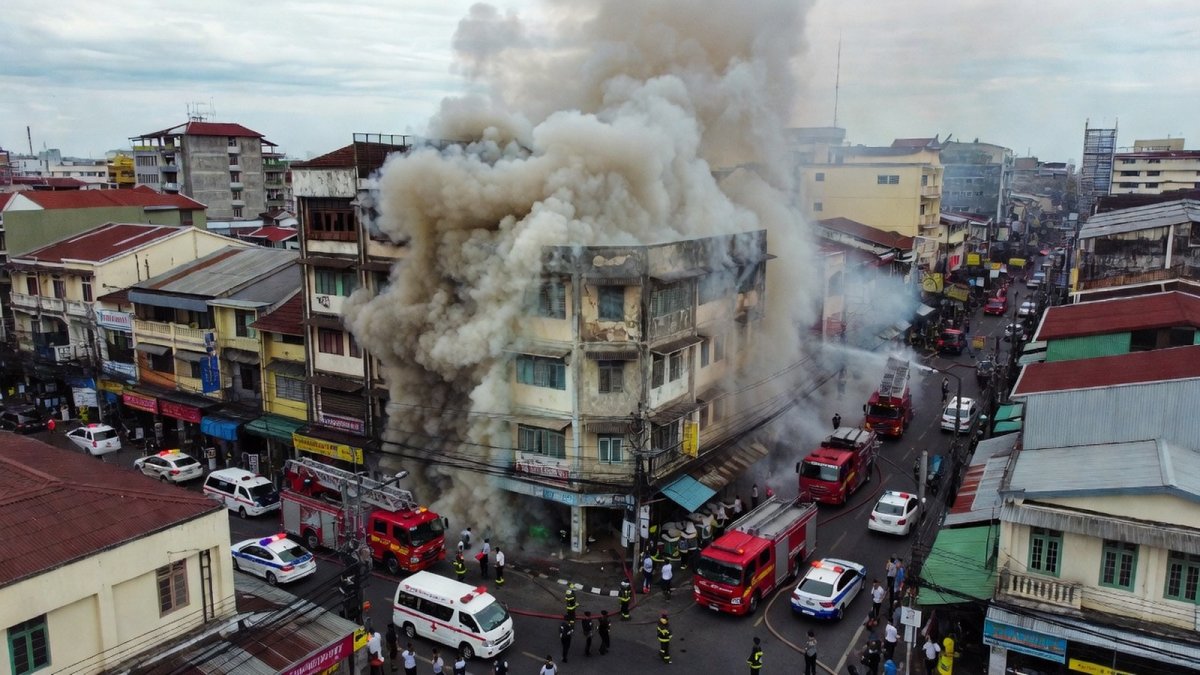
Khlong Thom is a well-known market district in Bangkok, famous for its dense collection of electronics shops, hardware stores, and second-hand goods vendors. The area, located in the historic Pom Prap Sattru Phai district, is characterized by narrow streets and tightly packed buildings, making firefighting particularly challenging. The Khlong Thom Center, a multi-story commercial building on Worachak Road, has been a hub for small traders and wholesalers for decades. The fire has not only disrupted businesses but also raised questions about fire safety standards in older commercial buildings across the city.
Regional Perspective: Air Quality Across ASEAN Cities
The implications of this fire extend beyond Bangkok. Across Southeast Asia, cities are increasingly vulnerable to air-quality crises, whether from seasonal forest fires, industrial accidents, or urban conflagrations. The PM2.5 reading of 630 micrograms per cubic metre at the Khlong Thom site is a stark reminder of how quickly air quality can deteriorate in an urban environment. For neighboring countries, including Malaysia, Singapore, and Vietnam, the transboundary nature of air pollution means that a major fire in one city can have ripple effects across the region, particularly if smoke plumes are carried by prevailing winds.
For Thai readers, this incident underscores the importance of being prepared for air-quality emergencies. The BMA’s response — including real-time monitoring, public warnings, and the use of drones for aerial assessment — represents a modern approach to disaster management. However, the fire also highlights gaps in urban fire safety, particularly in older districts like Pom Prap Sattru Phai, where buildings may not meet current fire codes. The use of chemicals in commercial goods, as suspected in this fire, adds another layer of complexity to the response, as firefighters must contend with potentially toxic fumes in addition to the flames.
What Residents Should Do and What This Means for Bangkok’s Preparedness
For residents living or working near the Khlong Thom area, the advice from the governor is clear: avoid the area unless necessary, wear N95 masks if you must go out, and follow BMA updates closely. For those with underlying health conditions, the risk is heightened, and extra precautions are advised. The BMA has set up monitoring stations along the wind path, and residents in the northeast of the city should pay attention to any public warnings issued in the coming days.
This incident also serves as a test of Bangkok’s preparedness for urban disasters. The use of infrared-equipped drones, the coordination of multiple firefighting units, and the rapid deployment of air-quality monitoring equipment all point to a city that has learned from past crises. However, the fact that the fire reignited hours after being declared nearly under control suggests that the response is not yet complete. The BMA has said it will continue to monitor both the fire and air quality to protect residents and emergency personnel, and further updates will be provided as the situation develops.
As the sun sets over Bangkok on Saturday, the smoke rising from Khlong Thom Center serves as a visible reminder of the fragility of urban life. The fire may be contained, but the air we breathe will be affected for days to come. The governor’s warning is not just about this fire — it is about the broader challenge of living in a city where air quality is under constant threat, and where every incident, no matter how localized, has the potential to affect the health of thousands.
By Ann Srisawat, Staff Writer
This article was produced with AI-assisted research and editorial support. Sources: Khaosod English (https://www.khaosodenglish.com)
What's Your Reaction?
 Like
0
Like
0
 Dislike
0
Dislike
0
 Love
0
Love
0
 Funny
0
Funny
0
 Wow
0
Wow
0
 Sad
0
Sad
0
 Angry
0
Angry
0

Southeast Asia Correspondent at Global1.News. Based in Bangkok, covering Thai and Southeast Asian politics, economy, technology, and culture. Deep regional perspective on one of the world's most dynamic regions.












Comments (0)