
Xi, Putin to Meet in Bishkek as Power of Siberia 2 Talks Return
Xi Jinping and Vladimir Putin meet in Bishkek on August 31 with the long-stalled Power of Siberia 2 gas pipeline on the agenda, as the Shanghai Cooperation Organisation marks its 25th anniversary and Hormuz tensions reshape Asian energy security.
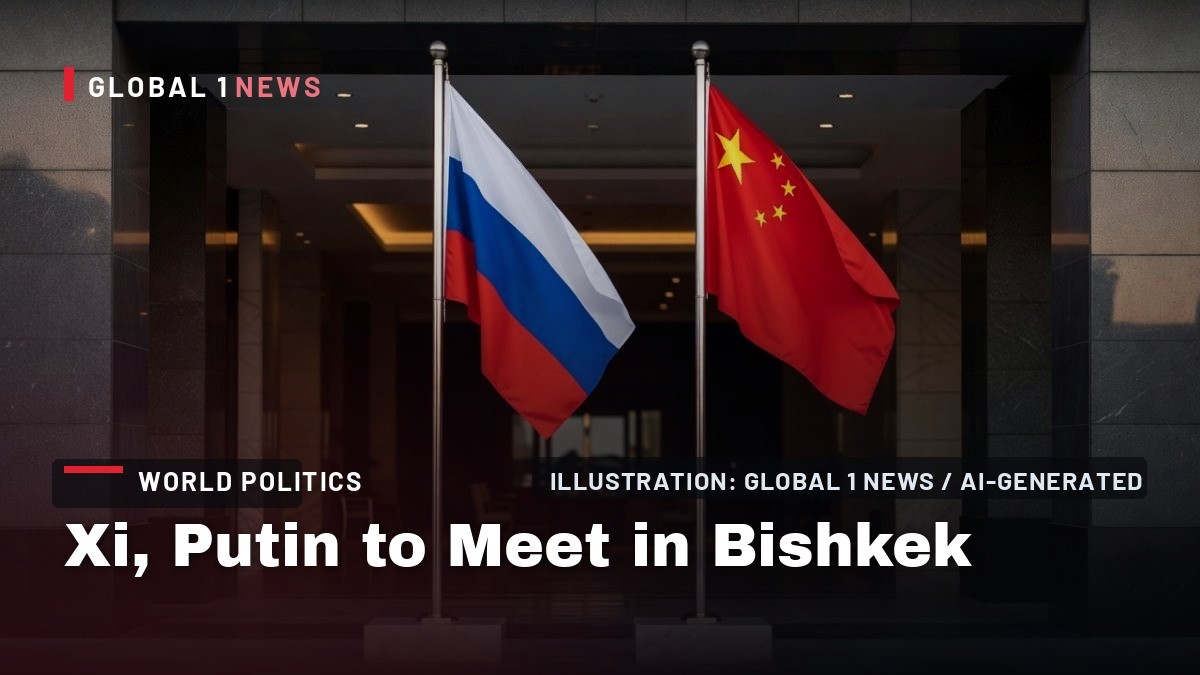
Kremlin Confirms Gas Pipeline on the Agenda for Monday's Meeting
Chinese President Xi Jinping and Russian leader Vladimir Putin are expected to discuss the long-stalled Power of Siberia 2 gas pipeline project when they meet in Bishkek on Monday, the Kremlin said, in a session that also marks the 25th anniversary of the Shanghai Cooperation Organisation.
The meeting in Kyrgyzstan's capital will be the two leaders' second face-to-face talks this year, following Putin's trip to Beijing in May that came shortly after US President Donald Trump's visit to China. Russian presidential aide Yury Ushakov told the Interfax news agency on Friday that the project "will be discussed bilaterally" - not only on the sidelines of the Eastern Economic Forum in Vladivostok on September 1-4, but also in the meeting with the Chinese leader on August 31.
A 20-Year Project Still Waiting for a Price
Power of Siberia 2 is one of the most consequential energy projects never built. First proposed in 2006, the planned 2,600-km (1,616-mile) pipeline would carry 50 billion cubic metres of natural gas a year from Russia's Yamal fields in the Arctic to China through Mongolia - nearly a third more than the existing Power of Siberia line, which has delivered about 38 bcm annually to northeastern China since 2019.
For Moscow, the pipeline is the centrepiece of its pivot to Asian buyers after European purchases collapsed following the invasion of Ukraine. For Beijing, it would lock in pipeline-delivered gas for decades and deepen the "no limits" partnership that both capitals have promoted since 2022. But the project has been stuck on price for years. In July, Asia Times reported that Chinese negotiators had effectively told Moscow to stop raising the subject, with the gap in pricing expectations so wide that both sides had stopped pretending a deal was close.
Russian Deputy Prime Minister Alexander Novak said in May that some contracts were approaching "final agreement," yet Beijing has remained conspicuously quiet. That silence makes Ushakov's confirmation that the topic is on the Bishkek agenda significant: after months of deadlock, Moscow is trying again at the highest level.
China holds most of the cards in that negotiation. With its economy growing more slowly than in the 2000s and its own domestic gas production expanding alongside imports of LNG and Central Asian pipeline gas, Beijing has no urgent need for a project Russia needs far more. The existing Power of Siberia line, which began exports in 2019, has already shifted Gazprom's centre of gravity eastward; a second artery through Mongolia would complete the transformation of Russia's gas export map, but only on terms China chooses to accept.
An SCO at 25 With Two Wars on Its Doorstep
The Xi-Putin meeting sits inside a broader gathering: the SCO's 25th-anniversary summit in Bishkek on August 31-September 1, bringing together the leaders of China, Russia, India, Pakistan, Iran and Belarus alongside their Central Asian counterparts. Xi begins a state visit to Kyrgyzstan on Sunday before travelling on to Egypt.
Founded in Shanghai in 2001 by six members, the SCO was created to counter terrorism, extremism and separatism in the region, and has since expanded to promote economic cooperation and logistical connectivity. It has also emerged as a significant counterweight to the Western-led international order, a framing Moscow and Beijing lean on more heavily each year.
This year's summit carries an awkward undertone: two of its members are at war. Russia's war in Ukraine drags on, while Iran - an SCO member since 2023 - is in direct conflict with the United States after Tehran restricted passage through the Strait of Hormuz, the chokepoint that handles roughly a quarter of global seaborne oil trade.
Hormuz Hangs Over the Energy Chessboard
Iran's move has scrambled energy calculations across Asia. The United States has responded with fresh sanctions against 60 entities and individuals worldwide, including some in mainland China and Hong Kong. On Thursday, Trump suggested Washington might target Chinese banks for their dealings with Iranian entities - raising fears of a new flashpoint in US-China ties just weeks before Xi's planned visit to Washington.
About half of China's seaborne crude imports in 2025 transited the Strait of Hormuz, according to Chinese commodity intelligence provider JLC. Yet China's vast overland pipeline network - the very logic that makes Power of Siberia 2 attractive - allows it to source oil and gas from Russia and Central Asia, cushioning maritime disruption. The calculus is straightforward: the more overland energy Beijing secures, the less vulnerable it is to the naval and sanctions pressure Washington can project through the world's chokepoints.
What a Deal Would Mean for Japan
For Tokyo, the Bishkek meeting is not a spectator sport. Japan is not an SCO member, but its energy security is directly exposed to the forces the summit is navigating. The Middle East supplied 94 per cent of Japan's crude oil in 2025, with 93 per cent arriving via the Strait of Hormuz, according to Reuters. On the gas side, roughly 9 per cent of Japan's LNG comes from Russia, almost all of it from Sakhalin-2, where Mitsui and Mitsubishi hold a combined 22.5 per cent stake alongside Gazprom.
Japan has spent years trying to square that circle: keep Sakhalin-2 volumes flowing for energy security while joining G7 sanctions on Russian oil. Reuters reported on August 26 that Tokyo is now preparing to diversify crude supplies and back pipelines that bypass Hormuz - an admission, in effect, that it cannot rely on the maritime chokepoints it once took for granted.
If Xi and Putin edge Power of Siberia 2 toward a deal, Japanese policymakers will watch closely. Deeper Russia-China energy integration shifts the balance of Asian gas supply, potentially reshaping the LNG market Japan depends on - and handing Beijing a geopolitical dividend Moscow has been trying to deliver for two decades.
The Week Ahead: Bishkek, Vladivostok and Washington
Bishkek is only the first act. Ding Xuexiang, China's first-ranked vice-premier who oversees the intergovernmental energy and investment commissions with Russia, will join Putin at the Eastern Economic Forum in Vladivostok next week - the venue where Ushakov says pipeline details will also be discussed.
Behind the summit diplomacy sits the larger question of US-China relations. The new Iran-related sanctions, and Trump's warning about Chinese banks, land weeks before Xi's expected visit to Washington. Beijing's willingness to move on Power of Siberia 2 can be read in that context: a hedge against a rocky autumn, a signal of options, or simply a price negotiation long overdue.
What to Watch For
The most telling signal from Bishkek will be language. If the joint statement references progress toward a deal, expect the financial and technical details to be hashed out at the Vladivostok forum. If the pipeline goes unmentioned, the price gap remains as wide as ever - and Mongolia, which would earn transit fees and gain access to Russian gas, will keep waiting.
For Japan and the wider Asia-Pacific, the summit is a reminder that the region's two largest economies are building energy infrastructure designed to outlast Western sanctions, and that the chokepoints that used to define Asian energy security are being quietly re-routed overland. Tokyo's own diversification push, announced just days ago, suggests the message has been received.
By Kenji Tanaka, Staff Writer
This article was produced with AI-assisted research and editorial support. Sources: SCMP, Reuters, Asia Times, Kremlin, Interfax.
What's Your Reaction?
 Like
0
Like
0
 Dislike
0
Dislike
0
 Love
0
Love
0
 Funny
0
Funny
0
 Wow
0
Wow
0
 Sad
0
Sad
0
 Angry
0
Angry
0

Japan Correspondent at Global1.News. Tokyo-based voice covering Japanese politics, technology, economy, and culture. Tracks the intersection of tradition and innovation in one of the world's most dynamic societies.












Comments (0)