
Five Dead After Amazon Prime Air Cargo Plane Overruns Miami Runway
Five people were killed and five injured, three critically, when an Amazon Prime Air Boeing 767-300F cargo jet overran a runway at Miami International Airport on Sunday and struck multiple vehicles on a perimeter road, according to Miami-Dade Fire Rescue. The FAA, NTSB and cargo operator 21 Air are investigating.
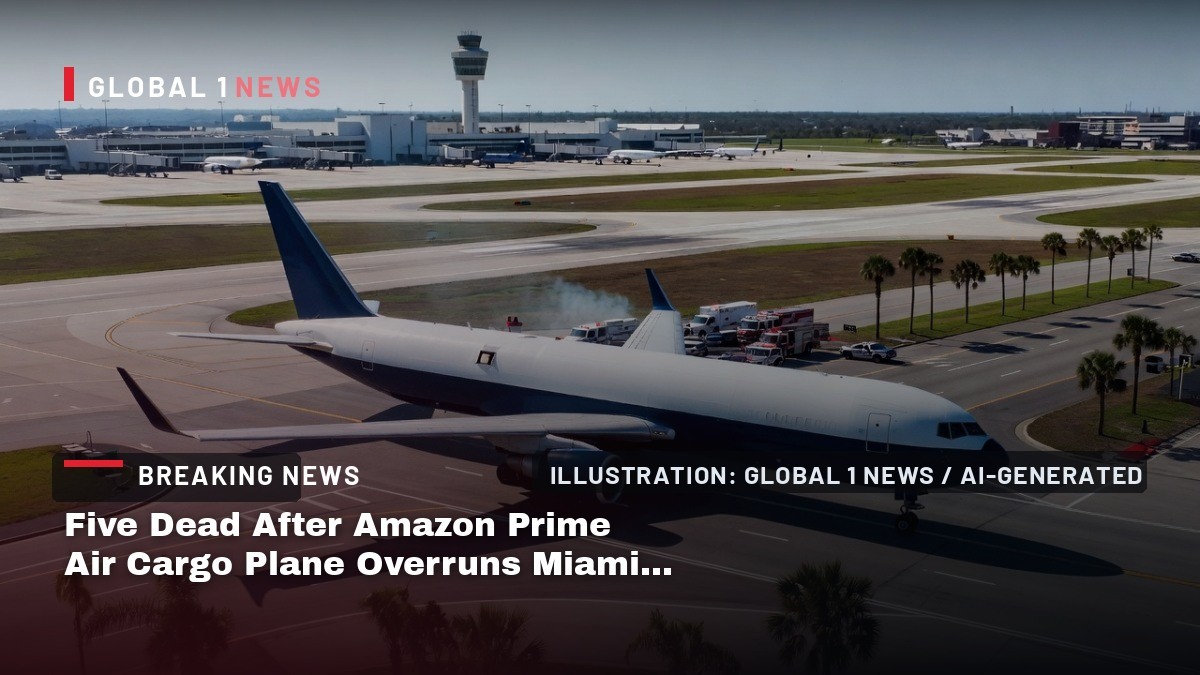
It was supposed to be a routine Sunday afternoon at one of the busiest airports in the country. Instead, a cargo plane carrying packages for Amazon turned a stretch of Miami roadway into a scene of twisted metal, fire, and tragedy. Here is what we know, what we don’t, and what happens next for the travelers, the families, and the massive air freight network that keeps America’s deliveries moving.
FIVE DEAD AFTER AMAZON PRIME AIR CARGO PLANE OVERRUNS MIAMI RUNWAY
Miami, Florida — A Boeing 767-300F cargo jet operating for Amazon Prime Air slammed through the end of a runway at Miami International Airport on Sunday afternoon, plowing into a busy perimeter road, striking multiple vehicles, and erupting into flames. The crash killed five people and injured five others, three critically, according to Miami-Dade Fire Rescue.
The aircraft, identified by the Federal Aviation Administration as Prime Air Flight 7598 and operated by the cargo airline 21 Air, came to rest on its belly beside a roadway just off the airfield, its fuselage largely intact but surrounded by black smoke and fire. The impact zone was a scene of utter chaos: semi-trucks and rows of Tesla Cybercabs parked nearby were caught in the path of the careening jet.
The Crash: A Routine Flight Ends in Catastrophe
The flight had departed earlier that day from Luis Muñoz Marín International Airport in San Juan, Puerto Rico, and was making its final approach into Miami when things went horribly wrong. According to the FAA, the aircraft overran the runway around 2 p.m. EDT (1800 GMT) on Sunday, September 6, 2026.
Instead of stopping on the tarmac, the massive freighter crossed the end of the runway, tore through a fence or barrier, and barreled onto a perimeter road that runs alongside the airport. The plane struck "multiple vehicles" on the ground, according to Miami-Dade Fire Rescue, before coming to a halt and catching fire.
Video and images captured by NBC 6, Telemundo, and Reuters showed the cargo plane askew across the roadway, its belly on the asphalt, with thick black smoke billowing into the Miami sky. The fire was intense enough that the smoke plume was visible across the city, a grim visual for anyone watching from miles away.
The aircraft was largely intact, which is remarkable given the forces involved, but the damage on the ground was severe. The plane had hit a row of vehicles, including semi-trucks, and the impact zone was littered with debris. The fact that the death toll wasn't higher is, frankly, a matter of luck and the quick response of emergency crews.
The Victims and the Rescue: A Race Against Fire and Fuel
Miami-Dade Fire Rescue responded with overwhelming force. More than 60 units and approximately 200 personnel were dispatched to the scene, a testament to the severity of the incident. Fire Chief Ray Jadallah addressed the media at a Sunday afternoon news conference, delivering the grim news: five people were dead, and five others were injured, including three in critical condition.
The victims included people on the ground. Chief Jadallah confirmed that at least two people were trapped inside vehicles that were struck by the plane. The rescue effort was a race against time, with crews working frantically to extricate those trapped while battling the blaze.
Adding to the horror, the pilot and co-pilot of the cargo plane were also trapped inside the aircraft by the crash. The cockpit area was compromised, and it took time for rescue teams to reach them. Officials declined to identify any of those who died, pending notification of next of kin.
As of late afternoon, the situation was still volatile. Crews were dealing with an active fuel leak from the damaged aircraft, a constant threat of re-ignition that forced a cautious approach to the wreckage. The scene was not just a rescue operation; it was a hazardous materials incident, a firefight, and a recovery mission all rolled into one.
Ground Stop and Airport Chaos: What Travelers Face
The immediate aftermath of the crash was a logistical nightmare for one of the nation's busiest airports. The FAA and airport authorities issued a full ground stop, halting all flights into and out of Miami International Airport. All runways and taxiways were closed as emergency crews flooded the scene.
U.S. Transportation Secretary Sean Duffy confirmed the severity of the situation, stating that his department had issued a full ground stop in Miami and urging travelers to anticipate "significant delays." This wasn't a minor hiccup; it was a complete shutdown of air traffic at a major international hub.
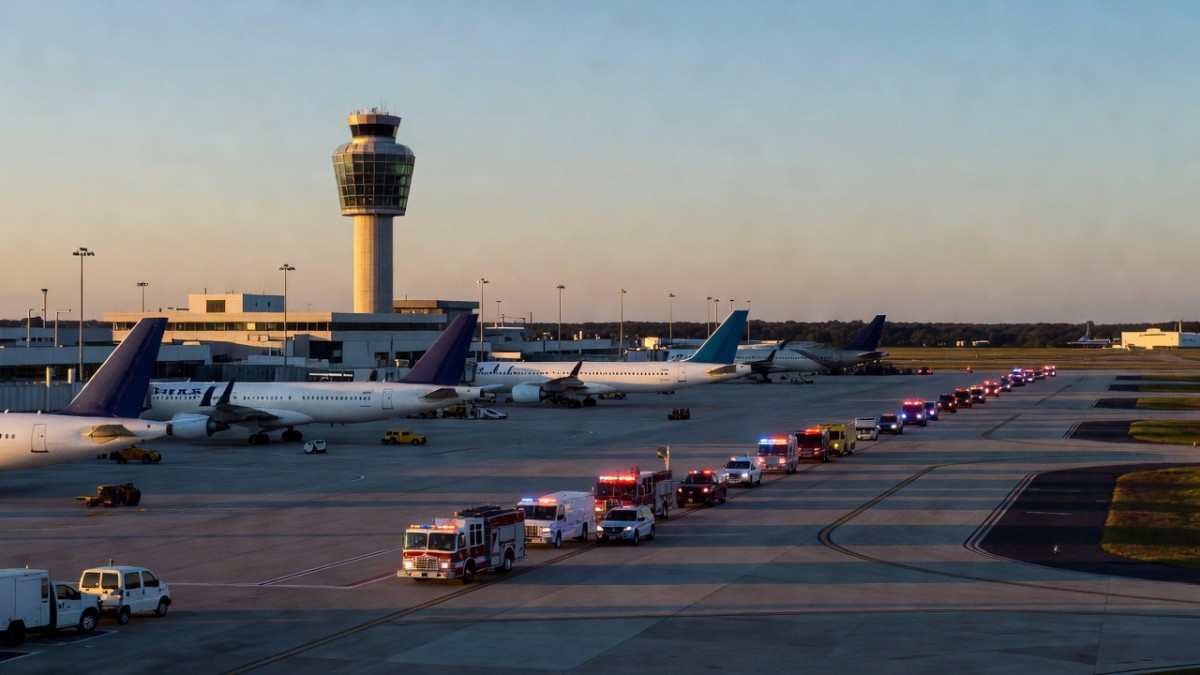
By Sunday evening, there was a glimmer of progress. Two of the airport's four runways had reopened, allowing some flights to resume. But the backlog of delayed and canceled flights will take days to clear. If you have a flight scheduled out of MIA in the next 48 hours, you need to check with your airline immediately. Expect cancellations, long lines, and a lot of frustration.
The reopening of the two runways is a double-edged sword. It allows the airport to function, but the crash site is still an active investigation zone. The runway that was overrun, and the adjacent roadway where the plane came to rest, will be closed for the foreseeable future as investigators comb through the wreckage. This will constrain airport capacity for days, if not weeks.
Amazon and 21 Air Respond: Corporate Statements vs. Reality
Amazon, the retail giant whose logo was emblazoned on the side of the doomed aircraft, was quick to issue a statement. Spokesperson Kelly Nantel said, "We're working closely with local authorities and officials to understand exactly what happened. Right now, our absolute priority is the safety, well-being, and care of everyone involved. We're doing everything we can to support those affected."
It's a standard corporate response, but the reality is far more complex. Amazon confirmed that the plane was operated by 21 Air, a cargo airline whose website lists Prime Air (an Amazon company) as a customer. 21 Air did not immediately respond to a request for comment, which is telling. They are likely lawyering up and preparing for a long, painful investigation.
This is a critical distinction. Amazon owns the brand and the contracts, but they lease the lift from operators like 21 Air and Atlas Air. This structure allows Amazon to scale its air network without owning planes or employing pilots directly. But it also creates a murky web of responsibility when things go wrong. Who is liable for the ground deaths? Who is responsible for the maintenance of the aircraft? These are questions that will be answered in courtrooms, not press releases.
For Amazon, this is a public relations nightmare. The company has built its empire on speed and reliability. A plane with their name on it plowing into a road and killing people is a stark reminder that the convenience of next-day delivery comes with a massive, invisible infrastructure that carries real-world risks.
The Investigation Ahead: NTSB Takes Center Stage
The National Transportation Safety Board (NTSB) has announced it is "gathering information" about the crash and will provide updates as more information becomes available. The FAA has also said it will investigate. This is standard procedure, but the NTSB is the lead agency, and they will be methodical.
The cause of the crash is unknown at this time. The investigation will focus on several key areas: the aircraft's mechanical condition, the pilots' actions, weather conditions, and the runway itself. Was there a mechanical failure? Did the pilots misjudge their landing speed or distance? Was there a problem with the brakes or thrust reversers?
The NTSB will also look at the runway overrun area. Why was there a public road so close to the end of the runway? Were there adequate safety barriers? These are questions that will have implications for airports across the country. The fact that the plane struck vehicles on a perimeter road suggests a potential design flaw in the airport's safety zones, a finding that could lead to costly changes at MIA and other facilities.
Do not expect answers quickly. The NTSB investigation will take months, possibly a year or more. The initial "black box" data, including the cockpit voice recorder and flight data recorder, will be analyzed in the coming days, but a final report with a probable cause is a long way off. In the meantime, the families of the victims are left in limbo, and the traveling public is left with more questions than answers.
A History of Tragedy: Amazon Prime Air's Safety Record
This is not the first fatal accident involving a plane flying for Amazon Prime Air, and that context is impossible to ignore. In February 2019, Atlas Air Flight 3591, a Boeing 767-300 freighter operating on behalf of Amazon Prime Air from Miami to Houston, entered a rapid descent and crashed into Trinity Bay near Houston. All three people on board were killed.
That crash was a wake-up call for the industry. The NTSB investigation into Flight 3591 focused on the first officer's performance and the airline's training protocols. Now, seven years later, another 767 freighter operating for Amazon has crashed on a landing approach, this time with a far higher death toll because it happened on the ground.
The question that hangs over this tragedy is whether Amazon's relentless push for speed and efficiency is putting undue pressure on its contractors. Amazon has built a massive air network, with Prime Air hubs in Cincinnati, San Bernardino, and elsewhere. They rely on a patchwork of cargo airlines like 21 Air and Atlas Air to fly their packages. These airlines are under immense pressure to meet Amazon's demanding delivery schedules.
This crash will force a hard look at the entire cargo aviation sector. Are runways at major airports like MIA adequate for the increasing volume of freighter traffic? Are the safety margins for landing and takeoff sufficient? Are the airlines that fly for Amazon held to the same rigorous standards as major passenger carriers?
The FAA will likely face pressure to increase oversight of cargo operators. The NTSB will issue safety recommendations. But the real change needs to come from the culture of the industry, one that prioritizes speed above all else. Five people are dead because a plane full of packages didn't stop in time. That is a price that no delivery schedule can justify.
For now, Miami mourns. The families of the five victims are beginning a nightmare that no one should have to endure. The three critically injured are fighting for their lives in local hospitals. And the rest of us are left to wonder how a Sunday afternoon delivery flight turned into a tragedy that will be felt for years to come.
By Jessica Ali, Staff Writer
This article was produced with AI-assisted research and editorial support. Sources: Reuters, Al Jazeera, CNBC, NBC News, ABC News, Federal Aviation Administration, National Transportation Safety Board, Miami-Dade Fire Rescue.
What's Your Reaction?
 Like
0
Like
0
 Dislike
0
Dislike
0
 Love
0
Love
0
 Funny
0
Funny
0
 Wow
0
Wow
0
 Sad
0
Sad
0
 Angry
0
Angry
0

Editor-in-Chief at Global1.News. Atlanta-based journalist who cuts through the BS and tells it like it is. Lead anchor, host, and the voice you hear when the spin stops and the truth starts.













Comments (0)