
Venezuela's Oil Mega-Deal: What Happens Next After the Caracas Signing
In a recent DW News report, "Trump's Venezuela oil move: What happens next?" published this week, the global broadcaster laid out the stakes of a deal it called "a massive oil announcement" with questions swirling about "who controls one of the world's biggest energy reserves." The report...
In a recent DW News report, "Trump's Venezuela oil move: What happens next?" published this week, the global broadcaster laid out the stakes of a deal it called "a massive oil announcement" with questions swirling about "who controls one of the world's biggest energy reserves." The report featured John D. Feeley, former US ambassador to Panama and now executive director of the Center for Media Integrity of the Americas, offering perspective on an agreement that has shaken Caracas, Washington, and every capital in Latin America.
Venezuela's Oil Mega-Deal: What Happens Next After the Caracas Signing
Caracas, Venezuela — This week, the promises moved from press conferences to paper, as acting President Delcy Rodríguez and US Energy Secretary Chris Wright presided over a signing ceremony at Miraflores Palace that could redefine Venezuela's economic future — or test the limits of its sovereignty.
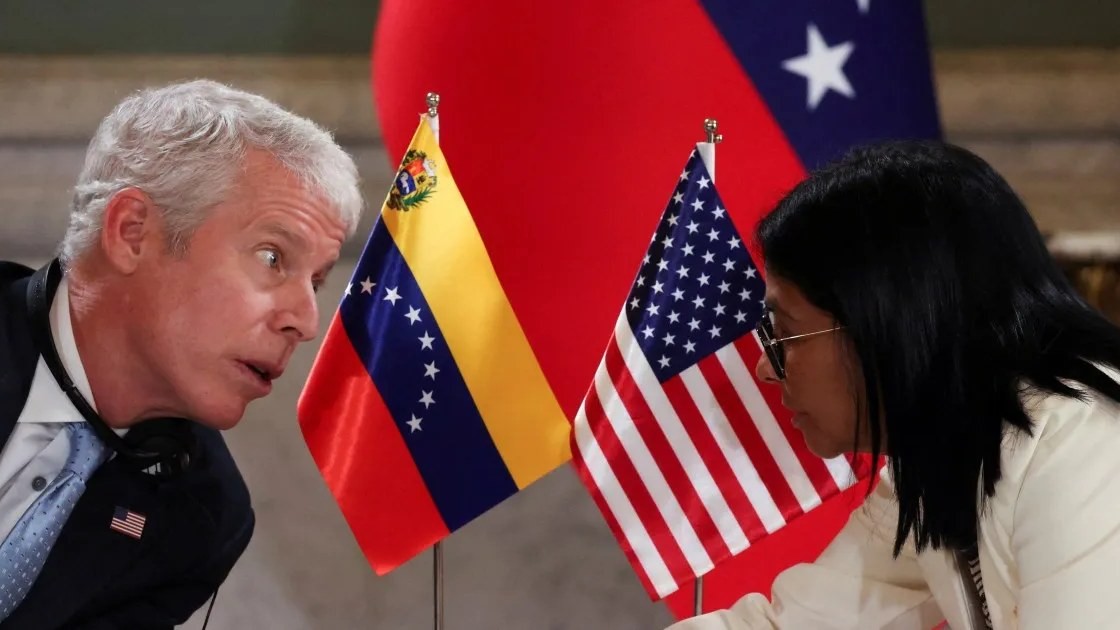
A Historic Signing at Miraflores Palace
On Wednesday, inside the presidential palace that once housed Hugo Chávez and Nicolás Maduro, Rodríguez and Wright oversaw what the Trump administration has called the "biggest oil deal in world history." The centerpiece is an arrangement granting North American Blue Energy Partners (NABEP) — a US-led company controlled by Venezuelan businessman Alejandro Betancourt — development rights over 17 Venezuelan oil fields holding an estimated 65 billion barrels of proven reserves. That figure represents roughly 22 percent of Venezuela's total reserves, a staggering transfer of resource control that has no modern precedent in the Western Hemisphere.
The ceremony was not limited to NABEP. Chevron signed agreements to expand its presence in the Orinoco Belt, committing more than $7 billion over five years to more than double output to about 600,000 barrels per day through its PDVSA joint ventures Petropiar, Petroindependencia, and Petroboscán. Italy's Eni gained exclusive rights to explore the giant Junín 5 block. GE Vernova, a General Electric offshoot, will take on the monumental task of repairing Venezuela's battered electricity grid. Other firms — GeoPark, Keo Capital, Primavera, and Aspect Energy — are also pursuing projects, with the total package described as worth "tens of billions of dollars."
Wright called the deals "critical in starting this ball rolling of peace, opportunity, and prosperity," adding that they represent "a massive win" that would bring "many thousands of jobs." For a nation whose oil production once topped three million barrels a day and has since fallen to a fraction of that, the promise of investment is not trivial. But the details of who controls what, for how long, and under whose legal authority remain deeply contested.
The 100-Year Question and the Betancourt Factor
The most explosive dispute centers on duration. Venezuela's government describes the arrangement as a preferential 25-year concession, a framing consistent with its hydrocarbons law amended in January 2026. Washington, however, maintains the rights extend for 100 years. That is not a minor legal discrepancy; it is the difference between a generation-long partnership and a multi-generational transfer of resource sovereignty that would outlast every living Venezuelan politician.
Equally contentious is the structure of the deal itself. The US government takes a 35 percent stake in NABEP's parent company. Washington is guaranteed the right to buy 20 percent of production at cost and holds a right of first refusal on the remaining 80 percent. The company's board must have a US-citizen majority, and Washington has veto power over board appointments. In practical terms, this means the US government — not Venezuela — holds decisive control over the strategic direction of nearly a quarter of the nation's proven oil reserves.
Then there is Alejandro Betancourt himself. The controversial Venezuelan businessman, once close to Hugo Chávez's government and linked to a past PDVSA corruption scandal, did not appear at the Miraflores ceremony. His absence spoke volumes. Betancourt's role has drawn scrutiny from Venezuelan civil society and international observers alike, yet US Secretary of State Marco Rubio has publicly defended him, and Wright called him "a business partner you can believe in." For many Venezuelans, the image of a US-backed Venezuelan oligarch with a checkered PDVSA past controlling their national oil wealth is a bitter irony.
What This Means for Venezuelan Families and Workers
Behind the geopolitics are real people. Venezuelan families have endured years of blackouts that shut down hospitals, water pumps, and refrigeration. They have waited in fuel lines that stretched for kilometers, a humiliating reality for a nation sitting on the world's largest proven oil reserves. The GE Vernova agreement to repair the electricity grid offers genuine hope — but Venezuelans have heard promises before, and the memory of Chávez-era nationalizations that failed to deliver reliable services remains fresh.
The jobs question is equally complex. Wright promises "many thousands of jobs," and the scale of investment — nearly $100 billion planned by NABEP alone, including in Lake Maracaibo and the Orinoco Oil Belt — would require substantial local hiring. Venezuela's oil industry, once the pride of Latin America with a highly skilled workforce at PDVSA, saw mass exodus during the Maduro years. PDVSA engineers, technicians, and skilled workers now live across Colombia, Chile, Peru, and the United States. A genuine recovery could draw some of them home, reversing a migration crisis that has reshaped the continent.
But there is deep skepticism. The full contracts have not been made public, and skeptics question who actually stands behind NABEP's promised $100 billion. El País titled its analysis "Big promises, little clarity," capturing the mood of many analysts who see a deal heavy on rhetoric and light on verifiable commitments. The Venezuelan government projects $209 billion in national benefit over 25 years, but that figure assumes production targets are met, prices remain high, and the political situation stabilizes — three assumptions that are far from guaranteed.
Sovereignty and the Colonial Echo Across Latin America
Across Latin America, the reaction has been visceral. The deal evokes the era of concessions to foreign companies that defined the region before nationalization movements swept the continent in the mid-20th century. Venezuela nationalized its oil industry in 1976, creating PDVSA as a symbol of resource sovereignty. A second nationalization came in 2007 under Chávez, who expelled Exxon and ConocoPhillips while allowing Chevron to stay through a joint venture. Now, less than two decades later, the pendulum has swung dramatically back toward foreign control.
For Mexico, the parallels are uncomfortable. The 1938 oil expropriation under Lázaro Cárdenas remains a foundational moment of Mexican national identity, and the Pemex monopoly — however inefficient — is tied to that legacy. Mexican observers watch Venezuela's deal with a mixture of sympathy and caution, recognizing that resource nationalism has costs but also understanding that foreign control carries its own dangers. The arrangement's structure, with Washington holding veto power over board appointments and a US-citizen board majority, goes far beyond typical commercial agreements.
Rodríguez has insisted Venezuela is "not ready yet" for elections, a position Trump has echoed. That alignment is telling. The deal effectively freezes the political status quo, with Delcy Rodríguez — Maduro's former vice president — serving as acting president while Maduro sits in a Brooklyn jail cell facing US drug-trafficking charges and his wife Cilia Flores faces the same indictment. The democratic question hangs over everything: can a government that has not faced voters since before the US intervention legitimately sign away control of national resources for a century?
Washington's Calculus: War, Oil Prices, and Midterms
The timing of the deal is no accident. The US-Iran war has pushed oil above $90 a barrel, raising fuel prices ahead of US midterm elections. The White House says the Venezuela deal will replenish the US Strategic Petroleum Reserve and lower gasoline prices over time. That is a political argument aimed at American voters, but it carries enormous consequences for Venezuelans who will live with the results.
The US government's 35 percent stake in NABEP's parent company means Washington is taking direct equity in a foreign oil venture on a scale with little modern precedent. The right to buy 20 percent of production at cost, plus right of first refusal on the remaining 80 percent, effectively makes the US government the primary customer for Venezuelan oil. This is not free-market capitalism; it is state-directed resource extraction with a distinctly imperial flavor, dressed in the language of partnership and prosperity.
John D. Feeley, the former US ambassador interviewed in the DW News report, represents a school of thought that sees danger in this arrangement. The Center for Media Integrity of the Americas, which he now leads, has raised questions about transparency and accountability. When the world's largest economy takes direct control of another nation's strategic resources, the precedent is troubling — not just for Venezuela, but for every resource-rich nation in the Global South that must negotiate with Washington.
What to Watch For Next
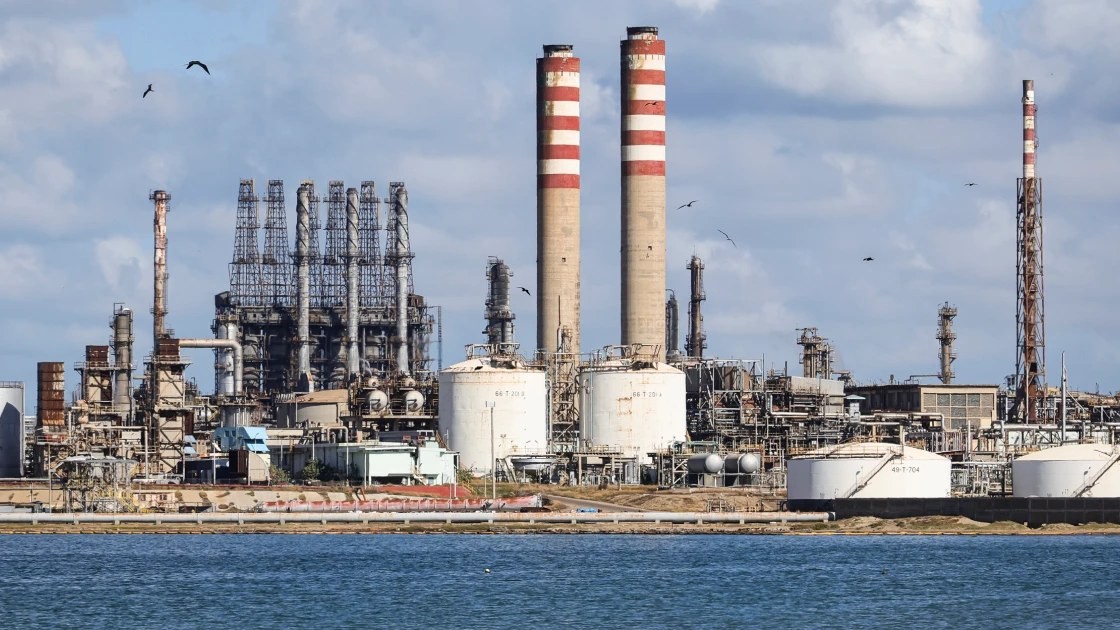
The coming months will determine whether this deal becomes a new foundation for Venezuela's recovery or another chapter in its long tragedy. Several developments bear watching. First, the full contracts must eventually be made public; the current secrecy is unsustainable and feeds speculation about hidden terms. Second, NABEP must demonstrate it has the financial capacity to back its $100 billion promises — a figure that strains credibility for a company with no track record at this scale.
Third, the refinery meetings that Trump has planned with US executives will reveal whether American infrastructure can actually process Venezuelan heavy crude, which requires specialized upgrading facilities that have deteriorated along with the rest of the country's energy system. Fourth, legal challenges are almost certain, both in Venezuela and internationally, given the disputed 25-year versus 100-year terms and the circumstances under which the deal was negotiated.
Finally, the democracy question will not disappear. Rodríguez's statement that Venezuela is "not ready yet" for elections, echoed by Trump, suggests the current arrangement could persist indefinitely. For Venezuelans who dreamed of a post-Maduro transition leading to free and fair elections, the deal may represent a different kind of trap: a US-backed government that is neither democratic nor accountable to the Venezuelan people, but is protected by Washington's strategic interests.
The DW News report asked what happens next. The honest answer is that no one knows. The deal could bring investment, jobs, and reliable electricity to a suffering nation. It could also entrench a new form of foreign domination, replacing the failed Chávez-era model with one that serves Washington's interests first and Venezuela's second. For the millions of Venezuelans who have endured blackouts, fuel lines, and exile, the hope is that this time will be different. The skepticism is equally understandable. Venezuela's oil has been both its blessing and its curse, and the latest chapter in that story is only beginning.
By Rosa Martinez, Staff Writer
This article was produced with AI-assisted research and editorial support. Sources: DW News, Al Jazeera, Reuters, EFE, El País.
What's Your Reaction?
 Like
0
Like
0
 Dislike
0
Dislike
0
 Love
0
Love
0
 Funny
0
Funny
0
 Wow
0
Wow
0
 Sad
0
Sad
0
 Angry
0
Angry
0
Latin America/Andes Correspondent at Global1.News. Based in Bogota, covering politics, environment, energy, and social movements across the Andean region. Passionate about environmental journalism and communities protecting their land.












Comments (0)