
Hong Kong working carers shun family-friendly measures amid stigma fears: study
The gap between the documented benefits and the low uptake has prompted calls from academics and policy experts to confront a lingering stigma that discourages carers from seeking support, and to reshape corporate cultures that inadvertently label employees who request caregiving leave.
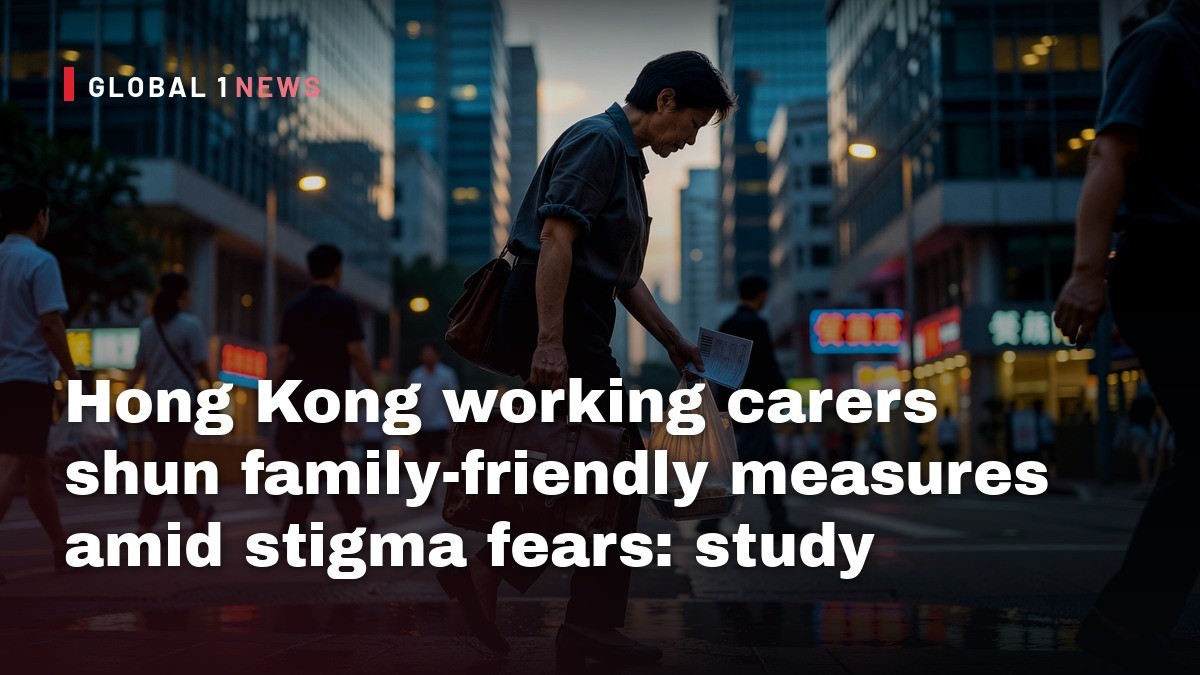
In a recent study of 566 working carers in Hong Kong, researchers found that while family‑friendly workplace measures such as flexible hours and remote work can markedly ease the psychological and practical strains of caregiving, more than half of respondents have never taken advantage of these provisions. The gap between the documented benefits and the low uptake has prompted calls from academics and policy experts to confront a lingering stigma that discourages carers from seeking support, and to reshape corporate cultures that inadvertently label employees who request caregiving leave.
Scope of the Survey and Core Findings
The survey, conducted by Professor Bobo Lau Hi‑po of the School of Arts and Humanities at Tung Wah College, gathered responses from 566 employees who identified themselves as active caregivers. The questionnaire examined usage patterns of employer‑offered family‑friendly measures, as well as self‑reported levels of depression and caregiving burden. The data revealed a clear pattern: participants who accessed flexible working hours or the option to work from home reported fewer depressive symptoms and a lighter perceived caregiving load.
Despite these positive outcomes, the study highlighted a striking paradox. More than half of the surveyed working carers reported never having used any of the family‑friendly options made available by their employers. This discrepancy underscores a behavioural barrier that extends beyond the mere existence of supportive policies.
Benefits of Flexible Working Arrangements
Respondents who utilized flexible scheduling indicated that the ability to adjust start and finish times helped them coordinate medical appointments, school pickups, and other caregiving responsibilities without sacrificing work commitments. Such flexibility translated into measurable mental‑health advantages, with participants noting a reduction in depressive symptoms. The link between schedule control and emotional well‑being aligns with broader research on work‑life integration, suggesting that temporal autonomy can mitigate the stressors inherent in dual‑role juggling.
Similarly, the option to work from home emerged as a valuable tool for managing caregiving duties. Employees who worked remotely reported a decreased sense of burden, likely because they could remain physically present for dependents while maintaining productivity. The study’s findings reinforce the argument that remote work, when structured thoughtfully, can serve as a protective factor against caregiver burnout.
Stigma and the Fear of Labelling
Professor Lau emphasized that the reluctance to use family‑friendly measures stems largely from concerns about how colleagues perceive repeated caregiving leave. He described a “certain degree of labelling” that can arise when an employee is seen as regularly absent for personal responsibilities. This social dynamic creates a subtle yet powerful deterrent, prompting many carers to forgo formal support in order to avoid being singled out or judged as less committed.
The stigma attached to caregiving leave is not unique to Hong Kong, but the local corporate culture—characterized by long working hours and a strong emphasis on presenteeism—intensifies the pressure. When employees anticipate negative reactions, they may opt for informal coping strategies that do not involve official policy use, thereby missing out on the documented mental‑health benefits.
Implications for Workplace Culture
The study’s outcomes suggest that policy alone is insufficient to address the needs of working carers. Companies must cultivate an environment where taking advantage of family‑friendly measures is normalized and free from judgment. This involves proactive communication from senior leadership, training for managers on empathetic handling of caregiving requests, and visible endorsement of work‑life balance initiatives.
Without such cultural shifts, the risk is that the very policies designed to support carers remain underutilized, perpetuating a cycle of hidden strain and potential productivity loss. Organizations that successfully integrate supportive attitudes into their corporate ethos can expect not only healthier employees but also enhanced loyalty and reduced turnover among a demographic that is increasingly central to the labor force.
Potential Economic Impact
Although the study did not quantify financial metrics, the qualitative link between reduced depression and lower caregiving burden implies potential economic gains. Employees experiencing fewer mental‑health challenges are less likely to take sick leave, and those who can manage caregiving duties without excessive overtime may sustain higher overall productivity. Moreover, by retaining skilled workers who might otherwise exit the labor market due to caregiving pressures, firms can mitigate recruitment and training costs.
From a macro‑economic perspective, broader adoption of effective family‑friendly policies could alleviate some of the demographic pressures facing Hong Kong’s ageing society. As more citizens assume caregiving roles, ensuring that these responsibilities do not erode workforce participation becomes a strategic imperative for both private and public sectors.
Recommendations from Experts
In response to the study, experts advocate a two‑pronged approach: first, enhance the visibility and accessibility of existing measures; second, address the cultural stigma that discourages usage. Suggested actions include anonymized reporting of policy uptake to protect employee privacy, peer‑to‑peer support groups that normalize caregiving discussions, and regular audits of managerial practices to detect inadvertent bias.
Professor Lau and other scholars also recommend that companies embed caregiving considerations into performance appraisal frameworks, ensuring that employees are not penalized for legitimate leave. By aligning evaluation criteria with realistic work‑life expectations, organizations can reinforce the message that caregiving responsibilities are respected and accommodated.
Future Research Directions
The current study provides a snapshot of the relationship between policy use and caregiver well‑being, but several questions remain open for further investigation. Longitudinal analyses could track how sustained access to flexible arrangements influences mental‑health trajectories over time. Comparative studies across industries might reveal sector‑specific barriers or facilitators to policy adoption.
Additionally, exploring the role of gender dynamics in caregiving stigma could yield insights, given that cultural expectations around family roles differ among male and female employees. Expanding the sample beyond Hong Kong to include other Asian metropolitan areas would also help determine whether the observed patterns are regionally consistent or uniquely shaped by local corporate cultures.
This article was produced with AI-assisted research and editorial support. Reporting is based on the source material cited below. Sources: South China Morning Post; scmp.com; Global1.News (05 November 2026).
By Kenji Tanaka, Staff Writer
What's Your Reaction?
 Like
0
 Dislike
0
 Love
0
 Funny
0
 Wow
0
 Sad
0
 Angry
0

Japan Correspondent at Global1.News. Tokyo-based voice covering Japanese politics, technology, economy, and culture. Tracks the intersection of tradition and innovation in one of the world's most dynamic societies.















Comments (0)