
Yucatán Activists Halt Luxury Dune Project Amid Legal Battle
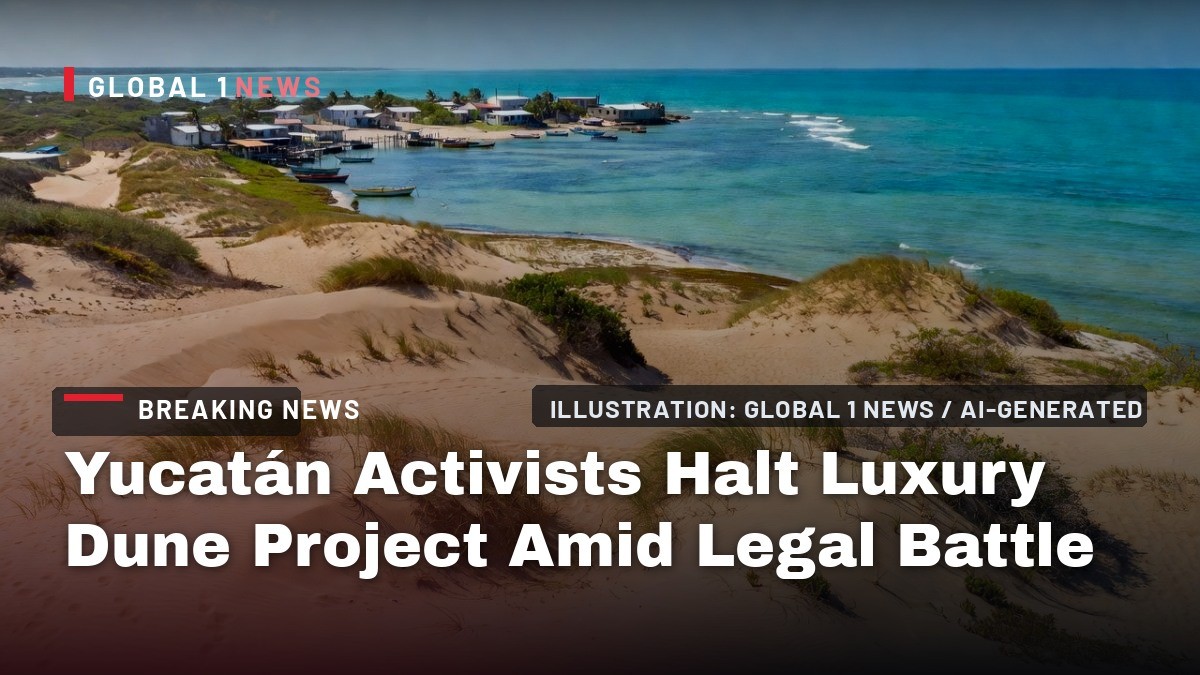
A Community Rises to Defend Its Dunes In the small fishing village of Chuburná Puerto, about 15 kilometers west of the port city of Progreso on Yucatán's Gulf coast, a quiet battle has erupted into a landmark environmental struggle.
A Community Rises to Defend Its Dunes
In the small fishing village of Chuburná Puerto, about 15 kilometers west of the port city of Progreso on Yucatán's Gulf coast, a quiet battle has erupted into a landmark environmental struggle. The luxury beachfront development called "Las Dunas" — planned for more than 92,000 square meters (about 22.7 acres) of virgin beachfront land — has been placed on hold after intense pushback from activists, environmental authorities, and a federal judge's ruling.
What began as a local concern among residents who watched heavy machinery clear dune vegetation in July 2026 has grown into a movement with more than 140,000 petition signatures and a legal challenge that reached the federal courts. The collective Salvemos Las Dunas (Save the Dunes) has become the voice of a community that sees the dunes not merely as sand and vegetation, but as the very fabric of their identity and survival.
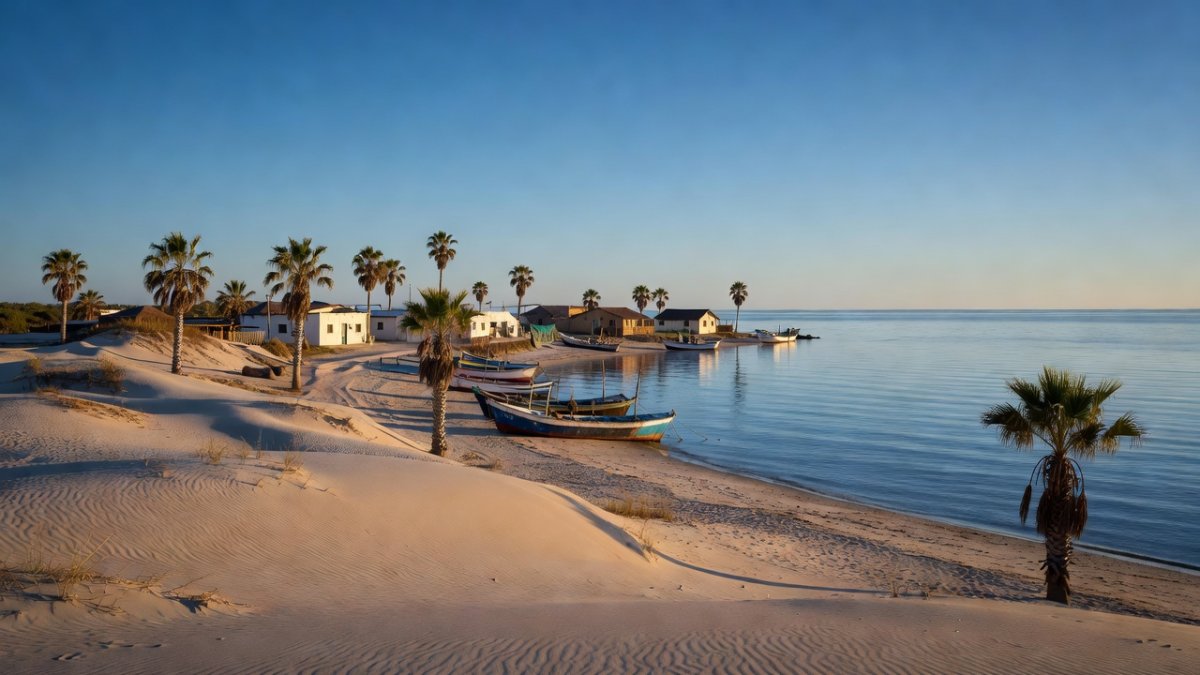
"The dunes represent our identity as Maya people because they have been passed down from generation to generation as a source of sustenance for many families," Chuburná resident Karen Sosa told El País. Her words echo the sentiment of a village that has watched the coastline shift and change over generations, understanding intuitively what scientists confirm: these dunes are a natural barrier against hurricanes and storm surge, absorbing wind and wave energy before it reaches homes and roads inland.
The project, developed by Mérida-based Designia Desarrollos — the company behind Paseo 60 and the Tívoli hotel in the state capital — has become the third high-profile reversal of a beach development in Mexico this year, signaling what many see as a shifting tide in how the country balances development against environmental preservation.
From Rejection to Approval: A Controversial History
The story of Las Dunas is not a simple one of developers ignoring the law. In December 2023, Semarnat — Mexico's Ministry of Environment and Natural Resources — initially rejected the proposal due to the site's ecological vulnerability. The dunes of Chuburná are not just any stretch of coastline; they are a nesting ground for hawksbill and green sea turtles, both protected species, and habitat for two birds found almost nowhere else on Earth: the Mexican sheartail hummingbird and the Yucatán wren, both listed under Mexico's endangered-species standard NOM-059-SEMARNAT.
Yet in April 2025, federal approval was granted after revised plans were submitted. The developer's plans, as reported by various outlets, vary in specifics — The Yucatan Times reported more than 70 luxury apartments across six towers, while Mexico News Daily cited plans for 138 apartments in 14 towers, and Yucatan Magazine reported 72 apartments in six towers. Other local outlets said 74 units. The discrepancies in reporting reflect the opacity that has frustrated activists throughout the process.
The approval came with conditions. State officials said existing permits require the developer to preserve 45,728 square meters (about 11.3 acres) of coastal wetland plus 2,880 square meters (0.71 acres) of federal maritime-terrestrial zone — together more than half the property. But when heavy machinery began clearing dune vegetation in July 2026 near El Playón de Chuburná, close to the popular Isla Columpios tour site, residents and environmental groups said the clearing began without community consultation.
The lack of transparency and the sudden appearance of machinery on the dunes galvanized the community. Public protests were held in Mérida; on August 3, more than 350 environmental activists, community groups, and residents gathered at the Monumento a la Patria along Paseo de Montejo demanding an immediate halt to the project.
Profepa Finds Violations, Judge Halts Construction
The federal response came swiftly once the scale of the damage became clear. In late July 2026, a three-day inspection by Profepa — the Federal Prosecutor's Office for Environmental Protection — found multiple regulatory violations that officials warned could constitute criminal offenses against biodiversity. The agency found clearing and sand movement over 1.3 hectares (31% of the authorized land-use-change area) that damaged protected flora and breached environmental and forestry authorizations. Protected species were present on about half the cleared area.
On August 2, 2026, Profepa announced a temporary closure of the Las Dunas worksite. Yucatán's state government also paused construction to review compliance. But the legal battle was far from over. On August 26, a federal judge allowed a legal challenge seeking to stop construction while authorities review the alleged environmental violations, effectively placing the future of the complex in limbo.
The legal proceedings have brought into sharp focus the complex jurisdictional dance between state and federal authorities. State officials have stressed that a state urban-environmental feasibility assessment is not a construction permit, and that Semarnat holds federal authority over the environmental-impact authorization. Because the site touches wetlands and federally protected coastline, final authority rests with the federal government.
Yucatán Governor Joaquín Díaz Mena has affirmed that protecting the state's natural heritage would take priority over private developments. His statement reflects a broader political context in which environmental protection has become a central theme of the Sheinbaum administration, which has shown increasing willingness to intervene in large-scale coastal projects.
A Pattern of Reversals: Mexico's Shifting Coastal Policy
Las Dunas is not an isolated case. In May 2026, Semarnat rejected Royal Caribbean's Perfect Day Mexico project near Mahahual, Quintana Roo — planned for about 90 hectares of jungle and mangrove — after President Claudia Sheinbaum ordered a new environmental review. In July 2026, Semarnat revoked the federal coastal concession for the Las Cocinas luxury development in Punta Mita, Nayarit, a project that included a 145-room hotel and more than 60 luxury residences, citing unauthorized works and environmental violations.
These decisions mark a significant departure from the development-friendly policies of previous administrations. Under the AMLO legacy and now the Sheinbaum administration, environmental authorities have shown a new willingness to enforce regulations and prioritize ecological preservation over private investment. The message to developers appears clear: environmental impact assessments are not mere formalities, and community concerns cannot be dismissed.
For the people of Chuburná, this pattern offers hope. The village, which depends on fishing and increasingly on tourism from the nearby Isla Columpios site, has watched tour operators near the attraction issue public statements distancing themselves from the Las Dunas project. The economic calculus is shifting — protecting the dunes may prove more valuable than building on them.
Researchers warn that damaged dune systems can take decades to recover, and some damage never fully heals. The clearing that occurred in July may have already caused irreversible harm to the fragile ecosystem that the community has fought to protect.
Community Identity and the Fight for the Future
For the residents of Chuburná Puerto, the fight over Las Dunas is about more than environmental regulations or legal technicalities. It is about the survival of a way of life. The dunes have served as a natural barrier protecting the village from the Gulf's fury for generations. They are part of the cultural landscape that defines this Maya community.
The petition launched by Salvemos Las Dunas grew from more than 43,000 signatures in late July to more than 140,000 by late August — a remarkable surge that demonstrates the resonance of this issue far beyond the Yucatán Peninsula. The movement has tapped into a broader national conversation about who benefits from development and who bears its costs.
In Mexico, where coastal communities have often seen their land transformed by tourism developments that bring few local benefits, the Las Dunas case has become a symbol of resistance. The activists have drawn connections to other struggles across the country, from the mangroves of Quintana Roo to the beaches of Nayarit, building a network of communities united by a common cause.
The legal proceedings now underway will determine the immediate fate of the project, but the broader question remains: can Mexico find a way to develop its coastline that respects both ecological limits and community rights? The answer, as the Las Dunas case demonstrates, will be shaped not only in courtrooms and government offices but in the streets and on the beaches where ordinary people have chosen to make their stand.
For now, construction remains on hold pending further legal and environmental proceedings. The future of the complex remains uncertain, but the community of Chuburná has already achieved something remarkable: they have forced a pause, gathered 140,000 voices, and reminded the nation that the dunes belong to more than just a developer with a permit.
This article was produced with AI-assisted research and editorial support. Sources: Mexico News Daily, The Yucatan Times, Yucatan Magazine, El País, La Jornada.
Tags: Las Dunas, Chuburná Puerto, Yucatán dunes, Salvemos Las Dunas, Profepa, Semarnat, environmental activism, luxury development, sea turtles, Mexican sheartail hummingbird, Yucatán wren, coastal protection, Designia Desarrollos, federal judge, construction halt
By Rosa Martinez, Staff Writer
What's Your Reaction?
 Like
0
Like
0
 Dislike
0
Dislike
0
 Love
0
Love
0
 Funny
0
Funny
0
 Wow
0
Wow
0
 Sad
0
Sad
0
 Angry
0
Angry
0

Latin America/Andes Correspondent at Global1.News. Based in Bogota, covering politics, environment, energy, and social movements across the Andean region. Passionate about environmental journalism and communities protecting their land.















Comments (0)