
Xi Calls for US‑China Partnership as Tensions Simmer Across Asia
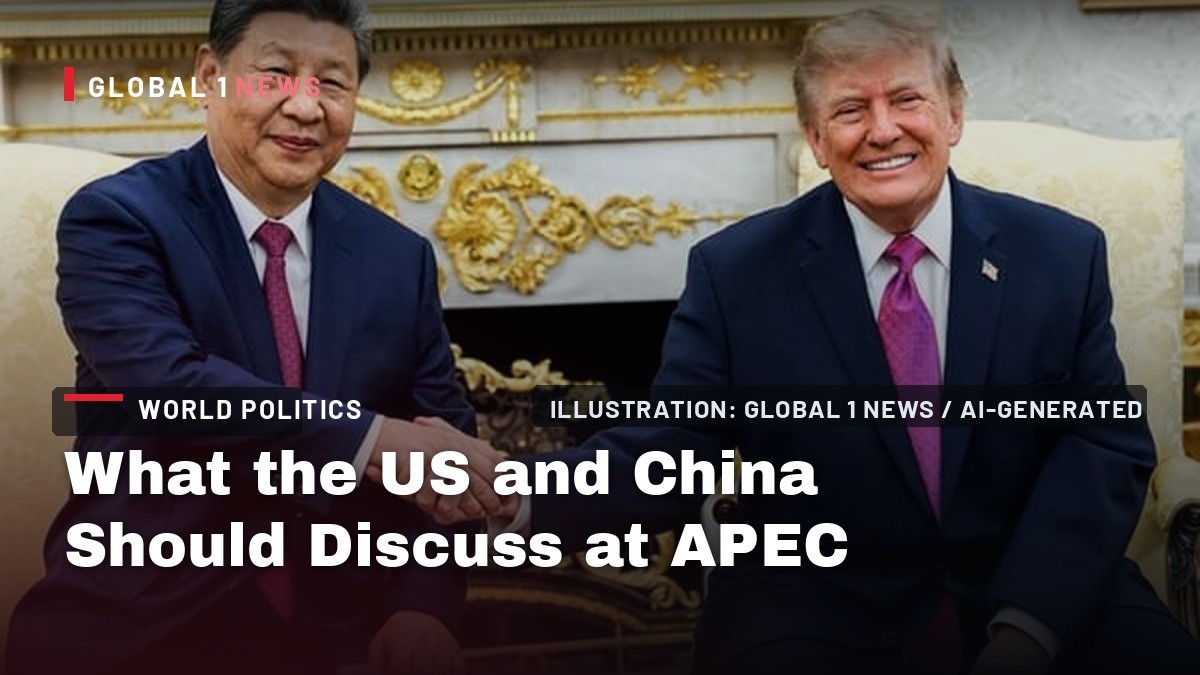
In a televised address captured by CNA on 24 September 2026, Chinese President Xi Jinping urged that the United States and China move beyond rivalry to become partners, a message that reverberated through a series of concurrent developments highlighted in the same broadcast.
In a televised address captured by CNA on 24 September 2026, Chinese President Xi Jinping urged that the United States and China move beyond rivalry to become partners, a message that reverberated through a series of concurrent developments highlighted in the same broadcast. The remarks came as diplomatic preparations intensified for an imminent summit between Xi and former U.S. President Donald Trump, a meeting that analysts anticipate will shape the trajectory of bilateral relations for the coming years. While the call for partnership was framed in broad, optimistic language, the surrounding news items – ranging from an extended trade truce to North Korea’s defiant nuclear pledge – illustrate the complex and often contradictory environment in which Japan must navigate its own strategic calculations.
Summit Preparations and the Narrative of Partnership
The video’s opening segment, timed at 01:29, focused on the lead‑up to the Trump‑Xi summit. Both leaders are slated to meet later this month, a gathering that has been billed as a chance to reset ties that have been strained by trade disputes, technology bans, and competing security postures in the Indo‑Pacific. Xi’s call for partnership was presented as a cornerstone of the agenda, emphasizing cooperation on climate change, public health and the digital economy. The language used was deliberately measured, avoiding any direct commitment to specific policy reversals, yet the emphasis on “partnership” signals a diplomatic overture that Tokyo will scrutinise closely.
For Japan, the summit holds particular relevance because of its own delicate balancing act between the United States and China. The Ministry of Foreign Affairs (MOFA) has repeatedly highlighted the importance of a stable U.S.–China relationship for regional security, especially concerning the Taiwan Strait and the Korean Peninsula. At the same time, the Ministry of Economy, Trade and Industry (METI) monitors any potential shifts that could affect Japan’s export‑driven economy, particularly in high‑tech sectors where Chinese competition is intensifying. Xi’s partnership narrative, therefore, will be examined for signals that could affect Japan’s trade policy, its technology import controls, and its broader strategic posture.
Analysts note that the timing of the summit – occurring shortly after the extension of a bilateral trade truce – may be intended to create a conducive environment for dialogue. The truce, which the video mentions as being extended to 10 January, temporarily suspends the imposition of new tariffs and export restrictions that have been a hallmark of the trade conflict since 2022. While the extension does not resolve underlying disputes over market access and intellectual property, it does provide a short window of reduced economic friction that could be leveraged during the summit to discuss longer‑term frameworks.
Japanese think tanks, such as the Japan Institute of International Affairs (JIIA), have warned that the partnership rhetoric must be matched by concrete steps, particularly in areas where both powers have overlapping interests and rivalries, such as semiconductor supply chains and AI governance. The upcoming summit will likely test whether Xi’s call for partnership translates into actionable cooperation or remains a diplomatic platitude.
Trade Truce Extension and Its Implications for Japan
The video reports that Washington and Beijing have agreed to extend their trade truce until 10 January 2027. This extension halts the escalation of tariffs that have previously targeted sectors ranging from agricultural products to high‑tech components. For Japanese exporters, especially those in automotive parts, machinery and consumer electronics, the truce offers a brief period of market stability in China, a crucial destination for Japanese manufacturing output.
METI officials have previously indicated that Japanese firms are closely monitoring the truce’s terms, particularly any clauses that could affect the flow of critical materials such as rare earths and advanced semiconductors. The extension may also provide an opportunity for Japanese companies to renegotiate supply contracts that were disrupted by earlier tariff hikes, thereby reducing production bottlenecks in domestic factories.
However, the truce’s temporary nature underscores the fragility of the economic relationship. The video does not detail any substantive negotiations on intellectual property protection or technology transfer, issues that have long been points of contention. Japanese businesses remain wary that once the truce expires, the United States may re‑impose stricter export controls on technologies deemed sensitive, potentially limiting Japan’s ability to source advanced chips from U.S. allies.
Strategically, the truce also reflects a broader diplomatic calculus. By extending the pause in trade hostilities, both Washington and Beijing signal a willingness to avoid a full‑scale economic confrontation, at least in the short term. For Japan, this aligns with the government’s objective of maintaining stable trade flows while simultaneously reinforcing security alliances with the United States. The balance will be delicate, particularly as other regional actors, such as South Korea and Australia, also navigate similar pressures.
North Korea’s Nuclear Commitment and Regional Security Dynamics
At 33:33, the broadcast highlighted North Korea’s declaration that it will retain its nuclear arsenal “forever.” This stark statement came in response to international calls for denuclearisation, which the video notes were rejected by Pyongyang. The reaffirmation of a permanent nuclear posture adds a layer of volatility to an already tense security environment surrounding the Korean Peninsula.
Japan’s security establishment, under the guidance of the Ministry of Defense and the National Security Council, has long regarded North Korea’s nuclear capabilities as a primary threat. The “forever” pledge intensifies concerns about the regime’s willingness to engage in diplomatic negotiations, especially those that might involve the United States or China as mediators. The Japanese government has repeatedly called for a coordinated approach, urging both Washington and Beijing to apply pressure while keeping diplomatic channels open.
The timing of this declaration, coinciding with Xi’s partnership overture, places Beijing in a particularly sensitive position. China has historically acted as a de‑facto guarantor of stability on the peninsula, often mediating ceasefire talks and advocating for sanctions relief in exchange for denuclearisation steps. However, the video’s coverage suggests that North Korea remains resolute, potentially limiting China’s leverage and complicating its role as a regional stabiliser.
For Japan, the North Korean stance reinforces the importance of maintaining robust defence capabilities, including the development of missile defence systems and the strengthening of the U.S.–Japan security alliance. It also underscores the need for diplomatic engagement with both the United States and China to manage escalation risks, particularly as both powers have significant influence over Pyongyang’s strategic calculations.
Taiwan’s Appreciation of U.S. Support Amid Rising Tensions
At 13:45, the video featured a segment in which Taiwanese officials expressed gratitude to the United States for its continued support. The remarks came against a backdrop of increasing Chinese military activity around the island, a development that has drawn heightened attention from regional observers, including Japanese policymakers.
Japan’s Ministry of Foreign Affairs has consistently advocated for a peaceful resolution of cross‑strait issues, emphasizing the importance of stability for regional trade routes and security. The Taiwanese appreciation of U.S. backing aligns with Japan’s own interest in preventing any unilateral change to the status quo that could trigger a broader conflict. Consequently, Tokyo monitors U.S. policy moves toward Taiwan closely, particularly any arms sales or diplomatic statements that could be perceived as provocative by Beijing.
The video’s coverage of Taiwan’s statement also illustrates the broader narrative of alliance politics in the Indo‑Pacific. While Japan does not have a formal defence treaty with Taiwan, it shares common concerns over freedom of navigation and the rule of law in the South China Sea, where Chinese claims intersect with those of Japan’s maritime partners. The Japanese government, therefore, views U.S. support for Taiwan as indirectly reinforcing its own security objectives.
In practical terms, the Japanese government may consider augmenting its own diplomatic outreach to Taipei, enhancing economic cooperation, and possibly coordinating with the United States on contingency planning. Such steps would be undertaken within the constraints of Japan’s constitutional pacifist stance, focusing on capacity‑building and humanitarian assistance rather than direct military involvement.
Technology Competition: Chinese Chip Firms and the AI Wave
At 39:32, the broadcast turned to the rapid advancement of Chinese semiconductor companies riding the global AI wave. The segment highlighted that Chinese chip makers are accelerating development of AI‑optimised processors, a move that reflects Beijing’s strategic priority to achieve self‑sufficiency in critical technologies.
Japan’s technology sector, overseen by METI and the Ministry of Economy, Trade and Industry, is acutely aware of the competitive pressure. Japanese firms such as Renesas, Toshiba and newer AI‑focused startups are investing heavily in next‑generation chips, yet they face a market where Chinese firms benefit from substantial state backing and a large domestic market. The AI chip race also intersects with U.S. export controls that limit the transfer of advanced lithography equipment to China, a policy that Japan must navigate carefully given its own export licensing regimes.
The video’s focus on Chinese AI chips underscores a broader trend of technology decoupling, where the United States and China are establishing parallel ecosystems. For Japan, this presents both challenges and opportunities. On one hand, Japanese companies may lose market share in China as domestic alternatives become more competitive. On the other, Japan could position itself as a bridge, offering high‑quality components to both sides, provided it can comply with export regulations and maintain trust with its allies.
Policy responses from Tokyo may include increased funding for domestic R&D, incentives for semiconductor fab construction, and closer collaboration with the United States on standards for AI ethics and security. The Japanese government has already signalled intent to bolster its chip industry through subsidies and tax incentives, aiming to preserve its role in the global supply chain while aligning with allied security concerns.
Regional Incidents: Australia’s OpenAI Breach and SoftBank’s Bond Sale
Later in the video, at 42:10, a report detailed an incident in Australia where an OpenAI system suffered a data breach. While the incident occurred outside Japan, it raises questions about the security of AI platforms that are increasingly integrated into critical infrastructure across the Asia‑Pacific. Japanese regulators, particularly the Financial Services Agency (FSA) and the Personal Information Protection Commission (PIPC), have been developing guidelines for AI governance, and such breaches abroad serve as cautionary examples for domestic policy formulation.
The breach highlights the growing interdependence of AI services and the need for robust cybersecurity standards. Japan’s recent amendments to its cybersecurity framework, which aim to enforce stricter data protection for AI‑driven services, may be accelerated in response to such incidents. Coordination with allies, including the United States, Australia and South Korea, is likely to intensify as the region seeks common standards to mitigate AI‑related risks.
At 44:16, the video mentioned SoftBank’s bond sale, a financial move that underscores the continued appetite for capital among Japanese conglomerates despite a volatile global market. SoftBank’s fundraising efforts are part of a broader trend where Japanese firms seek to diversify financing sources, often tapping overseas investors. The bond issuance reflects confidence in Japan’s fiscal stability, bolstered by the Bank of Japan’s accommodative monetary stance, which has kept interest rates low.
For the Japanese economy, SoftBank’s activity signals the resilience of corporate finance and the importance of maintaining a stable funding environment. The Ministry of Finance (MOF) monitors such developments, ensuring that corporate bond markets remain liquid and that regulatory frameworks support sustainable growth. Moreover, the bond market’s health influences Japan’s ability to fund strategic initiatives, such as the development of next‑generation AI and semiconductor capabilities discussed earlier.
By Kenji Tanaka, Staff Writer
This article was produced with AI-assisted research and editorial support. Reporting is based on the source material cited below. Sources: CNA video report (24 September 2026); CNA; Global1.News
What's Your Reaction?
 Like
0
Like
0
 Dislike
0
Dislike
0
 Love
0
Love
0
 Funny
0
Funny
0
 Wow
0
Wow
0
 Sad
0
Sad
0
 Angry
0
Angry
0

Japan Correspondent at Global1.News. Tokyo-based voice covering Japanese politics, technology, economy, and culture. Tracks the intersection of tradition and innovation in one of the world's most dynamic societies.













Comments (0)