
Women and Children Left Behind in Ceuta Face Uncertain Asylum Path
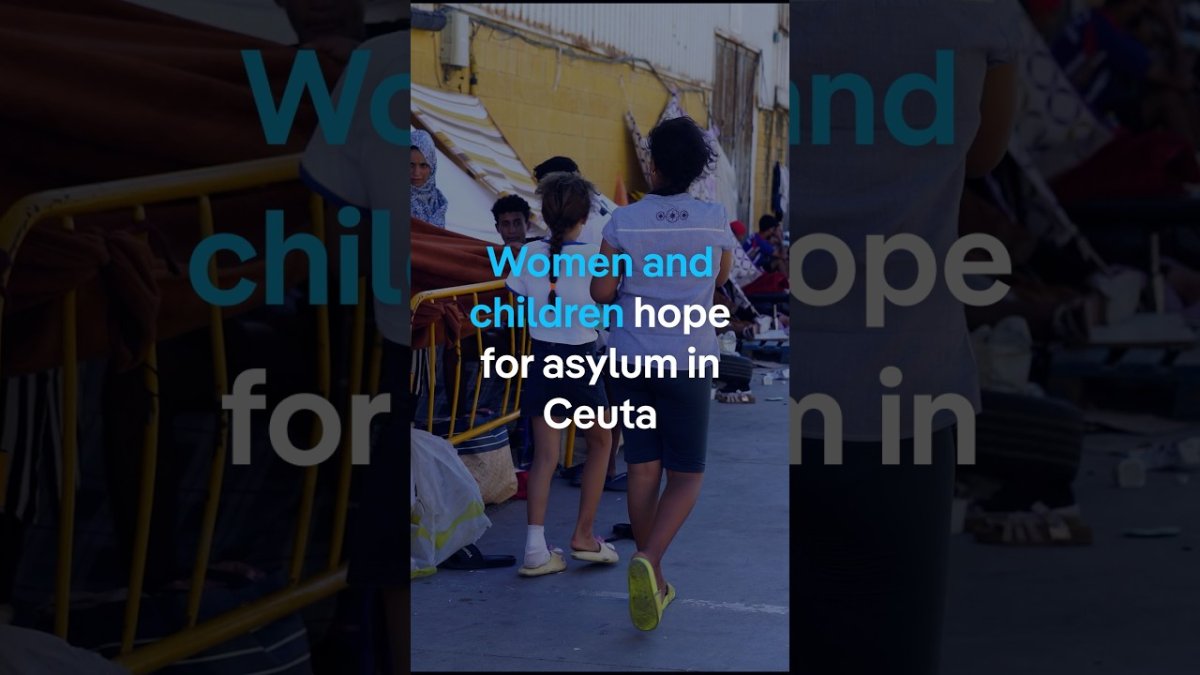
In a recent DW News report, the focus fell on women and children who reached the Spanish enclave of Ceuta after the mass crossing from Morocco and now wait on beaches and hills for asylum decisions. More than 70,000 people entered Ceuta between July 30 and 31, 2026, yet authorities confirm at least 2,000 remain, including hundreds of unaccompanied minors.
In a recent DW News report, the focus fell on women and children who reached the Spanish enclave of Ceuta after the mass crossing from Morocco and now wait on beaches and hills for asylum decisions. More than 70,000 people entered Ceuta between July 30 and 31, 2026, yet authorities confirm at least 2,000 remain, including hundreds of unaccompanied minors. This situation directly affects families in colonias across Mexico who watch similar scenes unfold at the US-Mexico border in Tijuana, where the Instituto Nacional de Migración processes thousands of Central American and Mexican children each year.
Women and Children Left Behind in Ceuta Face Uncertain Asylum Path
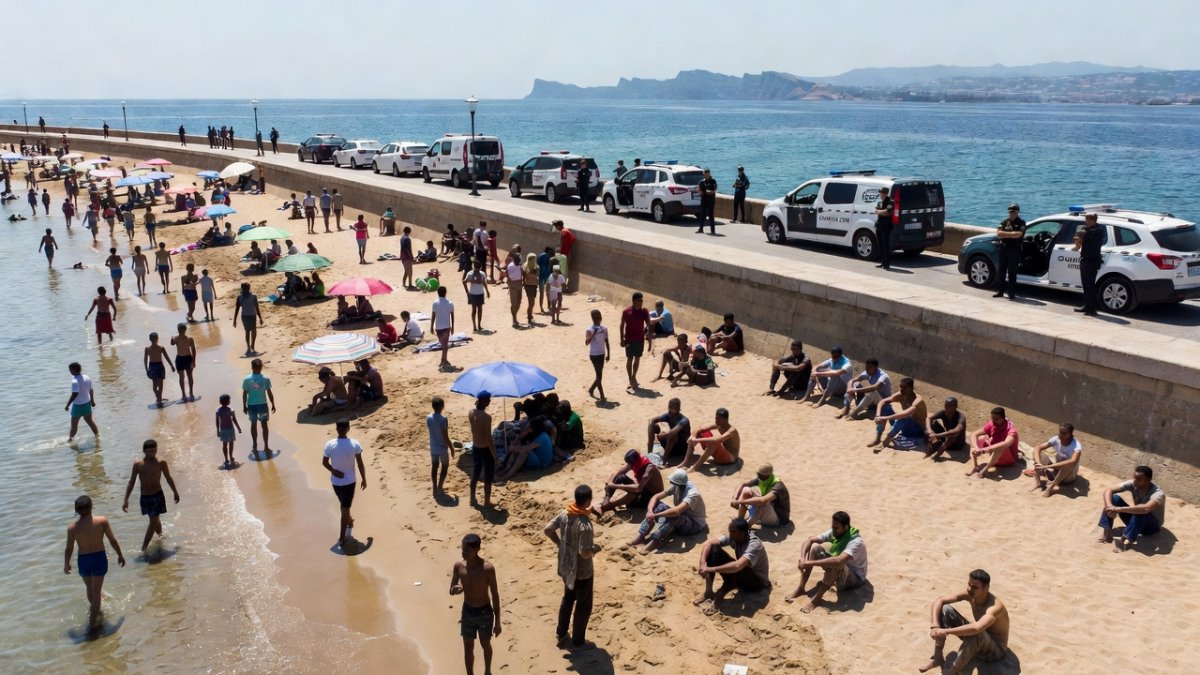
Ceuta, Spain — At least 72 people died during the July 2026 crossings, with Spain's government later confirming 75 deaths, Ceuta authorities reporting 88, and Ceuta president Juan Jesús Vivas stating the toll reached at least 100 when including deaths on the Moroccan side. The vast majority of the 70,000 who crossed returned within days, but women, children, and unaccompanied minors stayed behind, sleeping on beaches or in the overcrowded migrant center that holds only 600 people.
Political Reactions and the Scale of the Exodus
Spanish interior minister Fernando Grande-Marlaska stated that about 70,000 of the 72,000 people who entered Ceuta had left by early August. Ceuta president Juan Jesús Vivas told EU lawmakers the event felt like an invasion and called for immediate expulsion of all who crossed irregularly. EU migration commissioner Magnus Brunner criticized Spain's regularization plan during the August 4 emergency video conference, saying it sent the wrong signal to the rest of Europe. Twenty-two EU countries signed a letter led by Italy and Denmark opposing the plan to regularize 500,000 undocumented migrants. Spanish intelligence has since warned of another mass crossing attempt based on credible online calls. The rapid return of most migrants left local services strained, with officials scrambling to process claims from those who remained. Grande-Marlaska emphasized coordination with Moroccan authorities to prevent further surges, while Vivas highlighted the psychological impact on Ceuta residents who felt their small territory had been overwhelmed overnight. Brunner urged member states to strengthen external borders rather than offer pathways that could encourage more attempts. The 22-country letter underscored deep divisions, with Italy citing its own recent Schengen suspension as a model for temporary controls. Spanish intelligence reports pointed to social media activity in Morocco and beyond that could spark a repeat event within weeks, forcing European capitals to revisit funding for North African border security.
Local NGOs documented how the sudden influx exposed gaps in reception capacity, with many families separated during the chaos of the crossings. The death toll progression from 72 to 75, then 88, and finally over 100 reflected both the scale of the tragedy and the difficulty in counting bodies recovered from the sea and Moroccan territory. These numbers fueled calls for independent investigations into the use of force at the border fence.
The Human Toll: A Family Torn Apart at the Fence
A 17-year-old girl from Tangier described to AP how she and her family tried to swim around the border fence. Her 8-year-old brother drowned in front of her, and Spanish police pulled his body from the water. She reached shore but lost her mother and spent four days alone on the streets before locals gave her food, clothing, and a place to bathe. The government youth center was full, leaving her and other children begging on the street. AP reporters saw Spanish soldiers escorting a crying 12-year-old unaccompanied Moroccan boy who begged not to return; a lieutenant colonel halted the repatriation after residents confirmed he was a minor and transferred him to the Spanish Civil Guard. At least 860 unaccompanied minors remain according to earlier local counts, with some estimates reaching 3,000 to 5,000 total migrants still in the city. The girl's account revealed the personal devastation behind the statistics, as she searched daily for any sign of her mother among the remaining groups on the beaches. Community members in Ceuta organized informal aid networks after seeing children like her go without shelter for days. The 12-year-old boy's intervention by residents underscored how quickly public pressure can alter official actions at the border. With the center at 600 capacity already exceeded, many minors slept exposed to the elements, increasing health risks amid limited medical access. Sudanese, Palestinian, Afghan, and other African nationals among the remaining migrants shared stories of fleeing conflict only to face new uncertainties in the enclave.
These individual tragedies echoed across the community, prompting local volunteers to distribute blankets and meals despite official discouragement. The progression of the death toll continued to rise as more bodies washed ashore, deepening grief among families on both sides of the border.
Legal Protections and Overwhelmed Facilities
Spanish asylum law allows adults to apply for protection, yet the bar remains high for Moroccan nationals seeking humanitarian status. Unaccompanied minors must receive protection and care from Spanish authorities under existing rules. The Ceuta migrant center operates at full capacity with 600 beds, forcing many to sleep outdoors where food and water remain scarce. Local activist Ramsés Mohamed Azumik of Asociación Elín stated the strategy relies on hunger, thirst, and exhaustion to push voluntary returns to Morocco. Among those still present are Sudanese fleeing war, Palestinians from Gaza, Afghans, and nationals from several African countries. Azumik noted that the deliberate lack of resources created a de facto deterrent, leaving children and women particularly vulnerable. Legal advocates argued that Spain's obligations under international conventions required immediate expansion of shelter options rather than reliance on informal returns. The 860 unaccompanied minors identified in initial counts represented only a fraction of the total, with many hiding to avoid repatriation. Overcrowding at the 600-bed facility meant daily decisions about who received a spot, often based on age or nationality rather than need. This system strained relations between Spanish officials and humanitarian groups working on the ground.
European Divisions Over Border Policy
EU interior ministers met via video conference on August 4 to address the crisis. Magnus Brunner described the events as shaking the politics of an entire continent. Italy had already suspended parts of the Schengen treaty in response. Ceuta's conservative president Juan Jesús Vivas expressed that residents feel sad, helpless, anxious, fearful, and worried, noting that security rests in Morocco's hands. These divisions mirror ongoing debates in Mexico's Congreso de la Unión over how the Instituto Nacional de Migración should handle returns and protections. Brunner's comments highlighted the tension between solidarity and national interests, as several countries resisted any plan that appeared to reward irregular entry. Vivas's remarks captured the local anxiety in Ceuta, where residents worried about long-term demographic shifts. The 22-country letter signaled a hardening stance across the bloc, with Italy's Schengen move serving as precedent for future restrictions. Spanish intelligence warnings of renewed attempts added urgency to the discussions, pushing ministers to consider increased funding for Moroccan border controls.
Humanitarian Response by Local Activists and Red Cross Teams
Red Cross volunteers and members of Asociación Elín worked around the clock to provide basic supplies to those sleeping on the beaches, despite limited official support. Ramsés Mohamed Azumik coordinated food distributions that reached hundreds of women and children each day, filling gaps left by the overwhelmed 600-capacity center. These efforts highlighted the role of civil society when state systems reached their limits, offering temporary relief to the 17-year-old from Tangier and others like her. International observers noted that such grassroots actions prevented a larger humanitarian catastrophe in the days following the crossings.
Parallels with Mexico's Border Challenges
Mexico's experience as both source and transit country for migrants creates direct parallels with Ceuta. In Tijuana, the Instituto Nacional de Migración processes unaccompanied minors daily under the Sheinbaum administration's current approach, which emphasizes coordination with the US while maintaining protections required by Mexican law. Families in the colonias of Tijuana and Ciudad Juárez see children separated during crossings similar to the 17-year-old from Tangier. The Secretaría de Gobernación and the Guardia Nacional manage flows at the northern border much as Spanish forces manage Ceuta, with the same tension between rapid returns and obligations to minors. Rural communities in Oaxaca and Chiapas send young migrants northward, just as Moroccan families send children toward Ceuta, and both nations face pressure from larger neighbors over regularization and repatriation. The legacy of AMLO-era policies and the current Sheinbaum administration's focus on root causes shows that enforcement alone does not stop families from attempting dangerous crossings when economic and security conditions collapse at home.
What to Watch For
Spanish intelligence continues to monitor online calls for another mass attempt, while EU policy debates over regularization and border funding remain active. Morocco-Spain relations will shape future crossings, just as US-Mexico talks influence flows through Tijuana and other border cities. Mexican readers should watch how the Instituto Nacional de Migración adapts its handling of unaccompanied minors in the coming weeks, because any shift in Ceuta's return practices could affect how Mexico balances its own humanitarian commitments with external pressure. The women and children still in Ceuta represent the human core of this crisis, and their situation echoes the daily reality for families along Mexico's northern and southern borders where policy decisions in distant capitals determine whether children find safety or face another forced return.
By Rosa Martinez, Staff WriterThis article was produced with AI-assisted research and editorial support. Reporting is based on sources cited in the article.
What's Your Reaction?
 Like
0
Like
0
 Dislike
0
Dislike
0
 Love
0
Love
0
 Funny
0
Funny
0
 Wow
0
Wow
0
 Sad
0
Sad
0
 Angry
0
Angry
0

Latin America/Andes Correspondent at Global1.News. Based in Bogota, covering politics, environment, energy, and social movements across the Andean region. Passionate about environmental journalism and communities protecting their land.














Comments (0)