
Saudi Arabia, Turkey, Pakistan Forge Joint Defence Pact
Saudi Arabia, Turkiye and Pakistan are set to sign a joint defence pact in Jeddah on Friday as Crown Prince Mohammed bin Salman hosts President Erdogan and PM Shehbaz Sharif amid the US-Iran war, Red Sea threats and deepening R-4 coordination.
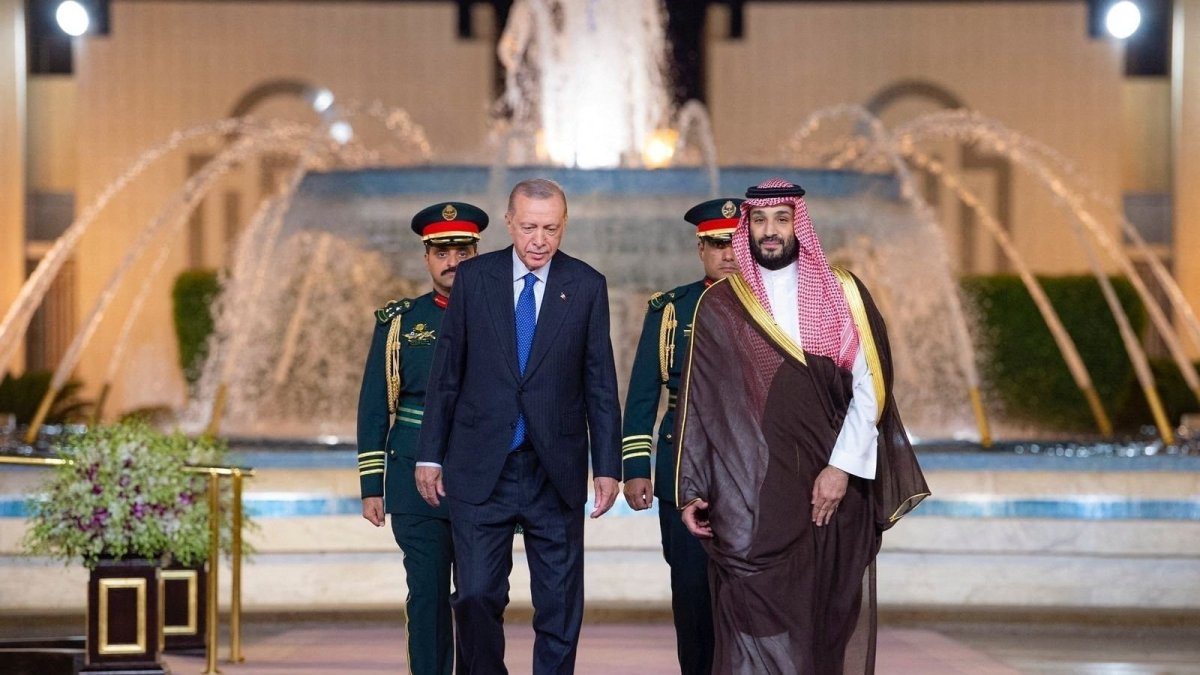
The leaders of Saudi Arabia, Türkiye and Pakistan are converging on Jeddah for a trilateral summit expected to formalize a joint defence agreement — a pact long under discussion that the US-Iran war and mounting threats to Gulf shipping lanes have suddenly accelerated. The meeting brings together three of the Muslim world's most consequential states at a moment when the region's security architecture is being redrawn in real time.
Saudi Arabia, Türkiye and Pakistan Forge Joint Defence Pact in Jeddah
Jeddah, Saudi Arabia – August 7, 2026 — Crown Prince and Prime Minister Mohammed bin Salman will host Turkish President Recep Tayyip Erdoğan and Pakistani Prime Minister Shehbaz Sharif on Friday for a one-day working visit that is expected to culminate in the signing of a trilateral joint defence agreement. Sources close to the Saudi military and government told AFP that the three countries will sign the pact in Jeddah, with Reuters corroborating the timeline from two regional sources with direct knowledge of the matter.
Trilateral Summit Convened in Jeddah
Saudi Arabia will host Crown Prince and Prime Minister Mohammed bin Salman, Turkish President Recep Tayyip Erdoğan and Pakistani Prime Minister Shehbaz Sharif for a one-day working visit on Friday, August 7, 2026. The Turkish presidency confirmed Erdoğan's travel, while Pakistani officials noted that Prime Minister Sharif arrived on August 6 accompanied by Deputy Prime Minister and Foreign Minister Ishaq Dar and Chief of Army Staff Field Marshal Asim Munir. The meeting occurs as the three capitals seek to coordinate responses to ongoing regional instability.
Joint Defence Agreement Nears Signature
Sources close to the Saudi military and government told AFP that the three countries will sign a joint defence agreement on Friday. Reuters reported the same timeline from two regional sources with direct knowledge. One Saudi source stated that discussions had continued for an extended period but recent regional developments accelerated the process. No public details on the agreement's specific provisions have been released, and officials have avoided outlining operational commitments at this stage.
Backdrop of US-Iran Hostilities
Hostilities between the United States and Iran began on February 28, 2026, following US-Israeli airstrikes that killed senior Iranian officials. The conflict has disrupted shipping through the Strait of Hormuz, which Iran has controlled, and through the Red Sea. Ongoing talks involving Iran and Oman aim to establish an interim arrangement for reopening the Strait. Saudi Arabia has maintained high alert regarding threats from Iranian proxies operating across the region during this period.
The US-Iran conflict has forced Gulf capitals to recalibrate their security assumptions, particularly as Iranian control over the Strait of Hormuz intersects with ongoing Red Sea disruptions. Gulf states now face simultaneous pressure on two critical chokepoints, prompting them to accelerate diversification of defense partnerships rather than relying solely on traditional US security guarantees. This environment has elevated the value of trilateral coordination among actors that can offer both diplomatic channels and operational capacity without directly challenging American primacy in the region.
Negotiations over an interim Iran-Oman shipping arrangement, conducted with US involvement, illustrate how even limited de-escalation mechanisms require broad regional buy-in. Saudi Arabia's decision to embed Turkey and Pakistan within its newly unveiled maritime coalition reflects a calculated effort to distribute risk while maintaining OPEC+ cohesion. The resulting architecture allows Riyadh to signal resolve toward Tehran without locking itself into a single bilateral framework that could limit future flexibility.
Second-order effects include accelerated arms-transfer timelines and technology-sharing arrangements that predate the current crisis but now gain strategic urgency. These moves also complicate Iranian calculations by demonstrating that Gulf states can mobilize non-Arab partners whose interests in stable energy routes align with, yet remain distinct from, Washington's objectives.
R-4 Group Coordination Efforts
The foreign ministers of Turkey, Egypt, Pakistan and Saudi Arabia met in Amman on August 5 for the fifth session of the R-4 Group. Turkish Foreign Minister Hakan Fidan, Egyptian Foreign Minister Badr Abdelatty, Pakistani Foreign Minister Ishaq Dar and Saudi Foreign Minister Prince Faisal bin Farhan participated. The mechanism, which began in Riyadh in March, focuses on containing fallout from the US-Iran war, advancing diplomatic initiatives and addressing shared security challenges. The ministers reiterated support for Palestinian self-determination and an independent state on the 1967 borders with East Jerusalem as capital, while stressing dialogue to prevent further escalation.
The R-4 format has positioned itself as a quiet diplomatic channel emphasizing dialogue over confrontation, allowing participating states to maintain distinct bilateral relationships with Washington while creating space for de-escalatory messaging that might otherwise lack a structured venue. By focusing on process rather than immediate outcomes, it reduces the risk that any single member's outreach to Iran or other actors will be interpreted as defection from collective positions.
Over time, the mechanism's emphasis on incremental diplomacy may influence how Gulf states manage the second phase of the Gaza Peace Plan, where compliance questions remain sensitive. Its continued operation suggests that regional actors view sustained, low-profile coordination as essential insurance against rapid deterioration in either the Hormuz or Red Sea theaters.
Turkey's Defense Footprint in the Gulf
Turkey and Saudi Arabia have expanded defense cooperation in recent years. In 2023 Saudi Arabia signed a major drone procurement agreement with Turkish company Baykar, followed by a 2024 deal covering UAV production, technology transfer and personnel training. In February 2026 the two countries agreed on joint production of the Gökbey utility helicopter, with ongoing discussions about possible Saudi involvement in Turkey's KAAN fighter program. Bilateral trade reached $8.5 billion by the end of 2025. President Erdoğan last visited Saudi Arabia in February 2026 and spoke with Mohammed bin Salman by phone on August 3 regarding Gaza and bilateral ties.
These developments coincide with Erdoğan's February Riyadh visit and his more recent telephone conversation with MBS, during which he stressed the importance of Israeli compliance with the Gaza roadmap. Turkish officials have simultaneously used public statements to highlight Israel's destabilizing role, aligning rhetorical positioning with concrete defense cooperation that strengthens Riyadh's maritime coalition options.
The resulting footprint allows Ankara to project influence without committing operational forces, preserving flexibility while deepening leverage over Gulf security outcomes. This calibrated approach also positions Turkey to benefit from any future expansion of the Saudi-led coalition's mandate, particularly if Red Sea or Hormuz contingencies require additional surveillance or logistical capacity.
Pakistan's Nuclear and Diplomatic Role
Pakistan, the only Muslim-majority state with nuclear weapons, announced a separate joint defence pact with Saudi Arabia in 2025. Islamabad has sought to mediate an end to the US-Iran war. Foreign Ministry spokesman Tahir Andrabi stated that Prime Minister Sharif's visit carries significance beyond the immediate crisis. Pakistan's participation in the Saudi-led maritime defense coalition, which includes 14 countries and targets threats in the Red Sea, Bab el-Mandeb Strait and Gulf of Aden, adds a nuclear dimension to collective efforts aimed at protecting commercial and energy routes.
By aligning with the coalition while stopping short of immediate operational commitments, Pakistan mirrors Turkey's approach, offering diplomatic and potential logistical support without locking itself into open-ended deployments. This stance preserves Islamabad's ability to maintain independent channels with Tehran and other regional actors, consistent with its broader strategy of balancing relations across the Gulf.
The second-order effect is an incremental broadening of the coalition's credibility among states that view Pakistan's nuclear deterrent and mediation experience as stabilizing factors. Over time, this could encourage further institutionalization of trilateral defense planning, particularly if energy-route protection requirements intensify and demand contributions from partners whose capabilities complement Saudi and Turkish assets.
Red Sea Security and Energy Route Protection
Saudi Arabia unveiled the multinational maritime coalition last week to safeguard shipping amid Houthi attacks backed by Iran. Turkey and Pakistan joined the initiative. The trilateral agreement under discussion in Jeddah is expected to complement these measures, though officials have not specified new operational arrangements. Disruption to energy flows through the Strait of Hormuz and Red Sea continues to affect global markets, prompting Gulf states to diversify partnerships while maintaining existing OPEC+ diplomacy.
Disruptions in the Red Sea have compounded the effects of Hormuz-related tensions, driving oil prices near US$90 per barrel and prompting Gulf states to accelerate alternative security arrangements. Saudi Arabia's maritime coalition explicitly addresses these vulnerabilities by incorporating partners capable of contributing to surveillance, interdiction, and diplomatic signaling against Houthi threats. Turkey's expression of solidarity with Riyadh indicates Ankara's interest in protecting energy transit corridors that affect its own economic calculations.
These arrangements carry longer-term implications for how Gulf states manage the intersection of energy security and great-power competition. By embedding non-Arab partners into coalition structures, Riyadh creates additional points of leverage that can be activated if Iranian or Houthi pressure on shipping lanes escalates, while still preserving space for OPEC+ diplomacy and ongoing US-Iran de-escalation talks.
Strategic Calculus and Regional Balance
Each participant brings distinct leverage. Saudi Arabia seeks additional layers of maritime and air defense amid proxy threats. Turkey aims to broaden regional backing against Israeli actions while expanding its defense exports. Pakistan offers diplomatic channels and military capacity. The R-4 framework provides a parallel diplomatic track that includes Egypt. Second-order effects may include tighter coordination on Gaza diplomacy and greater Turkish influence in Gulf security planning, though the precise scope of the Friday agreement remains to be seen once details emerge.
By Malik Hassan, Staff Writer
This article was produced with AI-assisted research and editorial support. Reporting is based on sources cited in the article.
What's Your Reaction?
 Like
0
Like
0
 Dislike
0
Dislike
0
 Love
0
Love
0
 Funny
0
Funny
0
 Wow
0
Wow
0
 Sad
0
Sad
0
 Angry
0
Angry
0

Middle East Correspondent at Global1.News. Based in Beirut, covering politics, conflict, energy, and society across the Middle East. Brings context and depth to a region often reduced to headlines.













Comments (0)