
Weverse Con Festival India pre-sale sells out in minutes as fans react to ticket availability and booking process
India’s first Weverse Con Festival pre‑sale, conducted under the Mastercard Collection, has ignited a digital frenzy that underscores the growing appetite for Korean pop culture on the sub‑continent.
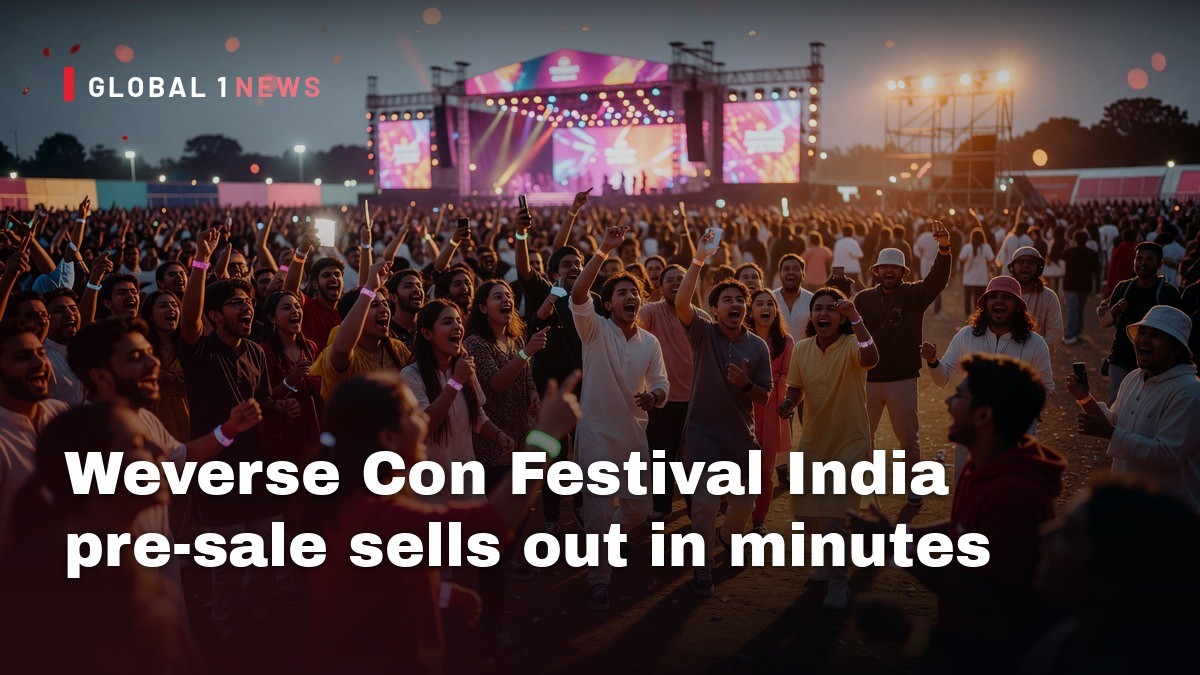
India’s first Weverse Con Festival pre‑sale, conducted under the Mastercard Collection, has ignited a digital frenzy that underscores the growing appetite for Korean pop culture on the sub‑continent. Within less than twenty minutes of the 27 October opening, the limited pool of tickets was exhausted, leaving thousands of fans stuck in virtual queues and prompting a wave of complaints about booking limits, potential scalping and the looming prospect of BTS concerts on Indian soil. The episode offers a vivid case study of how entertainment demand, digital ticketing infrastructure and consumer protection intersect in a market where online ticketing platforms such as BookMyShow dominate.
Ticket frenzy and the speed of the sell‑out
The pre‑sale, branded as the Mastercard Collection, reportedly sold out in under twenty minutes, with several users noting that premium categories vanished before they could even reach the booking page. One fan posted that tickets disappeared in twelve minutes, while another reported a queue number of roughly 2,500 only to find most categories sold out by the time they accessed the site. The rapid depletion of inventory highlights the sheer scale of enthusiasm for a two‑day festival that will bring together major Korean acts and Indian performers at New Delhi’s Outdoor Expo Site, Yashobhoomi, on 27‑28 March 2027.
These anecdotes, while anecdotal, illustrate a broader pattern observed in Indian entertainment events: high‑profile launches often trigger a surge of traffic that can overwhelm even robust ticketing platforms. The speed of the sell‑out also raises questions about the adequacy of current queuing mechanisms and whether they can ensure equitable access for a diverse fan base spanning metro cities to tier‑2 towns.
Fan concerns over booking limits and scalping
BookMyShow’s published guidelines allow a registered user to purchase up to ten tickets during the pre‑sale, a ceiling that some fans deem excessive given the limited supply. One user explicitly called for a stricter cap, urging the organiser to limit purchases to two tickets per person with proper ID verification. This demand reflects a growing awareness among Indian consumers about the threat of scalpers who exploit high demand to resell tickets at inflated prices.
Criticism also targeted Hybe India, the local arm of the Korean entertainment conglomerate behind the festival. Fans argued that the current policies make it easier for scalpers to acquire bulk tickets, urging the company to tighten controls before future high‑stakes events such as BTS concerts. While the source material does not provide independent verification of scalping, the vocal backlash signals a need for tighter regulatory oversight and perhaps the adoption of anti‑bot technologies that have been deployed in other markets.
Pricing structure and perceived affordability
The festival’s ticket pricing starts at ₹ 2,499 for General Access, with tiered categories ranging up to ₹ 14,499 for Platinum Lounge. An optional Mastercard Soundcheck Experience adds another ₹ 2,499 for eligible ticket holders, granting access to pre‑show soundchecks featuring ENHYPEN, LE SSERAFIM and TOMORROW X TOGETHER. Fans commented on the “cheap” price point, juxtaposing the nominal ticket cost against the broader expense of travel, accommodation and parental permission, which many consider a larger barrier.
One user expressed frustration that, despite a ticket price of ₹ 2,500, ancillary costs such as travel and hotel could “clean up” their entire account. This sentiment underscores the layered financial burden Indian concert‑goers face, especially when events are hosted in distant venues like Delhi’s Yashobhoomi. It also points to the importance of pricing strategies that balance accessibility with revenue generation for large‑scale cultural festivals.
Implications for future BTS concerts in India
The pre‑sale’s rapid sell‑out has amplified anxieties about how ticketing will be handled if BTS, the global K‑pop phenomenon, announces concerts in India. Fans repeatedly referenced the potential for even greater demand, fearing that the current booking system would exacerbate inequities. One post warned that “the whole country is admonishing BMS for their Weverse Con actions and not to repeat this for next year’s BTS concert,” highlighting a collective expectation that organisers learn from this episode.
Given BTS’s massive fan base in India, any future ticketing rollout will likely attract scrutiny from consumer rights groups, the Ministry of Information and Broadcasting, and possibly the Competition Commission of India, which monitors anti‑competitive practices in ticketing. The Weverse Con experience may serve as a benchmark for policy interventions, such as mandatory ID verification, caps on per‑person purchases, and transparent queue reporting.
Digital ticketing infrastructure and platform responsibility
BookMyShow, the exclusive ticketing partner for the general sale slated to begin on 30 October, is central to the narrative. The platform’s ability to handle massive spikes in traffic is critical, as any technical failure can translate into lost revenue and fan disenchantment. While the source material does not detail any system outages, the sheer volume of users attempting to secure tickets within minutes suggests that platform resilience is a key factor in future ticketing events.
Moreover, the platform’s published limit of ten tickets per user raises the question of whether such policies are sufficient to curb bulk buying. In other Indian contexts, platforms have experimented with dynamic pricing, verified fan accounts and staggered release windows to mitigate scalping. Whether BookMyShow will adopt similar measures for the upcoming general sale remains to be seen, but the fan outcry indicates a demand for stronger safeguards.
Broader cultural and economic context
The Weverse Con Festival marks the first time the event is staged outside South Korea, reflecting a strategic push by Korean entertainment firms to tap into India’s burgeoning youth market. The line‑up—featuring ENHYPEN, TOMORROW X TOGETHER, LE SSERAFIM, Hwasa and Indian acts such as Gini, King and RHEA Raj—signifies a hybrid cultural offering that blends K‑pop’s global appeal with local talent. This cross‑border collaboration aligns with India’s broader cultural diplomacy agenda, which seeks to attract foreign entertainment investments while promoting domestic artists.
Economically, the festival is poised to generate ancillary revenue through tourism, hospitality and merchandise sales. However, the ticket pricing debate reveals a tension between maximizing attendance and ensuring affordability for a price‑sensitive Indian audience. Policymakers may need to consider tax incentives or subsidies for cultural events that attract international acts, thereby lowering ticket costs without compromising the financial viability of organizers.
Looking ahead: regulatory and industry lessons
The Weverse Con pre‑sale episode offers several actionable insights for regulators, ticketing platforms and event promoters. First, transparent communication of queue numbers and real‑time availability can help manage fan expectations and reduce speculation. Second, enforcing stricter per‑person purchase caps, coupled with mandatory ID verification, could deter bulk buying and scalping. Third, platforms should invest in anti‑bot technologies to safeguard against automated ticket snatching, a problem that has plagued many high‑demand concerts globally.
Finally, the episode underscores the need for a coordinated approach between the Ministry of Culture, the Ministry of Electronics and Information Technology and consumer protection agencies to develop a robust framework for ticketing fairness. As India continues to attract marquee international events, the lessons from the Weverse Con pre‑sale will likely shape the next generation of ticketing policies, ensuring that the excitement of live entertainment remains accessible to the broadest possible audience.
This article was produced with AI-assisted research and editorial support. Reporting is based on the source material cited below. Sources: Livemint; livemint.com; Global1.News (28 October 2026).
By Dr. Raj Patel, Staff Writer
What's Your Reaction?
 Like
0
 Dislike
0
 Love
0
 Funny
0
 Wow
0
 Sad
0
 Angry
0

India/South Asia Correspondent at Global1.News. Analytical voice with a background in science and health journalism. Based in New Delhi, covering Indian politics, education, healthcare, technology, and policy. Breaks down complex data into clear, actionable reporting.











Comments (0)