
Review: Crystal Lake suffers a bit from its obsession with Pam Voorhees
Peacock’s new series Crystal Lake arrives with the promise of a fresh pre‑quel to the iconic 1980 slasher Friday the 13th . Her screen time lasted barely 13 minutes before the character was beheaded, and the franchise never returned to flesh out her motives beyond a vague maternal fury.
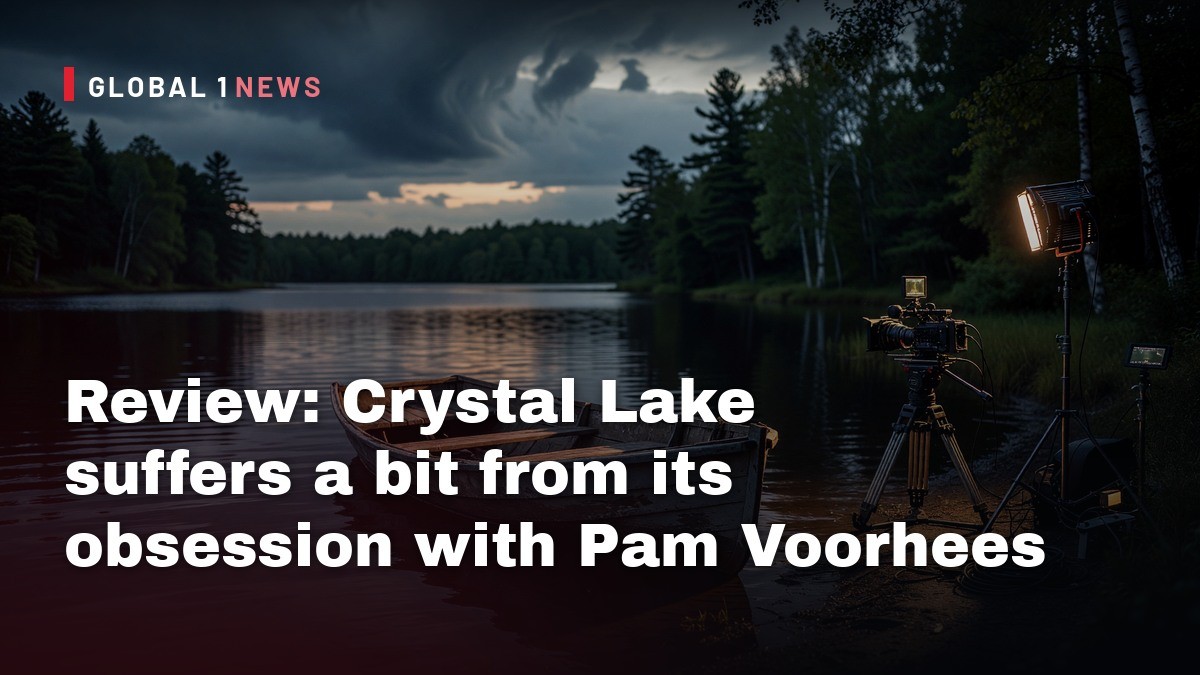
Peacock’s new series Crystal Lake arrives with the promise of a fresh pre‑quel to the iconic 1980 slasher Friday the 13th. The first impression, however, is that the show feels less like a straight‑forward horror outing and more like a period drama that’s trying to rewrite the mythos of Pamela Voorhees. While the series eventually hands over the reins to the hockey‑masked killer fans know and love, its early episodes are dominated by a painstakingly crafted backstory for Pam – a move that both honors and challenges the franchise’s legacy.
Re‑imagining Pam Voorhees: From “Helicopter Mom” to Tragic Protagonist
In the original 1980 film, Pam Voorhees (played by Betsy Palmer) shocked audiences when she appeared briefly, delivering the chilling line “Kill her, mommy” using her drowned son’s voice. Her screen time lasted barely 13 minutes before the character was beheaded, and the franchise never returned to flesh out her motives beyond a vague maternal fury. This lack of depth left a lingering curiosity among fans, a curiosity that Crystal Lake attempts to satisfy.
Showrunner Brad Caleb Kane, whose résumé includes the character‑driven horror series Welcome to Derry, approached Pam’s story as a chance to give the “helicopter mom” a genuine emotional core. By shifting the timeline of Jason’s drowning from 1958 to the early 1970s, Kane anchors the series in a period when “experiments on mothers” and corporate malfeasance were hot‑button issues. The result is a Pam who is less a one‑dimensional villain and more a protective mother forced into desperate measures by external forces.
The Historical Revision: Why 1971‑2 Matters
Kane’s decision to move Jason’s death to 1971‑2 was not a mere continuity tweak; it was a narrative strategy. He told Daily Dead that anchoring the story in the early ’70s allowed him to weave in “actual experiments on mothers” and a corporate antagonist that pushes Pam toward the violent path she later follows. This “Douglas Sirk‑meets‑David Cronenberg” approach adds a body‑horror flavor that feels novel for a franchise traditionally rooted in slasher tropes.
By setting Jason’s conception in the early 1960s, the series can explore the era’s cultural anxieties—rising self‑help movements, corporate overreach, and the burgeoning women’s liberation movement—through the lens of a mother who feels her son is under threat from forces beyond her control. The historical shift also gives the series a visual palette of muted earth tones and period‑accurate set design, enhancing the sense that this is a drama as much as it is a horror pre‑quel.
Betsy Palmer’s Legacy and the Quest for Depth
Palmer’s original portrayal of Pam was famously brief, and she herself resisted returning to the role. According to Ars Technica, Palmer criticized later installments for offering her character only “stupid” lines. She explained in a 2005 interview that she accepted the original part because a broken Mercedes forced her to need a new car, working ten days for a $10,000 paycheck. Her disdain for the script—“I read that script and thought ‘What a piece of junk’”—underscores why she felt the role lacked substance.
Palmer’s own attempts to imagine a richer Pam backstory, revealed in interviews, centered on a teenage pregnancy and an instinctual protectiveness over Jason. In 1982 she said she hoped her performance would convey that “there was more good in Pam than viewers knew.” This personal desire for nuance aligns with Kane’s modern reinterpretation, suggesting that the new series is, in part, an attempt to fulfill the actress’s unspoken wish for a deeper Pam.
Linda Cardellini’s Take: Protective Mama Bear Mode
When casting the role for Crystal Lake, Kane consulted with actress Linda Cardellini, who ultimately stepped into Pam’s shoes. Cardellini embraced the “protective mama bear mode” that Kane emphasized, noting that the character’s actions are rooted in “her love for Jason, and her dedication to Jason.” This framing reinforces the series’ central thesis: Pam’s violent spree is less a random act of madness and more a desperate, if twisted, maternal instinct.
The series also nods to Palmer’s own starlet past. Cardellini’s Pam is portrayed as a well‑known singer with a hairstyle reminiscent of Palmer’s 1950s look, and she dons the iconic cable‑knit sweater that fans associate with the original film. These visual callbacks serve both as fan service and as a bridge linking the new narrative to its 1980 predecessor.
Balancing Homage with New Narrative Terrain
Fans of the original franchise may initially feel impatient with the series’ focus on corporate conspiracies, self‑help gurus, and period‑specific body horror. Yet, by the third episode, the series pivots back toward the familiar slasher formula: a swarm of hippies, oblivious to the looming danger, arrive at the camp and become “lambs to the slaughter.” At this point, Jason’s presence becomes more pronounced, and the gory deaths that define the franchise begin to dominate the screen.
The transition is deliberate. Kane has said he wanted to “add context to key moments in the original movie without feeling bound to perfectly tie in the series.” By first establishing Pam’s motivations, the later killings feel less arbitrary and more an extension of her protective rage. The series also sprinkles “Easter eggs” throughout—exact recreations of iconic scenes, familiar lines, and the lake’s haunting vistas—rewarding long‑time fans while still inviting newcomers to the mythos.
Production Values: Makeup, Effects, and Period Detail
One of the series’ standout achievements is its commitment to high‑end practical effects. Kane enlisted “very detail‑oriented” makeup artists to craft body‑horror sequences that feel visceral rather than CGI‑dependent. The result is a series where the gore is both shocking and grounded in the tactile realism that horror aficionados appreciate.
Beyond the gore, the production design meticulously recreates 1970s camp aesthetics: weathered cabins, period‑accurate clothing, and a lake that mirrors the “gorgeous haunting” quality of the original film’s setting. These details, combined with the series’ careful lighting and sound design, create an atmosphere that feels both nostalgic and unsettlingly fresh.
What This Means for the Franchise’s Future
By re‑imagining Pam Voorhees as a fully realized character, Crystal Lake attempts to address a long‑standing critique of the Friday the 13th franchise: its reliance on a one‑dimensional mother figure to justify Jason’s murderous spree. Kane’s hope, as reported to Esquire, is that this “loving homage” will resonate with both die‑hard fans and a new generation, potentially earning the series multiple seasons.
The series’ blend of period drama, corporate thriller, and classic slasher elements signals a willingness to evolve the brand while respecting its core mythology. If the show can maintain the delicate balance between homage and innovation—delivering enough familiar camp carnage to satisfy purists while offering fresh emotional stakes—it may well set a new template for horror franchises seeking relevance in the streaming era.
This article was produced with AI-assisted research and editorial support. Reporting is based on the source material cited below. Sources: Ars Technica; arstechnica.com; Global1.News (26 October 2026).
By Jessica Ali, Staff Writer
What's Your Reaction?
 Like
0
 Dislike
0
 Love
0
 Funny
0
 Wow
0
 Sad
0
 Angry
0

Editor-in-Chief at Global1.News. Atlanta-based journalist who cuts through the BS and tells it like it is. Lead anchor, host, and the voice you hear when the spin stops and the truth starts.












Comments (0)