
What a spectre - Bond boys bounce around London
London is once again at the centre of a global spectacle, this time not for a royal procession or a state visit but for the hunt for the next James Bond.
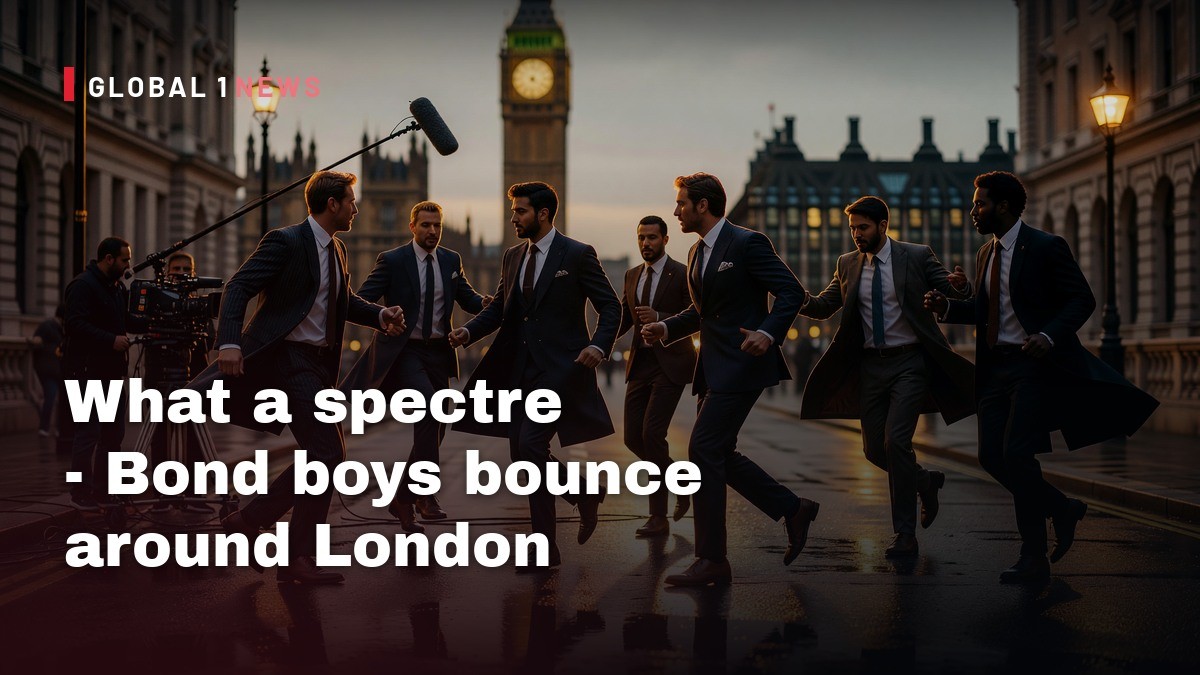
London is once again at the centre of a global spectacle, this time not for a royal procession or a state visit but for the hunt for the next James Bond. As screen tests for the iconic spy’s successor are scheduled for this weekend, the capital’s streets will become a live‑action casting ground, with three leading contenders – Jack Lowden, Callum Turner and Josh O’Connor – expected to be seen navigating the three core components of the audition: stunts, camera presence and dialogue. While the actors may be hard to spot amid the city’s bustle, the very locations that have housed Bond’s most memorable moments are themselves a draw for fans, offering a tangible link between fiction and the real world.
The Screen‑Test Process: Stunts, Presence and Dialogue
The forthcoming screen tests are being described as a three‑part gauntlet. First, the actors will be required to perform a series of stunts, a nod to the franchise’s reputation for high‑octane physicality. Next, they will be evaluated on camera presence – the elusive charisma that made Daniel Craig’s 2006 debut as Bond in Casino Royale a turning point for the series. Finally, a dialogue segment will assess their ability to deliver the dry wit and gravitas that have become synonymous with the 007 persona.
Jack Lowden, Callum Turner and Josh O’Connor have each been seen in London’s dinner‑jacket‑ready attire, suggesting they are already being positioned as the polished, well‑dressed killers the role demands. Their progress through these three components will determine who ultimately steps into the shoes of the man who has, for over six decades, embodied Britain’s most famous fictional spy.
Ian Fleming’s London: A Pilgrimage for Bond Aficionados
For those keen to trace the literary roots of the franchise, a visit to Ian Fleming’s former flat at 22B Ebury Street in Belgravia is a must. The modest residence now bears a blue plaque commemorating the author’s time there, offering a quiet counterpoint to the high‑speed chases that dominate the films. While the plaque itself is unassuming, it anchors the modern myth in a tangible piece of London’s architectural heritage.
Beyond Fleming’s flat, the city’s streets double as a living museum of Bond cinema. Fans can walk the same routes that have been transformed on screen, turning an ordinary stroll into a guided tour of cinematic history.
Iconic Film Locations: From Buckingham Palace to the Olympic Stadium
One of the most recognisable backdrops in the Bond canon is Buckingham Palace, featured in Die Another Day when the villain Gustav Graves parachutes in to receive a knighthood from the Queen. The palace’s exterior, with its stately façade, provides the perfect juxtaposition of regal authority and the film’s over‑the‑top villainy.
Another landmark that has hosted Bond’s daring entrances is the Olympic Stadium. In a 2012 stunt, performers dressed as the monarch and the “dashing womaniser” – a tongue‑in‑cheek reference to Bond himself – made a dramatic appearance, echoing the franchise’s penchant for blending spectacle with national symbolism.
GoldenEye’s St Petersburg Double: The Langham, Drapers’ Hall and Somerset House
The 1995 film GoldenEye required a convincing stand‑in for St Petersburg, a challenge met by several London venues. The Langham hotel was transformed into a Russian hotel, while Drapers’ Hall served as the Russian Council Chamber. Both locations, with their grand interiors, convincingly evoked the austere grandeur of the Russian capital.
Somerset House on the Strand also featured prominently, doubling as a St Petersburg setting in GoldenEye and later appearing in 1997’s Tomorrow Never Dies as the site of a meeting between Bond and M. The building’s neoclassical columns and expansive courtyard have become a visual shorthand for the franchise’s ability to repurpose London’s architecture for international intrigue.
St Pancras and St Sophia: More Russian Illusions
St Pancras station, with its Victorian grandeur, was rebranded as St Petersburg station for the same 1995 production, while the interior of St Sophia Cathedral on Moscow Road was transformed into a St Petersburg church. These adaptations demonstrate the production’s resourcefulness, turning familiar London landmarks into convincing foreign locales without the need for overseas shoots.
The seamless blending of the city’s historic sites into the film’s narrative underscores a broader trend: London’s architectural diversity makes it a versatile canvas for global storytelling, a fact that Bond’s producers have exploited repeatedly.
Skyfall’s Artistic Touch: The National Gallery and the Old Royal Naval College
In 2012’s Skyfall, the National Gallery in Trafalgar Square provided a striking backdrop for Bond’s first meeting with the new Q. The scene unfolds in front of JMW Turner’s painting The Fighting Temeraire, a work that itself commemorates a warship being towed away for scrap. The painting, bequeathed to the nation in 1851, adds a layer of historical resonance to the film’s modern espionage narrative.
Beyond the gallery, the Old Royal Naval College in Greenwich featured in the same film, serving as the setting for a solemn funeral scene following a terrorist attack on MI6 agents. The college’s sweeping colonnades and river‑front location lend a gravitas that aligns with the franchise’s more reflective moments, balancing the high‑octane action with moments of quiet tribute.
Contemporary Sites and the Spectre Legacy
More recent entries in the series have continued to mine London’s urban landscape. The River Thames, a constant in the city’s identity, featured prominently in 1999’s The World Is Not Enough, where Bond speeds past the Houses of Parliament, traverses Tower Bridge and races through Docklands towards the then‑Millennium Dome. This sequence showcases the river’s role as both a literal and symbolic conduit for the spy’s high‑speed pursuits.
City Hall in Southwark, formerly the home of the Greater London Assembly, appeared in 2015’s Spectre as the headquarters of the fictional Centre for National Security. Nearby, Freemasons’ Hall on Great Queen Street also featured, reinforcing the narrative’s reliance on recognisable civic architecture to ground its fictional conspiracies.
The Secret Intelligence Service building at Vauxhall Cross, long associated with MI6 on screen, has been attacked in multiple films, including The World Is Not Enough, Skyfall and Spectre. Its repeated use cements it as an iconic visual shorthand for the agency’s real‑world counterpart.
Even the oldest restaurant in London, Rules in Covent Garden, found its way onto the screen in Spectre, hosting a discreet meeting of M, Q and Moneypenny. Its reputation as a quiet dining venue makes it an apt choice for clandestine exchanges, further blurring the line between the franchise’s fictional world and the city’s lived reality.
This article was produced with AI-assisted research and editorial support. Reporting is based on the source material cited below. Sources: BBC News UK; bbc.co.uk; Global1.News (25 October 2026).
By Erica Thornton, Staff Writer
What's Your Reaction?
 Like
0
 Dislike
0
 Love
0
 Funny
0
 Wow
0
 Sad
0
 Angry
0

US Politics and Policy Correspondent at Global1.News. Based in Washington DC, covering American politics, policy, elections, and the courts. Knows how the system works and tells you what it actually means.















Comments (0)