
VP Sara Urges ICC to Expedite Father Duterte's Trial
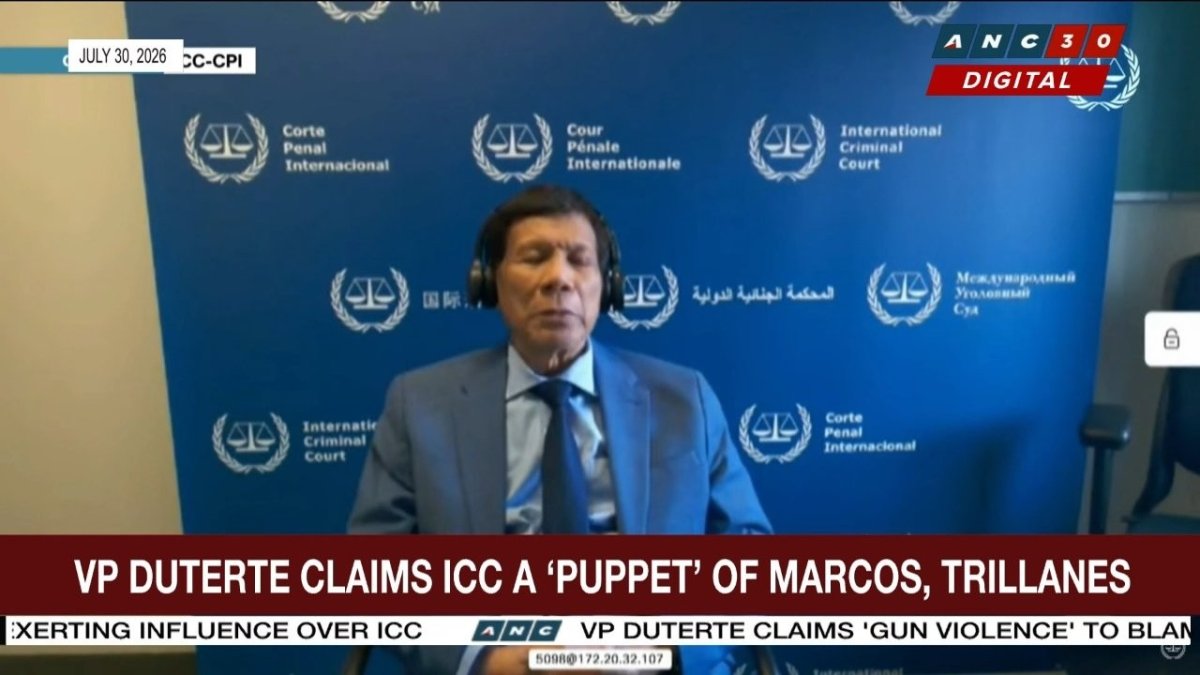
In a recent ANC 24/7 report, Vice President Sara Duterte made an emotional appeal to the International Criminal Court, urging the tribunal to expedite the trial of her father, former President Rodrigo Duterte, who has been detained in The Hague for nearly 16 months.
In a recent ANC 24/7 report, Vice President Sara Duterte made an emotional appeal to the International Criminal Court, urging the tribunal to expedite the trial of her father, former President Rodrigo Duterte, who has been detained in The Hague for nearly 16 months. The vice president's plea comes amid growing concerns over the 81-year-old former leader's health and the toll that prolonged detention has taken on the Duterte family, even as the Philippine government under President Ferdinand Marcos Jr. continues to navigate its complicated relationship with the international court.
VP Sara Duterte Urges ICC to Expedite Father's Trial as Detention Concerns Mount
Manila, Philippines — Vice President Sara Duterte on Wednesday called on the International Criminal Court to fast-track the crimes against humanity trial of former President Rodrigo Duterte, warning that the 81-year-old former leader may not survive years more of confinement in The Hague. Speaking to reporters after visiting her father at the ICC detention facility in the Netherlands, the vice president said the former president's health continues to deteriorate and that his prolonged detention amounts to an "unjust" deprivation of liberty.
A Father's Health at the Center of an International Case
Vice President Duterte did not hold back in describing the physical and emotional toll that the ICC detention has taken on the 81-year-old former president, who was arrested in March 2025 and transferred to The Hague to face charges of crimes against humanity linked to his bloody war on drugs. She revealed that her father has lost significant weight, struggles with his mobility, and has been grappling with the psychological burden of indefinite confinement.
"He cannot afford years more in detention," the vice president told reporters in The Hague. "There is always the possibility that he will pass inside the prison." Her statement underscored the urgency of the family's appeal, as the ICC has scheduled the formal trial to begin on November 30, 2026 — a date that the Dutertes argue is still too far off given the former president's age and declining health.
The vice president also called for the immediate release of her father, arguing that the former president no longer poses a flight risk or a threat to the ICC investigation. She cited the provisions of the Rome Statute, the ICC's founding treaty, which she said require the court to release detainees when continued detention is no longer justified.
Palace Strikes Back: 'Baseless, Useless and Nonsense'
Back in Manila, Malacañang was quick to dismiss Vice President Duterte's remarks. Presidential press officer Claire Castro, in a briefing at the Palace, described the vice president's statements as "baseless, useless and nonsense," saying that Duterte's tirades against the ICC may be fueled by personal frustration over her father's arrest rather than any legitimate legal argument.
"Ang lahat po halos ng sinasabi ng Bise Presidente sa ngayon ay walang basehan, walang saysay, useless at nonsense," Castro said, using both English and Filipino to emphasize the administration's position. The Palace press officer said the Marcos administration remains committed to the rule of law and that the Philippines, despite its withdrawal from the Rome Statute in 2019, continues to cooperate with the ICC under the principle of complementarity.
The Palace's sharp response reflects the deepening rift between the Duterte and Marcos camps — a fracture that has only widened since the impeachment trial against Vice President Duterte began in the Philippine Senate. The Marcos administration's authorization of the release of the vice president's bank and tax records to the impeachment court has further strained the already tense relationship between the two political dynasties.
VP Sara's Controversial Remarks on Drug War Deaths
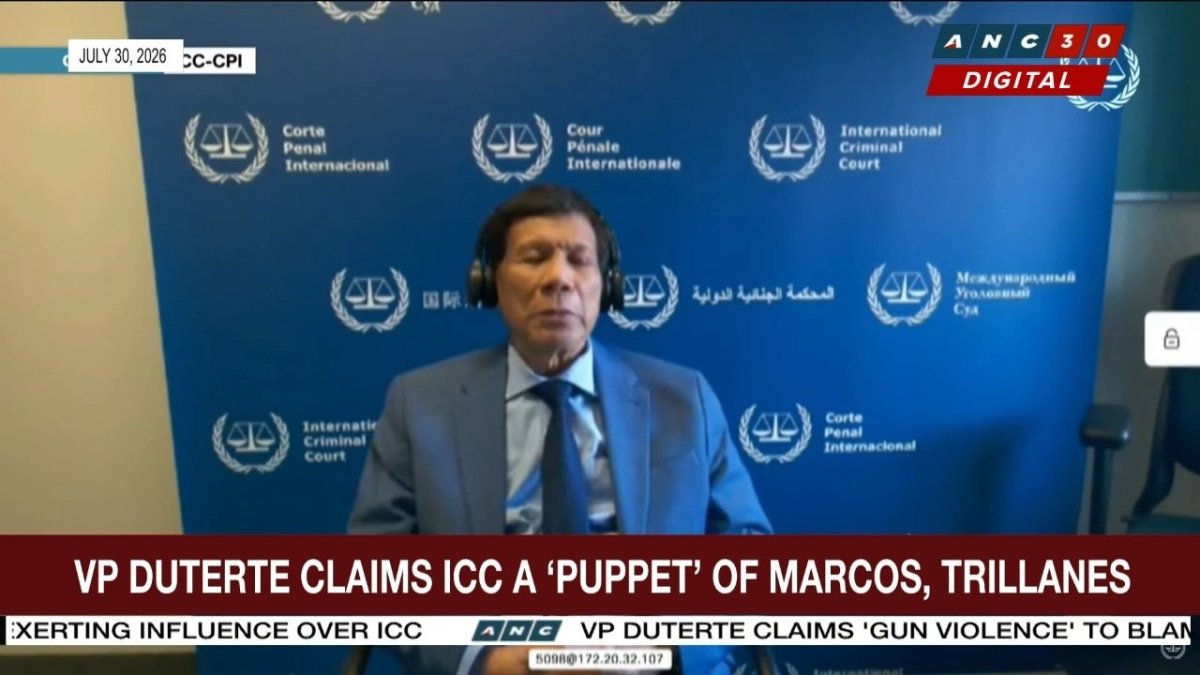
In a separate but related development covered by ANC 24/7, Vice President Duterte made headlines with a controversial remark about the thousands of deaths linked to her father's drug war. Questioning the ICC's assertion that the victims were all killed as part of a state-directed campaign, the vice president painted a stark picture of gun violence in the Philippines.
"You can hire a gunman for P5,000," Duterte told reporters, illustrating her point with a hypothetical scenario. She argued that many of the deaths attributed to the drug war were actually the result of rampant criminal violence, personal vendettas, and the easy availability of firearms in the country — not systematic state execution. "I have a husband. If my husband has a mistress, I can hire a gunman for P5,000 to kill the mistress," she said in Filipino, insisting that the ICC has not proven that all 30,000+ deaths in the drug war were state-sponsored killings.
The remark drew widespread criticism from human rights groups and victims' families, who pointed out that the ICC's case against Rodrigo Duterte is built on extensive documentation, witness testimony, and forensic evidence gathered over years of investigation. The Philippine National Police has also disputed the vice president's characterization, maintaining that the drug war operations followed official protocols — a claim that has been repeatedly challenged by independent investigators and international bodies.
The ICC Trial: What's at Stake for the Philippines
The ICC's case against former President Rodrigo Duterte represents the most significant international criminal prosecution of a former Philippine head of state. The charges center on the war on drugs that Duterte launched shortly after taking office in 2016, which human rights groups estimate resulted in the deaths of between 12,000 and 30,000 people, mostly poor urban residents in Metro Manila, Caloocan, Quezon City, and other cities across the country.
The ICC Office of the Prosecutor has presented evidence that the drug war was conducted with official sanction, involving police death squads, unidentified gunmen on motorcycles, and a system of rewards and incentives for officers who achieved kill quotas. The prosecution has identified nine co-perpetrators alongside Duterte, including former Philippine National Police chiefs and Davao City officials.
For the Philippines, the trial has far-reaching implications. It tests the country's commitment to international justice, raises questions about the Marcos administration's balancing act between cooperating with the ICC and maintaining political alliances, and puts a spotlight on the human cost of the drug war that continues to divide Filipino society.
VP Sara's Own Legal Battle: The Impeachment Trial
Even as she fights for her father's release, Vice President Duterte is waging her own legal battle back home. The Philippine Senate impeachment court — composed of senators acting as judges — has been hearing evidence on charges that the vice president amassed unexplained wealth, violated the Constitution, and committed betrayal of public trust during her tenure as education secretary.
In a major development this week, the Senate impeachment court received Vice President Duterte's sealed financial records from the Bureau of Internal Revenue and several banks, after President Marcos authorized their release. The records include bank statements, tax returns, and financial documents that prosecutors say show millions of pesos in unexplained deposits and transactions. The impeachment court has limited the use of these records to wealth verification purposes, according to Senate sources.
The simultaneous legal battles facing the Duterte family — the former president in The Hague and the vice president in Manila — have created an unprecedented situation in Philippine politics. The outcome of both cases could reshape the country's political landscape for years to come, particularly with the 2028 presidential election already on the horizon.
Philippine Public Opinion: A Nation Divided
On the streets of Metro Manila, the case has divided public opinion. In barangays across Quezon City, Manila, and Caloocan — areas that saw some of the highest drug war death tolls — families of victims express frustration that the ICC trial has taken so long to begin. At the same time, Duterte supporters continue to rally outside the ICC headquarters in The Hague, with many Filipino diaspora members from across Europe traveling to the Netherlands to show their solidarity with the former president.
For ordinary Filipinos, the trial raises uncomfortable questions about accountability, justice, and the rule of law. Jeepney drivers in Manila discuss the case over morning coffee at their local sari-sari store. OFWs in Hong Kong and the Middle East follow the developments through online news. Students in university campuses debate whether international justice can deliver closure for the families of drug war victims. The case has become a national conversation that touches every corner of Philippine society.
What to Watch For
As the ICC trial approaches its November 30 start date, several developments are worth watching. The vice president's continued campaign for her father's release could escalate, potentially drawing more international attention to the case. The Philippine Senate impeachment trial against VP Sara is expected to resume in the coming weeks, with more witnesses and documents to be presented. And the Marcos administration's stance on the ICC — walking a tightrope between cooperation and political expediency — will continue to evolve as both trials unfold.
For the Duterte family, the clock is ticking. With an 81-year-old former president in detention and a vice president fighting impeachment, the coming months will determine not just the fate of one political dynasty, but the direction of Philippine democracy and its engagement with international justice.
By Bella Reyes, Staff Writer
---This article was produced with AI-assisted research and editorial support. Reporting is based on sources cited in the article.
What's Your Reaction?
 Like
0
Like
0
 Dislike
0
Dislike
0
 Love
0
Love
0
 Funny
0
Funny
0
 Wow
0
Wow
0
 Sad
0
Sad
0
 Angry
0
Angry
0

Philippines/Southeast Asia Correspondent at Global1.News. Manila-based journalist covering Philippine politics, environment, maritime security, and social issues. Passionate about marine conservation and the communities protecting the Philippines' natural heritage.











Comments (0)