
Vietnam to Honor North Korean Pilots with New Memorial Near Hanoi
Announcement Signals Renewed Diplomatic Acknowledgment Vietnam’s government has announced plans to construct a memorial at an existing cemetery in Bac Ninh province outside Hanoi for North Korean soldiers killed during the Vietnam War. The project emerged from a Monday meeting chaired by Deputy Defense Minister Nguyen Truong Thang and attended by North Korean Ambassador Ri Sung Guk. State media quoted Thang stating that Vietnam’s Party, State, people, and People’s Army always cherish the effecti
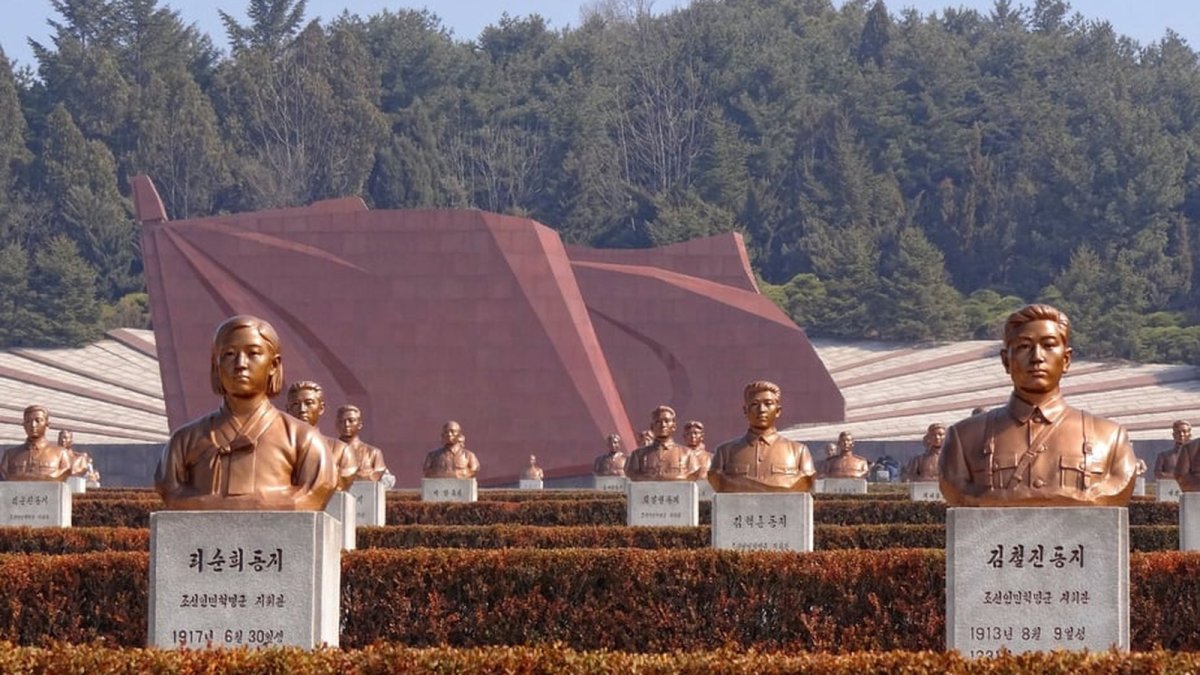
Announcement Signals Renewed Diplomatic Acknowledgment
Vietnam’s government has announced plans to construct a memorial at an existing cemetery in Bac Ninh province outside Hanoi for North Korean soldiers killed during the Vietnam War. The project emerged from a Monday meeting chaired by Deputy Defense Minister Nguyen Truong Thang and attended by North Korean Ambassador Ri Sung Guk. State media quoted Thang stating that Vietnam’s Party, State, people, and People’s Army always cherish the effective assistance of North Korea and the sacrifices of its martyrs in the struggle for national independence.
By situating the new memorial at the existing Bac Ninh cemetery, Vietnamese authorities link the current diplomatic gesture directly to the physical remnants of North Korean involvement, including headstones that still face northeast toward Korea. The refurbishment plans announced alongside the memorial construction indicate that the site will serve not only as a commemorative space but also as a tangible anchor of a wartime bond that Hanoi is now willing to acknowledge publicly. Such visible restoration reinforces the historical narrative of mutual sacrifice without requiring new disclosures, allowing both capitals to signal continuity in their relationship while navigating contemporary constraints.
Thang’s language deliberately echoes the original 1965 decision by North Korea’s Workers’ Party to endorse active support for North Vietnam, suggesting that contemporary Hanoi seeks to invoke that shared ideological commitment amid shifting alignments in Northeast and Southeast Asia. The framing permits Hanoi to reference past military cooperation as an official act of gratitude rather than a routine infrastructure decision, without reopening debates over later divergences in foreign policy.
North Korea’s Secret Deployment to North Vietnam
Between 1966 and 1971, an estimated 1,000 North Koreans were sent secretly to support North Vietnam. The contingent included mechanics, support personnel, psychological operations specialists, and engineers. A smaller group of around 100 pilots arrived in the mid-1960s to train Vietnamese counterparts and later flew combat missions in Soviet-made MiG-17 jets against U.S. aircraft. The decision to dispatch these forces was made in 1965 and endorsed at a Workers’ Party meeting the following year.
North Korea’s choice to embed pilots and technical specialists within North Vietnamese units reflected Pyongyang’s broader strategy of projecting revolutionary solidarity beyond the Korean Peninsula during the height of the Cold War. By committing forces under conditions of strict secrecy, the Workers’ Party could demonstrate ideological alignment with Hanoi while preserving operational deniability toward both Washington and its own domestic audience. This calibrated approach allowed North Korea to participate in the defense of a fellow socialist state without triggering direct escalation on the Korean Peninsula itself.
The Pilots’ Combat Role and Fatalities
Fourteen North Korean pilots, including two officers, were killed between September 1965 and early 1968 while engaging U.S. Air Force aircraft. Their headstones at the Bac Ninh cemetery face northeast toward Korea. Before departure, President Kim Il Sung instructed the pilots to fight thinking of Vietnam’s sky as their own sky, Hanoi as Pyongyang, and Ho Chi Minh as their own leader.
The instruction issued by Kim Il Sung framed the Vietnamese theater as an extension of North Korea’s own revolutionary struggle, a rhetorical device that later enabled Pyongyang to portray its limited intervention as an act of principled internationalism rather than a peripheral sideshow. The deaths of the pilots in MiG-17 engagements underscore the tangible risks undertaken by North Korean personnel at a time when Hanoi’s air defenses remained underdeveloped. That human cost, preserved in the orientation of the headstones, continues to anchor bilateral memory even after the physical remains were removed.
Decades of Official Silence and Gradual Recognition
For years the North Korean role remained veiled in secrecy. A Vietnamese official first openly admitted North Korean participation in 2000, and North Korean state media confirmed involvement in 2001, noting the supply of weapons, ammunition, and two million sets of uniforms. The disclosures were calibrated to coincide with high-level exchanges: in July 2001, Kim Yong Nam, then North Korea’s second-most-senior leader, paid respects at the Bac Ninh cemetery. The remains of the fourteen pilots were repatriated to North Korea in 2002, though the headstones and a marker reading “Here used to lie 14 North Korean comrades” remain in place.
North Korean state media’s 2001 statement and the Workers’ Party endorsement the year after the 1965 decision reveal a pattern in which Pyongyang timed its revelations to reinforce its self-image as a steadfast communist ally. The fact that the pilots had been instructed to regard Vietnam’s sky as their own was only publicized decades later, allowing both governments to portray the intervention as an act of ideological solidarity rather than a covert military deployment. This controlled release of information demonstrates how historical recognition served immediate diplomatic needs, particularly as Vietnam prepared to host Kim Yong Nam and later to manage the sensitive repatriation process.
The Inter-Korean Mirror in the Vietnam Conflict
North Korea’s contribution stood in stark contrast to South Korea’s deployment of approximately 320,000 troops alongside U.S. forces to defend the Republic of Vietnam, of whom more than 5,000 died. Although North Korean personnel never encountered their southern counterparts directly, psychological warfare units distributed leaflets targeting South Korean soldiers with communist propaganda, including one urging them to “seek hundred, thousand vengeances against the American imperialist aggressors.” The two Korean states thus found themselves on opposing sides of the same Southeast Asian war.
The propaganda effort underscores how the Vietnam conflict became an arena for inter-Korean ideological competition, with each side projecting its own narrative of legitimacy onto Southeast Asian soil without direct confrontation between Korean forces. The absence of contact between the two contingents highlights the broader pattern of proxy alignment that characterized the Cold War on the Korean Peninsula: North Korea’s decision to send pilots and support personnel to North Vietnam mirrored South Korea’s choice to fight alongside U.S. forces, yet the secrecy surrounding the northern deployment allowed Pyongyang to maintain plausible deniability for years. The leaflets distributed by North Korean psyops specialists thus served as the only tangible link between the two Korean presences, transforming the Vietnamese theater into an indirect extension of the peninsula’s divided politics.
Strategic Implications for Contemporary Hanoi-Pyongyang Relations
Relations between Hanoi and Pyongyang cooled after Vietnam’s 1978 invasion of Khmer Rouge-ruled Cambodia, another recipient of North Korean aid, and further deteriorated when Vietnam established diplomatic ties with South Korea in 1992. These ruptures illustrate how ideological solidarity gave way to pragmatic national interests once the immediate threat of U.S. involvement in Indochina receded.
The new memorial project revives public recognition of wartime cooperation at a time when both countries navigate shifting regional alignments. By restoring and expanding the Bac Ninh site, Vietnamese authorities underscore a historical bond that once placed North Korean airmen in direct defense of Hanoi, offering a concrete reminder of shared communist-era commitments amid today’s more complex diplomatic landscape. The project avoids direct engagement with the post-1978 divergences and instead focuses on the 1960s period when North Korean mechanics, engineers, and pilots operated alongside Vietnamese forces.
This selective historical framing offers both capitals a low-risk avenue for signaling continuity, reminding observers that their relationship once included direct military collaboration in defense of a common ideological cause. For scholars of inter-Korean affairs, the memorial is a rare official artifact of a chapter in which the two Koreas fought parallel wars on opposite sides — and a reminder that Pyongyang’s internationalist credentials, however selectively invoked, remain a usable diplomatic asset.
By Prof. David Park, Staff WriterThis article was produced with AI-assisted research and editorial support. Reporting is based on sources cited in the article.
What's Your Reaction?
 Like
0
Like
0
 Dislike
0
Dislike
0
 Love
0
Love
0
 Funny
0
Funny
0
 Wow
0
Wow
0
 Sad
0
Sad
0
 Angry
0
Angry
0

East Asia/Technology Correspondent at Global1.News. Seoul-based voice covering Korean politics, technology, business, and culture. Analyzes how technology and geopolitics intersect across East Asia.











Comments (0)