
Israeli Army Demolishes Shops, Tightens Restrictions Near Qalandia Refugee Camp
The Israeli army began demolishing commercial shops near the Qalandia refugee camp north of occupied East Jerusalem on Thursday, while imposing a curfew on the adjacent town of Kafr Aqab and sealing all roads leading to Jerusalem.
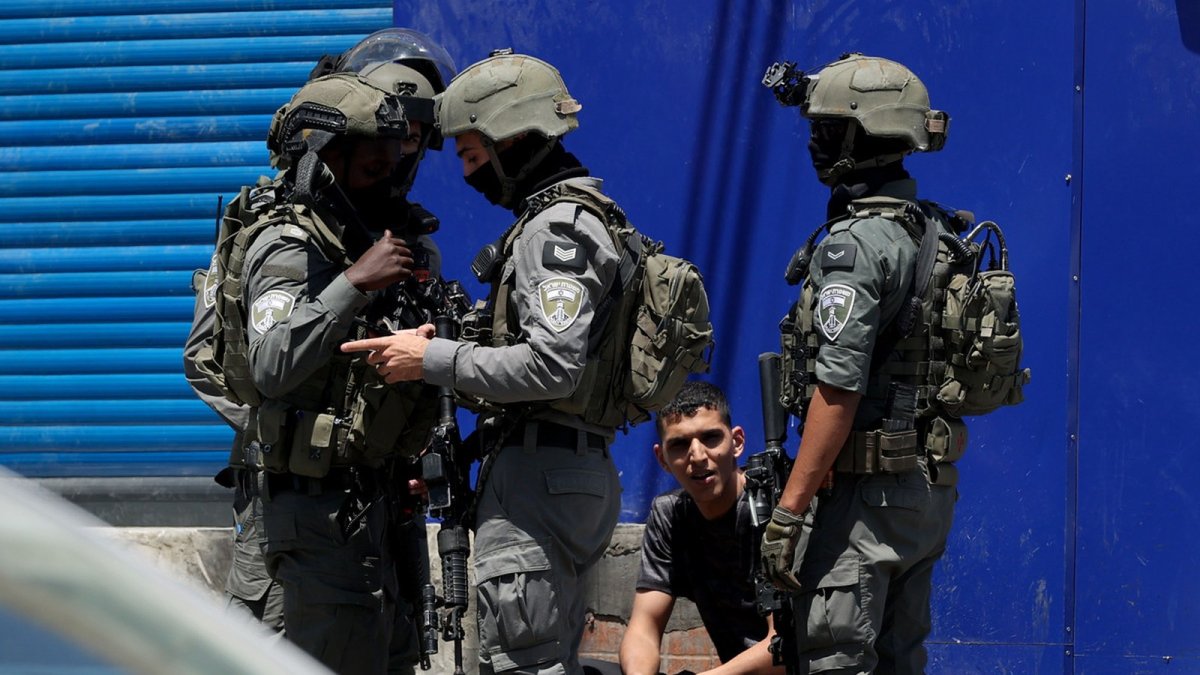
The Israeli army began demolishing commercial shops near the Qalandia refugee camp north of occupied East Jerusalem on Thursday, while imposing a curfew on the adjacent town of Kafr Aqab and sealing all roads leading to Jerusalem. The moves formed part of a large-scale military operation that entered its second day inside the camp, with widespread house raids, arrests, and the conversion of homes into military positions. Palestinian officials described the restrictions as bringing daily movement to a complete standstill.
Demolitions and a Camp Under Curfew
The Jerusalem Governorate reported that Israeli forces started tearing down a number of commercial shops near the Qalandia military checkpoint on Thursday morning. At the same time, loudspeakers announced a curfew across Kafr Aqab, and all intersections and roads to Jerusalem, including Al-Ma'had Street, were closed under heavy military deployment. WAFA stated that the closures halted vehicle traffic entirely in the area.
The demolition of commercial shops near the Qalandia military checkpoint directly targets the economic lifeline of the area. By closing the main road to vehicles and bringing movement to a standstill, the operation severs daily commerce that has long sustained residents dependent on access between Ramallah and Jerusalem. The checkpoint economy, already strained by prior isolation, faces further collapse as businesses are razed on the second day of the campaign.
Curfew measures imposed at dawn on Kafr Aqab streets, announced via loudspeakers, combined with closures of all intersections and roads to Jerusalem including Al-Ma'had Street, create a complete severance from the city. Heavy military deployment reinforces these barriers, preventing residents of both Kafr Aqab and the adjacent Qalandia camp from reaching workplaces, services, or family networks in Jerusalem.
The targeting of the commercial strip near the checkpoint carries layered significance. Positioned at the historic crossing point between Ramallah and Jerusalem and beside the West Bank Barrier, this strip represented one of the few remaining economic nodes after early-2000s expansions isolated the camp from the Israeli job market. Its destruction underscores the campaign's focus on disrupting connectivity in an already confined space.
These actions compound the standstill, leaving the camp and surrounding areas functionally cut off during the operation's 22nd hour and beyond.
'Extremely Difficult': Inside the Second Day of Raids
Mohammad Aslan, head of the PLO-affiliated Qalandia Refugee Camp Popular Services Committee, told Anadolu Agency that conditions inside the camp were extremely difficult. The operation, which began early on Wednesday, included house raids, assaults on residents, and the use of homes as military outposts. Aslan said three people suffered serious injuries from beatings, one with a skull fracture, while more than 60 others required treatment for tear gas inhalation.
The scale of the second day's violence was documented through the accounts of residents and medical crews who reached the camp's edges. Beyond the injuries reported by the services committee, the broader pattern — house raids, physical assaults, and tear gas fired into residential streets — reflects an operation conducted at close quarters inside one of the West Bank's most densely populated camps, where narrow alleyways leave residents little room to escape.
The conversion of private homes into temporary military outposts changes the character of the camp itself: families who remain find troops operating from rooms beside their own living quarters, while those who leave do not know when — or whether — they will be allowed back. The seizure of private property for military use signals an operation planned to continue well beyond its opening hours, with residents describing conditions of sustained duress.
Young men were detained amid reinforcements deployed toward the Market Neighborhood on the second day of house raids, arrests, and assaults that began early Wednesday. These patterns extend the operation's reach into residential zones, intensifying pressure on the densely populated area.
Ambulances Blocked, Homes Detonated
The Palestine Red Crescent Society reported treating ten people injured in the attacks and evacuating several medical cases. Israeli forces prevented ambulances from entering the camp during the night and ordered crews to leave despite untreated patients remaining inside. In one incident, forces evacuated the home of resident Mohammad Jamil Ammar, placed explosives inside, detonated part of the structure, and later detained him, according to the Jerusalem Governorate.
A Camp Born of the Nakba, Strangled by the Checkpoint
Qalandia refugee camp was established in 1949 on land leased from Jordan and now houses descendants of Palestinians displaced from roughly 52 villages in the Lydda and Ramle areas during the 1948 Nakba. UNRWA registered around 16,344 refugees there as of 2023. The camp's location beside the main checkpoint between Ramallah and Jerusalem and the West Bank Barrier has isolated residents from former job markets in Jerusalem, severely damaging the local economy built around small commercial shops now facing demolition.
The camp's origins trace to the first months after the 1948 Nakba, when the Red Cross established a refuge on land leased from Jordan for families driven from the Lydda and Ramle areas. Generations later, that refugee identity remains central to the camp's character, with UNRWA continuing to register descendants within a confined footprint of just 353 dunums.
The camp's extreme density, with 8,336 people recorded in the 2017 census, defines living conditions in one of the most crowded refugee camps in the West Bank. Located in Area C and East Jerusalem near the main checkpoint, residents navigate tight quarters shaped by successive layers of restriction.
Checkpoint and barrier expansion in the early 2000s isolated the camp from the Israeli job market and Jerusalem, transforming a once-accessible location into an enclave. Most residents hold Jerusalem residency ID cards yet face high municipal taxes alongside minimal basic services, creating legal and economic precarity.
This history of displacement followed by physical and administrative barriers frames the current operation as an intensification of long-standing isolation measures.
Wider West Bank Escalation: Jenin, Tulkarm and Nur Shams
The Qalandia operation coincides with ongoing Israeli military campaigns in the Jenin, Tulkarm, and Nur Shams refugee camps. Last week, authorities extended closure orders on those camps until September 30, barring entry or exit without special military permits. The broader offensive, which began in Jenin on January 21, 2025, has involved raids, home demolitions, and the forced displacement of tens of thousands of families across the northern West Bank.
Closure orders extended until September 30 prohibit entry, remaining in, or leaving the designated areas without special military permits, while exempting Israeli forces and police. These orders, replacing previous ones that expired July 31, enforce a permit regime that tightly controls Palestinian movement across affected zones.
The January 21, 2025 Jenin offensive, later expanded to Tulkarm and Nur Shams refugee camps, forms the backdrop for parallel actions in Qalandia. The campaign's mechanics rely on sustained military presence and access restrictions that mirror tactics applied in multiple locations.
Forced displacement of tens of thousands of families has resulted from these operations, with refugee camps emerging as focal points of the broader military effort. Palestinian officials have characterized the measures as a tightening siege that compounds prior patterns of raids and demolitions.
Since October 2023, the West Bank-wide toll documented by Palestinian authorities has mounted into the thousands of dead, injured and detained, alongside repeated demolitions, the bulldozing of agricultural land, and the expansion of illegal settlements. Each new operation adds to that cumulative record of displacement and loss, with refugee camps increasingly at the centre of the military campaign.
Two and a Half Years of Intensified Attacks
Since October 7, 2023, Israeli forces have killed at least 1,182 Palestinians, injured around 13,000 others, and arrested nearly 24,000 people across the occupied West Bank, including East Jerusalem. The campaign has also featured the demolition of homes and facilities, the burning of mosques, the bulldozing of agricultural land, and the expansion of illegal settlements. Near-daily raids continue in cities and towns throughout the territory.
The Bottom Line
Residents of Qalandia now face the combined effects of prolonged curfew, blocked medical access, and the destruction of commercial property that once sustained the camp's economy. The Jerusalem Governorate described the military campaign as having reached its 22nd hour amid mounting violations against people and property. Palestinian medical teams and local committees continue to document the immediate human cost while the operation remains underway.
By Fatima Al-Rashid, Staff WriterThis article was produced with AI-assisted research and editorial support. Reporting is based on sources cited in the article.
What's Your Reaction?
 Like
0
Like
0
 Dislike
0
Dislike
0
 Love
0
Love
0
 Funny
0
Funny
0
 Wow
0
Wow
0
 Sad
0
Sad
0
 Angry
0
Angry
0
Gulf/MENA Correspondent at Global1.News. Based in Doha, covering Gulf politics, energy markets, diplomacy, and development across the Middle East and North Africa. Tracks the economic transformation of the Gulf states.










Comments (0)