
Russian Managers Take Control at Western Companies Seized by the Kremlin
The Kremlin has moved swiftly to place the Russian divisions of three prominent French firms—Auchan, Lemana Pro and FM Logistics—under the control of executives with close ties to state agencies.
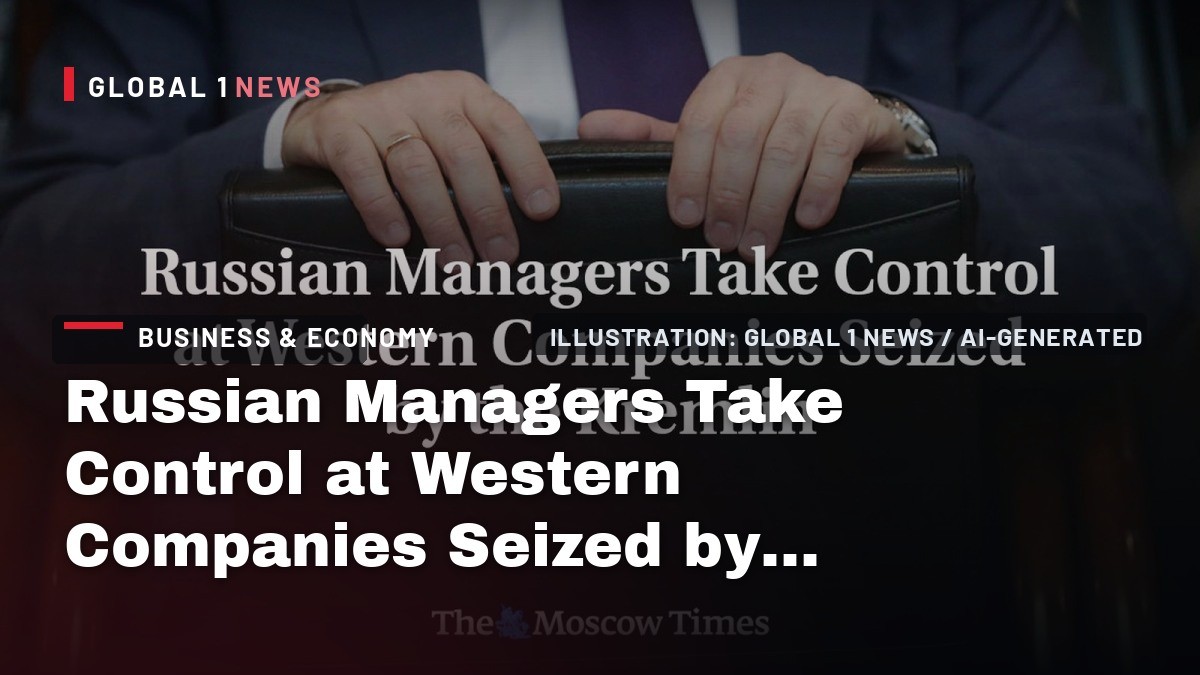
The Kremlin has moved swiftly to place the Russian divisions of three prominent French firms—Auchan, Lemana Pro and FM Logistics—under the control of executives with close ties to state agencies. This latest wave of asset seizures, announced in September 2026, follows a broader pattern of using legal mechanisms to re‑assert Moscow’s authority over foreign‑owned businesses operating on Russian soil, while simultaneously sending a stark warning to European capitals about the potential costs of tapping frozen Russian assets to fund Ukraine.
Executive appointments signal state‑linked management
According to the newspaper Kommersant, Ilya Berdnikov, a former official of Rosimushchestvo—the state property management agency—has been appointed to head Auchan Retail Russia. The appointment follows a presidential executive order signed by Vladimir Putin that placed Auchan’s Russian operations under temporary state management. Berdnikov will supervise the former CEO, Asya Balabay, who will remain on site to manage daily store operations under his supervision.
Similarly, Denis Isayev, identified as the son of former State Duma lawmaker Rizvangadzhi Isayev, will assume leadership of Lemana Pro, the home‑improvement chain formerly known as Leroy Merlin. The former CEO of Lemana Pro will also stay on to work with Isayev. At FM Logistics, Yevgeny Nenashev, a former housing official in the Moscow region, has been named head, though it remains unclear whether the incumbent CEO, Oleg Alkhamov, who has led the firm since 2021, will retain any role.
Temporary oversight by L.E.V. Management
Last week, the Russian assets of the three French firms, together with those of Swiss food giant Nestlé, were transferred to L.E.V. Management, a little‑known entity headed by a former police general. This move placed the assets under a temporary state‑controlled structure, enabling the Kremlin to install its preferred managers while maintaining a veneer of corporate continuity.
Nestlé’s Russian arm will continue operating under its existing CEO, Denis Voityuk, but within the new oversight framework. The arrangement mirrors the pattern observed at Auchan and Lemana Pro, where former CEOs are retained to ensure operational stability while ultimate authority rests with Kremlin‑aligned appointees.
Strategic messaging to Europe
Alexander Shokhin, head of the Russian Union of Industrialists and Entrepreneurs, framed the seizures as “pre‑emptive signals” to European officials. Speaking to state media, Shokhin warned that Moscow’s actions are designed to demonstrate retaliatory capacity should the West move to use frozen Russian funds to finance Ukraine. He linked the asset seizures directly to the broader geopolitical debate over the exploitation of Russian sovereign wealth held abroad.
Shokhin’s comments underscore a calculated narrative: the Kremlin is not merely nationalising foreign assets for economic gain, but leveraging those moves as diplomatic tools. By positioning the seizures as a response to potential Western actions, Moscow seeks to deter further sanctions and to portray itself as capable of exacting “retaliatory measures” against perceived aggression.
Legal and administrative mechanisms employed
The executive order signed by President Putin placed Auchan under “temporary state management,” a legal instrument that allows the government to assume control without outright nationalisation. This framework has been used repeatedly since the start of the conflict, providing a flexible tool for the Kremlin to intervene in foreign‑owned enterprises while sidestepping full expropriation, which could trigger additional legal challenges.
The appointment of former Rosimushchestvo officials, such as Berdnikov, signals the use of existing state property expertise to manage these assets. By deploying individuals familiar with state‑owned enterprises, the Kremlin ensures a smoother transition and reinforces the perception that the moves are administrative rather than purely punitive.
Impact on the companies and their staff
While former CEOs remain in operational roles, the shift in ultimate authority creates uncertainty for employees and supply chains. Retaining Asya Balabay at Auchan and the former Lemana Pro chief suggests an effort to minimise disruption, yet the presence of state‑aligned managers may alter corporate strategies, procurement policies and pricing structures to align with Kremlin priorities.
The situation at FM Logistics is less clear, as the future role of Oleg Alkhamov remains ambiguous. This uncertainty could affect the firm’s logistics contracts and its ability to maintain service levels, especially if new directives from the appointed head, Yevgeny Nenashev, diverge from previous commercial practices.
Broader economic implications
The seizure of assets belonging to major Western retailers and a Swiss food giant reflects a widening trend of economic decoupling. By placing these firms under state‑aligned management, Moscow not only secures control over domestic retail and logistics networks but also signals to foreign investors the heightened political risk of operating in Russia.
These actions may deter future foreign investment and encourage existing foreign firms to consider divestment or restructuring to mitigate exposure. At the same time, the Kremlin’s use of temporary management structures allows it to reap short‑term economic benefits—such as directing supply chains to domestic producers—while preserving the option to return assets to private owners if geopolitical conditions shift.
Repression of independent reporting
The Moscow Times, the source of this report, notes that it has been designated an “undesirable” organization by Russia’s Prosecutor General’s Office, criminalising its work and exposing its staff to prosecution. This designation follows an earlier labeling as a “foreign agent.” The outlet’s statement frames these measures as attempts to silence independent journalism, highlighting the broader climate of repression that accompanies the Kremlin’s economic maneuvers.
By emphasizing the risks faced by independent media, the Moscow Times underscores the intertwined nature of political control, economic seizure, and information suppression in contemporary Russia. The article’s own call for financial support reflects the precarious position of outlets that continue to report on these developments despite state pressure.
This article was produced with AI-assisted research and editorial support. Reporting is based on the source material cited below. Sources: The Moscow Times; themoscowtimes.com; Global1.News (27 September 2026).
By Irina Volkov, Staff Writer
What's Your Reaction?
 Like
0
Like
0
 Dislike
0
Dislike
0
 Love
0
Love
0
 Funny
0
Funny
0
 Wow
0
Wow
0
 Sad
0
Sad
0
 Angry
0
Angry
0
Russia/Eastern Europe Correspondent at Global1.News. Covering Russian politics, energy, security, and the shifting dynamics of the post-Soviet space. Provides clear-eyed analysis on one of the world's most opaque regions.












Comments (0)