
Students for Justice in Palestine is 'broke,' its attorney says
In a courtroom in the Central District of California, the attorney for the National Students for Justice in Palestine (NSJP) painted a stark picture of financial desperation.
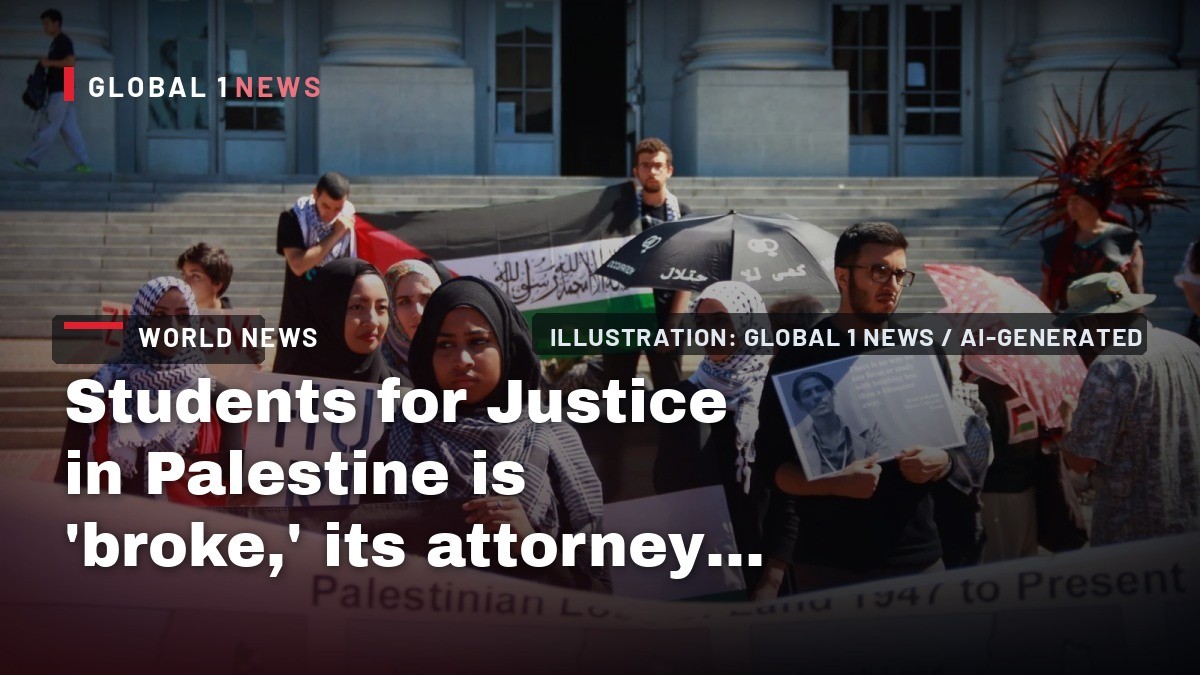
In a courtroom in the Central District of California, the attorney for the National Students for Justice in Palestine (NSJP) painted a stark picture of financial desperation. Jonathan Wallace, a solo practitioner, told magistrate judge A. Joel Richlin that his client is “broke,” lacking any endowment, savings or other financial resources to meet the massive discovery demands of a lawsuit filed by four plaintiffs alleging antisemitic assaults at a UCLA encampment. The case, Matthew Weinberg v. National Students for Justice in Palestine, has become a flashpoint for broader debates over campus activism, donor transparency and the legal pressures faced by student‑run advocacy groups that challenge Israel’s policies.
Background to the lawsuit
The dispute stems from a series of alleged attacks that took place at an anti‑Israel encampment on the University of California, Los Angeles campus between April 25 and May 2, 2024. According to the complaint, Nir Hoftman was “assaulted and robbed” by members of the encampment’s self‑styled “security” team, Rabbi Dovid Gurevich was “assaulted and subjected to death threats,” Matthew Weinberg was “denied access to the ‘occupied’ parts” of the quad, and Eli Tsives was “denied access to his ordinary route to class.” The plaintiffs—Weinberg, Gurevich, Hoftman and Tsives—filed suit in April 2025, naming NSJP, its leaders and affiliated entities such as the Faculty for Justice in Palestine Network and the WESPAC Foundation.
The filing alleges that NSJP bears responsibility for the alleged antisemitic conduct, despite the organization’s claim that it has no direct control over local chapters. The plaintiffs argue that NSJP has failed to make a good‑faith effort to comply with court‑ordered discovery, prompting them to seek limits on the group’s ability to evade obligations.
Legal strategy and discovery challenges
Wallace’s letter to Judge Richlin underscores the asymmetry of resources between the plaintiffs and the defendant. He described himself as “personally overwhelmed” by the sheer volume of discovery, noting his inexperience with federal discovery at such a scale. The attorney warned that “requiring a broke organization and its harried solo attorney to be able to respond to whatever plaintiffs’ two law firms and law nonprofit can throw creates a truly Darwinian environment.” He urged the court to limit subpoenas and narrow the scope of search terms, arguing that the burden threatens the very existence of the organization.
The plaintiffs, represented by two law firms and a law‑focused nonprofit, countered that NSJP has “not made a good‑faith effort” to comply, and asked the judge to prevent further evasion. The clash highlights a broader tactical battle: whether discovery can be wielded as a weapon to financially cripple activist groups that lack the deep pockets of larger NGOs or corporate defendants.
Financial opacity and donor scrutiny
According to NGO Monitor, NSJP chapters on university campuses are not registered nonprofit organizations, which means they are not subject to standard financial disclosure laws. This structural opacity has drawn criticism from donors, regulators and opponents who allege that the group may be “misleading donors and sending funds to terror groups,” a claim that recently prompted an investigation by the state of Missouri. Wallace emphasized that the organization’s fiscal sponsor, the WESPAC Foundation, provides limited financial oversight, but he denied any wrongdoing, stating he found “no evidence of antisemitism” or direct involvement by NSJP in the UCLA incidents.
The Missouri probe reflects a growing trend of state‑level scrutiny of campus‑based activist groups, especially those that receive donations for political advocacy. While the investigation’s outcome remains pending, the mere existence of such inquiries can chill fundraising and amplify the financial strain on groups already operating on shoestring budgets.
Campus policy enforcement and chapter suspensions
Multiple universities have taken action against SJP chapters, suspending them for violations of campus policies. These suspensions often arise from allegations of harassment, intimidation or the creation of hostile environments for Jewish students. The UCLA encampment, which became the focal point of the current lawsuit, was one of several sites where tensions between pro‑Palestinian activists and Jewish students escalated into confrontations that the plaintiffs describe as assaults.
The pattern of chapter suspensions underscores a broader dilemma for student‑run organizations: balancing the exercise of First Amendment rights with compliance to university codes of conduct. NSJP’s attorney framed this tension as a fundamental civil‑rights issue, arguing that the group’s members are “American students in their 20s, who passionately use their First Amendment rights to advocate for the Palestinian people and against the Israeli nation‑state, and it is being targeted everywhere for that reason.”
Implications for Israel‑related advocacy in the United States
The lawsuit and the surrounding legal battles carry significant implications for the broader ecosystem of Israel‑related advocacy on American campuses. Legal pressures, combined with financial investigations, can deter student groups from engaging in contentious debate, potentially reshaping the landscape of campus discourse. For Israeli NGOs and diplomatic missions, the case serves as a reminder of the need to monitor and respond to anti‑Israel activism that may cross into harassment or violence.
At the same time, the episode illustrates how litigation can be used strategically by pro‑Israel entities to impose financial and administrative burdens on activist groups. The plaintiffs’ request for stringent discovery and the emphasis on compliance could set a precedent for future cases seeking to hold student organizations accountable for on‑ground actions, even when direct control is contested.
Responses from the Israeli innovation and diplomatic community
While the article does not detail official statements from Israeli ministries, the Ministry of Economy and the Israel Innovation Authority have historically emphasized the importance of safeguarding Israel’s image abroad, particularly in the tech and innovation sectors. Incidents that cast Israel in a negative light on university campuses can have ripple effects on investment, talent recruitment and collaborative research partnerships.
Israeli diplomatic missions in Washington, D.C., and other U.S. capitals routinely engage with university administrations to promote balanced dialogue and to counter misinformation. The current legal saga may prompt renewed outreach efforts, as Israeli officials seek to ensure that campus debates do not devolve into intimidation or violence that could jeopardize bilateral academic and economic ties.
Looking ahead: legal, financial and reputational stakes
The immediate future of the case hinges on the judge’s decision regarding discovery limits. Should the court grant Wallace’s request for narrower subpoenas, NSJP may avoid a financially crippling flood of document production. Conversely, a ruling that expands discovery could force the organization to allocate resources far beyond its modest means, potentially leading to further chapter closures or even dissolution.
Beyond the courtroom, the broader narrative will likely influence how donor agencies, university administrations and state regulators approach student‑run advocacy groups that operate without formal nonprofit status. The Missouri investigation, combined with the plaintiffs’ allegations, may encourage tighter oversight and more rigorous financial reporting requirements for such groups.
For Israel and its supporters, the case underscores the importance of monitoring and responding to campus dynamics that can affect national reputation and diplomatic relations. As the legal battle unfolds, the intersection of First Amendment rights, financial transparency and campus safety will remain a contested arena, shaping the contours of Israel‑related activism in the United States for years to come.
This article was produced with AI-assisted research and editorial support. Reporting is based on the source material cited below. Sources: JNS (Jewish News Syndicate); jns.org; Global1.News (27 September 2026).
By Hannah Berg, Staff Writer
What's Your Reaction?
 Like
0
Like
0
 Dislike
0
Dislike
0
 Love
0
Love
0
 Funny
0
Funny
0
 Wow
0
Wow
0
 Sad
0
Sad
0
 Angry
0
Angry
0

Israel Correspondent at Global1.News. Based in Tel Aviv, covering Israeli politics, security, technology, and society. Provides balanced, deeply-sourced reporting on one of the most closely-watched regions in the world.














Comments (0)