
Inside Lerner College of Medicine’s Innovative Education Philosophy
Meta Title: Inside Lerner College of Medicine’s Innovative Education Philosophy Meta Description: Explore how Cleveland Clinic’s Lerner College of Medicine reshapes medical training with research focu...
Why Lerner College’s Approach Matters
When you hear “medical school,” the first thing that probably pops into mind is a grueling schedule of lectures, labs, and endless exams. The Cleveland Clinic Lerner College of Medicine (LCM) is trying to rewrite that script. In a recent video posted by the Cleveland Clinic, students and faculty walk us through a philosophy that blends rigorous research, early patient contact, and a community‑first mindset. Even if you haven’t clicked play, the ideas they share are worth a closer look—especially as the broader world of medical education is wrestling with how to train doctors who can both think like scientists and act like compassionate clinicians.
The Core Idea: “Physician‑Scientist” From Day One
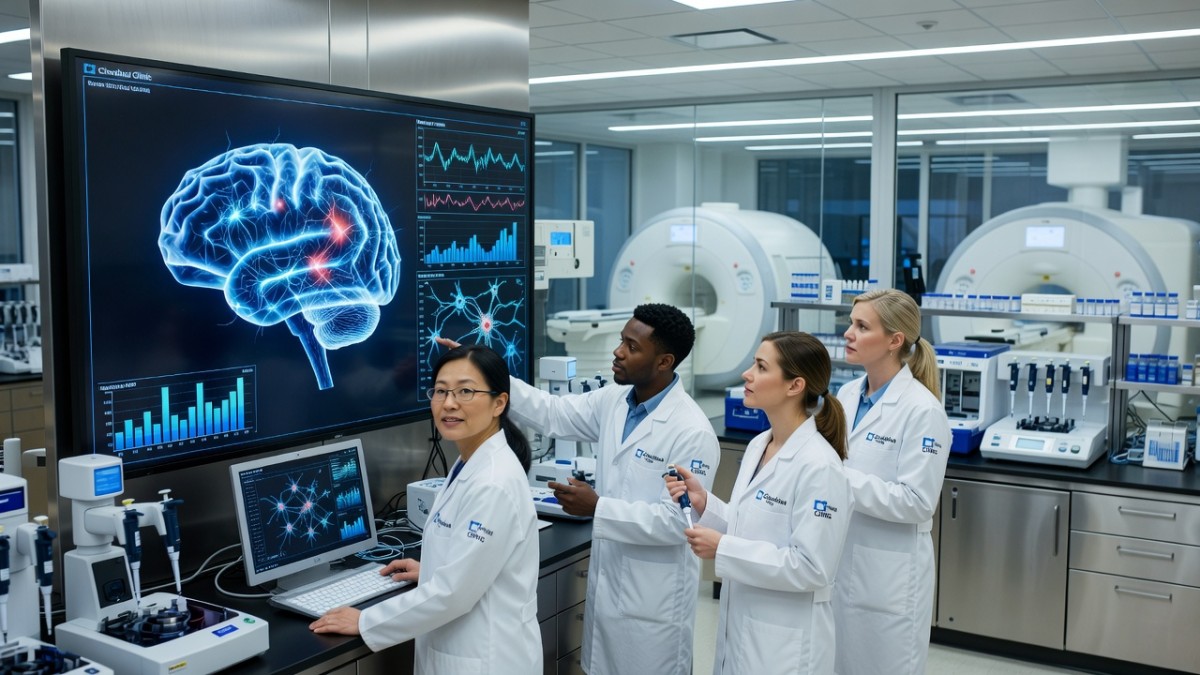
At the heart of Lerner College’s philosophy is a simple, yet ambitious, promise: every student should graduate not just as a competent physician, but as a physician‑scientist. That means research isn’t an after‑thought or a summer elective; it’s woven into the fabric of the first two years. In the video, a second‑year student describes how she spent her mornings in a molecular biology lab, troubleshooting an experiment that could one day inform a new treatment for heart disease. By the afternoon, she’s on the wards, applying that same analytical mindset to a patient’s chart.
This integration is intentional. Rather than treating research and clinical work as separate silos, Lerner College pairs each student with a faculty mentor who guides a longitudinal research project. The mentor‑mentee relationship is more than a supervisory check‑box; it’s a partnership that evolves over the four‑year curriculum. The video highlights a faculty member who says, “We want our students to see the bench and the bedside as two sides of the same coin.” That sentiment sets the tone for the entire program.
Early Clinical Immersion: Learning at the Bedside From the Start
Traditional medical schools often wait until the third year to introduce students to real patients. Lerner College flips that timeline. In the video, a first‑year student recounts her first week of “clinical immersion,” where she shadowed a cardiology team during rounds. Instead of passive observation, she was asked to present a brief case summary, ask a focused question, and even suggest a diagnostic test based on what she’d learned in the classroom that morning.
These early encounters serve two purposes. First, they demystify the clinical environment, making the transition to full‑time clerkships smoother. Second, they reinforce the idea that scientific curiosity belongs at the bedside. When a student sees a patient with a puzzling symptom, the habit of asking “why does this happen?” is already ingrained, thanks to the research‑centric mindset cultivated from day one.
Mentorship and Community: A Small‑Class, Big‑Heart Model
One of the most striking aspects of Lerner College’s philosophy, as highlighted in the video, is its emphasis on community. With a class size that hovers around 30 students per cohort, the program can afford a level of personalization that larger schools simply can’t match. Students talk about “learning circles,” small groups that meet weekly to discuss not just academic material but also personal challenges, ethical dilemmas, and career aspirations.
Faculty members act as both teachers and coaches. A professor of internal medicine shares how he meets with his mentees over coffee to review their research data, but also to talk about work‑life balance. This dual role helps students see their mentors as whole people, not just academic gatekeepers. The video captures a moment where a group of students collectively thank a faculty advisor for “always being there,” underscoring the deep relational fabric that Lerner College strives to weave.
Curriculum Design: Integration Over Isolation
Beyond the anecdotes, the video outlines the structural backbone of the program. The curriculum is organized around “themes” rather than isolated courses. For example, a theme on “Cardiovascular Health” might include a genetics lecture, a lab rotation studying heart tissue, a clinical clerkship on cardiac imaging, and a community outreach project that educates patients about lifestyle risk factors. By revisiting the same theme from multiple angles, students develop a multidimensional understanding that sticks.
Assessment methods also reflect this integrated philosophy. Instead of relying solely on multiple‑choice exams, Lerner College uses portfolio reviews, research presentations, and reflective essays. This approach encourages students to synthesize information and articulate their thought process—skills that are essential for both research and patient care.
Why This Matters for the Future of Medicine
Medical education is at a crossroads. On one side, there’s a push for more technology‑driven training—think AI‑assisted diagnostics and virtual reality simulations. On the other, there’s a call to preserve the humanistic core of medicine. Lerner College’s philosophy tries to bridge those worlds by grounding high‑tech, research‑intensive training in real‑world patient interaction and mentorship.
For prospective medical students, the video offers a glimpse into a path that doesn’t force you to choose between being a scientist or a clinician—you can be both. For educators, it serves as a case study in how curriculum design, class size, and faculty engagement can collectively reshape the learning experience. And for patients, it’s reassuring to know that the next generation of doctors is being trained to ask deeper questions, collaborate across disciplines, and stay connected to the communities they’ll serve.
Whether you decide to watch the video or not, the take‑away is clear: Lerner College of Medicine is betting on a holistic, integrated model that could set a new standard for how we train physicians. It’s a bold experiment, and the early stories shared by students and faculty suggest it’s already paying off in the form of more curious, compassionate, and collaborative future doctors.
By Allan Ali, PublisherThis article was produced with AI-assisted research and editorial support. Reporting is based on sources cited in the article.
What's Your Reaction?
 Like
0
Like
0
 Dislike
0
Dislike
0
 Love
0
Love
0
 Funny
0
Funny
0
 Wow
0
Wow
0
 Sad
0
Sad
0
 Angry
0
Angry
0

Publisher of Global1.News. Automation architect, systems builder, and the guy making sure the truth gets published.













Comments (0)