
Ed Sheeran’s tour in trouble after opening acts drop out in solidarity with rapper Macklemore
Ed Sheeran’s North and South American stadium tour entered a storm of controversy on Tuesday, when four of his supporting acts withdrew in solidarity with rapper Macklemore, who was removed from the lineup after making pro‑Palestinian remarks onstage.
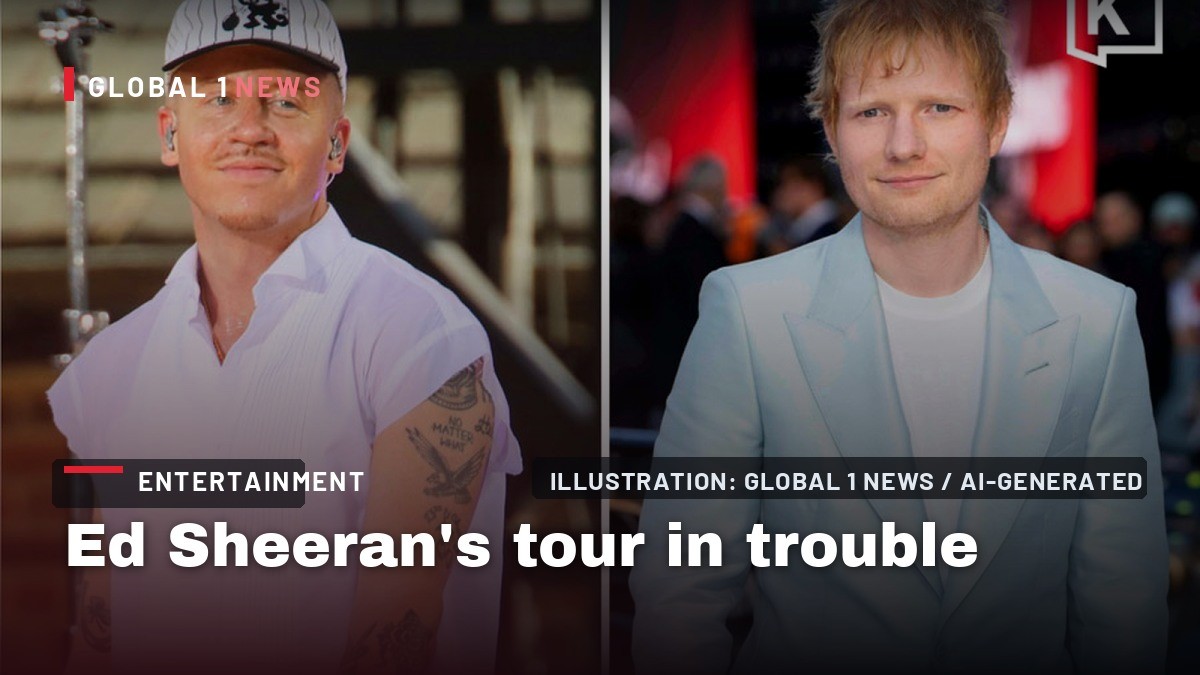
Ed Sheeran’s North and South American stadium tour entered a storm of controversy on Tuesday, when four of his supporting acts withdrew in solidarity with rapper Macklemore, who was removed from the lineup after making pro‑Palestinian remarks onstage. The sudden exits have placed the Irish‑born singer‑songwriter at the centre of a debate that touches on artistic freedom, the influence of wealthy patrons, and the broader geopolitical tensions surrounding the Gaza conflict.
What triggered the walk‑outs
Hours after Ed Sheeran announced on Instagram that Macklemore’s removal was a decision made solely by the tour’s promoters, Irish singer‑songwriter Aaron Rowe, the Irish folk group Beoga, Danish pop band Lukas Graham, and American producer Finneas each posted that they would no longer participate in the tour. Their statements linked the decision to a larger concern about silencing artists who speak up for the oppressed.
Finneas, known for his collaborations with his sister Billie Eilish, wrote, “Artists must not be silenced when they speak up for the oppressed… I stand with Palestine and its people.” Rowe and Beoga invoked their own national histories, mentioning colonialism, forced famine, and occupation as reasons they could not remain silent. Lukas Graham warned that money should not dictate who gets to speak, a reference to billionaire Robert Kraft’s involvement in the decision to drop Macklemore.
Sheeran’s stance and the promoter’s role
Sheeran responded on Instagram, emphasizing that the choice to remove Macklemore rested with the promoters, not with him. He said he would not abandon fans, the touring crew, or the other support acts who depend on the tour for their livelihood. He also noted that he had spoken with venues at length to “try to build a bridge,” but that the venue and promoter decision was final.
The tour’s promoter, the Messina Touring Group, has not issued a public comment beyond acknowledging the situation. The lack of a direct response from the promoter leaves open questions about how much influence venue owners and financial backers have over artistic line‑ups, especially when political sensitivities are involved.
The Macklemore incident
Macklemore was removed after he shouted “Free Palestine!” during a performance at New Jersey’s MetLife Stadium on September 5, and introduced a protest song titled “Hind’s Hall.” He addressed both Jewish and Palestinian audiences, saying criticism of Israel’s policies is not criticism of Jewish people. Following his remarks, several U.S. venues reportedly told the promoter they would prohibit him from performing as an opening act, a stance reportedly rallied by Robert Kraft, owner of the New England Patriots and Gillette Stadium.
Kraft’s statement framed the decision as a response to Macklemore’s comments and a broader history of antisemitic rhetoric that the Kraft Group found “deeply offensive and hurtful to the Jewish community.” The involvement of a prominent sports and entertainment mogul underscores how financial power can shape cultural events, especially when political statements are involved.
Impact on the tour schedule
With Macklemore originally slated for eight of the ten remaining shows, his removal leaves a noticeable gap in the lineup. The tour is set to resume on Saturday in Philadelphia, with upcoming stops at Gillette Stadium, Atlanta’s Mercedes‑Benz Stadium, and Indianapolis’ Lucas Oil Stadium. The departure of the four supporting acts—Rowe, Beoga, Lukas Graham, and Finnan—adds further uncertainty to the remaining dates, as they had been scheduled to perform either as replacements for Macklemore or as collaborators with Sheeran during his set.
Beoga, for instance, had been joining Sheeran on stage for several songs, including ones they co‑wrote. Their exit means those collaborative moments will no longer occur, potentially altering the musical texture of the shows and affecting fans who anticipated those unique performances.
Artists’ moral arguments
The withdrawing artists framed their decisions in moral terms, drawing on historical memory and ethical responsibility. Beoga highlighted their role as founding members of the Irish Artists for Palestine movement, emphasizing a commitment to justice rooted in Ireland’s own experiences of colonisation and famine. Rowe echoed this sentiment, noting that as Irish people they “know all too well about genocide, forced famine and violent occupation,” and could not stand by while “billionaires use their position of power to silence the rightful voices of those who speak up.”
Lukas Graham’s statement focused on the principle that financial wealth should not dictate whose suffering is acknowledged, reinforcing the idea that artistic platforms carry a responsibility to amplify marginalized voices. Their collective stance reflects a growing trend among musicians to align their public personas with broader social justice movements.
Sheeran’s diplomatic approach
Sheeran positioned himself as a neutral facilitator, stating that he seeks to keep his concerts a “place of safety and sanctuary” where conversations remain open rather than closed. He expressed respect for Macklemore’s courage while emphasizing his own desire to use his fame to foster “peace” and “diplomacy.” By refusing to become a “political forum,” Sheeran aims to preserve the concert experience for fans who attend for music rather than political discourse.
However, his insistence on staying out of the political debate has been challenged by the very actions of his supporting acts, who argue that silence can be complicit. The tension between maintaining a non‑political entertainment space and acknowledging the moral weight of global conflicts illustrates the difficult balance artists must strike in an increasingly politicised cultural landscape.
Broader regional reflections
For Thai readers, the unfolding drama resonates with ongoing conversations in Southeast Asia about the role of artists in political discourse. In Thailand, musicians and performers have historically used their platforms to comment on social issues, from the pro‑democracy movements to environmental concerns. The principle that “money doesn’t give you the right to own the conversation,” voiced by Lukas Graham, echoes the Buddhist teaching of right speech—using words responsibly and for the benefit of all.
Moreover, the involvement of a billionaire patron mirrors the influence of powerful business figures in the region, who can shape cultural events through sponsorships and venue ownership. As the situation develops, it offers a reminder that artistic expression, while a universal language, does not exist in a vacuum; it is intertwined with the histories, values, and power structures of the societies it touches.
This article was produced with AI-assisted research and editorial support. Reporting is based on the source material cited below. Sources: Khaosod English; khaosodenglish.com; Global1.News (16 September 2026).
By Ann Srisawat, Staff Writer
What's Your Reaction?
 Like
0
Like
0
 Dislike
0
Dislike
0
 Love
0
Love
0
 Funny
0
Funny
0
 Wow
0
Wow
0
 Sad
0
Sad
0
 Angry
0
Angry
0
Southeast Asia Correspondent at Global1.News. Based in Bangkok, covering Thai and Southeast Asian politics, economy, technology, and culture. Deep regional perspective on one of the world's most dynamic regions.










Comments (0)