
Fire Academy preps for global accreditation
Barbados is gearing up for a landmark moment in its fire service history. The accreditation, therefore, is not just a badge of honour but a practical tool for regional integration.
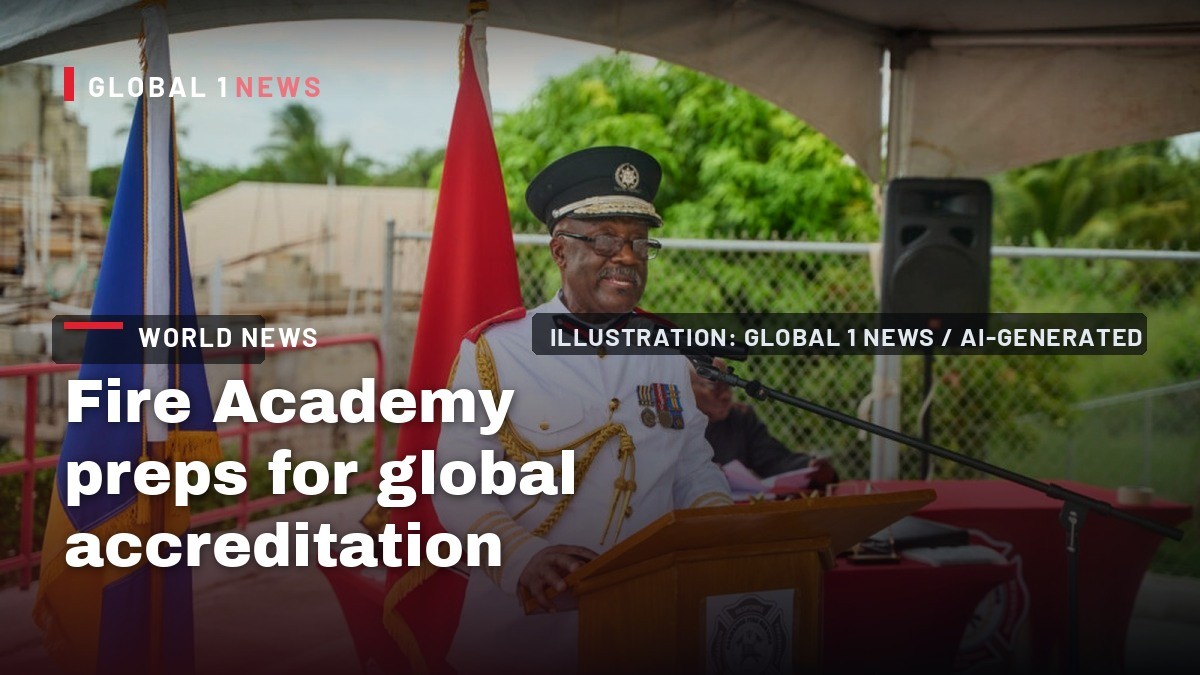
Barbados is gearing up for a landmark moment in its fire service history. In just over two weeks, the Barbados Fire Academy – the training arm of the island’s fire service – will host an international accreditation assessment, a step Chief Fire Officer Errol Maynard says will cement the island’s reputation for producing firefighters whose qualifications are recognised far beyond Caribbean shores.
Why accreditation matters for Barbadian firefighters
Chief Maynard explained that accreditation offers an independent verification that the academy’s programmes meet internationally accepted standards and best practices. He stressed that the real value lies in the portability of qualifications: “It will ensure that the qualifications earned by all firefighters are recognised beyond our borders, enhancing professional mobility, strengthening regional cooperation, and reaffirming our commitment to developing firefighters who can operate confidently and competently alongside counterparts from anywhere in the world.”
For a small island nation, the ability to move seamlessly across borders for training, assistance or deployment is a strategic advantage, especially as the region faces increasingly complex emergencies. The accreditation, therefore, is not just a badge of honour but a practical tool for regional integration.
Evolving risks demand ever‑higher training standards
Maynard highlighted that the nature of emergencies is changing rapidly. Population growth, technological advances, climate‑related events, modern transportation systems and emerging hazards all combine to create new challenges for emergency responders. He noted that “to meet these challenges, we must continually invest in our most valuable asset,” referring to the people who stand ready to protect communities.
In Barbados, as across the Caribbean, the profile of calls to emergency services has shifted. While fire suppression remains a core function, medical emergencies now account for a substantial portion of calls. This dual focus means that training must be both broad and deep, preparing recruits for fire, rescue and medical response alike.
The 42nd Passing Out Parade: A milestone for the new batch
At the academy’s Arch Hall facility in St Thomas, the 42nd passing out parade marked the graduation of Batch 42, Course 1 of 2026. Twenty recruits successfully completed the Firefighter 1 and Firefighter 2 programmes, as well as an Emergency Medical Technician (EMT) programme delivered in partnership with the Barbados Community College.
The curriculum covered fire suppression, rescue operations, fire behaviour, incident safety, firefighting tactics, equipment operation and emergency response procedures. The graduates also put their skills to the test during a live emergency drill, demonstrating the practical application of their training under realistic conditions.
From fire suppression to medical response: A modern firefighter’s toolkit
Chief Maynard underscored that modern firefighting extends well beyond the act of putting out flames. “Medical emergencies account for a substantial portion of calls received by emergency services,” he observed, reinforcing the importance of the EMT component of the training. All twenty graduates met the minimum requirements for both the firefighter and EMT courses, a testament to the academy’s comprehensive approach.
This blended skill set reflects a broader trend in Caribbean emergency services, where limited resources and the need for rapid, versatile response mean that firefighters often serve as first responders to medical incidents, road accidents and even natural‑disaster evacuations.
Challenges on the road to full accreditation
Despite the enthusiasm, Maynard candidly acknowledged several hurdles that still need to be addressed. The academy currently faces constraints in training props, training availability and space for live‑fire exercises. Additionally, there is a pressing need to develop specialised props for aircraft firefighting, an area of growing importance given the increase in regional air traffic.
To overcome these limitations, the fire service is pursuing a dedicated training facility in the northern part of the island. Maynard explained that this new site would “expand our training capacity, provide opportunities for more realistic and advanced emergency response exercises, and further strengthen our ability to prepare firefighters for the complex hazards they may encounter throughout their career.”
Regional implications: Strengthening Caribbean cooperation
The pursuit of international accreditation is not an isolated ambition. It dovetails with broader CARICOM goals of harmonising standards and facilitating mutual assistance across member states. By aligning its training programmes with globally recognised benchmarks, Barbados positions itself as a regional hub for fire‑service expertise, potentially offering training slots to neighbouring islands and contributing to a more integrated emergency‑response network.
Moreover, the accreditation process itself will bring external evaluators to the island, providing an opportunity for knowledge exchange. Such interaction can help identify best practices that may be adapted to the Caribbean context, from advanced fire‑behaviour modelling to integrated medical‑response protocols.
Looking ahead: What accreditation could mean for the next generation
For the fresh batch of twenty graduates, the upcoming accreditation represents a validation of the hard work they have put in over the past months. As they step into operational roles, the assurance that their training meets international standards may open doors to overseas courses, joint exercises and even secondments with fire services in other jurisdictions.
In the words of Chief Maynard, “as you move forward into your operational career, let discipline guide you.” With the accreditation assessment looming, the entire Barbados fire service is poised to demonstrate that its commitment to excellence, community safety and regional cooperation is as robust as the flames they are trained to tame.
This article was produced with AI-assisted research and editorial support. Reporting is based on the source material cited below. Sources: Barbados Today; barbadostoday.bb; Global1.News (26 September 2026).
By Sharon Sahatoo, Staff Writer
What's Your Reaction?
 Like
0
Like
0
 Dislike
0
Dislike
0
 Love
0
Love
0
 Funny
0
Funny
0
 Wow
0
Wow
0
 Sad
0
Sad
0
 Angry
0
Angry
0

Caribbean Correspondent at Global1.News. Based in Port of Spain, Trinidad, covering Caribbean politics, economy, energy, climate, and culture. Amplifying the voices and stories of the Caribbean region.














Comments (0)