
F-Droid gets its biggest update in a decade with new UI and smoother app installs
The Android ecosystem has long been dominated by Google’s Play Store, preinstalled on virtually every device and serving as the default gateway for apps.
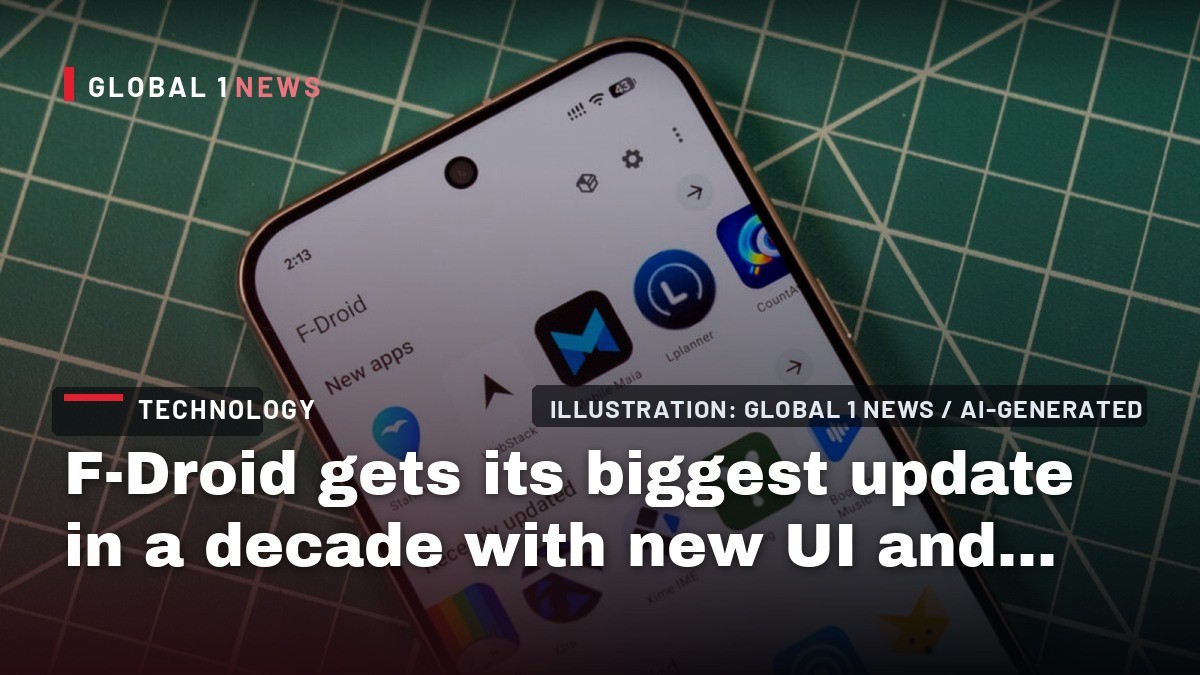
The Android ecosystem has long been dominated by Google’s Play Store, preinstalled on virtually every device and serving as the default gateway for apps. Yet an alternative that champions free and open‑source software has quietly been gaining traction. F‑Droid, the community‑driven catalog of open‑source Android applications, has just rolled out its first major overhaul in a decade: F‑Droid 2.0. After years of development, the new client arrives rebuilt from the ground up in Kotlin Compose, the modern toolkit that powers today’s Android interfaces. The upgrade promises a faster, more polished experience while keeping the core principle of privacy‑first app distribution intact.
Why a Ten‑Year Gap Matters
The original F‑Droid client launched over ten years ago, at a time when the Android market was still nascent and alternatives to the Play Store were scarce. Back then, the catalog was modest, offering a handful of open‑source utilities. Over the intervening decade, the repository has swelled to “thousands of open source apps,” according to the project’s own announcement. This growth reflects a broader shift among users seeking privacy‑respecting options that do not track taps or push targeted ads. The ten‑year lull in major client updates meant that many users were stuck with an aging UI and limited functionality, even as the back‑end repository expanded dramatically.
F‑Droid’s resurgence is significant because it aligns the front‑end experience with the scale of its library. The new client is not merely cosmetic; it addresses longstanding usability hurdles that have kept casual users from adopting the platform. By modernizing the interface and streamlining installation, F‑Droid aims to convert curiosity into regular usage, challenging the Play Store’s monopoly on Android app distribution.
Under the Hood: Kotlin Compose and Material Theming
The technical heart of the upgrade is a complete rewrite in Kotlin Compose, Google’s declarative UI framework that has become the standard for contemporary Android apps. This shift brings two immediate benefits: responsiveness and visual consistency. Compose allows the UI to react fluidly to user input, eliminating the lag that older, imperative codebases often suffer. Users will notice smoother scrolling, quicker transitions, and a generally snappier feel when browsing categories or searching for apps.
In addition to performance gains, the new client offers optional support for Android’s Material theming. This means that users who prefer the familiar Material Design language can enable it, while those who favor a more minimal aesthetic can stick with the default look. The flexibility to toggle theming underscores F‑Droid’s commitment to user choice—a stark contrast to the Play Store’s one‑size‑fits‑all approach.
Redesigned Navigation and Search
Beyond the visual overhaul, F‑Droid 2.0 reshapes how users find apps. The interface has been “cleaned up considerably,” with the most essential functions brought to the fore and less‑frequent actions tucked into overflow menus. This decluttering reduces the cognitive load for newcomers, who no longer have to hunt through nested screens to locate basic features like app installation or updates.
Search, a critical entry point for any app store, receives a substantive upgrade. Previously, queries matched only app names, limiting discoverability. The new client expands the search scope to include app descriptions, allowing users to locate tools based on functionality rather than brand. Coupled with a “huge number of categories” that drill down into niches such as firewalls, password managers, and VPNs, the discovery experience becomes both broader and deeper. Users can browse high‑level categories on the Discover page or drill into specialized groups via the search tab, making it easier to surface the right tool for a specific need.
Simplified Installation: Bypassing Sideloading Friction
One of the most persistent pain points for sideloading Android apps has been Google’s security prompts, which require users to manually approve each APK download. F‑Droid 2.0 mitigates this friction by leveraging Google’s pre‑approval API. Instead of the traditional “download‑then‑open‑APK‑then‑confirm‑install” sequence, users now tap “Install” within F‑Droid, receive a single system pop‑up, and confirm the installation. While this still involves two taps—one in the client and one in the system dialog—it trims a step from the process, making sideloading less intimidating for the average user.
This improvement is especially relevant as Google tightens sideloading restrictions, citing security concerns. By integrating the pre‑approval API, F‑Droid demonstrates a pragmatic approach: it respects Google’s security model while reducing barriers for open‑source app distribution. The result is a smoother, more trustworthy installation flow that could encourage broader adoption among privacy‑concerned users.
Automatic Updates and Multi‑App Installations
F‑Droid 2.0 also introduces background update capabilities. By default, the client will automatically check for and install updates to installed apps, though users can disable this behavior if they prefer manual control. This mirrors the Play Store’s seamless update experience, a feature long missing from F‑Droid’s toolbox. The auto‑update function eliminates the need for users to repeatedly open the app, pull‑to‑refresh, and manually trigger updates—a workflow the developers acknowledge may upset “their particular user base.” Nonetheless, the option to revert to manual updates remains accessible via the three‑dot menu, preserving flexibility for power users.
Another notable addition is the ability to download and install multiple apps simultaneously. Previously, users had to install apps one at a time, a tedious process when setting up a new device or provisioning a suite of tools. Batch installation streamlines this workflow, saving time and reducing the repetitive tapping that can deter less‑tech‑savvy users.
Rollout Strategy and Community Access
The new client is being deployed in stages over the next two weeks. As of the announcement, the default installer on the official F‑Droid website has not yet been swapped out, meaning that users who wish to try the 2.0 version immediately must navigate to the “versions page” to download the latest build. This phased rollout allows the team to monitor performance and address any unforeseen issues before a full‑scale launch.
It’s worth noting that the official F‑Droid client is not the sole gateway to the repository. Alternative front‑ends and third‑party tools can also fetch apps from the F‑Droid catalog. However, the upgraded client reduces the incentive to seek out these alternatives by offering a polished, feature‑rich experience that aligns with modern Android expectations. For the community, this consolidation could strengthen the ecosystem, funneling more contributions and feedback into a single, well‑maintained app.
Implications for Android’s App Landscape
F‑Droid’s resurgence arrives at a moment when user awareness of data privacy and app security is at an all‑time high. By providing a privacy‑centric alternative that now matches the usability standards set by the Play Store, F‑Droid positions itself as a viable competitor for users who prioritize open‑source software. The combination of a modern UI, streamlined installation, and automatic updates narrows the functional gap that has long separated it from Google’s flagship store.
From a broader industry perspective, the upgrade underscores a growing demand for diversified app distribution channels. As Google continues to tighten sideloading policies, platforms like F‑Droid that can navigate these constraints while preserving user autonomy will become increasingly relevant. Whether F‑Droid can capture a sizable slice of the market remains to be seen, but its 2.0 release marks a decisive step toward mainstream viability, offering Android users a genuine choice beyond the Play Store’s monopoly.
This article was produced with AI-assisted research and editorial support. Reporting is based on the source material cited below. Sources: Ars Technica; arstechnica.com; Global1.News (26 September 2026).
By Jessica Ali, Staff Writer
What's Your Reaction?
 Like
0
Like
0
 Dislike
0
Dislike
0
 Love
0
Love
0
 Funny
0
Funny
0
 Wow
0
Wow
0
 Sad
0
Sad
0
 Angry
0
Angry
0

Editor-in-Chief at Global1.News. Atlanta-based journalist who cuts through the BS and tells it like it is. Lead anchor, host, and the voice you hear when the spin stops and the truth starts.














Comments (0)