
Datacentres to create 70% more carbon emissions by 2030, IEA report warns
Datacentres, the backbone of the digital economy, are poised to become a major source of carbon emissions in the coming decade. This rapid expansion translates directly into a 70 % rise in carbon emissions associated with datacentre operations, according to the agency’s analysis.
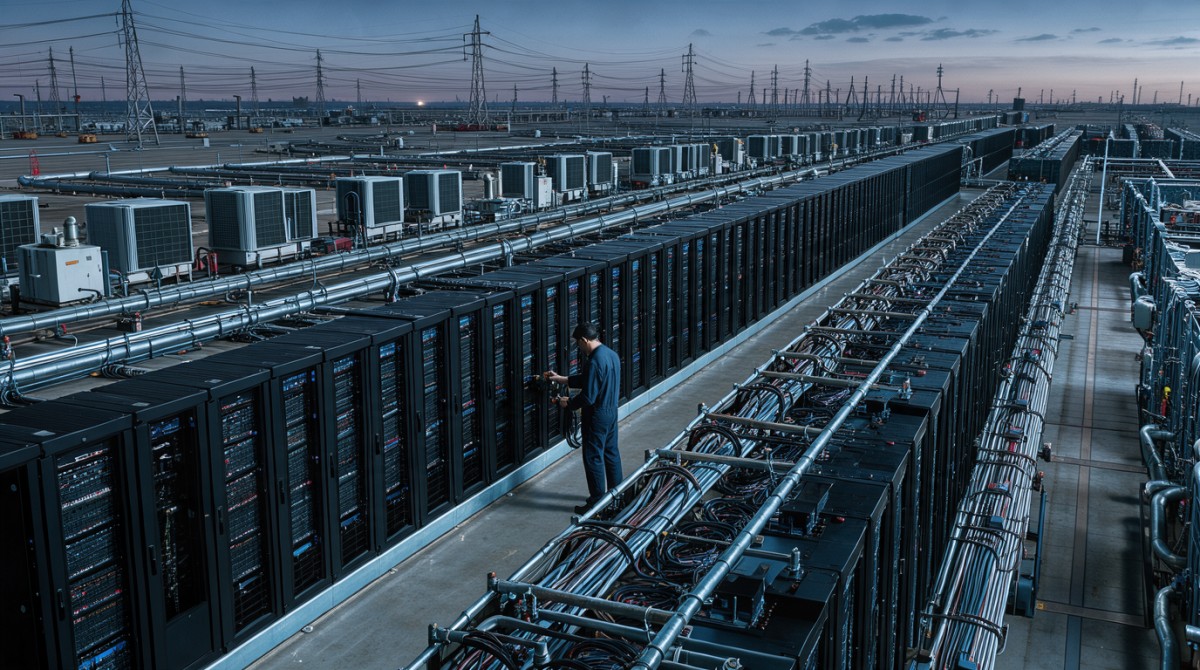
Datacentres, the backbone of the digital economy, are poised to become a major source of carbon emissions in the coming decade. The International Energy Agency’s latest forecast warns that the sector will generate 70 % more emissions by 2030, driven largely by the United States and China’s reliance on fossil fuels to power an accelerating artificial‑intelligence (AI) boom. This trajectory not only reshapes global energy demand but also carries profound implications for climate policy, geopolitical competition over energy resources, and the strategic calculus of the world’s two largest economies.
Scale of the looming emissions surge
The IEA projects that worldwide datacentre electricity consumption will double by 2030, with AI‑driven workloads accounting for roughly three‑quarters of that increase. In concrete terms, the sector is expected to add an extra 350 terawatt‑hours of electricity demand each year within the next four years—an amount comparable to the entire annual electricity consumption of Great Britain. This rapid expansion translates directly into a 70 % rise in carbon emissions associated with datacentre operations, according to the agency’s analysis.
Such growth is unprecedented for an industry that has traditionally been lauded for its aggressive procurement of renewable power. While datacentre developers have become the world’s largest corporate buyers of green electricity, the IEA’s data indicate that the appetite for coal and gas will outpace renewable uptake in the United States and China, the two jurisdictions that dominate the sector’s capacity.
China’s coal‑heavy AI datacentre strategy
By the end of the decade, the IEA estimates that about half of the electricity required for China’s AI‑focused datacentres will be supplied by coal‑fired power plants. The remainder will be sourced from renewables, with smaller contributions from nuclear and a minimal share of gas. This reliance on coal reflects China’s broader energy mix, where coal still supplies the majority of baseload power, and underscores the challenge of decarbonising a sector that is central to the country’s ambition to lead in AI.
China’s dominance in the global datacentre landscape is evident in the existing stock: 80 % of the world’s 120 GW of capacity is located in China, the United States, and the European Union. The concentration of capacity in China means that any shift toward coal for AI workloads will have outsized effects on global emissions, reinforcing the strategic importance of Beijing’s energy policy choices for the climate agenda.
U.S. dependence on natural gas
In contrast, the United States is projected to source roughly 60 % of its datacentre electricity from natural gas by 2030. The IEA notes plans for about 180 GW of new gas‑fired capacity linked to U.S. datacentres, a figure approaching the total installed gas capacity across the European Union. This scale of gas deployment reflects the United States’ abundant domestic gas resources and the perceived flexibility of gas plants to meet the variable demand of AI workloads.
The appetite for gas in the United States is markedly higher than in other major economies. The IEA reports that U.S. developers’ demand for gas power is more than sixteen times that of Canadian developers, who have identified only 11 GW of gas generation for their datacentres. Elsewhere, the combined planned gas capacity for AI datacentres totals just 4 GW, indicating that the United States is the primary driver of the sector’s gas‑fuelled expansion.
Renewables and nuclear in the rest of the world
Outside the United States and China, renewable energy is expected to assume a leading role in powering datacentres. In the European Union, the IEA forecasts that renewables will supply about 70 % of datacentre electricity by 2030, with nuclear, gas, and a minimal share of coal filling the balance. This reliance on green power aligns with Europe’s broader decarbonisation policies and reflects the region’s mature renewable markets.
Globally, the IEA’s scenario anticipates the construction of an additional 120 GW of datacentre capacity by 2030, three‑quarters of which will be dedicated to AI workloads. The sector’s total capacity, including existing stock, will rise from 120 GW to roughly 240 GW, underscoring the magnitude of the infrastructure build‑out required to support AI‑driven services.
Methodology behind the IEA’s forecasts
The agency’s projections are grounded in two primary data streams. First, it tracked the annual global shipment of AI servers, which have surged eighteen‑fold since 2020, indicating a massive scaling of AI‑optimised hardware. Second, the IEA employed space‑based imagery to identify and monitor the construction of 93 large “AI factories” worldwide, providing a satellite‑derived view of capacity expansion.
According to the IEA, the world’s datacentre capacity has expanded tenfold in the last 24 months, reaching 17 GW of AI‑specific installations. When the identified AI factories are completed, they are expected to contribute about 50 GW of capacity, highlighting the rapid pace at which purpose‑built AI infrastructure is being deployed.
Strategic implications for geopolitics and climate policy
The projected emissions surge from datacentres has direct ramifications for the United States and China’s energy security strategies. Both nations are turning to abundant fossil‑fuel resources—coal in China, gas in the United States—to meet the insatiable power demand of AI development. This reliance may entrench existing energy supply chains, reduce the leverage of renewable‑focused policies, and complicate international climate negotiations.
From a geopolitical perspective, the United States’ planned 180 GW of gas‑fired capacity could deepen its domestic energy independence while also creating new export opportunities for liquefied natural gas. Conversely, China’s continued coal use may heighten its exposure to global coal market volatility and draw criticism from climate‑concerned partners, potentially affecting its diplomatic standing in multilateral forums.
Finally, the IEA’s warning that “the world’s energy future was less certain after the impact of the Middle East war” underscores how external shocks can reshape energy markets. As governments grapple with the dual imperatives of AI leadership and climate commitments, policy choices made in the next few years will determine whether datacentre growth amplifies carbon emissions or catalyses a transition to cleaner power sources.
This article was produced with AI-assisted research and editorial support. Reporting is based on the source material cited below. Sources: The Guardian China; theguardian.com; Global1.News (22 November 2026).
By Prof. Marcus Chen, Staff Writer
What's Your Reaction?
 Like
0
 Dislike
0
 Love
0
 Funny
0
 Wow
0
 Sad
0
 Angry
0

World Politics Analyst at Global1.News. Based in Beijing, covering US-China relations, global trade, and geopolitical strategy. Brings deep analytical perspective to the power dynamics shaping international affairs.














Comments (0)