
NVIDIA Releases Alpamayo 2 Edge: A 2B Reasoning VLA for DRIVE Thor
When NVIDIA drops a new model, the hype train whistles louder than a freight on a rainy night. This time it’s Alpamayo 2 Edge, a 2‑billion‑parameter vision‑language‑action (VLA) engine that claims to do reasoning‑based planning right inside a car’s DRIVE AGX Thor box.
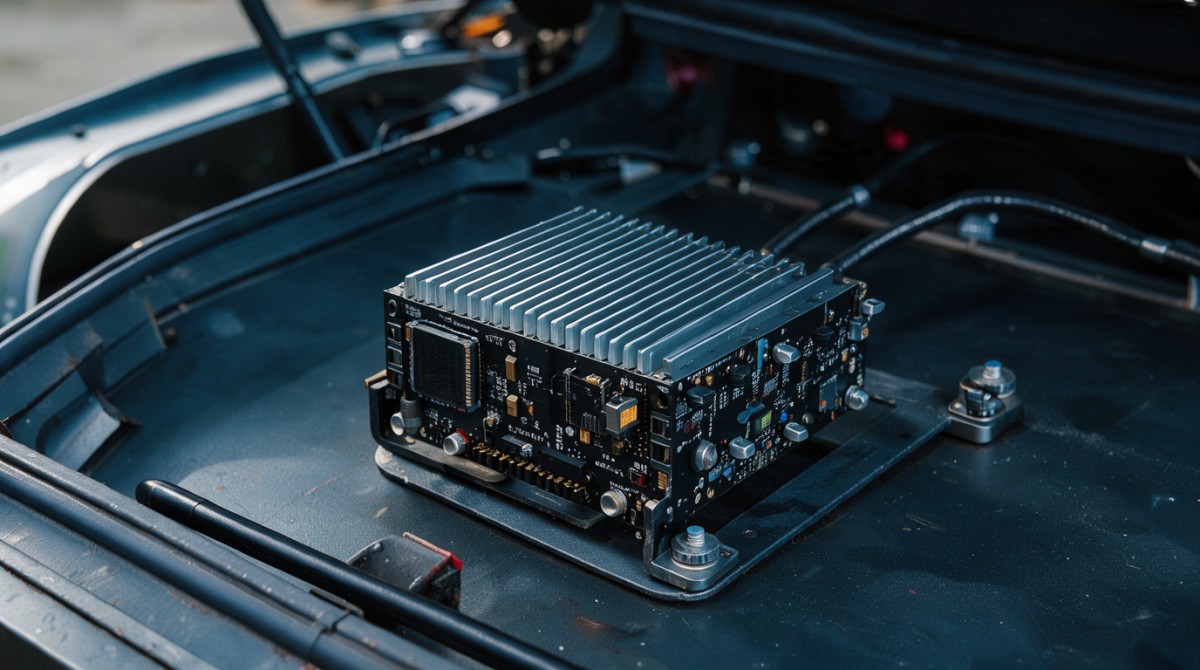
When NVIDIA drops a new model, the hype train whistles louder than a freight on a rainy night. This time it’s Alpamayo 2 Edge, a 2‑billion‑parameter vision‑language‑action (VLA) engine that claims to do reasoning‑based planning right inside a car’s DRIVE AGX Thor box. As a founder who runs real‑world hosting infrastructure, I’m less interested in the marketing fluff and more in the hard facts that matter to anyone building or operating autonomous‑driving stacks on the edge.
What Alpamayo 2 Edge actually is
Alpamayo 2 Edge is an open VLA model that turns surround‑camera video into a 6.4‑second trajectory plan. The model card breaks the architecture down to a 2.45 B‑parameter backbone – a 1.96 B Nemotron‑based language core paired with a 0.41 B SigLIP2 vision encoder – topped by a 0.2 B diffusion‑style action expert. NVIDIA markets it as a 2 B model, while the Hugging Face metadata lists it at roughly 3 B, but the functional split is clear: vision, language reasoning, and a small action head.
The input pipeline reads six cameras, pulling 22 frames per observation (front cameras 5 frames each, the other four 3 frames each), plus a navigation instruction and 20 historic ego poses. The output is a set of 64 waypoints spanning 0.1 to 6.4 seconds, along with a textual Chain‑of‑Causation (CoC) trace that explains the plan. In routine driving the model emits a special <NOMINAL> token instead of a full trace, saving compute when a scene doesn’t need deep reasoning.
Latency and hardware reality
The headline claim is “reasoning‑based planning at 160‑190 ms pixel‑to‑trajectory latency on DRIVE AGX Thor.” That number comes from NVIDIA’s reference configuration: DRIVE AGX Thor‑X running DRIVE OS 7.2.7.0, CUDA 13.4, and TensorRT 11.3.1.9. In BF16 PyTorch the model runs at a crawl‑ish 0.76 Hz, but after the full FP8 TensorRT Edge‑LLM recipe – which involves staging the checkpoint, calibrating FP8 scales, exporting ONNX, and building TensorRT engines – the pipeline hits 13.02 Hz in the AlpaSim simulator. Partner Embedl reports a real‑world 10 Hz rate on Thor after a 48‑hour tuning run.
Memory‑wise the model ships in BF16 and needs at least 16 GB of GPU RAM for a comfortable margin. NVIDIA measured a peak of 12.06 GiB on a single H100 with six trajectory candidates, so the Thor‑class hardware, which typically offers 8‑10 GB, will be pushing the limits unless you trim candidate counts or rely on the FP8 path. No other GPU architectures have been validated, so if you’re betting on a non‑NVIDIA accelerator you’re flying blind.
Performance versus the competition
In NVIDIA’s own closed‑loop AlpaSim runs, Alpamayo 2 Edge covered 15.15 km per at‑fault incident, dwarfing Alibaba’s 4 B Qwen‑Drive‑1.0, which managed just 0.25 km – a roughly 60× gap. Open‑loop min‑ADE (average displacement error) was 0.53 m for Edge versus 1.68 m for Qwen‑Drive‑1.0, again showing a clear advantage. On the Lingo‑QA benchmark the Edge model scored 75.2, trailing the 79.4 of Qwen‑Drive‑1.0 SFT and the 79.2 of the much larger Alpamayo 2 Super (34 B). So while the reasoning‑based planning shines, the language‑only QA still lags behind the bigger models.
These numbers are all self‑reported by NVIDIA, but they’re consistent across the model card and the technical blog. The key takeaway is that the reasoning advantage translates into far fewer safety‑critical incidents in simulation, which is the metric that matters for OEMs evaluating edge models.
What the “adaptive reasoning” trick really buys
The <NOMINAL> token scheme is a clever way to throttle compute. In routine highway cruising the model skips the heavy CoC trace and just emits the nominal token, shaving off the extra token processing time. When a complex scenario pops up – say a cyclist drifting into the lane or an on‑coming vehicle blocking a pass – the model switches to full reasoning, generating a longer token stream that explains the decision. This dynamic token budget means you can keep the average latency in the 160‑190 ms window while still having the capacity to dive deep when the road demands it.
From an infrastructure perspective, this is a win. It lets you provision a fixed compute envelope on the Thor module and still get variable‑depth reasoning without overrunning the latency budget. However, the actual token count and compute saved are not disclosed, so you’ll need to profile on your own data to confirm the savings hold up in the wild.
Implications for independent hosting and OEMs
For independent hosting providers or smaller OEMs, the Edge model offers a tempting middle ground. It’s open‑source under the OpenMDW‑1.1 license, with Apache 2.0 code, so you can host the weights on your own servers, fine‑tune them, or embed them in custom stacks. The requirement to run the FP8 TensorRT recipe does tie you to NVIDIA’s software stack, but that’s a price many are willing to pay for the 10‑13 Hz planning rates on modest edge hardware.
The memory requirement of 16 GB for BF16 means you can’t squeeze the model onto the smallest Thor variants without trimming candidates or relying on the FP8 path. If you’re already running a fleet of Thor‑X boxes, the upgrade path is straightforward – just swap in the new checkpoint and run the developer hub steps. For those on older or non‑NVIDIA silicon, the lack of validation is a red flag; you’d be betting on untested ports.
Business‑risk lens: cost vs benefit
Pricing for the Thor hardware isn’t disclosed in the source, but we know the model itself is free to download under the OpenMDW‑1.1 license. The real cost comes from the engineering effort to integrate the FP8 recipe, calibrate scales, and build TensorRT engines. That’s a non‑trivial dev‑ops job – you’ll need engineers familiar with ONNX export, TensorRT Edge‑LLM plugins, and FP8 quantization. For a startup, that overhead could be weeks of work, which translates into opportunity cost.
On the upside, the 15 km per incident safety gain in simulation could shave years off validation cycles. If you can trust the simulation results, the reduction in on‑road testing time is a direct dollar saving. The trade‑off is clear: invest in integration now, reap safety and time‑to‑market benefits later.
Actionable advice for founders
First, run a quick sanity check: pull the BF16 weights from Hugging Face, spin up a PyTorch inference on a workstation with 16 GB GPU RAM, and verify the 12 GiB peak memory claim. If you’re within budget, move to the FP8 recipe – follow the five‑step developer hub guide (stage checkpoint, calibrate FP8, export ONNX, build TensorRT, run the harness). Expect a latency range of 160‑190 ms; if you see higher numbers, you’re probably over‑loading the candidate pool.
Second, profile your own sensor suite. The model expects six cameras with a specific frame cadence. If your hardware differs, you’ll need to adapt the input preprocessing or risk mismatched performance. Third, budget for engineering time – allocate at least a sprint for integration, plus another for validation against your own safety metrics. Finally, keep an eye on the Lingo‑QA gap; if your product needs strong natural‑language interaction, you may still need to supplement Edge with a larger cloud model or fine‑tune the Edge model on domain‑specific data.
Bottom line: Alpamayo 2 Edge is a solid step forward for on‑device reasoning, but it’s not a plug‑and‑play miracle. It demands careful integration, memory planning, and a willingness to work within NVIDIA’s software ecosystem. For those who can pull it off, the payoff is a dramatically safer, more explainable planning stack that runs on the same box that powers today’s ADAS. Miss the integration window, and you’ll be left chasing the next hype cycle.
— Allan Ali, Founder
This article was produced with AI-assisted research and editorial support. Reporting is based on the source material cited below. Sources: MarkTechPost; marktechpost.com; Global1.News (22 November 2026).
By Allan Ali, Global1.News
What's Your Reaction?
 Like
0
 Dislike
0
 Love
0
 Funny
0
 Wow
0
 Sad
0
 Angry
0

Publisher of Global1.News. Automation architect, systems builder, and the guy making sure the truth gets published.












Comments (0)