
U.S. Unions Urge Reconsideration of Section 338 Tariffs on $28 Billion in Canadian Goods
Two major North American unions — the United Steelworkers and the Machinists — have asked U.S. Trade Representative Jamieson Greer to reconsider Section 338 tariffs on Canadian goods, as 50 per cent duties on $28 billion in imports loom for August 19.
In a recent CBC News report on Power & Politics, two major North American unions sent a letter dated July 28, 2026, to U.S. Trade Representative Jamieson Greer asking him to reconsider the threatened Section 338 tariffs covering $28 billion of Canadian goods. The segment featured an interview with Roxanne D. Brown, international president of the United Steelworkers, who stressed that Canada has never been the problem in the bilateral trade relationship.
U.S. Unions Urge Reconsideration of Section 338 Tariffs on $28 Billion in Canadian Goods
Ottawa – United Steelworkers international president Roxanne D. Brown and International Association of Machinists and Aerospace Workers international president Brian Bryant signed the July 28 letter that reached Greer's office this week. The document calls for the return of the U.S.-Canada trade relationship to stable, balanced footing and warns that the 50 per cent duties would inflict self-inflicted industrial damage on integrated North American supply chains. Brown told CBC News Power & Politics that the unions have backed several administration trade actions but object to targeting a deeply integrated ally.
The Letter to Washington
The letter was delivered Tuesday, July 28, 2026, to USTR Jamieson Greer and carried the signatures of the heads of unions representing roughly 1.45 million active and retired members across both countries. United Steelworkers represents about 850,000 members and retirees in metals, mining, chemicals, auto supply, energy, pulp and paper, and rubber. International Association of Machinists and Aerospace Workers represents roughly 600,000 members in aerospace, defence, transportation, shipbuilding, and manufacturing. The unions asked Greer to withdraw the proclamations and avoid measures that would override USMCA duty-free treatment on 554 tariff lines.
The signatories urged Greer to pull back before the August 19 effective date. The letter also acknowledged the unions' record of backing enforcement against subsidies, forced labour and unfair practices, while insisting that Canadian and American workers often produce identical components in linked facilities spanning the border. The unions drew a sharp distinction between Canada and other trading partners, arguing that Ottawa shares comparable labour standards, environmental expectations and defence relationships with the United States, and calling instead for a coordinated North American front against global overcapacity.
A Dormant Trade Weapon, Revived
Three presidential proclamations signed July 20, 2026, invoked Section 338 of the Tariff Act of 1930 for the first time since the Smoot-Hawley era. The measure imposes an additional 50 per cent duty on approximately $20 billion worth of Canadian goods, including wine, beer-related products, hockey sticks, cement, plywood, dairy, alcoholic beverages, electronics, machinery, wood products, clothing, and selected food items. The duties apply even to goods that qualify as duty-free under USMCA and take effect August 19, 2026. Energy, potash, fish, critical minerals, and products already facing Section 232 duties remain exempt.
The revival comes after the Supreme Court's February 2026 ruling in Learning Resources, Inc. v. Trump struck down the broad tariff authority the administration had been exercising under the International Emergency Economic Powers Act. With that authority eliminated, Section 338 — a dormant provision that requires no investigation, no hearing and no formal process, only a presidential proclamation — became the alternative statutory hook. Scott Lincicome, vice president of general economics at the Cato Institute, described the move as "the nuclear option."
Why the Unions Broke Ranks
Brown and Bryant wrote that their organisations have supported strong enforcement against subsidies, forced labour, and unfair practices, yet they view Canada as the wrong target. The unions noted that Canadian and American workers often build the same products in linked plants, particularly in the auto sector where Ontario, Michigan, and Ohio facilities operate on tightly timed deliveries under the 75 per cent North American value rule. Protection aimed at Canada, they argued, risks raising input costs and triggering retaliation that would harm U.S. manufacturing employment.
The letter stressed that Canadian workers often produce identical components to their American counterparts, making the 50 per cent duties on $20 billion of goods an inefficient tool. Existing 25 per cent tariffs on steel, aluminum and assembled vehicles already strain these integrated lines, and the unions warned that further measures would compound job losses recorded in motor vehicle parts and related industries.
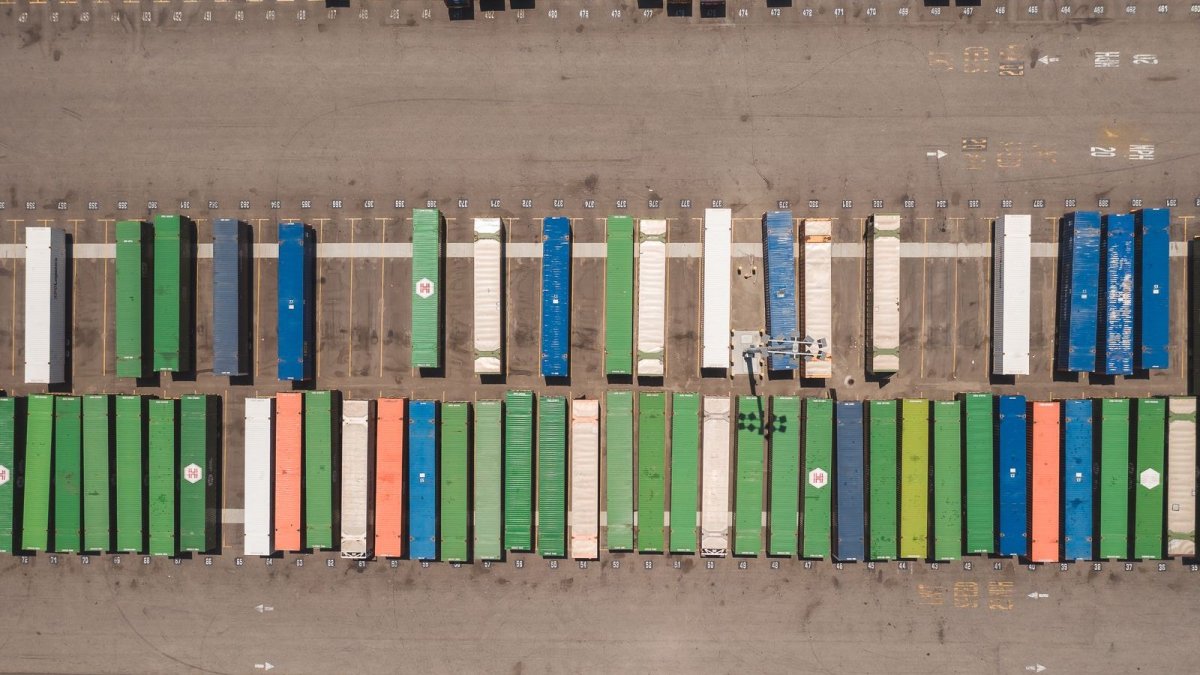
The border functions less like the edge of a market and more like a seam running through a single industrial platform: components can cross it several times before a final product reaches a customer. Evidence from the 2018-2021 tariff period found that American importers bore nearly the full cost of earlier duties, with import prices rising about 1 per cent for every 1 per cent increase in tariffs. Federal Reserve researchers also found that manufacturing industries more exposed to those increases experienced relative employment declines, because the benefits of import protection were outweighed by higher input costs and foreign retaliation.
The Stakes for Canadian Workers
Canada sends 73 per cent of its goods exports to the United States, and Bank of Canada data show approximately 2 million Canadian jobs depend on those shipments. Manufacturing employment fell by 32,161 positions between January 2025 and January 2026, with the motor vehicle parts sector accounting for 7,294 of those losses. Real GDP grew only 1.7 per cent in 2025, the weakest annual pace since the COVID recession, and contracted 0.6 per cent in the final quarter. Existing 25 per cent tariffs on Canadian steel, aluminum, and assembled vehicles already add pressure to these sectors.
The threatened tariffs cover goods that cross the border at a rate of nearly $2 billion daily. U.S. goods trade with Canada totalled an estimated $719.5 billion in 2025 — $336.5 billion in American exports and $383 billion in imports — and Canada also remains one of the most important customers for American manufacturers, farmers and energy-related businesses. Workers in exempted sectors such as energy and critical minerals sit outside the immediate scope, yet broader supply-chain effects could still reach those industries.
The pain is not spread evenly across the country. Auto-dependent regions of Ontario, the steel and aluminum heartland, and Quebec's aluminum and dairy sectors face the heaviest exposure, while provinces such as Alberta and Saskatchewan — whose bans on U.S. alcohol have already been lifted — are watching the politics as much as the economics. For consumers, higher duties typically translate into higher prices on both sides of the border as importers pass costs along integrated supply chains, a pattern documented in earlier tariff rounds.
Ottawa's Response
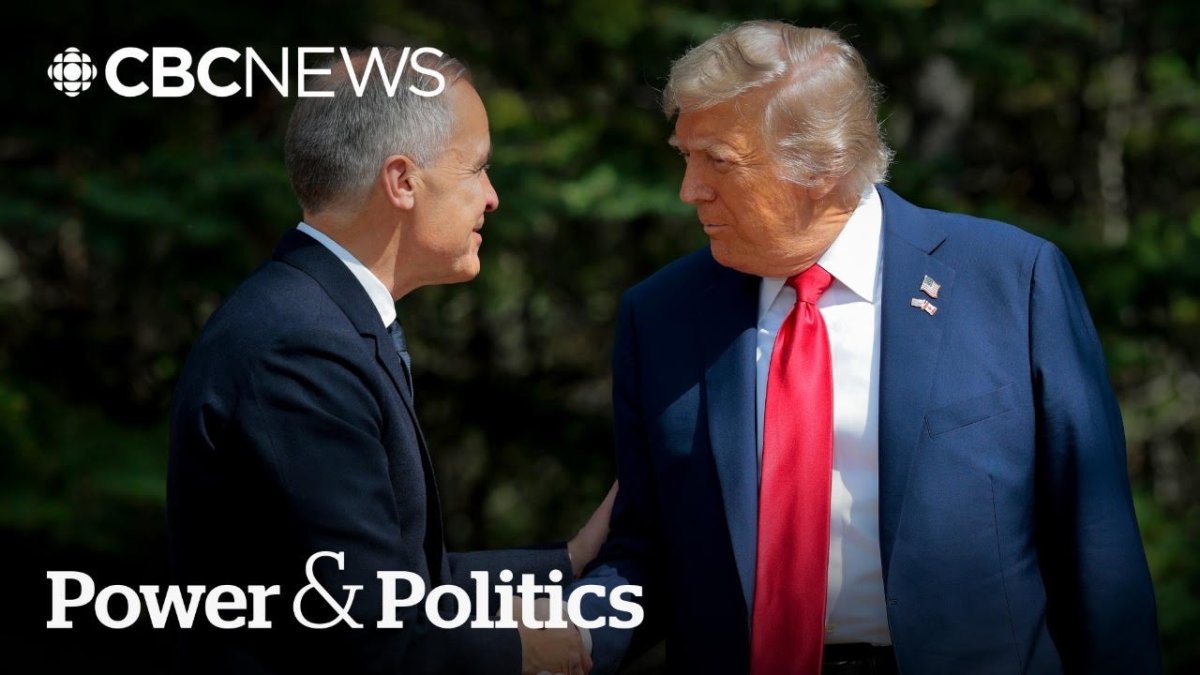
Trade Minister Dominic LeBlanc travelled to Washington the week of July 27 for the first in-person meetings since the July 20 proclamations. Prime Minister Mark Carney, who won the March 2025 federal election on a mandate to resist Washington without destroying the bilateral relationship, spoke with the U.S. president the morning the tariffs were unveiled and agreed to deepen negotiations. After meeting Canada's 13 provincial and territorial leaders in Charlottetown on July 23, Carney said every option remains available if the August 19 duties take effect.
Speaking in Charlottetown, Carney made clear he would not detail retaliatory options in advance. "I have to be convinced, the team has to be convinced, the premiers have to be convinced that an agreement is worth the paper it's written on," he told reporters — a measure of how much the credibility gap with Washington now colours every negotiating position. Ontario Premier Doug Ford, who ultimately backed Carney's approach, had earlier argued for a tariff-for-tariff, dollar-for-dollar response, while B.C. Premier David Eby declared there was no chance U.S. alcohol would return to British Columbia shelves. Greater Toronto Area mayors began preparing measures to shield local businesses. Carney rejected using Canadian energy as leverage, keeping the focus on bilateral channels.
The USMCA Deadlock and the August 19 Deadline
July 1, 2026, marked the mandatory six-year joint review of USMCA, after which the United States declined to extend the agreement, opening a potential decade-long wind-down ending in 2036. Trump told Fox News on July 28 that he does not really want to preserve or update the deal: "I'd rather be independent. Mexico and Canada need us. We don't need them. The deal is important for them. It's not important for us." USTR Greer completed a third round of talks with Mexico last week without resolution on automotive content rules, leaving Canada reliant on bilateral back-channels. Ontario's representative in Washington, David Paterson, told CBC News that Canada's retaliation is being noticed, with the city abuzz with activity as all of Canada's best people are on the ground.
Section 338 also allows Washington to discriminate between provinces that produce the same goods — wine from British Columbia and Nova Scotia could enter duty-free while Quebec wine faces the full 50 per cent levy. This week's proclamation on alcoholic beverages singled out Alberta and Saskatchewan as the only provinces to have lifted their bans on U.S. alcohol, raising fears that the tariff tool is being used to exploit Canada's internal divisions.
What Happens Next
With the August 19 deadline three weeks away, both sides have a short runway. The 30-day window between the July 20 proclamations and the start date was itself designed to leave room for negotiation, and the unions' letter now sits at the centre of that window. Trade lawyer Philip Zelikow has argued that Section 338 was superseded by the Trade Expansion Act of 1962 and Section 301 of the Trade Act of 1974, and that courts will almost certainly be asked to resolve the question if the duties take effect. Whether the unions' appeal moves the administration or the deadline forces a deal, the coming weeks will test whether the world's two most integrated economies can find a footing that satisfies Canadian premiers, American workers and a U.S. president who insists he would rather walk away.
By Alex Thompson, Staff Writer
This article was produced with AI-assisted research and editorial support. Reporting is based on sources cited in the article.
What's Your Reaction?
 Like
0
Like
0
 Dislike
0
Dislike
0
 Love
0
Love
0
 Funny
0
Funny
0
 Wow
0
Wow
0
 Sad
0
Sad
0
 Angry
0
Angry
0

Canada Correspondent at Global1.News. Based in Toronto, covering Canadian politics, energy, trade, and US-Canada relations. Provides the Canadian perspective on North American and global affairs.















Comments (0)