
Is J Street Pro-Israel? Liberal Zionist Group Caught Between AIPAC and the Progressive Left
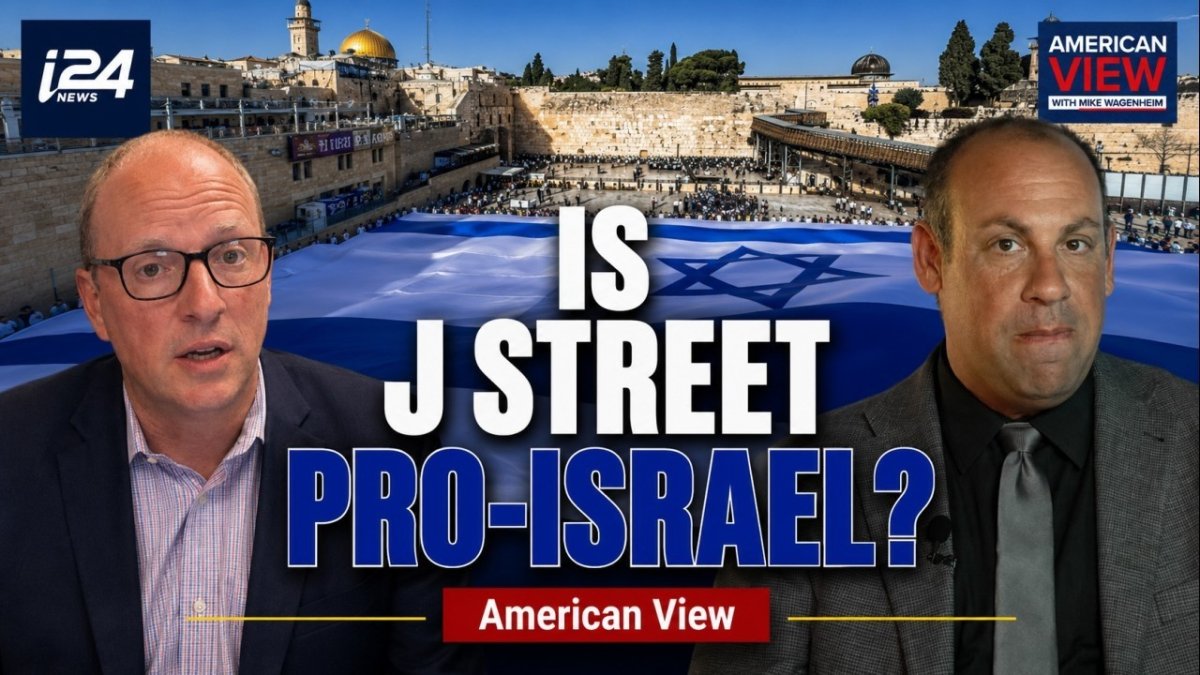
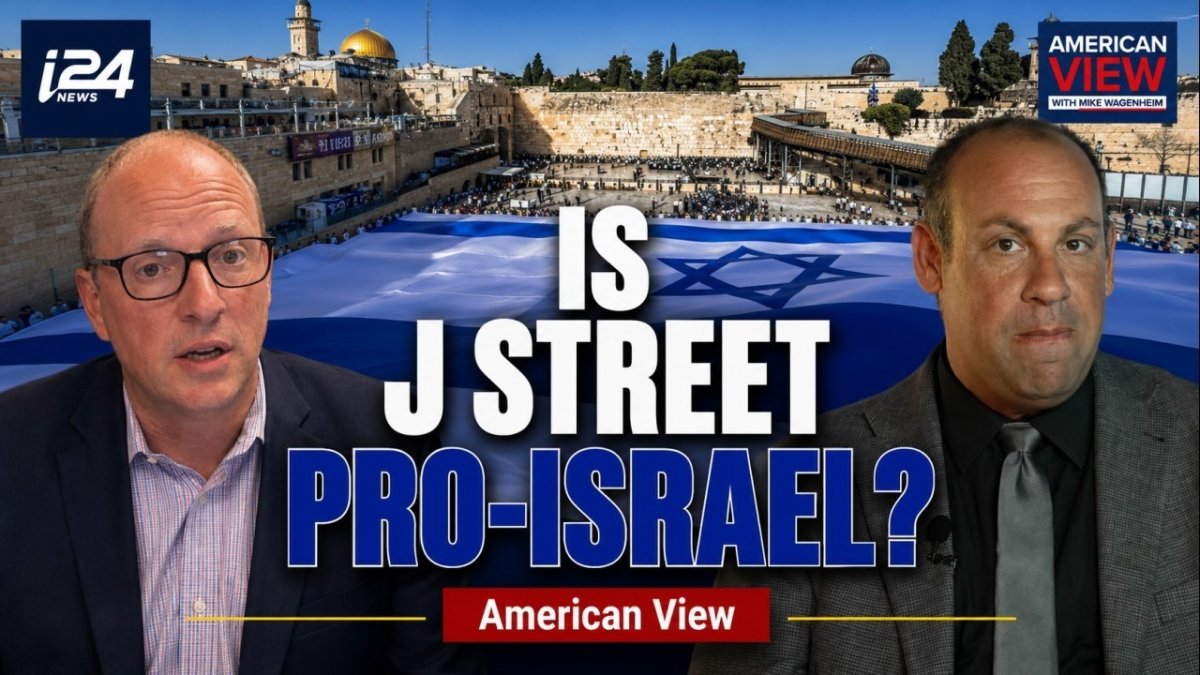
In a recent i24NEWS English video report titled 'Is J Street pro-Israel?' published on August 1, 2026, the debate over the liberal Zionist lobbying group takes center stage in Washington DC. The report examines J Street's self-description as the political home for pro-Israel, pro-peace Americans alongside growing criticism from both Israeli officials and progressive challengers.
In a recent i24NEWS English video report titled 'Is J Street pro-Israel?' published on August 1, 2026, the debate over the liberal Zionist lobbying group takes center stage in Washington DC. The report examines J Street's self-description as the political home for pro-Israel, pro-peace Americans alongside growing criticism from both Israeli officials and progressive challengers. This question carries direct implications for US-Israel relations and the American Jewish community.
J Street Faces Identity Crisis as Israeli Ambassador Labels Group a 'Cancer' and Progressives Gain Ground
Washington DC / Jerusalem – this week — The i24NEWS report highlights how J Street, founded in 2008 by Jeremy Ben-Ami, navigates an increasingly polarized landscape. Ben-Ami, a former domestic policy adviser to Bill Clinton, established the group and its PAC in April 2008 to advocate for a two-state solution while opposing the BDS movement. The West Bank settler population has nearly doubled since that founding year, underscoring the shifting ground J Street seeks to influence from its Washington DC base.
What Is J Street?
J Street derives its name from the Washington DC street grid where J Street is absent between I and K Streets. The organization describes itself with the motto 'pro-Israel, pro-peace, pro-democracy' and supports creation of a Palestinian state while opposing Israel's occupation of the West Bank and Gaza. It endorsed the 2015 Iran nuclear deal known as the JCPOA, which President Obama backed but Prime Minister Netanyahu and AIPAC opposed, and the agreement lasted three years until President Trump withdrew in 2018.
J Street was established explicitly as an alternative to AIPAC, which was founded in 1954 and remains the dominant pro-Israel lobby backing Israeli government policy. Unlike AIPAC, J Street has consistently opposed the BDS movement and advocated for Palestinian statehood alongside security guarantees for Israel.
The group's early years included limited engagement from Israeli officials, as the Israeli Embassy refused to attend J Street's first national conference in 2009 under Ambassador Michael Oren, and the Israeli Foreign Ministry declined meetings with US congressmembers escorted by J Street in February 2010.
Despite these tensions, then-Kadima opposition leader Tzipi Livni sent a congratulatory letter to J Street's 2009 inaugural event, signaling some initial openness from Israeli centrist figures to its two-state advocacy.
A New Center of Gravity in Washington
J Street PAC raised $1.3 million in June 2026, its largest monthly total ever, according to its vice-president of political and digital strategy. The group's staff has grown 50 percent in the last five years while its budget and number of individual donors, many former AIPAC supporters, have doubled. At least 60 percent of congressional Democrats now carry J Street endorsement, compared with 22 percent in 2012. Daniel Biss paid homage to J Street in his March 2026 victory speech after winning the Democratic nomination in Illinois' 9th congressional district.
Rahm Emanuel, former Obama chief of staff and potential 2028 presidential candidate, delivered a July 8, 2026 speech at Tel Aviv University that promoted a '23-state solution' involving Palestinian statehood plus normalization with 22 Arab nations, a concept first advanced by J Street after the Gaza war.
J Street's growth reflects a broader shift among some Democratic donors disillusioned with AIPAC's approach, with the organization's budget and donor base doubling in recent years as it positions itself against the occupation while rejecting BDS.
The PAC's record June 2026 fundraising underscores its expanding role in Democratic primaries, where endorsed candidates have secured nominations in key districts amid rising support from former AIPAC backers seeking a pro-Israel yet critical voice.
J Street PAC's record $1.3 million haul in June 2026 marks its largest monthly total ever, coinciding with a 50 percent staff increase over five years and doubled budget and donor base. Congressional Democratic endorsements have surged to 60 percent from 22 percent in 2012, positioning the group as an expanding force in Washington primaries and policy debates that challenge established pro-Israel networks.
AIPAC, founded in 1954, plans to deploy hundreds of millions in 2026 races while J Street's support for the 2015 JCPOA, which endured only three years until the Trump withdrawal, underscores differing approaches to Iran policy. These developments signal a potential realignment in Democratic circles where J Street seeks greater sway over legislative priorities.
Israel Reacts: From Embassy Snubs to a 'Cancer'
Israeli ambassador to the US Yechiel Leiter recently called J Street 'a cancer' during public remarks. On August 3, 2025, Ben-Ami wrote on his Substack that legal and scholarly arguments had persuaded him international courts would one day find Israel broke the genocide convention, a shift from his prior refusal to use the term due to his family's Holocaust history. This statement drew criticism from both right-wing and left-wing voices in the United States and Israel.
Israeli officials have maintained distance from J Street since its founding, exemplified by the 2009 embassy refusal to attend its inaugural conference and the 2010 Foreign Ministry decision against meetings with J Street-accompanied lawmakers.
Ben-Ami's August 2025 Substack post marked a notable evolution in his public stance, drawing sharp responses from both sides of the political spectrum and highlighting internal strains within liberal Zionist circles.
The ambassador's recent characterization of the group as a cancer reflects ongoing official Israeli skepticism toward organizations that challenge government policy on the occupation and two-state issues.
The Progressive Squeeze
J Street-endorsed candidates including Sharif Street in Pennsylvania, Tom Malinowski and Sue Altman in New Jersey, Dan Goldman in New York, and Diana DeGette in Colorado lost recent primaries to more pro-Palestinian challengers. Nearly half the House Democratic caucus voted in July 2026 for an amendment by Republican Thomas Massie to cut off aid to Israel, though J Street opposed the measure. In the Michigan Senate primary scheduled for August 4, 2026, neither Abdul El-Sayed nor Haley Stevens sought J Street endorsement.
J Street U reported around 60 chapters in 2016 but now claims activity on more than 50 campuses. Jewish Voice for Peace Action political director Beth Miller stated that J Street created space for congressional criticism of the Israeli government yet missed the current moment, while Yousef Munayyer of the Arab Center Washington DC said Ben-Ami's genocide comments satisfy nobody.
J Street opposed the Massie amendment despite nearly half of House Democrats supporting it in July 2026, illustrating the group's consistent stance against cutting US aid to Israel even as progressive challengers gain traction.
Former J Street-backed candidate Jamaal Bowman saw his endorsement withdrawn partly over his use of the term genocide, underscoring how the organization has distanced itself from positions that go beyond its two-state framework.
Israeli Politics: Waiting for a Shift
Ben-Ami stated that a shift in Israeli politics is required for J Street's approach to remain viable. Former IDF chief of staff Gadi Eisenkot's new party Yashar overtook Likud in one recent poll. Nearly four in five Jewish Israelis now oppose Palestinian statehood, according to polling cited by The Guardian on July 29, 2026, while eight in ten Democrats hold an unfavorable view of Israel.
Ben-Ami has noted that Yashar's polling gains represent a potential opening, yet he emphasized that sustained viability for J Street's politics depends on broader changes within Israeli electoral dynamics.
The contrast between eight in ten Democrats viewing Israel unfavorably and nearly four in five Jewish Israelis opposing Palestinian statehood highlights the widening gap J Street seeks to bridge through its advocacy.
Analysis: What This Means for US-Israel Relations
J Street's internal November 2023 upheaval saw younger staff demand a ceasefire call that Ben-Ami rejected, leading to resignations. Jamaal Bowman, elected in 2022 with J Street support, later lost the group's endorsement partly over his use of the term genocide and remarked that voters seek authenticity rather than unclear positions. Ben-Ami has emphasized that J Street exists solely to change American policy. For readers in Jerusalem and Tel Aviv, these developments signal that the middle lane in US advocacy may narrow further as AIPAC prepares to spend hundreds of millions in 2026 races and progressive groups push alternative frameworks including the Palestinian right of return.
Ben-Ami has repeatedly framed J Street's core mission as altering US policy toward Israel, a focus that has guided its endorsements and positions on issues from the JCPOA to arms sales resolutions.
The group's November 2023 staff resignations over the ceasefire demand revealed generational divides that continue to shape its internal dynamics amid external pressures from both Israeli officials and progressive activists.
Eight in ten Democrats now hold unfavorable views of Israel as West Bank settler numbers have nearly doubled since J Street's founding, while nearly four in five Jewish Israelis oppose Palestinian statehood. This divergence highlights structural obstacles for groups advocating territorial concessions amid persistent settlement expansion and Israeli public resistance to two-state frameworks.
J Street endorses the two-state solution and rejects BDS, yet Israeli ambassador Yechiel Leiter labeled the organization a cancer. Ben-Ami noted that Israeli political shifts are required for such positions to remain viable, illustrating tensions between American progressive pressures and Israeli domestic realities that could strain bilateral ties.
J Street's Evolving Stance on International Accountability
Ben-Ami's August 2025 acknowledgment of potential international court findings on the genocide convention came after years of avoiding the term due to personal family history, marking a shift that drew reactions across the political spectrum.
J Street's support for Bernie Sanders' November 2024 Senate resolutions to block certain US arms sales to Israel further illustrates its willingness to challenge aspects of bilateral policy while maintaining opposition to full aid cutoffs.
These positions continue to position J Street as a distinct voice within pro-Israel advocacy, even as critics from multiple sides question its consistency and impact on US-Israel relations.
By Hannah Berg, Staff WriterThis article was produced with AI-assisted research and editorial support. Reporting is based on sources cited in the article.
What's Your Reaction?
 Like
0
Like
0
 Dislike
0
Dislike
0
 Love
0
Love
0
 Funny
0
Funny
0
 Wow
0
Wow
0
 Sad
0
Sad
0
 Angry
0
Angry
0

Israel Correspondent at Global1.News. Based in Tel Aviv, covering Israeli politics, security, technology, and society. Provides balanced, deeply-sourced reporting on one of the most closely-watched regions in the world.














Comments (0)