
US Strike on Caribbean Vessel Kills Four, Bringing Operation Southern Spear Toll to 227
The waters of the Caribbean Sea turned deadly once again on Tuesday 25 August 2026, when a US military strike on a suspected drug-smuggling boat killed four people, according to US Southern Command (SOUTHCOM).
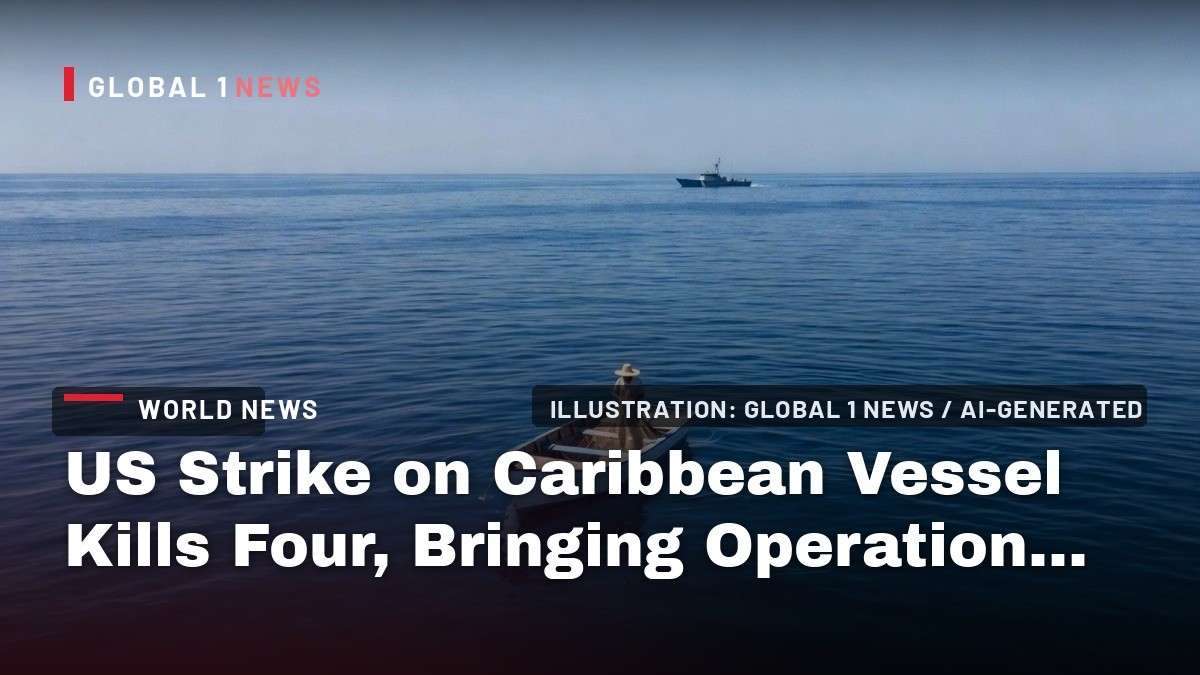
The waters of the Caribbean Sea turned deadly once again on Tuesday 25 August 2026, when a US military strike on a suspected drug-smuggling boat killed four people, according to US Southern Command (SOUTHCOM). The operation, part of the controversial campaign known as Operation Southern Spear, has now claimed at least 227 lives across 68 reported strikes in the eastern Pacific Ocean and Caribbean Sea, according to CBS News, Fox News, The Guardian and Marine Insight.
For those of us who call these islands home, the news lands with a particular weight. The Caribbean Sea is not just a body of water — it is our highway, our livelihood, our shared backyard. And now, it has become a theatre of war, with the echoes of American firepower reaching our shores and our consciousness, even as our own regional leaders remain publicly silent.
What Happened on 25 August
US Southern Command confirmed that its forces struck a vessel suspected of drug smuggling in the Caribbean Sea on Tuesday, killing four people on board. The strike was the 68th reported operation in the campaign, which began on 2 September 2025, when the US executed its first strike on a vessel the Department of Defense said was operated by a Venezuelan cartel, killing 11 people.
The operation is conducted by Joint Task Force Southern Spear under SOUTHCOM, whose commander is Gen. Francis L. Donovan. The Trump administration has described the strikes as part of an effort to fight the flow of illicit drugs from Latin America to the United States. But the human cost is mounting, and questions are growing louder about the use of lethal force against boats in our regional waters.
According to reports from CBS News and The Guardian, the total number of people killed in US strikes on suspected drug-trafficking boats since the campaign began now stands at least 227. That is 227 lives lost in less than a year of operations — a figure that demands our attention and, many would argue, our collective response.
Caricom Governments Stay Silent
Perhaps the most troubling aspect of this latest strike, as reported by Caribbean360, is the silence of CARICOM governments. The regional body, which represents 15 member states across the Caribbean, has not issued a public statement on the 68th strike or the rising death toll. Caribbean360's reporting highlights this quiet, and it is a quiet that speaks volumes.
For decades, CARICOM has positioned itself as a defender of regional sovereignty and a voice for small island states on the world stage. Yet when it comes to the United States military conducting lethal operations in our waters, the collective voice appears to have gone mute. This is not a new phenomenon — Caribbean nations have long navigated a delicate balance between their relationship with Washington and their own sovereignty — but the stakes have never been higher.
The silence is particularly striking given the scale of the operation. By late November 2025, the US had amassed its largest military presence in the region since the Cuban Missile Crisis in 1962, striking and sinking vessels allegedly operated by drug traffickers in the Caribbean and Eastern Pacific. That is not a small footprint. That is a military occupation of our maritime space, and it is happening with barely a whisper of protest from the very bodies meant to represent us.
The Human Cost of the Drug War
Behind the statistics — 68 strikes, 227 dead — are real people. The four individuals killed on Tuesday were on a boat in the Caribbean Sea, a vessel that US military officials say was suspected of drug smuggling. But who were they? Were they hardened traffickers, or were they fishermen caught up in a deadly game? The US military has not released their identities, and in the fog of war, the truth is often the first casualty.
Critics of the campaign have raised concerns about civilian casualties and the use of lethal force against boats. The Guardian has described the strikes as a "controversial campaign," and independent analysts and human rights groups have questioned whether the US is doing enough to distinguish between traffickers and innocent civilians. In waters where fishing is a way of life, the risk of mistaken identity is real and ever-present.
We must also consider the broader context of the drug trade in our region. The Caribbean has long been a transit point for illicit drugs moving from South America to the United States and Europe. The economic pressures that drive this trade are well documented — high unemployment, limited opportunities, and the crushing cost of living that pushes some towards the illicit economy. The drug trade is not just a security issue; it is an economic one, and until we address the root causes, the boats will keep coming, and the strikes will keep happening.
A History of US Intervention in Caribbean Waters
This is not the first time the United States has brought its military might to our waters. From the Banana Wars of the early 20th century to the Cuban Missile Crisis in 1962, the Caribbean has often been a staging ground for US strategic interests. More recently, US interdiction operations have been a constant presence in the region, with the Coast Guard and other agencies working to stem the flow of drugs.
But Operation Southern Spear represents a significant escalation. The use of lethal force against boats — sinking vessels and killing those on board — is a departure from the interdiction tactics of the past, which typically involved boarding and seizure. This is a more aggressive approach, and it carries with it a higher risk of civilian casualties and regional backlash.
The deployment of troops to the Caribbean began in mid-August 2025, and by late November of that year, the US had built up its largest military presence in the region since 1962. That is a sobering statistic, and it should give us all pause. What does it mean for our sovereignty when a foreign power can deploy thousands of troops and conduct lethal operations in our waters with impunity?
The Diaspora Watches and Worries
For Caribbean people living in the United States, these strikes hit close to home. Many in the diaspora have family members who fish these waters, who travel between islands, who depend on the sea for their livelihoods. The news of another strike, another four lives lost, is a reminder that the Caribbean is not just a vacation destination — it is a place where real people live, work, and sometimes die.
The diaspora also plays a complex role in this story. Many Caribbean Americans support efforts to combat the drug trade, which has devastated communities both in the region and in the US. But there is also a deep unease about the methods being used. The strikes raise difficult questions about due process, about the presumption of innocence, and about whether the ends justify the means.
As one Trinidadian friend in Brooklyn put it to me recently, "We want the drugs stopped, but not like this. Not with our people dying in the sea." That sentiment captures the tension at the heart of this issue — the desire for security versus the cost of achieving it.
What Comes Next for the Region
The silence of CARICOM governments is not sustainable. As the death toll rises and the strikes continue, the pressure will grow for a regional response. Whether that means a formal statement of concern, a diplomatic demarche to Washington, or a broader conversation about the future of US military operations in the region, something must change.
There are also practical considerations. The strikes are taking place in waters that are vital to Caribbean economies — for fishing, for tourism, for trade. A military campaign of this scale has economic consequences, from disrupted shipping lanes to the chilling effect on tourism that comes with the presence of warships and the sound of gunfire.
Regional leaders must also grapple with the underlying issues that fuel the drug trade. The cost of living crisis that has gripped the Caribbean in recent years has pushed more people into the illicit economy. Addressing these economic pressures — through investment, job creation, and social programmes — is essential if we are to reduce the flow of drugs and the violence that comes with it.
A Call for Transparency and Accountability
At the very least, the United States must be more transparent about its operations. Who is being killed in these strikes? What evidence is there that the vessels targeted are indeed involved in drug trafficking? What measures are in place to prevent civilian casualties? These are questions that demand answers, not just from Washington but from our own leaders as well.
The silence of CARICOM is a failure of leadership. Our governments have a responsibility to speak up for the people of the region, to demand accountability, and to ensure that our waters are not turned into a killing field. The United States is our neighbour and our partner, but partnership must be based on mutual respect, not unilateral action.
As we reflect on the 68th strike and the 227 lives lost, let us remember that these are not just numbers. They are people — people with families, with dreams, with stories. And they died in our waters, under our watch, while our leaders looked the other way.
The Caribbean deserves better. Our people deserve better. And it is time for our leaders to find their voice.
By Sharon Sahatoo, Staff Writer
This article was produced with AI-assisted research and editorial support. Sources: Caribbean360, CBS News, The Guardian, Fox News, Marine Insight, US Southern Command reports.
What's Your Reaction?
 Like
0
Like
0
 Dislike
0
Dislike
0
 Love
0
Love
0
 Funny
0
Funny
0
 Wow
0
Wow
0
 Sad
0
Sad
0
 Angry
0
Angry
0

Caribbean Correspondent at Global1.News. Based in Port of Spain, Trinidad, covering Caribbean politics, economy, energy, climate, and culture. Amplifying the voices and stories of the Caribbean region.














Comments (0)