
Trump's Canada Tariffs 'Pointless' and 'Illegal': Senator
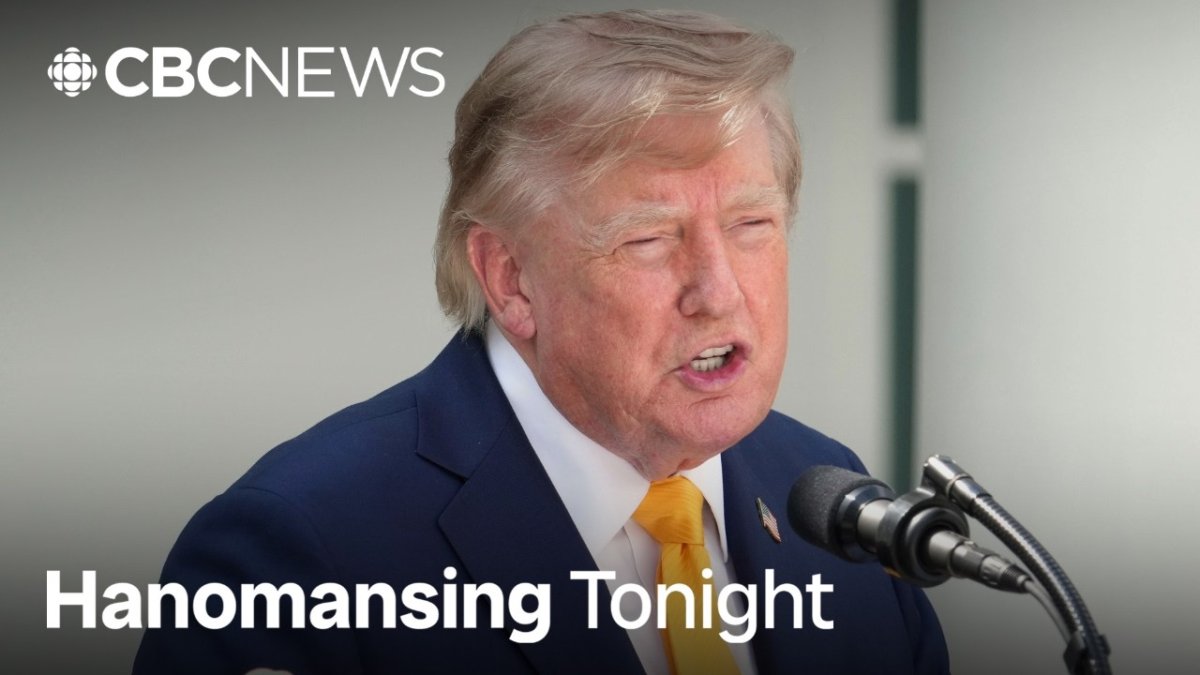
In a recent CBC News Hanomansing Tonight report, U.S. Democratic Senator Peter Welch of Vermont weighed in on President Donald Trump's escalating tariff war against Canada, offering rare bipartisan support for Prime Minister Mark Carney's decision to fight back. Welch, a member of the Senate Finance Committee, called the tariffs "pointless" and "illegal," while acknowledging that the White House's attacks have caused "undeniable harm" to his own state's economy.
In a recent CBC News Hanomansing Tonight report, U.S. Democratic Senator Peter Welch of Vermont weighed in on President Donald Trump's escalating tariff war against Canada, offering rare bipartisan support for Prime Minister Mark Carney's decision to fight back. Welch, a member of the Senate Finance Committee, called the tariffs "pointless" and "illegal," while acknowledging that the White House's attacks have caused "undeniable harm" to his own state's economy. The interview comes at a moment of maximum tension between the two countries, with trade talks collapsed, retaliatory tariffs scheduled, and rhetoric on both sides reaching levels not seen in generations.
Canada-U.S. Trade War Escalates as Talks Collapse
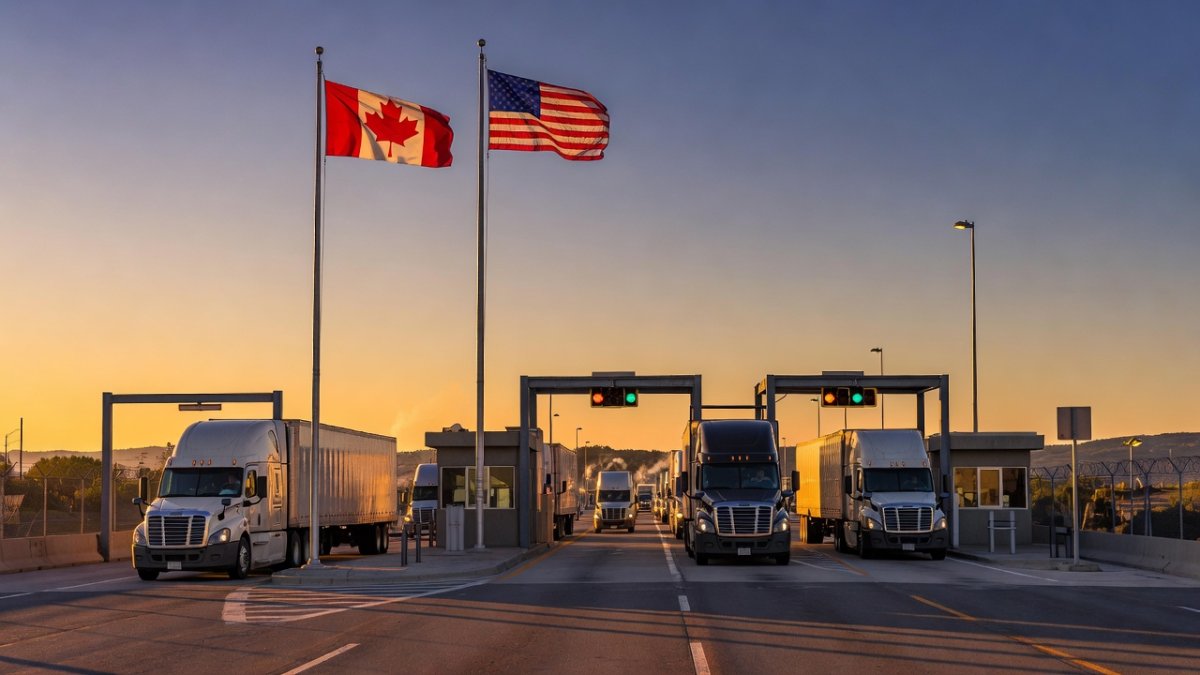
Ottawa, Ontario — The Canada-U.S. trade relationship has plunged into its most serious crisis in decades, with President Trump's 50 per cent tariffs on roughly $28 billion of Canadian goods taking effect at midnight Friday after negotiations collapsed earlier that day. Prime Minister Mark Carney has suspended trade talks, announced dollar-for-dollar retaliation beginning September 8, and declared that Canada is "at war" over trade. The breakdown marks a stunning reversal from earlier this week, when Trump announced a "DEAL!" after a three-day pause in hostilities.
The Story — U.S. Senator Condemns Trump's Tariffs
Senator Welch's intervention is significant not only for its content but for its source. As a Democrat from Vermont, Canada's closest trading partner among U.S. states, Welch has emerged as one of the most vocal critics of Trump's trade policy toward the north. In the CBC News report, Welch said Carney is "justified" in fighting back against what he described as a baseless and legally dubious assault on Canadian goods.
Welch's credentials on this file are substantial. He is the lead sponsor of the CANADA Act (Creating Access to Necessary American-Canadian Duty Adjustments), legislation that would exempt U.S.-owned small businesses from tariffs on Canadian goods. He also co-sponsors the bipartisan Trade Review Act, which seeks to restore Congress's constitutional role in trade policy — a direct challenge to the executive authority Trump has wielded aggressively. On July 20, 2026, Welch released a statement calling the tariff threats "an extreme escalation of President Trump's reckless and irresponsible trade war."
For Vermont, the stakes are existential. The state relies heavily on cross-border commerce with Quebec and the rest of Canada, and Welch has repeatedly warned that the White House's approach is damaging American jobs and businesses, not just Canadian ones. His comments in the CBC News interview reflect a growing frustration among border-state lawmakers who see their constituents caught in the crossfire of a trade dispute they never asked for.
Trade Talks Collapse — What Happened
The current crisis has its roots in June 2026, when the Trump administration announced tariffs on certain Canadian imports, citing what officials described as trade "discrimination" against American businesses. The duties would have covered roughly $20 billion in Canadian imports including liquor, dairy products, vehicles, hockey equipment, food products, wearables, synthetic materials and industrial goods.
Trump then paused the duties for three days and announced that the U.S. and Canada had reached a "DEAL!" — subject to final documentation. But on Friday, August 21, the talks collapsed. Carney suspended trade negotiations, saying "last-minute changes in the U.S. proposed terms were unfair, uneconomic, and called into question the reliability of any deal." He directed Canada's negotiators to return to Ottawa immediately.
U.S. Trade Representative Jamieson Greer responded by saying Canada declined to finalize terms agreed earlier in the week, calling it "a missed opportunity for Canada to partner with the United States." At midnight Friday, Trump's 50 per cent tariffs on roughly $28 billion of Canadian goods took effect as scheduled.
Carney was blunt in his assessment: "At midnight tonight, the U.S. intends to impose a 50% tariff on roughly $28 billion of Canadian goods. Canada will match those tariffs dollar for dollar to protect our workers and businesses."
Canadian Context — Retaliation and Provincial Response
Carney's language has escalated dramatically in recent days. Speaking about the trade war, he said: "You're at war when you get attacked, and we got attacked." He maintained that a "mutually beneficial deal" is possible only if Americans respect Canada's sovereignty — a pointed reference to Trump's repeated suggestions that Canada should become the 51st state.
The federal government has committed to dollar-for-dollar retaliation, with tariffs on U.S. steel and other goods beginning September 8. Carney also noted that nearly $25 billion in support for workers and businesses has been provided over the past 18 months, with additional measures coming. At a Quebec press conference, he announced an investment in six new Canadian icebreaker ships — a signal that the government is prepared to make long-term strategic commitments despite the trade uncertainty.
Ontario Premier Doug Ford has been even more forceful. Ford said Trump has "declared war, economic war against his closest friend and ally," invoking Ronald Reagan in his remarks. He said "everything is on the table" — including cutting off electricity and critical minerals from Ontario. "You won't get a grain of sand out of Ontario," Ford warned, noting that Ontario powers 1.5 million U.S. homes and businesses. He also called for using oil and potash as leverage in the dispute.
Trump responded on Truth Social, calling it "lots of bluster from Doug Ford" and warning that much of Canada's electricity, oil and gas is transported through the U.S.: "Someone should get these clowns to 'fall in line' or, the consequences for Canada will be far WORSE!"
Impact on Canadians — Jobs, Industry and the Cost of Living
The economic stakes are enormous. Canada is consistently one of the top two trading partners of the U.S. Last year, two-way goods and services trade totalled US$872.3 billion, down 4.6 per cent. Canada exports over three-quarters of its goods to the U.S. and imports almost half of its goods from the U.S. — a level of integration that makes the current tariffs all the more disruptive.
The auto sector is particularly vulnerable. U.S. auto production is heavily integrated with Canada and Mexico, with components crossing the border multiple times before a finished vehicle rolls off the line. The tariffs could drastically affect American production too, potentially leading to plant shutdowns and job losses on both sides of the border. On Monday, August 24, Trump announced that tariffs on Canadian autos and steel would double to 50 per cent from January 1, 2027, and introduced 50 per cent tariffs on auto parts. His Truth Social posts were characteristically blunt: "Build in the U.S. and there are ZERO TARIFFS. Canada will be treated like a State no longer!" and "WE DON'T NEED CANADA, THEY NEED US!"
For Canadian consumers, the impact is already being felt. The "Buy Canadian" movement has surged, with one website seeing traffic jump 300 per cent after the trade talks collapsed. But the reality is that many goods — from food products to industrial materials — are deeply integrated across the border, and tariffs will inevitably push prices higher. The cost of living, already a major concern for Canadian households, is likely to worsen before it improves.
Reactions and Analysis
U.S. Treasury Secretary Scott Bessent has said Trump wants Canada to come to the table and negotiate in good faith — a statement that stands in sharp contrast to the president's own inflammatory rhetoric. Whether this represents a genuine opening or simply an attempt to shift blame for the collapse remains unclear.
In Canada, the opposition Conservatives have called on the Prime Minister to reconvene Parliament over the failed trade talks, arguing that Canadians deserve a say in how the government responds to the crisis. Unifor, Canada's largest private-sector union representing auto workers, has been even more direct. President Lana Payne warned that Trump is trying to "destroy the manufacturing base of Canada" — a charge that carries particular weight given the centrality of the auto sector to the Ontario economy.
Trade experts note that the situation is unprecedented in the modern era. Never before has the U.S. imposed tariffs of this magnitude on its closest ally, and never before has a Canadian prime minister used the language of war to describe a trade dispute. The fact that Senator Welch — an American lawmaker — is publicly supporting Canada's position underscores how unusual this moment is.
What Happens Next
The immediate timeline is clear. Retaliatory tariffs on U.S. steel and other goods begin September 8. The auto tariff escalation to 50 per cent takes effect January 1, 2027. In between, there will be intense pressure on both governments to return to the negotiating table — but the collapse of talks on Friday has shattered whatever trust remained.
Carney has said Canada is prepared to negotiate, but only on terms that respect Canadian sovereignty and economic interests. The question is whether Trump is willing to accept such terms, or whether he will continue to treat Canada as a bargaining chip in his broader trade agenda. The parliamentary timeline is also uncertain, with the Conservatives pushing for a recall and the government focused on managing the immediate economic fallout.
For Canadian readers, the message is sobering. The era of frictionless trade with the United States is over, at least for now. The $872.3 billion relationship that has underpinned Canadian prosperity for generations is being fundamentally renegotiated under duress. The "Buy Canadian" movement and the federal government's $25 billion in support are early responses, but the full economic impact will take months — if not years — to unfold.
What is clear is that Canada's response has been unified in a way that is rare in Canadian politics. Carney, Ford, the opposition parties, and labour unions have all spoken with one voice against the tariffs. Whether that unity holds — and whether it translates into a better deal — will define the next chapter of Canada-U.S. relations. For now, Canadians are bracing for a fight that no one asked for but no one can avoid.
By Alex Thompson, Staff Writer
This article was produced with AI-assisted research and editorial support. Reporting is based on sources cited in the article.
What's Your Reaction?
 Like
0
Like
0
 Dislike
0
Dislike
0
 Love
0
Love
0
 Funny
0
Funny
0
 Wow
0
Wow
0
 Sad
0
Sad
0
 Angry
0
Angry
0

Canada Correspondent at Global1.News. Based in Toronto, covering Canadian politics, energy, trade, and US-Canada relations. Provides the Canadian perspective on North American and global affairs.















Comments (0)