
Ex-Pussy Riot Member Says She Helped the FSB Spy on Kremlin Critics
Former Pussy Riot member Rita Flores has revealed that she was coerced into working as an informant for Russia's FSB security service, saying that she gathered information on anti-war activists and was involved in a failed assassination plot against an exiled Kremlin critic.
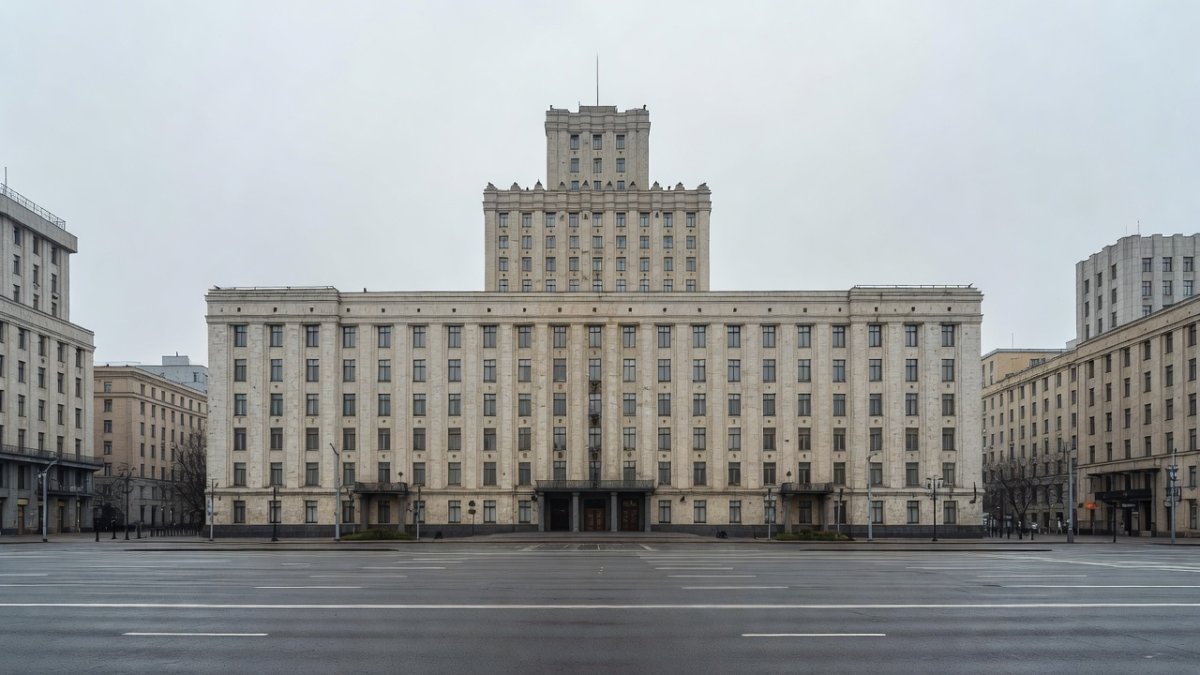
Former Pussy Riot member Rita Flores has revealed that she was coerced into working as an informant for Russia's FSB security service, saying that she gathered information on anti-war activists and was involved in a failed assassination plot against an exiled Kremlin critic. In a video interview with the exiled news outlet Port, Flores detailed three years of forced cooperation under the codename "Harley," describing threats against her family and a plot to kill her ex-boyfriend, activist Pyotr Verzilov. The Moscow Times could not independently verify any of the claims made by Flores.
The Revelation: A Coerced Informant Comes Forward
Flores, whose real name is Margarita Konovalova, went public this week in an interview with Port Media, describing how FSB officers forced her into signing a cooperation agreement following a February 2023 raid on her Moscow apartment. The former punk collective member said she was threatened with criminal prosecution over social media posts about alleged Russian war crimes in Ukraine, alongside death threats against her relatives.
"They began recruiting me with all kinds of threats and abuse [including] threats to murder my family and that I'd never be able to prove who killed my mother," Flores told Port. In a separate account corroborated by the Kyiv Independent, she added: "They attacked me personally, telling me how disgusting and horrible I was, that they would turn me into the biggest Satan in all of Russia."
The Recruitment: Threats, Humiliation, and Coercion
The February 2023 raid on Flores' Moscow apartment marked the beginning of what she described as a prolonged ordeal of psychological manipulation and coercion. According to her account, FSB officers confiscated her passport, effectively trapping her in Russia, and used the threat of criminal prosecution over her social media activity as leverage. The strategy mirrors a documented pattern of FSB recruitment tactics targeting activists and artists who have expressed opposition to the Kremlin's war in Ukraine.
Human rights lawyers familiar with such cases note that the FSB frequently targets individuals who have already attracted attention for anti-war statements, using the threat of prosecution under Russia's expansive wartime censorship laws. Flores said the officers who recruited her combined explicit threats with psychological abuse, telling her she would be "turned into the biggest Satan in all of Russia" if she refused to cooperate.
Informant Work Under the Codename "Harley"
Operating under the codename "Harley," Flores said she was assigned to build detailed profiles on Russian artists and political dissidents both inside and outside the country. Between early 2024 and June of this year, she received monthly payments of 50,000 rubles ($600) from her security service handlers, following an initial disbursement of 30,000 rubles ($360). The payments, while modest by Western standards, represent a significant sum for many Russians and reflect the FSB's approach of combining coercion with financial incentives.
According to Flores, her handlers wanted her to help develop some targets into fellow "assets" and line up new individuals for criminal cases. The FSB's interest in the artistic community aligns with the broader Kremlin crackdown on cultural figures who have spoken out against the war, with numerous artists, musicians, and writers facing prosecution or forced exile since February 2022.
Deliberate Sabotage: Faking Feuds to Protect Targets
In a striking detail from her interview, Flores claimed she deliberately sabotaged her FSB assignments for over two years, faking personal feuds with targets like artists Philippenzo and Pavel Krisevich to delay their arrest by law enforcement authorities. This alleged sabotage suggests that even within the coercive system of informant recruitment, individuals can find ways to resist and protect those targeted by the security services.
Flores described the period as one of intense psychological distress. In an Instagram post, she characterized the three years as "prolonged depression... complete, unrelenting derealization, PTSD from being followed and surveilled... several attempts at suicide, and so, so, so much more." Her account paints a picture of an individual trapped between the FSB's demands and her own conscience, attempting to navigate an impossible situation while protecting those around her.
The Verzilov Assassination Plot: A Point of No Return
In mid-2025, Flores said she was ordered to lure her ex-boyfriend and former Pussy Riot member Pyotr Verzilov into a cafe in Serbia where undercover FSB agents planned to kidnap and kill him. The activist said she was offered 3 million rubles ($36,000) for her role in the assassination plot. Verzilov, a co-founder of the independent media outlet Mediazona, has been a prominent voice documenting Russian war crimes and political repression.
"That was the point of no return. Before, I thought I just needed to wait to get my passport back and flee. But then I realized how far they were willing to go," Flores said in the interview with Port. The plot against Verzilov represents an escalation in the FSB's apparent willingness to conduct assassinations of Kremlin critics abroad, following a pattern of poisonings and other attacks on exiled Russians in recent years.
The Escape: Lawyers, Businessmen, and a Flight to Safety
Refusing to help carry out the assassination plot against Verzilov, Flores stalled her handlers and sought help from human rights lawyer Dmitry Zakhvatov. Exiled businessman Leonid Nevzlin subsequently helped her flee Russia earlier this month. Flores thanked both men publicly but did not disclose her current location, saying she went public to offer hope to those in the same situation.
The involvement of Nevzlin, a former Yukos executive who has been living in exile and funding opposition causes, highlights the role of the Russian exile community in supporting those fleeing FSB pressure. Zakhvatov, a lawyer known for taking on politically sensitive cases, has not publicly commented on the specifics of Flores' case, but his involvement suggests a coordinated effort to extract her from Russia once the assassination plot became known.
Verzilov's Response: A Decade of Threats
Pyotr Verzilov told the Kyiv Independent that the FSB has been trying to kill him for years. "The FSB has been trying to kill me for the last 10 years in various parts of the world. Their repeated attempts in the last several years are a testament of the work we do, first of all of the work focused on the defense of Ukraine in the face of Russian aggression," he said.
Verzilov's response underscores the ongoing threat faced by Kremlin critics in exile. The alleged plot in Serbia, if confirmed, would represent a significant escalation in the FSB's willingness to conduct operations against dissidents in European countries. It also raises questions about the extent of Russian intelligence operations across the continent and the safety of exiled activists who continue their work from abroad.
What This Reveals About FSB Methods
Flores' account, while unverified, aligns with documented patterns of FSB recruitment and coercion tactics. The combination of threats against family members, confiscation of passports, and financial incentives reflects a systematic approach to turning activists into informants. The targeting of artists and cultural figures specifically suggests a broader Kremlin strategy to suppress dissent within the creative community, which has been a significant source of anti-war sentiment since the invasion of Ukraine.
Analysts suggest this case could indicate that the FSB is increasingly desperate to neutralize opposition figures abroad, particularly those like Verzilov who have been effective in documenting Russian war crimes. The alleged assassination plot, if confirmed, would represent a willingness to conduct high-risk operations in European countries, potentially straining Russia's already tense relations with the West.
For ordinary Russians and the exile community, Flores' story serves as a chilling reminder of the reach of the security services and the personal costs of resistance. Her decision to come forward, despite the risks, offers a rare glimpse into the coercive machinery that maintains Kremlin control over dissent. Whether her claims are fully verified or not, they contribute to a growing body of evidence about the methods employed by the FSB to silence critics at home and abroad.
By Irina Volkov, Staff Writer
This article was produced with AI-assisted research and editorial support. Reporting is based on sources cited in the article.
What's Your Reaction?
 Like
0
Like
0
 Dislike
0
Dislike
0
 Love
0
Love
0
 Funny
0
Funny
0
 Wow
0
Wow
0
 Sad
0
Sad
0
 Angry
0
Angry
0
Russia/Eastern Europe Correspondent at Global1.News. Covering Russian politics, energy, security, and the shifting dynamics of the post-Soviet space. Provides clear-eyed analysis on one of the world's most opaque regions.











Comments (0)