
Edmonton Weighs Faster Storm-Water Plan After Record Rains
Edmonton is weighing whether to accelerate a 20-year, $1.6-billion storm-water resilience plan after a record-breaking summer of rainfall exposed weaknesses in the city's aging drainage network, leaving scores of homes damaged and several major roadways washed out.
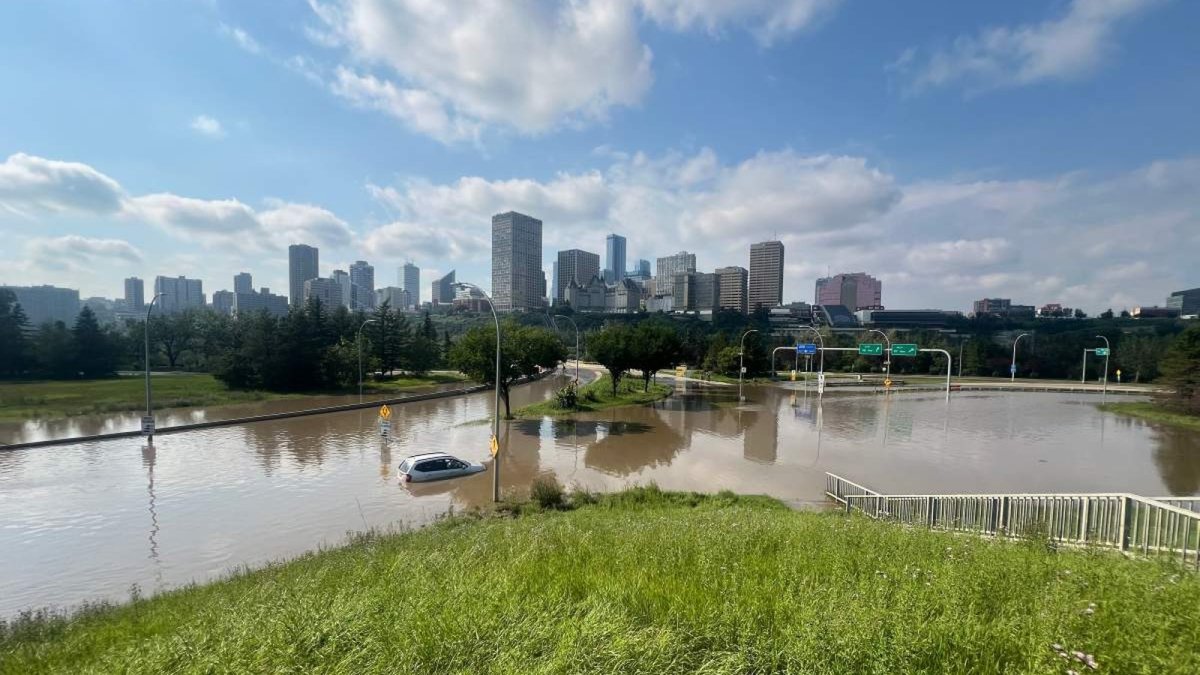
Edmonton is weighing whether to accelerate a 20-year, $1.6-billion storm-water resilience plan after a record-breaking summer of rainfall exposed weaknesses in the city’s aging drainage network, leaving scores of homes damaged and several major roadways washed out.
Edmonton, Alberta – Aug 25, 2026 — The summer of 2026 will be remembered in Alberta’s capital for relentless, record-breaking rainfall — multiple storms a week throughout June and July that saturated the ground, overwhelmed the storm-water system, and turned major arteries like Whitemud Drive, Groat Road and the Connors Road interchange into temporary rivers.
Close to a month since the extreme weather finally calmed down, city-owned utility EPCOR provided a verbal update to the City of Edmonton’s utility committee on Monday about how it managed its response to the series of floods and other issues during the storms. The message from councillors was clear: communication needs to improve, and the work to harden the city’s infrastructure cannot wait.
“I think the biggest takeaway from today was around communication and transparency,” said Keren Tang, city councillor for Ward Karhiio.
Mayor Andrew Knack agreed, saying the city learned a valuable lesson about keeping residents informed during a crisis. “It’s better to over-communicate in situations where you’re getting things like unprecedented weather, than to under-communicate and leave people feeling like they have to try and seek out that information.”
Record rainfall strained an aging system
According to Environment Canada, Edmonton received more than 500 mm of rain over June and July — the highest volume in decades. The city shattered the 1914 rainfall record for June with 271 mm, the second-largest volume since modern record keeping began. July brought another 264.7 mm, falling just shy of the all-time July record of 282.7 mm set in 1901.
EPCOR said the July storms were unique and extreme in nature, straining infrastructure with minimal recovery time between events. Multiple storms a week left the groundwater table so saturated that it stopped absorbing water, sending more runoff than normal into the storm-water system — which then struggled to keep up. A lengthy stretch of dry weather is needed to allow the system to recover, the utility said.
The weather highlighted weaknesses in Edmonton’s aging storm-water network. Last month, Knack admitted flood resiliency should have been started decades earlier, noting that what used to be one-in-100-year floods are now more like one-in-10-year floods.
“A lot of our infrastructure held up the way we had envisioned it to,” Knack said on Monday. “Obviously there’s still more work to do. Not every area held up the way we wanted it to.”
Homes damaged, roads washed out
Scores of homes across the city sustained water damage from sewage backups or overland flooding. Major roads — including Whitemud Drive, Yellowhead Trail, Groat Road and the interchange of Connors Road and the Low Level Bridge — turned into rivers and lakes during the peak of the storms.
“We’re going to look closely at our infrastructure and those cases, and see how over time we can make improvements to help mitigate those risks,” said Craig Bonneville, vice-president of planning, projects and engineering at EPCOR.
The July storms took a particularly heavy toll on several northwest Edmonton neighbourhoods, where a major road in and out of the area was washed away. The rains caused Horseshoe Creek to overflow and erode the banks around its culvert, leading to a stretch of 137 Avenue crumbling into the deep trench created by the floodwaters.
The road remains closed because of the washout, limiting access to the Starling and Hawks Ridge communities. Big Lake-area residents were already waiting for EPCOR to expand the creek’s culvert to help with drainage, and say erosion concerns were raised years ago.
“As a utility ratepayer, you assume Epcor will step up and do the right thing — and in my opinion, they didn’t do that,” said Raf Tenderenda with the Big Lake Community League. “Now we’re kind of thinking, is the road going to be closed for the whole year? That’s kind of frustrating to see, the lack of action in the last two months — let alone the last two years.”
Bonneville said the nature of the storm events Edmonton experienced were unpredictable — and to a degree, unprecedented — and simply overwhelmed the existing infrastructure in Big Lake.
Accelerating the $1.6-billion plan
EPCOR and the city are now looking at accelerating work on Edmonton’s storm-water system improvements, part of a 20-year, $1.6-billion storm-water resilience plan to upgrade infrastructure and minimise flood risk. The plan, launched in 2019, is now in its seventh year.
The city has spent about $350 million so far on flood resiliency projects, including dry ponds and maintenance work on pipes and manholes. But the scale of the remaining work is enormous, and councillors are mindful of the trade-offs involved in moving faster.
“It doesn’t happen overnight, it does take time to implement,” Tang said. “So if we want to implement all in one go, there’s huge financial, huge community impact that we have to keep in mind.”
Accelerating the plan would mean significant new spending in the near term — costs that would ultimately be borne by utility ratepayers. It could also mean more disruptive construction across the city, with road closures and neighbourhood upheaval happening all at once rather than spread out over two decades.
Communication and community response
Beyond the physical infrastructure, Monday’s utility committee meeting focused heavily on how EPCOR and the city communicated with residents during the crisis. Councillors identified communication and transparency as the key takeaway from the response, underlining the challenge of keeping residents informed about flooding and service impacts across the city.
EPCOR’s aim for clearing debris from a catch basin is within 24 hours of it being reported, but with the volumes of rain, workers can get overwhelmed. The utility received significant call volumes during the peak of the storms, though it would not estimate how many. The city separately received more than 3,000 calls related to fallen debris and downed trees, including 800 in the days after the weekend deluge.
EPCOR water services associate director Angus Grant said residents can remove debris from blocked storm drains themselves if it is safe to do so, or report the issue to EPCOR. Motorists and cyclists were advised to check the city’s website for the latest road closure updates.
The storms also took a toll on the city’s forest canopy. Edmonton signed a temporary mutual aid agreement with Calgary, and forestry crews from Calgary arrived to help with urban canopy damage and Dutch elm disease concerns — elm bark beetles thrive in fallen branches. Edmonton has more than 12.8 million trees, though only 380,000 are along boulevards and in open park spaces.
A national lesson in climate adaptation
Edmonton’s experience this summer is part of a broader pattern playing out in municipalities across Canada, as extreme weather events become more frequent and more intense. The federal government has been channelling climate adaptation funding through Environment and Climate Change Canada and the Federation of Canadian Municipalities, delivered through the Green Municipal Fund’s Local Leadership for Climate Adaptation initiative. Ottawa has invested $34.2 million in local climate adaptation projects through that program.
Canada’s National Adaptation Strategy sets targets to factor climate resilience into new federal infrastructure funding, but municipalities are increasingly left to shoulder the cost of climate-proofing aging infrastructure on their own. Storm-water and flood resilience is a growing priority for cities from coast to coast, as utility ratepayers and property owners bear the financial brunt of extreme weather.
For Edmonton, the question is no longer whether the city needs to invest in flood resilience — it is how quickly it can afford to do so. The record rainfalls of June and July 2026 made it clear that the old assumptions about one-in-100-year storms no longer hold. The city’s infrastructure held up in many areas, but not all, and the damage to homes, roads and neighbourhoods will take months — if not years — to fully repair.
“Obviously there’s still more work to do,” Knack said. “Not every area held up the way we wanted it to.”
As EPCOR and the city weigh accelerating the $1.6-billion plan, residents in affected neighbourhoods like Big Lake, Starling and Hawks Ridge are watching closely. For them, the summer of 2026 was not just a record-breaking season — it was a reminder that the infrastructure beneath their feet is aging, and that the cost of inaction is measured in flooded basements, washed-out roads and disrupted lives.
Tags: EPCOR, Edmonton, storm-water, flood resilience, climate adaptation, infrastructure, municipal government, Andrew Knack, Keren Tang, Big Lake, 137 Avenue, record rainfall, utility ratepayers, Green Municipal Fund, National Adaptation Strategy
This article was produced with AI-assisted research and editorial support. Sources: Global News, Postmedia/Yahoo News Canada, CTV News Edmonton.
By Alex Thompson, Staff Writer
What's Your Reaction?
 Like
0
Like
0
 Dislike
0
Dislike
0
 Love
0
Love
0
 Funny
0
Funny
0
 Wow
0
Wow
0
 Sad
0
Sad
0
 Angry
0
Angry
0

Canada Correspondent at Global1.News. Based in Toronto, covering Canadian politics, energy, trade, and US-Canada relations. Provides the Canadian perspective on North American and global affairs.














Comments (0)